Neighborhood Guides for Young Professionals: Real Estate Agent Content Framework + Lead Capture
Neighborhood Guides for Young Professionals
Real Estate Agent Content Framework + Lead Capture
A local-content system for agents who want guide readers to understand commute reality, walkable errands, remote work support, third places, housing mix, and the right next step.

Neighborhood guides that convert young professional research
Neighborhood Guides for Young Professionals convert when they frame the neighborhood as a daily operating system. The page should answer commute ranges, walkable errands, remote work options, third places, housing mix, and the next step for the buyer. Build three to five focused guide pages, attach a matching lead magnet, and distribute the cluster through search, short-form video, email, and retargeting.
- Young professionals evaluate neighborhoods through time, mobility, social routines, remote work support, and lifestyle ease.
- The strongest guide pages use concrete proof such as commute ranges, transit lines, walkable errands, cafés, gyms, parks, and coworking options.
- Guide pages should route readers to one matching lead magnet, not a generic contact form with no context.
- Search, social, email, and retargeting should all point back to the same neighborhood cluster so the content becomes a measurable pipeline asset.
Why This Pays Off
Young professionals do not read neighborhood content the same way move-up families do. They are comparing time, mobility, social density, remote work support, and whether weekday life feels easy. A high-converting neighborhood guide gives them a practical operating view of the area before they ever ask about a property.
The production model is straightforward. Build three to five focused guides, use the same conversion spine on every page, distribute the guide cluster through search, short-form video, email, and retargeting, then measure guide views, return visits, downloads, and consultation requests. Pair the guide pages with SEO for Real Estate Agents, Social Media Management for Real Estate Agents, and a clear lead capture path so the content becomes an operating system, not a one-time post.
If your positioning still reads generic, start by tightening trust and clarity with Building a Trusted Brand: The Key to Attracting Target Audiences Over Paid Leads and Mass Marketing. Neighborhood content performs best when the reader understands why your local lens is different from every portal summary they already skimmed.
- You answer practical lifestyle questions before the buyer enters a showing conversation.
- You build search pages that match real neighborhood-comparison behavior.
- You create lead magnets that feel like the next logical step instead of a disconnected download.
Foundations: The Young Professional Buy-Box
The young professional buy-box is built around time efficiency, mobility options, and social infrastructure. The guide has one job: reduce uncertainty about daily routines so the prospect feels confident taking the next step.
Walkability should be handled with proof, not adjectives. List the errands people run weekly and show how far they are on foot, by bike, and by transit. Add a simple radius map image that highlights grocery, gym, coffee, pharmacy, and green space within a practical loop.
Show the weekly errand loop
Explain whether a resident can handle grocery, pharmacy, fitness, coffee, park time, and casual dining without wasting the week in a car.
Name the commute reality
Focus on areas built around rail, bus rapid transit, and frequent service corridors. Name the lines, stations, park-and-ride points, and commute ranges people will actually compare.
Map the third places
Track the places where people form routines and friendships: coworking, fitness studios, parks, cafés, markets, live music, bars, and recurring community events.
Most agents overlook that young professionals view a home purchase as a lifestyle upgrade, not only a property transaction. High-performance operators focus on micromobility and third places: the coffee shops, gyms, parks, coworking rooms, and transit stops where clients will spend real time.
What To Build First
Start with three to five neighborhoods. Do not try to cover the entire metro. A focused cluster builds ranking strength faster, keeps research controlled, and gives retargeting enough relevance to perform.
Each guide should answer the same lifestyle questions in the same order. Consistency trains readers, supports internal linking, and makes your production system easier to scale.
Commute and mobility reality
Provide commute ranges to top job centers, plus a transit summary that names the lines, stations, and frequency posture. Add bike lane, scooter, parking, and rideshare notes when they affect weekday life.
Walkable errands and third places
List the places people use every week: grocery, pharmacy, coffee, gym, parks, markets, and recurring events. Give five to eight concrete locations instead of vague lifestyle adjectives.
Remote work support
Show coworking options, café work friendliness, quiet work alternatives, and library access. Young professionals often decide based on weekday productivity, not weekend vibes.
Housing mix and price posture
Summarize condos, townhomes, small single-family pockets, and the inventory types that tend to move fastest. Add plain-language entry, mid, and premium tier context when reliable local data is available.
The guide needs a conversion spine. Put one primary CTA in the top third, one mid-page, and one near the end. Route every CTA to a single landing page that matches the promise. Use The 5-Point Conversion Framework for a High-Performance Real Estate Lead Capture Page to keep that page focused on one promise, one form, one follow-up trigger, and no attention leaks.
The 90-Day Neighborhood Guide Rollout
Month one is the research phase. Pick the top neighborhoods based on young professional demand signals. Use showing feedback, rental inquiries, condo activity, relocation questions, transit demand, and walkability questions to guide selection. Build a lifestyle data sheet for each neighborhood with commute ranges, station names, gym density, coworking options, café clusters, housing mix, and a short list of third places.
Month two is content execution. Publish one long-form guide per week until the first three are live. Build the pages so the experience stays fast, mobile-friendly, and connected to listings and saved searches. Capture simple neighborhood visuals using assets you already have: storefronts, park entrances, transit signage, walkable errands, and steady phone clips.
Month three is lead capture and distribution. Publish a gated relocation asset that matches the guide promise. Strong options include a moving checklist, a transit cheat sheet, a neighborhood short list, or a weekly life plan template. Build one page, one form, one follow-up sequence, and neighborhood-level tags so the lead source stays visible. Use How to Build and Promote a High-Converting Real Estate Lead Magnet for Agents as your lead magnet build spec.
Each guide should become a campaign hub. Short-form videos point back to the guide, retargeting brings warm readers back to a focused lead magnet, and email follow-up carries the neighborhood tag forward.
Messaging Angles You Can Deploy
Young professionals respond to specificity. Name the friction and remove it. Headlines should sound like a local operator who already solved the problem, not a brochure.
The commute-first guide
Campaign prompt
Hook lineStop guessing your commute. See the real ranges by neighborhood.
Middle lineUse the guide to compare transit, parking, bike routes, and weekday travel friction before you choose a home search area.
CTA lineDownload the moving checklist and get the neighborhood guide links.
Use this angle for new job relocations, first condo buyers, and buyers who already mention commute anxiety.
The third-place guide
Campaign prompt
Hook linePick the neighborhood that matches your weekday life.
Middle lineCompare coffee, gym, parks, coworking, events, and walkable errands before you spend weekends touring the wrong area.
CTA lineGet the neighborhood short list and a price posture snapshot.
Use this angle for renters moving up, remote workers, and buyers who value walkability more than square footage alone.
Budgets And Briefs You Can Deploy
Budget planning should protect consistency before it chases scale. Use these ranges as operating examples for content distribution and paid traffic planning. They are not service pricing or performance guarantees.
$450 per month
Use a 70 percent retargeting and 30 percent contextual split. Build audiences from site visitors and neighborhood page viewers. Cap frequency at 8 to 10 impressions per week and refresh creative every 21 days.
$900 per month
Use a 60 percent retargeting and 40 percent contextual split. Segment by neighborhood visits plus moving and relocation intent. Cap frequency at 10 to 12 impressions per week, rotate three creative angles, and refresh the weakest performer every 14 days.
Distribute the assets through channels you can operate consistently: Social Media Marketing for short clips, Email Campaigns for guide follow-up, Digital Retargeting for warm visitors, and IDX Real Estate Websites for neighborhood and listing context.
Channel Strategy And KPI Benchmarks
KPIs are instrumentation benchmarks. They help you measure the engine, not promise outcomes. Review them weekly so headlines, CTAs, and audiences can be adjusted before momentum stalls.
| Channel | Content Focus | Target KPI | Lead Type |
|---|---|---|---|
| SEO for Real Estate Agents | Long-form neighborhood guides. | Top 3 ranking for one selected neighborhood-guide query within 6 to 12 months, framed as a goal rather than a guarantee. | Research-heavy leads who compare neighborhoods before booking a call. |
| Social Media Management | Short clips and walking tour reels. | 3%+ engagement rate per reel, reviewed weekly against reach and repeat-view signals. | Awareness-level leads who need repeat exposure before they download. |
| Retargeting & Contextual Ads | Guide ads and relocation lead magnet loops. | $15 to $30 cost per lead from neighborhood-page visitor retargeting, reviewed monthly. | High-intent leads who already engaged with a neighborhood page. |
The 10-Point Neighborhood Guide Audit
Use this checklist before publishing each guide. The goal is to make the page specific enough to rank, helpful enough to earn trust, and clear enough to convert.
- Clear neighborhood boundary description that matches common search language.
- Commute ranges to top job centers stated as ranges, not guesses.
- Transit summary that names the main lines and nearest stations.
- Walkable errands list with at least five practical stops.
- Third places section with cafés, gyms, parks, and one repeatable event.
- Remote work support section with coworking and quiet work options.
- Housing mix summary with the fastest-moving inventory types.
- Three CTAs placed top third, mid-page, and near the end.
- Lead magnet form tagged by neighborhood so follow-up stays specific.
- Retargeting audience built from neighborhood page visitors and guide readers.
Mini Case Pattern: The Young Professional Niche Shift
An agent in a booming tech hub stopped marketing as a general seller resource and repositioned around young professional neighborhood decisions. They built three hyper-local guides around walkability, commute ranges, and third places, then published one per week until the cluster was live. Organic traffic began to concentrate around relocation and neighborhood comparison searches.
The distribution principle matters more than the anecdote: each guide became a campaign hub. Short-form videos pointed back to the guide, retargeting brought warm readers back to a focused lead magnet, and email follow-up carried the neighborhood tag forward. That operating rhythm is what turns content from an article library into a pipeline system.
How This Becomes Marketing
A neighborhood guide system is more than a blog post series. It is a positioning asset. It lets an agent talk about lifestyle, commute fit, housing mix, and local decision-making without sounding like every other agent chasing generic buyer leads.
Use the same guide cluster across social clips, lead magnet pages, email follow-up, direct mail prompts, and warm-audience ads. The message should stay consistent: you help buyers understand daily life before they commit to the wrong neighborhood.
If you want help turning neighborhood intelligence into a managed marketing engine, AmericasBestMarketing.com can help connect the writing, distribution, retargeting, email, and follow-up infrastructure into one operating rhythm.
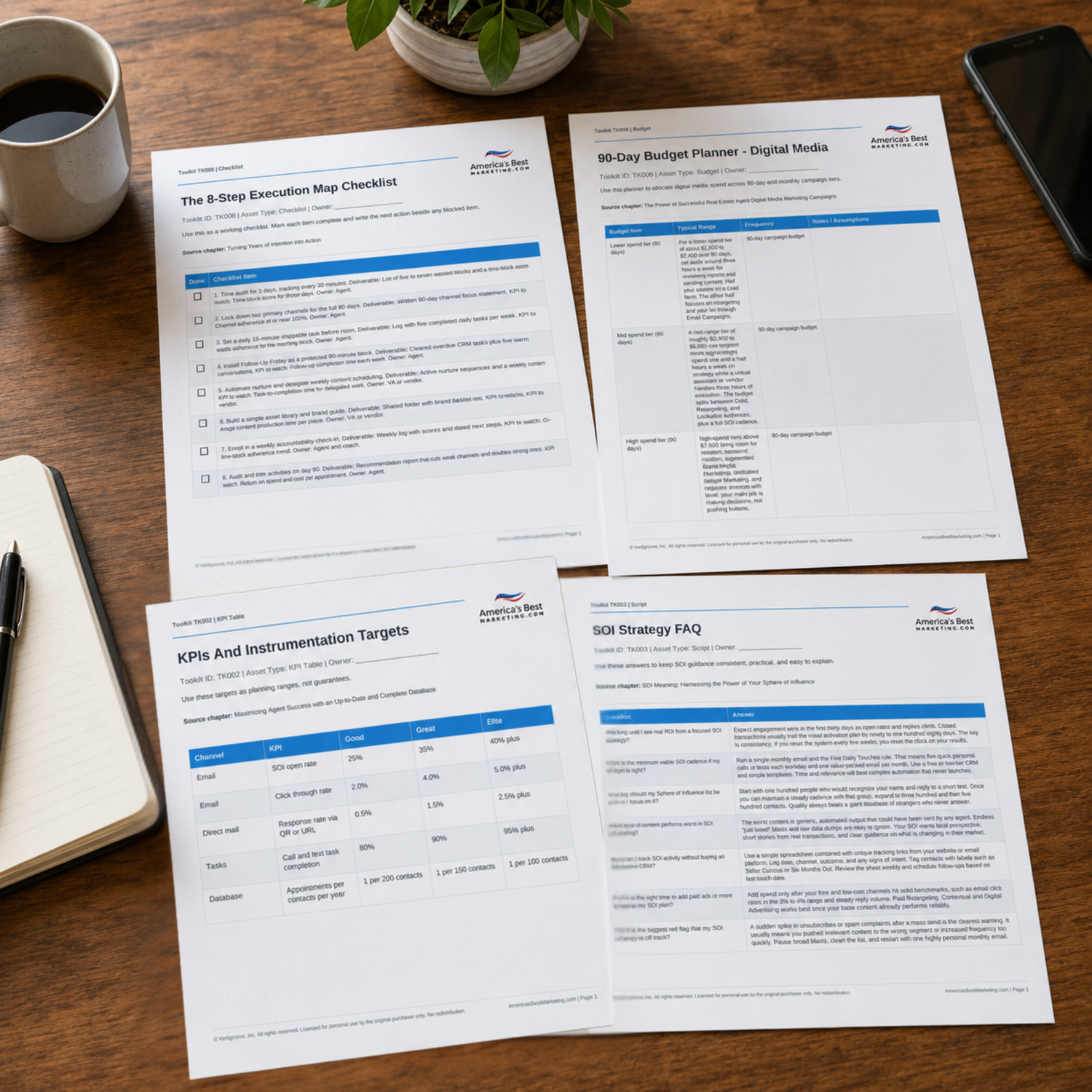
Download The Neighborhood Guide Toolkit
Use the companion Toolkit to organize the 90-day rollout, budget guardrails, KPI benchmarks, audit checklist, buyer-facing FAQ prompts, and lead capture plan behind a stronger young professional neighborhood campaign.
Download the Toolkit ZIPRecommended reads
Recommended Reads for Real Estate Agents
These articles help agents turn client questions, local guidance, marketing channels, and follow-up into a more useful content system.

Local SEO for Real Estate Agents: How to Dominate Search in Your Neighborhood
Make local search work harder with content that answers real questions and leads to a next step.
Read article
Outdoor Lifestyle Neighborhood Guides: Searchable Relocation Content Real Estate Agents Can Publish
Turn search visibility into a clearer publishing system for neighborhoods, services, and client decisions.
Read article
SEO for Real Estate: How Agents Can Dominate Local Search and Generate More Leads
Build a cleaner system for SEO for real estate, with better timing, clearer messaging, and a next step people can act on.
Read article
Local Restaurant Guides That Generate Leads: A Real Estate Agents-Friendly Where to Eat Framework
Publish content that answers local questions, supports lead capture, and gives future conversations a reason to start.
Read articleNeighborhood Guide Questions Agents Should Be Ready To Answer
How long does it take to see ROI from neighborhood guides?
Expect a ramp, not a spike. Most markets need multiple guides live before search traffic becomes consistent, then conversion comes from lead magnets and follow-up. Track leading indicators like guide page views, return visitors, and form starts. If those are flat, tighten the buy-box, improve CTA placement, and refresh the first screen of the page.
What content performs worst with young professionals?
Generic neighborhood descriptions with no decision support usually lose. Long text blocks with no commute ranges, walkable errands, or third places also drop engagement. Another weak performer is content that leans hard on suburban features with no lifestyle tie-in. Keep it practical, fast to scan, and grounded in daily routines.
Should I include rental data in my homebuyer guides?
Yes, but keep it simple and clearly labeled. Rental posture helps young professionals benchmark affordability and timing, especially for relocations where they may rent first. Use ranges and avoid absolute claims. If you do not have reliable neighborhood-level data, state that you are sharing directional context and invite them to request a custom snapshot.
How do I pick the first neighborhoods to cover?
Start with neighborhoods that already show young professional demand. Look at condo velocity, rental inquiries, relocation questions, and where buyers ask about walkability or transit. Pick three to five and commit to publishing them as a cluster. A focused cluster builds authority faster than scattered posts across the whole city.
What should the lead magnet be for this audience?
Make it a decision aid tied to time and lifestyle. Moving checklists, transit cheat sheets, a neighborhood short list, and a weekly life plan template work well because they feel immediately useful. Keep the form short and trigger an email that routes them back to the guide cluster. The magnet should feel like the next logical step, not a random download.
How do I keep the guides from going stale?
Update one section each month on a rotation. Refresh third places, transit notes, and the housing mix summary first, since those shift faster than a general description. Add a visible update note near the top so readers know the page is maintained. Treat each guide like a living asset you operate, not a post you forget.
How do I convert guide readers into consultations without sounding salesy?
Offer a specific next step that matches the guide promise. A neighborhood comparison call, commute-fit conversation, or short-list consult feels helpful because it reduces risk. Use one primary CTA and repeat it consistently. When the offer is clear and the process is simple, your tone stays calm and confident.
Next step
Build the System Behind the Advice
Continue from one useful article into the larger ABM ecosystem: the book series for strategic depth and the full marketing program for done-for-you execution.

View the Book Series
Explore the America’s Best Real Estate Agent Marketing System books for a deeper strategic framework around visibility, referrals, listings, lead generation, and growth.
View the Book Series
See Full Marketing Program
See how AmericasBestMarketing.com runs real estate blog writing, social media, listing marketing, email, direct mail, and retargeting as one managed system.
See Full Marketing Program