Real Estate Listing Promotion Playbook For Faster Sales And Future Listings
Real Estate Listing Promotion Playbook
For Faster Sales And Future Listings
A repeatable launch system for real estate agents who want every listing to create buyer interest, seller confidence, database growth, and future listing conversations.

The Listing Promotion System Agents Can Repeat
A strong real estate listing promotion playbook turns each property into a compact marketing engine. It sets the message before launch, coordinates email, social, direct mail, IDX traffic, retargeting, open house capture, and CRM follow up, then measures whether the listing produced showing requests, database growth, seller conversations, and stronger neighborhood visibility.
- Every listing should sell the property and create future seller conversations in the same neighborhood.
- The strongest launch plans start before the MLS date and continue through post-close promotion.
- Short video, email, direct mail, retargeting, and open house follow up work best when they carry one consistent property story.
- Cost per lead, listing page views, showing requests, and seller conversations matter more than vanity impressions.
Why Listing Leverage Builds Your Next Three Deals
Every listing has two jobs. First, it needs to sell at a strong market price. Second, it needs to introduce you to the next three sellers in that same farm. That second job is where listing leverage lives and where many real estate agents quietly leave money on the table.
Listing leverage means you design a short journey that takes buyers, neighbors, open house visitors, and online viewers from first glance to saved contact in your database. You do that with a consistent property story, a clear landing page, intentional follow up, and a repeatable system for Listing Marketing that looks and feels consistent across digital and print channels.
The point is not to add more random promotion to every property. The point is to build a campaign spine that keeps the seller calm, gives buyers a cleaner path to details, and turns neighborhood attention into measurable follow up.
- Relying only on the MLS feed and a yard sign leaves you invisible to many buyers and nearly all future sellers.
- Weak listing copy makes the home sound interchangeable instead of memorable.
- Random photo order can hide the property’s strongest selling points before the buyer understands the story.
- Low quality or mismatched visuals make buyers question the home and your professionalism before they read the description.
- Treating follow up as a chore instead of a core move leaks warm leads after every open house and online inquiry.
- Ignoring post-close promotion means the neighborhood never sees that you listed, marketed, and successfully closed the sale.
Your Real Estate Listing Promotion Playbook
A strong real estate listing promotion playbook runs on a simple calendar. You decide how you will market a listing from one week before launch through day fourteen, then run that same pattern every time. This removes guesswork and keeps the seller focused on the plan instead of random suggestions from friends and family.
The calendar below assumes you already have pricing strategy, disclosures, photography, and seller approvals in motion. It also assumes you will use digital, mail, email, video, and in-person touchpoints so the listing shows up wherever buyers and neighbors spend attention.
Days minus seven through minus five
Lock the launch calendar, confirm photography, gather disclosures, and finalize the property story. Write the main hooks around lifestyle, neighborhood value, daily routines, commute, storage, outdoor living, or another buyer benefit that is stronger than bedroom count alone.
Send a pre-launch note through Email Marketing for Real Estate Agents so past clients and your sphere hear about the property before the public. Organize photo order so the first images quickly answer why the home matters and what the buyer should notice first.
Day zero through day three
Publish to the MLS, confirm the listing appears correctly on your IDX Real Estate Websites, and test every lead form on desktop and mobile. Post a short teaser video, a strong still-image carousel, and one plain-language property page call to action.
Mail a targeted Direct Mail Marketing piece to nearby homes with a bold headline, clear photo, and simple path to the property page. Switch on Retargeting & Contextual Ads for people who viewed the listing page or watched the video long enough to show real interest.
Day five through day seven
Call and text every warm click, open, or sign in, then tag each person by interest level so you know who needs a second touch. At the open house, make sign in easy, capture common questions, and label neighbors separately from active buyers.
The neighborhood visitor who is “just looking” may be the next listing appointment. Treat that person as a seller lead in early research mode, not as a throwaway conversation.
Day ten through day fourteen
Refresh creative on your best performing ads and posts by swapping in hooks that answer the most common buyer questions. Send a quick recap email with early results, invite neighbors to request an updated value, and move the warmest contacts into long-term follow up.
After the closing, publish a clean success recap that shows the property was listed, marketed, and sold with a clear plan. That post-close proof is where one listing starts feeding the next listing conversation.
Treat each listing as a seller lead engine, not just a path to one commission check. Every flyer, ad, video, open house sign in, and email should help answer one operating question: how many future listing conversations did this property help start?
Creative And Messaging That Attracts The Right Buyer
Short listing messages work best when they name the buyer situation, highlight one main benefit, and spell out the next step in clear language. The goal is to keep every channel on the same story so buyers see the same promise in email, social, mail, and on your site.
Start with the property’s strongest strategic angle. A move-up home may need a message about space, layout, storage, schools, commute, or outdoor living. A condo may need a message about convenience, monthly cost control, maintenance simplicity, or location. A luxury listing may need restraint, stronger photography, and a clear narrative about privacy, setting, architecture, or lifestyle.
Quick tour listing video under fifteen seconds
Agent dialogue
Hook lineTake a fifteen second tour of this home and decide if it belongs on your shortlist.
CTA lineMessage me from this page for the full photo set, floor plan, and property report.
Use fast cuts of the exterior, kitchen, main living space, primary bedroom, storage, and outdoor space. End on the strongest lifestyle frame with a simple overlay that says tap for full report.
Problem and solution story for serious buyers
Agent dialogue
Hook lineTired of listings that look great online and feel cramped in person?
Build lineThis home solves that with real storage, smart layout, and a yard that actually works for daily life.
CTA lineSave this property and request the full guide with room sizes, upgrades, and local insights.
Open on the buyer frustration, cut to the feature that solves it, then route viewers into a lead capture page with clear next steps.
Feature and local gem spotlight
Agent dialogue
Hook lineMost buyers miss this feature on the first tour.
Build lineIt changes daily life for storage, energy bills, peace of mind, or neighborhood convenience.
CTA lineSave this listing and reach out if you want more details on upgrades and local spots like this one.
Pair one useful property detail with one nearby park, trail, cafe, or neighborhood feature so viewers connect the home to real local routines.
Match the call to action to the buyer’s stage. Use soft discovery language on social posts, a mid-funnel property report on landing pages, and a private-tour request in retargeting ads, texts, and personal emails to warm prospects.
Production Plans You Can Repeat
Once the listing story is set, you need a practical production plan that matches the commission opportunity, seller expectations, and market speed. Start lean for everyday listings, scale for competitive or premium properties, and make every plan repeatable enough that you can run it without reinventing the wheel.
Run a lean launch for everyday listings. Shoot one short video at the property, pull five of your strongest photos from the assets you already have, and spend three hundred to five hundred dollars on boosted social posts plus one small Direct Mail Marketing drop. Cap awareness ads at two impressions per person per day and send one well-written launch email to your list.
Use a mid-range play for a higher fee or more competitive listing. Spend nine hundred to fifteen hundred dollars across targeted social ads, Social Media Marketing, and a larger mail drop. Cap awareness ads at three impressions per person per day and run two Email Marketing for Real Estate Agents sends to past clients and sphere during the first two weeks.
Use your CRM, sign-in tools, website analytics, and pixels from your Retargeting & Contextual Ads system so every click and sign in flows into one place. Refresh ad creative every seven days and adjust budget after you see enough quality clicks or real sign ups, not because the seller is nervous on day three.
Here is the practical management test: if a seller asks what changed after the first week, you should be able to answer with more than impressions and likes. You should know which photo or message pulled attention, how many people visited the property page, how many real inquiries came in, how many showings were requested, what feedback patterns appeared, and which neighbors or past clients moved into follow up.
KPI Table For Listing Promotion
Focus on cost per lead, listing page views, showing requests, offer activity, time on page, and seller conversations. Vanity metrics can be useful early signals, but they do not replace campaign evidence that proves the listing is moving people toward action.
| Launch Tier | Primary Goal | Estimated Spend | What Changes First |
|---|---|---|---|
| Lean launch | Prove the basics with one strong listing at a time. | $300 to $500 | Expect a small lift in listing views and a cleaner group of hand raiser leads in your CRM. |
| Standard push | Balance seller impressions, lead capture, and neighbor branding. | $900 to $1,500 | You should see steady landing page sign ups and more serious showing requests from qualified buyers. |
| High-visibility mode | Increase neighborhood presence for this listing and future listings. | $2,000 to $3,500 | Use heavier distribution, stronger retargeting, and more follow up opportunities in that micro area. |
Compliance And Data Discipline
Keep every message aligned with Fair Housing guidance while you scale your listing promotion. Avoid language that favors or excludes protected groups, never narrow ad targeting in ways that block classes of people, and keep property details factual instead of speculative hype.
For email, include clear unsubscribe links and honor removal requests quickly so your list stays healthy. Limit CRM access to trusted people, store sign-in information in secure tools, and avoid copying contact lists into random apps. A clean and secure system makes every listing campaign safer and more profitable over the long run.
- Keep buyer-facing claims factual and tied to verifiable property features.
- Use inclusive language across listing copy, ads, mail, video, and open house materials.
- Document lead source, permission status, and follow-up notes in the CRM after each campaign.
- Review creative and targeting rules before scaling paid promotion into larger audiences.
Case Study: The Listing That Fed The Next Appointment
An agent with a mid-priced family home built the launch around storage, backyard use, and a smoother school-week routine. The first video did not start with the front elevation. It opened on the kitchen drop zone, pantry, garage shelving, and covered patio because those details matched the buyer frustration the agent kept hearing in showings.
The agent mailed nearby homeowners, sent a pre-launch email to past clients, and used retargeting for everyone who visited the property page. At the open house, the agent tagged neighbors separately from active buyers and followed up with a local value update. The home sold quickly, but the bigger win was the two seller conversations that came from neighbors who wanted the same level of launch planning.
That is the operating leverage. A listing promotion system should not disappear when the property goes pending. It should keep creating proof that you do more than place a home online and hope the market carries the deal.
Fourteen Day Listing Promotion Sprint
Use this sprint to turn the article into working behavior. The goal is not perfection on the next property. The goal is to run the same clean system often enough that your seller updates, lead capture, and post-close proof become automatic.
- Day minus seven: approve the launch calendar, photography plan, and seller update cadence.
- Day minus six: write the property story, primary buyer hook, and three alternate creative angles.
- Day minus five: prepare email, social, mail, landing page, and retargeting assets around the same message.
- Day zero: publish, test all lead forms, and confirm IDX display, tracking links, and CRM tags.
- Day three: review early traffic, creative performance, and lead quality before changing budget.
- Day seven: capture open house questions and separate neighbors from active buyers in your follow-up workflow.
- Day fourteen: recap campaign activity for the seller and move warm contacts into the next nurture sequence.
A listing is not only inventory. It is a live demonstration of how you market, communicate, follow up, and create confidence. Build the system once, tighten it every time, and let each property prove why the next seller should talk to you first.
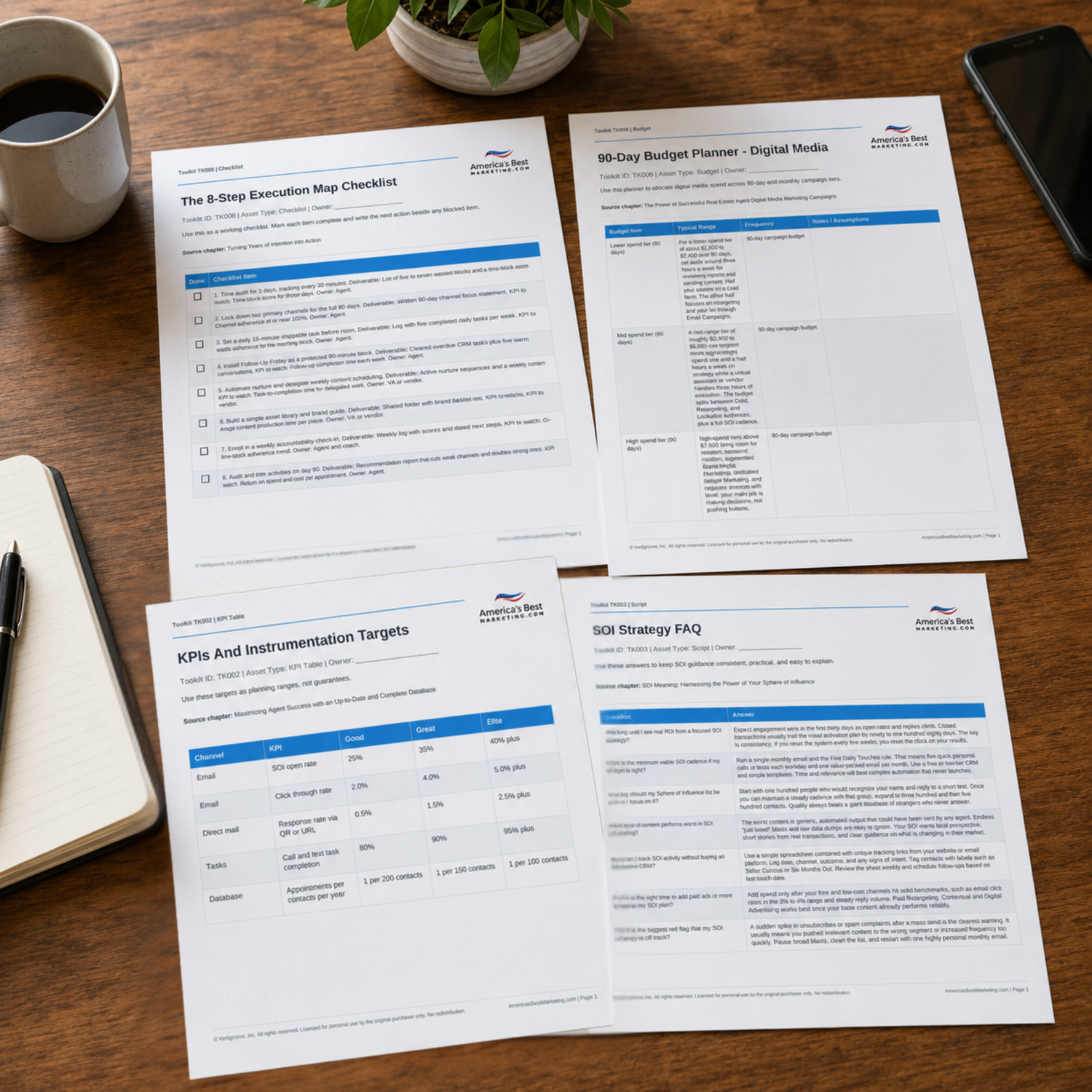
Download The Listing Promotion Playbook Toolkit
Use the companion Toolkit to plan listing promotion spend, organize the launch checklist, track core KPIs, and adapt three short video script frameworks for quick tours, serious-buyer problem solving, and feature spotlights.
Download the Toolkit ZIPRecommended reads
Recommended Reads for Real Estate Agents
These articles help agents connect listing visibility, seller education, marketing channels, and follow-up into a clearer growth system.

Understanding and Leveraging Real Estate Market Data to Win Listings and Trust
Make listing promotion feel planned instead of improvised, from pre-market to post-sale follow-up.
Read article
Community Development Districts (CDD): How Real Estate Agents Explain Fees, Benefits, and Risks
Make listing promotion feel planned instead of improvised, from pre-market to post-sale follow-up.
Read article
How to Attract High-End Buyers and Sellers in Today’s Market
Make listing promotion feel planned instead of improvised, from pre-market to post-sale follow-up.
Read article
How to Build and Promote a High-Converting Real Estate Lead Magnet for Agents
Use lead magnet promotion to create a stronger bridge between client education and real conversations.
Read articleListing Promotion Questions Agents Should Be Ready To Answer
How much should I budget to market a typical listing?
For everyday listings, many agents treat three hundred to five hundred dollars as a healthy starter range for ads and mail. Higher fee or more competitive properties often deserve nine hundred to fifteen hundred dollars. The right level depends on price point, days on market in your area, and how much seller lead generation you want that listing to create.
What is the minimum viable listing marketing plan if my budget is tight?
Run one strong landing page, one short listing video, boosted social posts with tight targeting, and a single mail drop to nearby homes. Add one smart email to your past clients and sphere, then follow up on every click and sign in. A small plan done with discipline beats a flashy plan you cannot repeat on the next listing.
How long does it take to see results from a new listing promotion plan?
You can usually see early signals within the first seven to ten days of launch. Watch listing page views, showing requests, buyer feedback, and responses from neighbors, not just social likes. If you see steady traffic but weak inquiries, adjust your hooks and calls to action before you touch the budget dial.
How can I track listing performance without advanced software?
Use your website analytics for page views and time on page, your CRM for leads and tags, and simple tracking links for ads and emails. Log open house sign ins and neighbor conversations in one consistent place. A basic spreadsheet that you update after each launch can still reveal patterns in cost per lead and seller conversations.
What type of listing content usually performs worst?
Generic copy that reads like a template and posts that show only the front of the house tend to underperform. Buyers scroll past vague lines about charm and potential. Specific hooks, lifestyle details, smart photo order, and proof of upgrades usually beat long fluffy descriptions that could apply to any home in your market.
When should I increase my listing marketing spend?
Consider higher spend when you handle premium listings, move up price points, or farms where you want long term market share. Make sure your current system already converts at a reasonable cost per lead. Then expand into stronger retargeting, larger mail drops, and more frequent follow up instead of just raising budgets on weak creative.
What is the biggest red flag that my listing promotion is not working?
The clearest warning sign is steady impressions with weak showings and almost no new contacts added to your database. That tells you the story is not landing or the calls to action are too weak. Fix the message, sharpen your landing page, and tighten your follow up process before you accept a price cut.
Next step
Build the System Behind the Advice
Continue from one useful article into the larger ABM ecosystem: the book series for strategic depth and the full marketing program for done-for-you execution.

View the Book Series
Explore the America’s Best Real Estate Agent Marketing System books for a deeper strategic framework around visibility, referrals, listings, lead generation, and growth.
View the Book Series
See Full Marketing Program
See how AmericasBestMarketing.com runs real estate blog writing, social media, listing marketing, email, direct mail, and retargeting as one managed system.
See Full Marketing Program