Client Appreciation and Gifting Programs for Real Estate Agents
Client Appreciation and Gifting Programs
For Real Estate Agents
A retention and referral system for agents who want closing gifts, home anniversaries, client events, email follow-up, and referral thank-yous to work together.

Client appreciation programs explained
A client appreciation and gifting program is a planned referral system, not a last-minute thank-you. The strongest version gives every past client a clear post-closing rhythm: a thoughtful closing moment, a review request, home anniversary recognition, useful email follow-up, client event invitations, and fast referral thank-yous that keep the relationship active without turning every touch into a sales pitch.
- Client appreciation should be scheduled as a long-term operating system, not improvised after closing.
- The gift matters less than the follow-up architecture around the gift.
- Budget tiers keep appreciation disciplined so the program can scale with production.
- Past-client visibility works best when gifts, direct mail, email, social proof, and CRM tracking all reinforce the same relationship.
Why Client Appreciation Pays Off
Most agents think about appreciation at the closing table. Operators think about appreciation as a three-year retention plan. After a buyer or seller closes, that person moves from active transaction to future advocate. The job changes from managing a deal to managing memory, trust, and timing.
A consistent appreciation program lowers pressure on cold lead generation because warm opportunities often come from people who already know your standard of service. When the right note, gift, call, or market update arrives at the right time, the client gets a low-friction reminder that you are still their real estate contact.
This is where appreciation connects to broader campaign planning. The same discipline agents apply to real estate marketing ideas should govern gifts, cards, reviews, client events, and referral asks. Nothing should rely on memory alone.
- Referrals usually arrive warmer than cold internet leads because trust already exists.
- Repeat clients shorten the sales cycle because they do not need to rediscover your value.
- A healthy past-client database can stabilize your business when the market gets noisy.
What To Do First
Start by turning past clients into a clear operating list instead of a vague memory. Tag every contact as past buyer, past seller, or both. Then mark who has already sent a referral, left a review, attended an event, or responded to your follow-up. Those signals show which clients belong in the highest appreciation tier.
Next, set a simple annual budget by tier so the program fits inside the larger marketing plan. A disciplined budget keeps appreciation from becoming an impulse purchase. Use the logic in real estate marketing budget planning to decide what belongs in relationship retention versus acquisition campaigns.
Sort every past client
Group clients by buyer, seller, repeat client, referral source, event attendee, and review contributor.
Flag anyone who has sent business, introduced you to a family member, or stayed engaged after the transaction.
Review the list twice a year so active advocates receive more intentional touches than dormant contacts.
Build the annual rhythm
Map closing, review request, home anniversary, holiday card, client event, ownership insight, and referral thank-you.
Assign each touch to a channel such as call, card, direct mail, email, text, social message, or in-person delivery.
Schedule everything inside the CRM before the next transaction distracts the agent from follow-up.
Track the introduction path
Record who referred whom, when the introduction arrived, and how quickly the thank-you went out.
Keep notes on gift preferences, local favorites, pets, hobbies, family milestones, and move-related details.
Use those notes to make the next touch feel personal while the back-end process stays systematic.
The gift is not the strategy. The system around the gift is the strategy. A thoughtful item with no follow-up is random kindness. A thoughtful item tied to a CRM task, a non-sales email, and a future contact date becomes a loyalty engine.
Three Talk Tracks That Turn Gifts Into Referrals
Scripts protect the relationship from awkwardness. The client should feel appreciated first and reminded second. Use these talk tracks to create a warm moment, reinforce post-closing availability, and make the referral path clear.
Closing gift drop-off
Agent dialogue
Hook lineYou did the hard part and now you get to enjoy this home. I brought something small to mark the moment.
Bridge lineI want you to know I stay available after closing too. Questions come up once people actually live in the home.
CTA lineSave my number as your real estate contact so you can text me first any time a house question pops up.
Deliver the gift after keys, codes, and immediate move-in details are settled. Follow with a short text that repeats the key message and log the gift type in your CRM the same day.
Home anniversary check-in
Agent dialogue
Hook lineYour home anniversary popped up on my calendar and I wanted to see how the place feels now that it is lived in.
Build lineI sent a small card to celebrate the milestone. You trusted me with a major move and I do not take that lightly.
CTA lineIf a friend or coworker mentions buying or selling, send them my way and I will take care of them carefully.
Pair the call or voice note with a card through Direct Mail Marketing. Send one practical market or ownership insight by email so the appreciation touch also creates useful value.
Referral thank-you reset
Agent dialogue
Hook lineI wanted to say a real thank you for sending your friend my way. That kind of trust is the foundation of my business.
Build lineI am sending a gift card to a local spot as a small thank you for thinking of me first.
CTA lineWhen the next conversation comes up, text me their name and I will take it from there.
Capture the referral source, the thank-you date, and any private follow-up message that reinforces how much the introduction mattered.
Budget Plans You Can Repeat
A gifting program fails when the numbers are vague. Set annual spend ranges and touch limits before the year starts so there is no hesitation when it is time to send a card, host an event, or thank someone for a referral. Treat appreciation like a campaign budget, not an impulse purchase.
One-hour setup
Plan a spend of $75 to $125 per closed client each year. Focus on recent buyers and sellers, then send one quality closing gift plus two personal notes.
Keep the creative simple: a local gift, a handwritten card, and one clear line that says thank you for trusting me with your home. Support the touch with light nurture through Email Campaigns.
Ninety-minute setup
Budget $150 to $250 per client each year and prioritize the top influence group, repeat clients, and anyone who already referred business.
Stack a personalized closing gift, a home anniversary card, and one annual client event promoted through Social Media Marketing. The goal is to make loyal clients feel seen without turning appreciation into a sales pitch.
These ranges are not about impressing people with expensive items. They are about staying memorable in a way that feels personal, measured, and repeatable. When the budget is fixed, the operator can focus on timing, message, and follow-up.
| Tier | What it covers | Annual spend | Operational focus |
|---|---|---|---|
| Foundation tier | One strong gift and core touches. | $75 to $125 | Protect every closing with a simple loyalty baseline. |
| Growth tier | Adds anniversary touch and one event. | $150 to $250 | Deepen relationships and train clients to send referrals. |
| Elite tier | Layers premium gifts and referral rewards. | $300 to $500 | Turn core advocates into a more predictable referral engine. |
Main Moves Across Three Years
Year one is about reinforcement and activation. Deliver the closing gift on time, request the review within a week, send a warm holiday card, and follow up with value-based emails or ownership insights. The client should feel supported after the transaction without feeling hunted for the next deal.
Year two focuses on staying relevant. Celebrate the home anniversary with a small item, invite them to a client event inspired by client appreciation event ideas, and make one short check-in call that references a detail from the move. This rhythm proves you were not just the agent who opened doors.
Year three and beyond is about advocacy. Continue light quarterly touches, send fast thank-you gifts for each referral, and watch for life changes such as kids, careers, parents, jobs, and downsizing conversations. The client should feel like you are their long-term home advisor, not just the person who once wrote an offer.
- Schedule every appreciation touch in your CRM the day the deal closes.
- Document personal preferences such as coffee shops, sports teams, pets, local restaurants, or hobbies.
- Route all touches through one calendar so nothing rides on memory.
- Tag each contact with a tier and review that list twice a year.
- Track every referral back to the client who sent it and the thank-you that followed.
How To Keep The Program From Feeling Generic
The best appreciation programs are structured on the back end and personal on the front end. The client should never feel dropped into a generic campaign. The CRM can manage timing, but the notes, gift choices, and follow-up language should reflect what the agent actually knows about the person.
Use a simple rule: automate the reminder, personalize the touch. A scheduled home anniversary task is smart. A generic message is weak. Reference the neighborhood, the move, the home, a family detail, or a practical ownership question. That is how appreciation feels human without becoming impossible to manage.
- Audit the database each quarter for past clients who have not heard from you in more than eighteen months.
- Use Email Marketing for Real Estate Agents to send four value emails each year that link back to useful resources.
- Highlight neighborhood guides and community pages on IDX Real Estate Websites inside those emails.
- Refine appreciation tiers twice a year with the same discipline used for broader Coaching and Consulting.
- Review referral volume and repeat-client activity so the program stays connected to business outcomes.
Client appreciation works when the client feels remembered and the agent can still operate at scale. Automate timing, personalize the touch, track the result, and make every thank-you part of the larger referral machine.
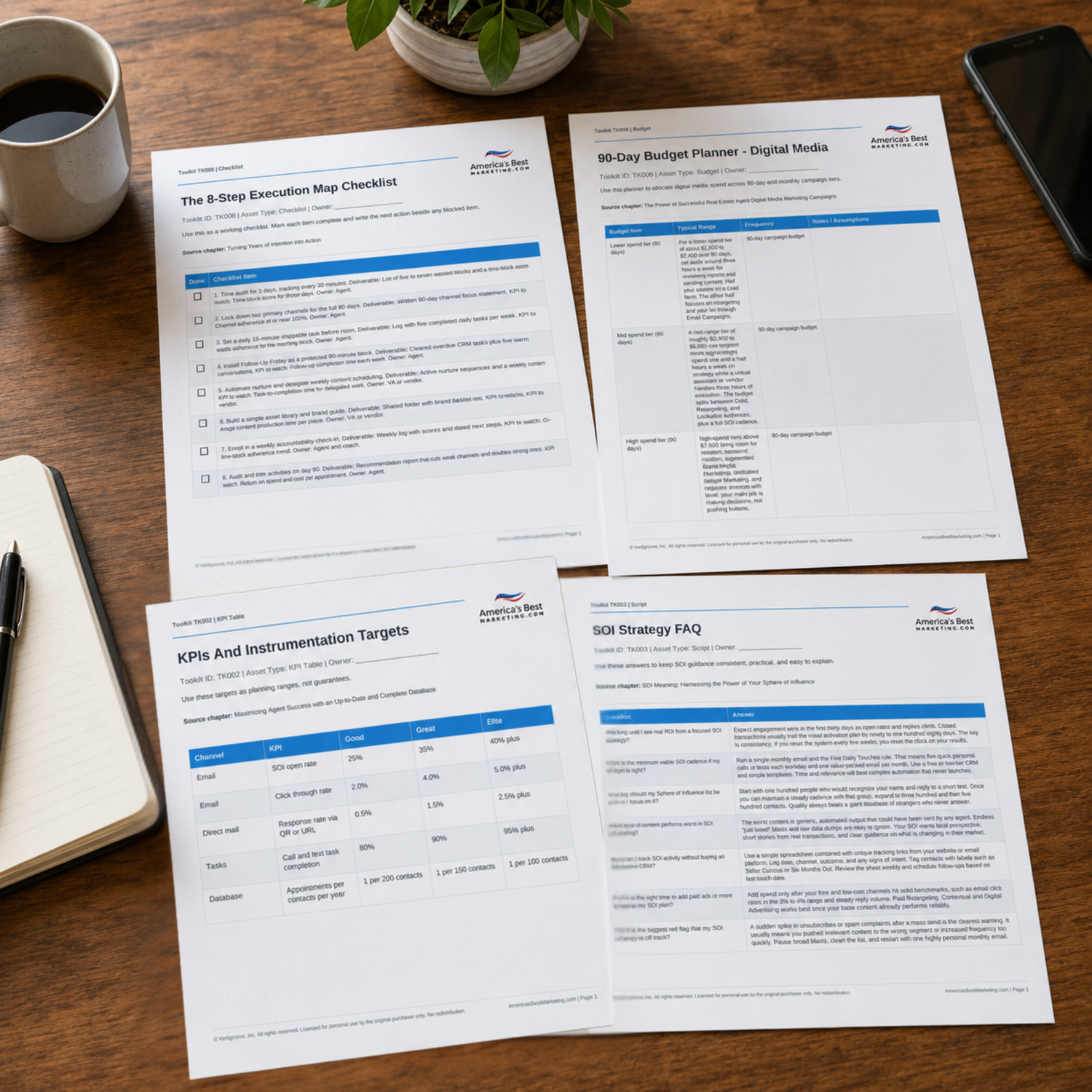
Download The Client Appreciation and Gifting Toolkit
Use the companion Toolkit to build appreciation tiers, budget ranges, CRM reminders, referral thank-you steps, script planning, KPI tracking, and a repeatable follow-up rhythm for past clients.
Download the Toolkit ZIPRecommended reads
Recommended Reads for Real Estate Agents
These articles help agents connect follow-up discipline, database habits, client communication, and marketing execution into a repeatable system.
Real Estate Agent Client Appreciation and Gifting Programs
Turn client appreciation and gifting programs into a steady operating habit, not another item that waits for a quiet week.
Read article
Property Taxes Explained: Real Estate Agent Cheat Sheet + Client Email Templates
Make property taxes explained more useful by tying the message, audience, and next step together.
Read article
Building a Personal Brand as a Real Estate Agent: From Your Bio to Your YouTube Channel
Make the agent’s brand easier to recognize through clearer positioning, touchpoints, and proof.
Read article
Effective Strategies for Managing Client Expectations in Real Estate
Create more leverage from client expectation management with a clear path from attention to follow-up.
Read articleClient Appreciation Questions Agents Should Be Ready To Answer
What is a client appreciation program for real estate agents?
It is a planned system for staying in touch with past clients after closing. It usually includes gifts, cards, home anniversary touches, referral thank-yous, client events, email follow-up, and CRM tracking so relationships do not depend on memory alone.
How much should I spend on client appreciation gifts?
A practical planning range is $75 to $250 per client each year depending on the relationship tier. Foundation clients may receive one strong gift and light touches. Higher-value advocates can justify a larger budget because they are more likely to send referrals or repeat business.
How often should I contact past clients without feeling pushy?
Aim for steady value-based contact rather than constant sales pressure. A useful rhythm can include a closing follow-up, review request, home anniversary touch, holiday card, occasional market insight, and a fast thank-you any time they send a referral.
Do buyers and sellers need different gifts?
The message stays similar, but the execution can change. Buyers often appreciate gifts tied to the new home or neighborhood. Sellers may appreciate experiences or items that support their next chapter. In both cases, the personal note matters more than the price tag.
What is the best way to thank a client for a referral?
Respond quickly and make the thank-you specific. Call or send a voice note, mention the person they referred, and send a thoughtful gift or local experience within a few days. Then record the referral and thank-you in your CRM so the relationship is tracked.
Can I automate client appreciation?
Yes, but automate the timing, not the entire relationship. Use your CRM to schedule reminders, anniversary tasks, and follow-up sequences. Then personalize the note, gift, or message so the client feels remembered rather than processed.
How do I track whether my gifting program is working?
Track appreciation spend by client, reviews received, referrals received, repeat transactions, event attendance, and response activity. Over time, compare which tiers and touches create the strongest relationship activity and adjust your budget accordingly.
Next step
Build the System Behind the Advice
Continue from one useful article into the larger ABM ecosystem: the book series for strategic depth and the full marketing program for done-for-you execution.

View the Book Series
Explore the America’s Best Real Estate Agent Marketing System books for a deeper strategic framework around visibility, referrals, listings, lead generation, and growth.
View the Book Series
See Full Marketing Program
See how AmericasBestMarketing.com runs real estate blog writing, social media, listing marketing, email, direct mail, and retargeting as one managed system.
See Full Marketing Program