Targeted Real Estate Marketing: Reach People Most Likely To Hire You
Targeted Real Estate Marketing
Reach the People Most Likely To Hire You
A ninety day targeting system for real estate agents who want to focus their marketing on their Sphere of Influence, niche audience, and hyperlocal farm instead of chasing the whole market.

Targeted real estate marketing starts with the highest-intent people
Targeted real estate marketing helps agents stop spreading budget across broad audiences and start focusing on the people most likely to know them, need them, refer them, or respond within the next ninety days. The strongest starting points are a clean Sphere of Influence list, one specific niche problem, and a small hyperlocal farm that can be reached repeatedly.
- Most agents do not have a marketing-volume problem. They have an audience-selection problem.
- Your best targets are usually your Sphere of Influence, a specific niche audience, and a micro farm you can afford to reach consistently.
- A ninety day campaign needs one offer, one landing page, one tracking path, and a weekly review rhythm.
- Scale only after replies, scans, downloads, calls, and appointments prove that the message is working.
Why Targeted Real Estate Marketing Works
Most agents post broad content, boost random ads, mail too large of an area, and send emails to lists that have not been cleaned or segmented. That activity can look productive, but it often creates soft metrics instead of real conversations.
A targeted system changes the operating question. Instead of asking how to reach more people, you ask which people are most likely to know you, need you, refer you, or respond to this message in the next ninety days. That answer is rarely the entire city. It is a tighter group of people with a stronger relationship, clearer intent, or a more specific problem.
This is where your broader Business Growth Strategy for Real Estate Agents becomes operational. You stop planning marketing around what sounds impressive and start building campaigns around the audiences that can create appointments.
- Your budget concentrates on audiences that already have trust, timing, or a relevant need.
- Your frequency improves because smaller lists are easier to reach consistently.
- Your message gets sharper because it speaks to a specific scenario instead of every possible buyer or seller.
- Your follow-up becomes easier because every lead can be tied to a source, offer, and next step.
This is not about being louder. It is about becoming unavoidable in the small circles that can actually produce appointments, referrals, and listings.
The Three Audiences Most Likely To Hire You
Your best marketing results usually live inside three circles: your Sphere of Influence, a clear niche, and a defined hyperlocal farm. Each audience needs a different message and cadence, but all three should point toward the same business outcome: more qualified real estate conversations.
Sphere of Influence
Your Sphere of Influence includes past clients, known referrers, friends, colleagues, vendors, and local partners. They already know your name, so they do not need a generic brand introduction. They need timely market context and clear ways to introduce you.
Niche Audience
A niche is a specific problem you solve well. Downsizing, probate, military relocation, investor acquisition, first-time buyers, or short-term rental exits can all become stronger marketing lanes than saying you help everyone buy and sell.
Hyperlocal Farm
A farm should be small enough to feel your presence. If you cannot afford to reach the same homes multiple times per quarter, the territory is too large. A smaller farm with real frequency beats a large farm with invisible marketing.
Sphere of Influence is where trust already exists. Monthly email, market texts, and client appreciation touches supported by Impactful Client Appreciation, Reviews, and Reputation Management keep you in the right conversations. The key metric is not just open rate. It is introductions, replies, and people asking for your perspective.
A niche is the problem you solve better than a generalist. A downsizing guide, investor checklist, landlord exit plan, or first-time buyer roadmap gives your advertising and content a concrete promise. The goal is to publish one useful resource and route your ads, email, and social posts toward it.
A hyperlocal farm is the set of streets you intend to own through repetition. Direct mail, listing visibility, neighborhood proof, and tight geographic Digital Retargeting create the repetition needed to become the default name in a small market. The farm works when neighbors start to believe you understand their specific homes, not just their general city.
What To Do First: The Ten Step Setup Checklist
Before you send another postcard or boost another post, build the foundation. This setup checklist gives your ninety day campaign enough structure to run without weekly reinvention.
- Export and clean your Sphere of Influence list. Pull contacts from your CRM, phone, email, and past transaction records. Remove duplicates and tag each contact by relationship type.
- Choose one niche problem. Write the niche as a practical statement, such as helping long-time owners downsize with a clear move plan.
- Select a micro farm you can afford. Start with a territory you can reach consistently. For many agents, five hundred to fifteen hundred homes is more realistic than a massive zip code.
- Build one core lead magnet. Create a focused resource that solves part of the niche problem, such as a downsizing checklist, investor worksheet, or seller prep guide.
- Launch a dedicated landing page. Use your IDX Real Estate Websites system or website platform to host the offer with a short form.
- Draft your monthly SOI market email. Use Email Marketing for Real Estate Agents to send one useful local stat, one short story, and one direct ask.
- Design a reusable mail shell. Create a postcard or letter format that can be updated each month without starting from scratch.
- Install pixels and build retargeting lists. Track visitors to your offer pages so your paid media can follow warm interest, not just cold traffic.
- Write three core social posts. Create one SOI post, one niche post, and one farm post that can be repurposed through your Social Media Marketing cadence.
- Test every link and tracking path. Click every call to action, scan every QR code, submit the form, and verify that the lead arrives where it should.
A Four Week Campaign Rhythm You Can Maintain
Once the assets are ready, the campaign should feel like a production loop. Run this four week cadence three times and you have a practical ninety day targeting system.
SOI email and niche awareness
Send your monthly SOI email with one local stat and one clear ask. Publish a niche post that drives to your lead magnet landing page. Watch for replies, forwards, and early offer downloads.
Farm mail and warm-contact pings
Send a farm postcard through Direct Mail Marketing with a unique QR code. Text ten strong contacts and ask whether anyone nearby has mentioned moving.
Retargeting and neighborhood proof
Run Digital Retargeting to people who visited your offer page. Post a simple neighborhood stat card such as price trend, inventory, or days on market.
Nurture, review, and tune
Send a follow-up email to new leads with one planning-call CTA. Review QR scans, clicks, replies, and booked appointments. Adjust the next month’s subject lines, offer, or farm size based on response.
Script Frameworks That Keep Messages Tight
Targeted marketing fails when the message is vague. These three frameworks keep your outreach practical, short, and tied to a real audience.
The SOI quiet buyer check-in
Agent dialogue
Subject lineQuick question about your street this quarter.
Hook lineWe have buyers looking in your pocket of town and inventory is still tight.
Build lineIf you have wondered about timing, I can map out a simple ninety day plan with real numbers for your address.
CTA lineReply with your address and I will send a quick pricing outline.
Use this script below your monthly SOI market note or as a personal follow-up to past clients in high-demand neighborhoods. Keep the ask small. The first goal is a reply, not a listing appointment.
The niche lead magnet landing page
Offer copy
HeadlineFive step downsizing plan that protects your equity and your sanity.
SubheadSee the order past clients used to sell, buy, and move without feeling rushed.
Proof lineRepairs that matter, timing the sale and purchase, and conversations to schedule early.
CTA lineSend me the five step plan.
Use this page as the primary destination for niche ads, postcard QR codes, your bio link, your email signature, and follow-up when someone asks for more information.
The farm text or direct message
Owner conversation
Hook lineI just pulled new numbers for your block and the last three sales changed the story.
Build lineI am putting together a one-page snapshot for owners on your street.
Reveal lineNo newsletter. Just price range, days on market, and what buyers are asking right now.
CTA lineWant me to send yours by text or email?
Use this after a postcard drop, after a neighborhood event, or when a past client introduces you to a nearby owner. You are proving you know the street before asking for the listing.
Budgets And Briefs For Real World Agents
You do not need a massive media budget to run targeted marketing. You need clear boundaries. The smaller your audience, the more consistently you can reach it.
Plan for a total of fifteen hundred to twenty five hundred dollars over ninety days. Allocate half to one or two Direct Mail Marketing drops to a focused farm. Use the rest for light social boosts, basic Email Marketing for Real Estate Agents, and a small retargeting audience. Expect to spend one focused hour each week reviewing results and calling warm leads.
Plan for four thousand to seven thousand dollars over ninety days. Fund three to four farm mail drops, an always-on retargeting campaign, and consistent Social Media Marketing support. Add a monthly strategy review so offers, scripts, and follow-up discipline stay aligned.
Once the budget is mapped, create a short creative brief. Name the audience, the pain point, the offer, the call to action, and the tracking path. Without that brief, every designer, writer, vendor, or assistant will guess. Guessing is where campaigns drift.
KPIs, Tracking, And When To Scale
Targeted marketing is not judged by likes. It is judged by whether the right people respond, ask questions, scan the code, download the resource, request a value report, or book a conversation. Use this scoreboard to separate useful activity from noise.
| Audience Or Channel | Healthy Signal | Primary KPI | What To Adjust First |
|---|---|---|---|
| Sphere of Influence email | Replies, forwards, introductions, and address requests | Reply rate and introduction count | Subject line, local relevance, and clarity of the ask |
| Niche lead magnet | Visitors understand the promise and submit the short form | Landing page conversion rate | Headline, offer specificity, and form friction |
| Hyperlocal farm direct mail | QR scans, value report requests, and direct owner replies | Response rate by mail drop | Farm size, postcard headline, and neighborhood proof |
| Retargeting ads | Warm visitors return to the offer or contact page | Click-through rate and assisted conversions | Audience quality, creative promise, and destination page |
Treat these numbers as instrumentation, not guarantees. If your SOI emails get opens but no replies, the ask is probably too vague. If a farm postcard gets scans but no forms, the landing page promise may be weak. If retargeting gets clicks but no leads, the page may not match the ad.
Scale only after the numbers show traction. Do not expand your farm or double your ad budget because you are bored with the campaign. Add homes, increase frequency, or increase spend when your response pattern proves the message is working.
Why This System Builds Trust And Protects Your Brand
Targeted marketing has to be paired with clean ethics and practical compliance. You are working with personal data, neighborhood information, email lists, ad audiences, and local claims. Keep the targeting focused on behavior, geography, relationship, and expressed interest. Avoid messaging that suggests protected personal traits or inappropriate audience selection.
Also protect the relationship. Send commercial email only to appropriate lists, include an opt-out path, and make sure someone monitors replies. Store lists carefully. Remove hard bounces. Segment contacts who have not engaged. Marketing discipline is not just about performance. It is also about trust.
Achieving Top-of-Mind Awareness is not about shouting more often. It is about sending precise, helpful messages at the right cadence so the audience feels understood instead of hunted.
Mini Case Pattern: Narrow Beats Big
Consider an agent who had been spending five hundred dollars each month on generic online ads without a listing to show for it. She shifted that same budget into a smaller farm focused on owners with high equity, then mailed three targeted postcards over ninety days with QR codes leading to a value report request.
The campaign produced a cleaner response pattern because the message, list, and offer matched. The lesson is not that one channel always wins. The lesson is that narrow audience selection, consistent repetition, and a specific call to action give the campaign a much better chance to produce real conversations.
Ninety Day Execution Checklist
Use this condensed execution checklist before launching your next ninety day cycle.
- Confirm your SOI, niche, and farm audiences are defined separately.
- Clean the contact list and tag every record by audience and relationship.
- Write one lead magnet promise tied to one audience problem.
- Build or update the landing page before ads or postcards go live.
- Create one email, one direct mail piece, one retargeting ad, and one social post around the same offer.
- Add a unique URL, QR code, or tracking path to every campaign asset.
- Check mobile readability, form delivery, and tracking before launch.
- Review replies, scans, downloads, and appointments every week.
- Adjust the message before expanding the audience.
Targeted marketing works when the audience is tight, the offer is specific, and the follow-up is disciplined. The system is not more complicated than that. The hard part is keeping the campaign focused long enough for the right people to respond.
Download the Targeted Marketing Toolkit
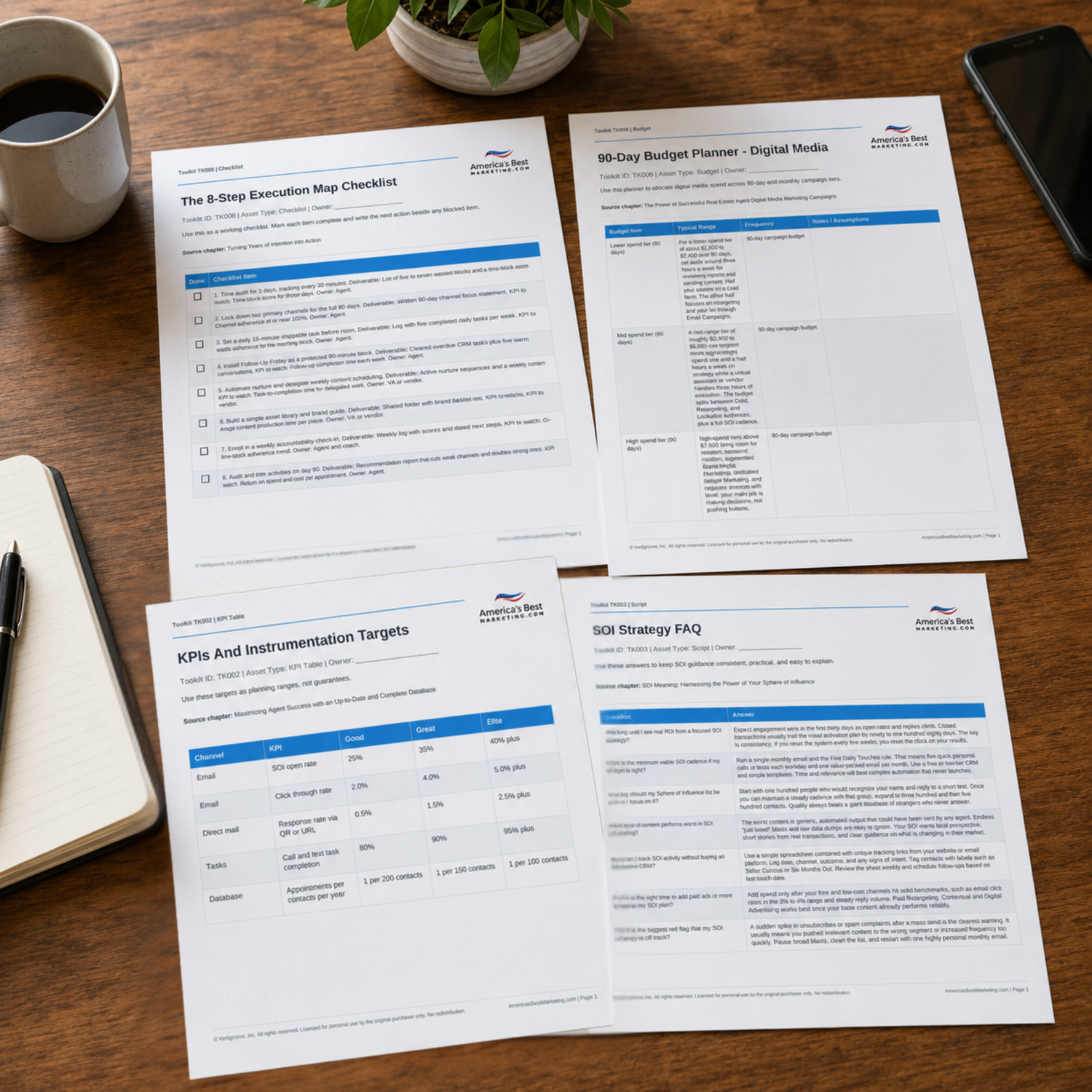
This companion Toolkit ZIP gives you implementation assets for turning this targeting strategy into a working ninety day campaign, including the budget planner, execution checklist, scripts, and FAQs that support SOI, niche, and farm outreach.
Download the Toolkit ZIPRecommended reads
Recommended Reads for Real Estate Agents
These articles help agents connect follow-up discipline, database habits, client communication, and marketing execution into a repeatable system.

Real Estate Marketing Funnels: What They Are and How to Build One
Turn real estate marketing funnels into a steady operating habit, not another item that waits for a quiet week.
Read article
Build a Relocation Lead Engine in [Your City] (Guide for Real Estate Agents)
Use relocation lead engine to strengthen visibility, follow-up, and client conversations without adding more random tasks.
Read article
Real Estate Blogging Made Simple: How Agents Can Attract Leads and Boost Their Online Presence
Make real estate blogging easier to plan, publish, and measure as part of a weekly marketing rhythm.
Read article
Best Marketing for Real Estate Agents: Strategies That Actually Work
Use marketing strategy to strengthen visibility, follow-up, and client conversations without adding more random tasks.
Read articleTargeted Real Estate Marketing Questions Agents Ask
What is targeted real estate marketing?
Targeted real estate marketing is a focused campaign strategy that directs your budget, content, email, direct mail, ads, and follow-up toward people most likely to hire or refer you. For most agents, the best starting audiences are their Sphere of Influence, a specific niche, and a manageable hyperlocal farm.
How long does targeted marketing usually take to pay off?
You should look for early indicators such as replies, QR scans, page visits, and offer downloads inside the first thirty to forty five days. Closed deals often take longer because real estate decisions have natural timing cycles. The first ninety days should prove whether the audience, message, and offer are working.
How big should my list be before I start?
You do not need a giant database. A clean Sphere of Influence with one hundred fifty to five hundred people can be enough to begin. For a farm, the better question is whether you can afford repeat visibility. If the farm is too large to reach consistently, shrink it before launching.
What if I do not have a clear niche yet?
Look at the last five to ten transactions you handled well or enjoyed most. Patterns usually show up around life stage, property type, financing situation, neighborhood, investor need, or seller challenge. Choose one theme and test it for ninety days before changing direction.
How often should I contact my Sphere of Influence?
A practical cadence is one useful email each month, one light personal touch each quarter for your strongest contacts, and occasional client appreciation or market-update outreach. People are less likely to complain about frequency when the message is relevant, clear, and useful.
Can I run this without an advanced CRM?
Yes. A spreadsheet can work at lower volume if it tracks names, email addresses, mobile numbers, segment tags, last touch, response notes, and next action. The non-negotiable requirement is follow-up discipline. Software helps, but it cannot replace a clean weekly review.
How do I know if my farm is too big?
If you cannot mail or meaningfully touch the entire farm multiple times per quarter, the farm is too big for your current budget. A smaller area with consistent visibility will usually outperform a larger area that barely sees your name.
What should I delegate first?
Delegate repeatable production tasks first: list hygiene, email formatting, social scheduling, direct mail ordering, QR code setup, and basic reporting. Keep your personal time focused on conversations, pricing strategy, referrals, appointments, and follow-up with people who raise their hand.
How does targeted marketing support my long-term brand?
Targeted marketing builds brand strength because your message becomes more relevant over time. Instead of asking everyone for business, you consistently show up with useful information for the people and problems you understand best. That makes you easier to recognize, easier to trust, and easier to choose.
Next step
Build the System Behind the Advice
Continue from one useful article into the larger ABM ecosystem: the book series for strategic depth and the full marketing program for done-for-you execution.

View the Book Series
Explore the America’s Best Real Estate Agent Marketing System books for a deeper strategic framework around visibility, referrals, listings, lead generation, and growth.
View the Book Series
See Full Marketing Program
See how AmericasBestMarketing.com runs real estate blog writing, social media, listing marketing, email, direct mail, and retargeting as one managed system.
See Full Marketing Program