Listing Agent Marketing: A Comprehensive Guide to Securing More Listings
Listing Agent Marketing That Wins More Sellers
A seller-first system for securing more listings
Build the brand, channel mix, proof, follow-up, and measurement rhythm that makes you the clear choice before the listing appointment.

How listing agents build a seller-first marketing system
Listing agent marketing works when every seller-facing asset communicates the same promise: you understand local pricing, you create demand through multiple channels, and you run a disciplined process that protects the seller’s time and equity. Build one named listing system, show proof across your website, social media, email, direct mail, and retargeting, then measure seller inquiries, appointments, and signed listings every week.
- Sellers should see one consistent story about pricing, promotion, proof, and process across every channel.
- A focused farm, a seller page, and a repeatable listing launch system create stronger familiarity than disconnected campaigns.
- Calls to action should progress from useful education to lead capture and then to a booked strategy conversation.
- The real scorecard is seller leads, listing appointments, signed agreements, and the quality of the fee you protect.
What Sellers Need To Believe Before They Call
Strong listing agent marketing turns you into the obvious choice long before a seller invites anyone to the kitchen table. It aligns the assets, campaigns, and metrics that keep you visible, credible, and ready to win the listing conversation. To see how one property can become a complete campaign, pair this operating plan with the Listing Launch System for Real Estate Agents: From Pre-Market to Just Sold.
Every seller you want to work with is quietly judging three things. Can you bring enough demand to the property, can you defend the price, and can you run a clean process that protects their time and stress level. Listing agent marketing should answer those questions before the first meeting.
Your brand, website, print, and social footprint need to tell the same story. A seller who looks you up should see proof that you understand local pricing, promote homes through more than one channel, and produce outcomes that past clients can describe in simple, measurable terms.
Seller relevance is missing
Your site and feeds talk mostly to buyers, so owners assume you are not focused on selling homes like theirs.
The channels do not agree
Your website looks polished, social content feels chaotic, and print looks generic. The inconsistency makes your promise feel uncertain.
The process is not ownable
Your listing presentation leans on brokerage logos instead of a clear, named system that sellers can understand and remember.
Build A Personal Brand Around The Listing Process
Sellers do not hire you for enthusiasm alone. They choose the listing agent who appears to run a repeatable system that protects equity and time. Your personal brand shows that system in a few seconds across every channel, from your website header to the back of your postcards.
Before you chase new tactics, tighten the core ingredients. Profile photos, bio, website pages, and offline pieces need to tell the same story. You bring a clear pricing strategy, a defined Listing Marketing plan, and proof that you keep your promises with real sellers in real neighborhoods.
Start with four visible assets that sellers check most: a seller-focused page that explains your launch plan, professional imagery that matches your price point, concise copy in your bio and email signature that speaks to owners, and social proof that shows how your results compare with local benchmarks.
Use this ten-point checklist to align everything around your listing story.
- Rewrite your home page hero line so it speaks directly to owners who plan to sell, not only to active buyers.
- Create a seller page that outlines your listing system in five to ten named steps from preparation through closing.
- Update your bio to emphasize pricing skill, negotiation outcomes, and local market depth instead of unrelated personal details.
- Gather at least five detailed seller reviews that mention days on market, sale price, and the client experience.
- Refresh your Google Business Profile with photos from closed listings and a headline that reinforces listing focus.
- Point every social media bio to one seller lead page, such as a valuation form or downloadable guide.
- Build a simple chart that compares your list-to-sale ratio and average days on market with local board-level numbers.
- Standardize your email signature so it includes your seller page and one short line about your listing system.
- Audit your last twelve posts and remove anything that clashes with the brand you want owners to see.
- Schedule brand maintenance each quarter so these pieces never drift away from the story you want to tell.
Most agents try to fix low listing volume by adding more activity instead of sharpening the story sellers see. Owners rarely remember the agent who shouts the loudest. They remember the agent whose promise about price, timing, and process appears the same way in every channel.
Run Listing Marketing As A Three-Phase Channel System
The seller who keeps seeing you in the mailbox, in their feed, and in search results starts to treat you as the default expert for the neighborhood. A serious listing agent marketing plan does not depend on one hero channel. It stacks digital, print, email, and follow-up so each campaign makes the others stronger.
Think in three phases. First, make your digital footprint match the fee you charge. Next, build constant yet respectful visibility through print and social. Then add light automation so the right owners receive the right follow-up at the right time.
Prepare the digital footprint
Build one seller page that explains your listing launch system in simple named steps. Add a clear home value form, city and neighborhood signals, past sales, case stories, reviews, and one direct path to a private strategy call.
Within about thirty days, an owner comparing agents should understand how you price and launch a home, see nearby proof, and know exactly how to start a conversation.
Create local repetition
Select a focused area of five hundred to fifteen hundred homes with enough turnover to support repetition. Use Direct Mail Marketing every month, then match the calendar with new listing, sold, and market-update content.
Turn every property into a showcase using the operating ideas in How to Host a Successful Real Estate Open House.
Nurture seller intent
Build Email Campaigns around market shifts, pricing education, and seller checklists. Add Retargeting, Contextual & Digital Advertising for owners who visit your seller pages.
Share recent reviews and sold results as short stories, include a direct scheduling link, and tag every lead source in your CRM so you can identify the channel mix that produces the strongest listing conversations.
Write Seller Messages Around Equity, Timing, And Stress
Once your system is in place, your words and visuals carry most of the weight. Sellers care about net proceeds, timing, and stress. Every subject line, caption, and presentation slide should answer one of those concerns in plain language that sounds like a real person, not a brochure.
Use short, direct lines that invite curiosity and make it easy to click. These seller-friendly subject lines and captions can be adapted for email or social posts.
- How long would a home like yours take to sell on your street right now?
- The single repair local buyers study first before they write an offer.
- Just sold near you and how we reached more than one hundred percent of list price.
- Your latest tax bill just arrived and what it says about your equity.
- Download the checklist that shows the smart way to prepare a home for sale.
- Rates shifted this month and what that means for buyers who want homes like yours.
- Update or sell as-is and how that choice changes your price range in this ZIP code.
Your live pitch needs the same clarity. Study The Art of the Listing Presentation: How to Win More Business with a Data-Driven Approach and build a deck around local charts, recent sales, and a step-by-step outline of your launch system.
Let trust determine the ask
Soft calls invite light engagement, such as reading a seller guide, reviewing recent sales, or checking a market update.
Mid-level calls trade clear value, such as a custom price range or preparation checklist, for contact details.
Hard calls move ready owners to the calendar for a fifteen-minute strategy call or a home walk-through.
Give every asset one next step
Do not force a calendar request into every touchpoint. Match the next step to the seller’s current level of intent, then make the action obvious and measurable.
A guide should lead to a guide download. A valuation page should lead to a custom estimate. A high-intent sold story or listing presentation page can lead directly to a strategy appointment.
Budget Listing Marketing In Ninety-Day Blocks
Strong listing agent marketing is a steady line item, not a one-time blast. Plan budgets in ninety-day blocks so you can test, measure, and adjust without starting from zero each season. Match your spend and time commitment to your current stage of business.
Four hundred to twelve hundred dollars
Over ninety days, focus on tightening your website, building one strong seller page, sending a basic monthly postcard, and publishing proof-based stories.
Expect ten to fifteen hours of personal time each week to write copy, manage lists, and handle follow-up.
Two thousand five hundred to five thousand five hundred dollars
Outsource design, automate parts of your Social Media Marketing, and expand direct mail to a focused farm.
Your time can drop to three to five hours per week while you review reports, record short videos, and attend more listing appointments.
Five thousand five hundred dollars and up
Fund larger print runs, more frequent ads, and deeper execution support. Your primary job becomes quality control of the message and high-quality delivery during calls, walk-throughs, and listing presentations.
Track The Seller Metrics That Lead To Signed Listings
Your goal is not likes or impressions. The real scorecard is how many sellers enter your database, how many book appointments, and how many sign listing agreements at healthy fees. Use simple numeric targets so you can see whether your channel mix is working.
Start with three numbers you can track in any basic CRM: the lead capture rate from seller pages, engagement on seller-focused email sends, and the share of listing appointments that become signed agreements at your full fee.
| Metric | What To Watch | Target Range | How To Use It |
|---|---|---|---|
| Lead rate | Share of visitors who become seller leads | 3% to 5% | Shows whether your pages and offers make owners feel safe enough to raise a hand. |
| Email open | Share of seller contacts who open each send | 35% to 55% | Signals whether subject lines and topics match the questions local owners are actually asking. |
| Listing win | Share of listing appointments that sign with you | 40% to 60% | Shows whether your listing presentation and proof support the fee you charge. |
Protect Trust With Compliant, Evidence-Based Outreach
Long-term listing growth depends on trust with clients and regulators. Treat compliance as part of your brand, not a box to check. Owners want to know that you care about fair process as much as fast results.
Keep targeting and language aligned with fair housing rules in your market. Avoid phrases that suggest a preference for certain groups and use neutral, property-focused language. Treat every email list with care, include clear opt-out links, and send only to people who have a legitimate relationship with you or your business.
Any time you share numbers such as average list-to-sale ratio or days on market, make sure you can support them with local data. When in doubt, check with your broker or local board before publishing a bold claim in a mailer, email, post, or ad.
- Document the source and date for performance claims before they enter a campaign.
- Keep property language neutral and focused on features, condition, location, and market context.
- Honor permission, opt-out, and contact-preference standards in every email workflow.
- Review local rules before expanding a claim, audience, or prospecting method.
Why Consistency Converts Better Than Random Activity
Consider an illustrative agent named Sarah who decides to become visible in one neighborhood with fifteen hundred homes. Over seven months, she sends a monthly postcard through her Direct Mail Marketing plan, publishes local sold stories twice a week, and runs a small retargeting campaign for people who visit her seller page.
Sarah invests about four thousand five hundred dollars across print and digital during that period. The mix generates fifteen warm seller conversations and three signed listing agreements inside the farm. Each new client points to the same reason: Sarah appeared everywhere with one clear plan rather than a collection of unrelated ads.
The lesson is not that every market will produce the same numbers. The lesson is that sellers connect repeated visibility with operational confidence. A consistent brand and process make the next conversation easier because the owner already understands what you stand for.
First, audit your website and profiles so a potential seller immediately sees your listing focus, your process, and one simple way to request a strategy call. Second, write down your five-step listing launch system from preparation through sold, then make sure every postcard, email, social post, and presentation slide points back to that system by name.
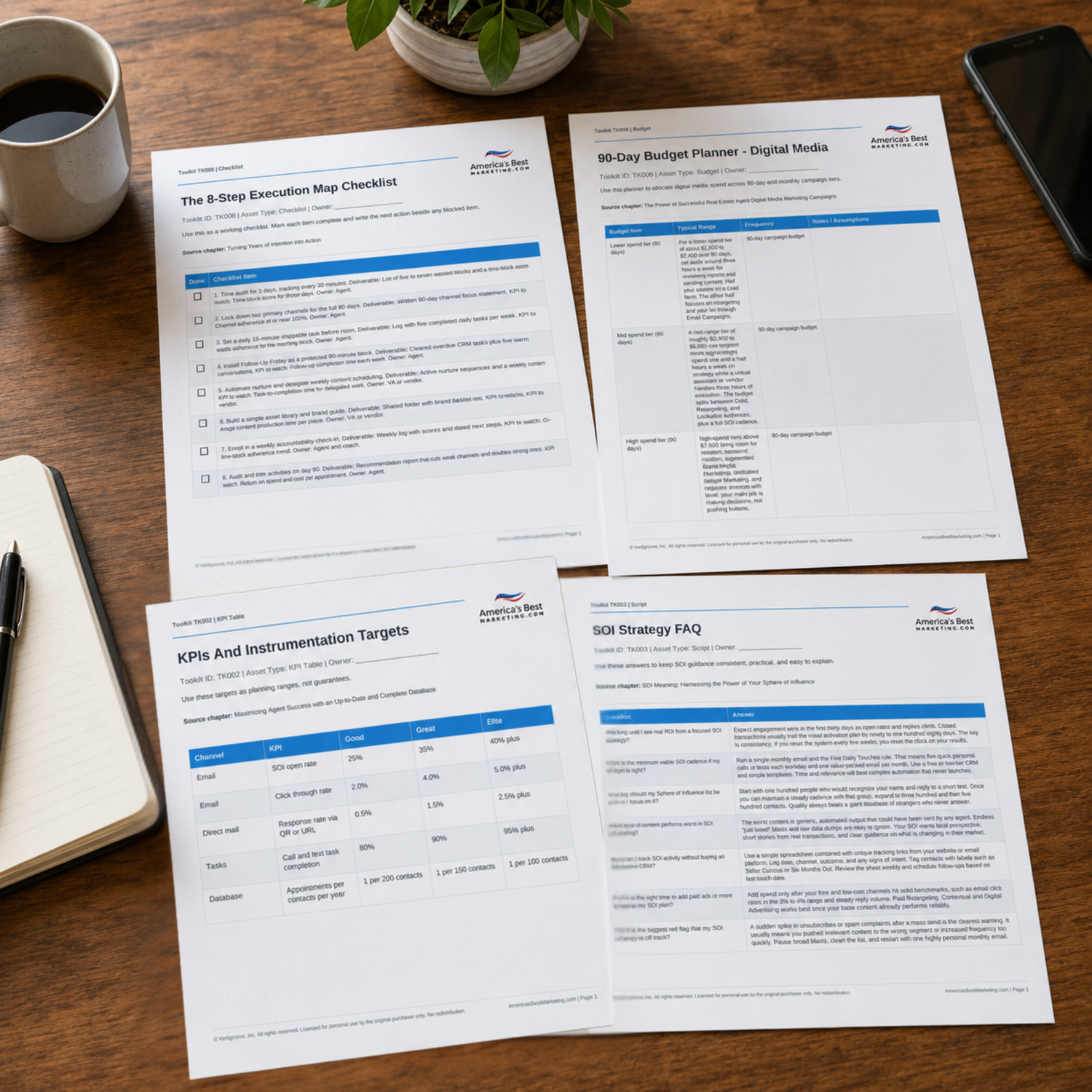
Download The Listing Agent Marketing Toolkit
Use the companion Toolkit to plan your listing-agent budget, align your seller-facing brand, build the channel framework, track seller-growth KPIs, and answer common listing marketing questions.
Download the Toolkit ZIPRecommended reads
Recommended Reads for Real Estate Agents
These articles help agents connect listing visibility, seller education, marketing channels, and follow-up into a clearer growth system.

Listing Marketing: Promoting Properties for Maximum Visibility
Use listing content to attract attention, explain value, and create better seller conversations.
Read article
Best Real Estate Content Marketing Ideas
Turn local knowledge into searchable content buyers, sellers, and relocation prospects can actually use.
Read article
Investor Content for Real Estate Agents: Build a Real Estate Investment Portfolio Series That Attracts Clients
Make investor content easier to plan, publish, and measure as part of a weekly marketing rhythm.
Read article
Marketing Analytics for Real Estate Agents: KPIs, Dashboards, and a Weekly Review Routine
Turn marketing analytics into a steady operating habit, not another item that waits for a quiet week.
Read articleListing Agent Marketing Questions
How long does it take to see results from focused listing agent marketing?
Most agents begin to see clear signs of progress within four to six months of consistent work in one farm. Early wins may show up as more valuation requests or strategy calls. Deeper results, such as a higher share of listings in that area, usually arrive after sellers watch you show up with the same message for a full season.
What is the smallest budget that can still move the needle for listings?
A lean yet focused plan can start with four hundred to six hundred dollars over ninety days. The key is to resist the urge to spread that spend across too many tactics. Put it into one seller page upgrade and one tight print farm, then add sweat equity through personal follow-up calls and email touches to your sphere.
How big should my geographic farm be for strong listing results?
Most agents see the best traction when they focus on five hundred to fifteen hundred homes at first. That range is large enough to provide steady turnover yet small enough for you to show up many times per year. Once your name shows up as the listing sign on several streets, expand slowly instead of jumping into a new area too fast.
How do I market myself as a listing agent without annoying my past clients?
The safest path is value first. Share useful market updates, sold stories that teach a lesson, and simple equity checks instead of constant sales pitches. Ask permission before adding contacts to any email list, keep your send frequency predictable, and give people an easy way to tell you when they prefer fewer updates.
What should my listing presentation focus on in order to win more sellers?
Lead with your understanding of the seller goal, then walk through your process. Show local numbers, your launch steps, and specific examples of how you created demand and protected price for past clients. Close by confirming timing, next steps, and what the seller can expect in the first week if they choose to work with you.
How can I stand out when many agents in my market already look polished online?
Most agents stop at polished visuals and light social activity. You gain the edge when you name your listing system, publish clear proof of performance, and stick with one farm long enough to become familiar. Simple, specific messages about price, timing, and service land better than generic brand slogans.
How do I balance time between buyers and sellers while I grow my listing brand?
Protect several blocks on your calendar each week for seller activity only. Use that time for market study, content creation, and follow-up with owners in your farm or database. As listing volume rises, shift more of your buyer work to trusted partners so your brand and energy stay centered on the listing side of the business.
Next step
Build The System Behind The Listing Brand
Continue from one useful article into the larger America’s Best Marketing ecosystem: the book series for strategic depth and the full marketing program for done-for-you execution.

View the Book Series
Explore the America’s Best Real Estate Agent Marketing System books for a deeper framework around visibility, referrals, listings, lead generation, and growth.
View the Book Series
See Full Marketing Program
See how AmericasBestMarketing.com runs blog writing, social media, listing marketing, email, direct mail, and retargeting as one managed system.
See Full Marketing Program