Client Follow-Up Systems That Create Lifetime Value
Client Follow-Up Systems That Create Lifetime Value
The 12-Month Blueprint
A past-client follow-up briefing for real estate agents who want referrals, reviews, repeat conversations, and future listing opportunities to come from a managed relationship system.

Client follow-up systems explained for real estate agents
The best 12-month past-client follow-up system gives every closed client one monthly value touch, quarterly physical mail, quarterly personal check-ins, light social visibility, and CRM tracking for replies, referrals, reviews, and future listing conversations.
- Past-client follow-up works best when it is enrolled immediately after closing, not remembered during the next slow week.
- A CRM should be the hub, while email, direct mail, social, and personal check-ins operate as coordinated spokes.
- Monthly value touches should help homeowners understand equity, taxes, maintenance, local resources, and timing.
- Referral tracking, review requests, and engagement signals turn a goodwill campaign into a measurable business system.
Why This Works Better Than Chasing New Leads
Past clients already trust you. That makes follow-up a leverage play, not a volume play. It protects you from dry spells because it keeps warm relationships active before another agent, ad, or algorithm grabs their attention.
The job is simple: stay present in their life as their home advisor. Do that for a year and you stop being a name in their phone and start being their default answer when someone asks who to call.
- Use one monthly value email to keep context alive.
- Use quarterly direct mail to add physical credibility.
- Use one personal check-in per quarter to keep the relationship human.
- Use social media to maintain soft visibility between heavier touches.
- Log every touch so the system stays real when production gets busy.
Build The Hub And Spokes Before You Write Anything
Your CRM is the hub. Email, direct mail, social visibility, and personal outreach are delivery paths. All four should tie back to one client record so you can see who replied, who clicked, who introduced someone, and who needs a personal conversation.
Start by tagging past clients into one clean segment and wiring a basic monthly cadence through Email Marketing for Real Estate Agents. Then layer in physical touches through Direct Mail for Real Estate Agents so your brand shows up where inbox filters cannot hide you.
Tag every closed client
Create one past-client segment, confirm addresses, save purchase details, and add a source field that must be completed for every future lead record.
Every new closing should be enrolled before you move on to the next transaction. If enrollment is optional, the system will leak.
Coordinate the touches
Use email for speed, direct mail for staying power, social for ambient familiarity, and personal calls or texts for the relationship layer.
The channels should repeat the same advisory themes instead of sounding like four unrelated campaigns.
Measure real engagement
Track replies, scans, clicks, review completions, referral introductions, and listing conversations. These are better signals than vanity reach.
Review the data monthly so your themes improve instead of becoming a generic newsletter habit.
Most follow-up fails because agents treat it like a task list instead of a product. If the next touch is not already scheduled, it will not happen when the week gets chaotic. The rule is simple: if your calendar and CRM cannot run it without you thinking, it is not a system yet.
The Client For Life Cadence
This cadence balances digital efficiency with physical impact. It is built to be set once and then maintained with light monthly effort, plus a few high-leverage personal moments.
Keep each touch focused on home ownership value. Markets change, taxes change, assessment cycles change, and maintenance seasons change. Those are natural reasons to show up without sounding salesy.
| Month | Channel | Action | Signal to watch |
|---|---|---|---|
| Month 1 | Direct mail | Send a settling-in checklist card with a short local service provider list link. | QR scans and page visits |
| Month 2 | Send a hyper-local market update tied to their neighborhood or zip code. | Open rate and clicks | |
| Month 3 | Call or text | Make a quarterly check-in that asks one clear question and offers help. | Contact rate and replies |
| Month 4 | Direct mail | Send a property tax and assessment explainer with one simple action step. | QR scans and questions |
| Month 5 | Social | Share a client appreciation post with permission, or publish a homeowner win story. | Comments and shares |
| Month 6 | Offer a semi-annual equity update with a reply-based call to action. | Replies and forwards | |
| Month 7 | Direct mail | Send a seasonal maintenance checklist designed to stay on the fridge. | Mentions and scans |
| Month 8 | Send a community resource guide that helps them live better locally. | Clicks and saves | |
| Month 9 | Call or text | Ask about repairs, contractors, renovation plans, or next-step questions. | Referral introductions |
| Month 10 | Direct mail | Mail a market outlook card that explains what changed and what it means. | QR scans and replies |
| Month 11 | Send a year-in-review style update for their neighborhood and a thank-you note. | Open rate and replies | |
| Month 12 | Mail or gift | Send a home anniversary card or small pop-by that feels personal and specific. | Texts back and social mentions |
Direct mail format matters because it changes how long the piece stays in the home. If you are not sure what to send, use Postcard vs. Letter vs. Brochure: Which Direct Mail Format is Best for Real Estate Agents? to pick a format that matches the message and the moment.
Also keep your copy tight and homeowner-focused. If your mail reads like a generic flyer, it will get treated like one, so model your approach after Real Estate Direct Mail Tips That Actually Work: A Guide for Real Estate Agents.
Three Check-In Scripts You Can Use This Week
Scripts matter because relationship touches become awkward when agents wait too long. Give yourself a repeatable opening, a useful reason for contact, and a clear next step so the conversation feels like service instead of prospecting.
The settling-in text
Agent dialogue
OpenHey Name, quick check-in. How is the house treating you so far?
ValueIf you need a plumber, electrician, or handyman, I can send my short list.
CloseNo rush. Just reply with one thing you want to tackle this season.
Send it mid-week between 4 and 6 pm local time. Use their first name and one specific detail from the deal, then log the outcome in your CRM immediately after they reply.
The equity update call
Agent dialogue
OpenHey Name, two-minute call. I ran a quick equity update for your neighborhood.
ValuePrices are holding steady and inventory is doing something interesting right now.
CloseWant me to text you a one-page snapshot, or are you good where you are?
Let the offer do the work. The snapshot is the value and the next step. If they show interest, offer a quick plan instead of a full presentation.
The warm introduction ask
Agent dialogue
OpenName, quick favor. I have room for one more client this month.
ValueIf someone you know is stuck, I can give them a clean game plan without any commitment.
CloseIf a name comes to mind, a simple text intro is perfect.
Use this after a value touch, not out of the blue. Ask for an introduction, thank them fast, and keep a clean record of who creates referral conversations.
Budget The System Around Database Size
Retention is usually cheaper than acquisition, but it still needs a real budget line. The objective is consistency. Your spend should fit your database size, your available time, and the level of personal follow-through you can sustain.
Use a simple split to stay disciplined: place most of your follow-up budget behind past clients and reserve a smaller portion for warm sphere contacts. Keep frequency caps sane so your audience does not feel spammed.
Seventy-five to one hundred fifty dollars monthly
For about one hundred past clients, run one email per month, one postcard per quarter, and one check-in text per quarter.
Use roughly eighty percent of the effort for past clients and twenty percent for warm sphere contacts. Keep email to one value message per month.
Two hundred fifty to four hundred dollars monthly
For a larger database or higher average sale price, add one mail piece per month, two personal touches per quarter, and one annual pop-by item.
Use the extra budget for better segmentation, cleaner creative, and campaign reporting, not for random volume.
The strongest follow-up creative does not scream for a listing appointment. It earns the next conversation by helping homeowners understand equity, taxes, repairs, timing, and local context before they have a transaction need.
KPIs That Tell You The System Is Alive
KPIs are instrumentation, not promises. You are looking for signals that your touches are landing and turning into conversations, so you can adjust themes, segments, and offers with discipline.
| Channel and metric | Good target | Great target | How to use this signal |
|---|---|---|---|
| Email open rate for past clients | Around 35 percent | Around 45 percent or higher | Shows whether subject lines and topics still feel relevant. If opens trend down, tighten your segmentation and refresh your themes. |
| Annual referral introductions per one hundred past clients | Five warm introductions | Ten or more warm introductions | Helps you see if value touches are turning into conversations. Track month by month and look for spikes after equity updates. |
| Review capture rate from closed clients | Twenty percent of clients leave a review | Forty percent or more of clients leave a review | Signals follow-through and the strength of your ask. Strong review volume also supports IDX Real Estate Websites and local search visibility. |
For optional paid reinforcement, retargeting can keep your brand familiar between core touches, especially for clients who are active online. If you use ads, keep frequency caps low and keep the message service-first through Retargeting, Contextual & Digital Advertising.
Turn Follow-Up Into Visible Marketing
A client follow-up system is not just retention infrastructure. It is a positioning asset. It gives you credible reasons to talk about homeownership, local value, financial timing, maintenance, and market movement without sounding like you are always asking for business.
Use the cadence across Real Estate Blog Writing Services, Social Media Marketing, Listing Marketing, Email Campaigns, and Direct Mail. Each channel should tell the same story: you stay organized, you keep homeowners informed, and you remain useful long after closing day.
If you want this built and managed end to end without long-term contracts, use the Full Marketing Program to install the follow-up engine, publish the content, send the touches, and keep execution consistent across channels.
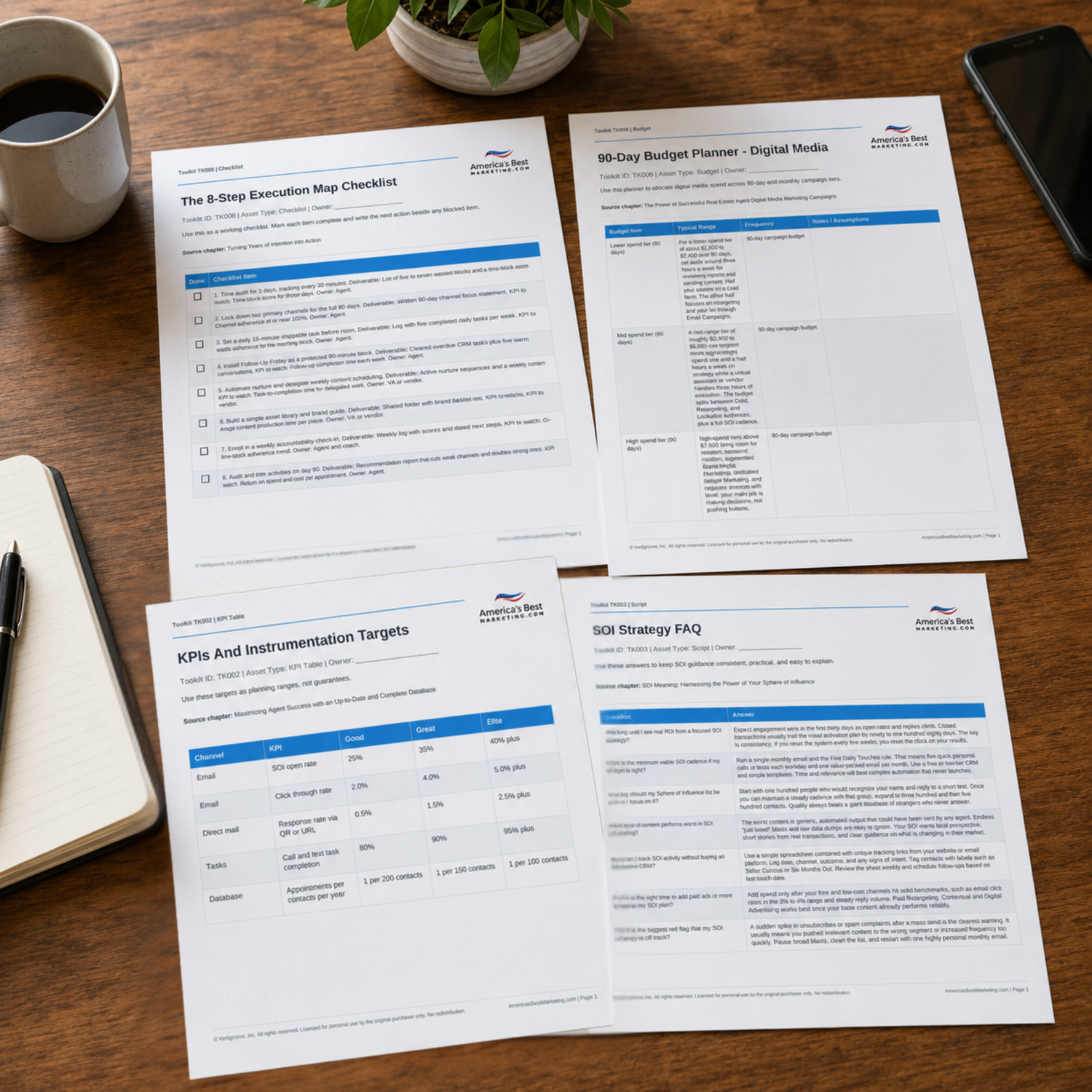
Download The Client Follow-Up System Toolkit
Use the companion Toolkit to plan a 12-month client touch cadence, assign ownership, set a realistic retention budget, prepare check-in scripts, and track the signals that show whether your follow-up is producing conversations.
Download the Toolkit ZIPRecommended reads
Recommended Reads for Real Estate Agents
These articles help agents connect follow-up discipline, database habits, client communication, and marketing execution into a repeatable system.

What Every Agent Needs to Know About Their Real Estate CRM
Turn scattered contacts into a workable pipeline with scripts, tags, reminders, and response routines.
Read article
High-End Buyer/Seller Tech Stack: Tools and Systems Luxury Agents Use
Create more leverage from high-end buyer/seller tech stack with a clear path from attention to follow-up.
Read article
Blog Topic: Real Estate Agent Brand Kit: Fonts, Colors, and Post Styles That Signal “Pro”
Clarify the message, visuals, and client experience that make an agent feel distinctive.
Read article
How to Handle Difficult Clients and De-escalate Situations
Use handle difficult clients and de-escalate situations to create a stronger bridge between client education and real conversations.
Read articleClient Follow-Up Questions Agents Should Be Ready To Answer
How soon should I put a client into my follow-up system after closing?
Enroll them immediately, ideally the same day you mark the deal closed in your CRM. The first month is when clients are most emotionally connected to the purchase and most likely to reply. If you wait until your next slow week, it becomes a random task instead of a process. Schedule the first twelve months up front and let tasks fire automatically.
What is the minimum cadence that still works if my budget is tight?
Start with one value email per month and one personal touch per quarter. Add one direct mail piece per quarter once addresses are clean. The point is consistency, not volume. Keep the content tied to home value, taxes, maintenance seasons, and neighborhood context. Avoid generic newsletters. Put every touch in your CRM so you can keep momentum when you get busy.
What should I send that does not feel like sales?
Send homeowner value: equity snapshots, tax and assessment guidance, maintenance checklists, and local resource lists. These are service touches that match why clients hired you in the first place. Keep the call to action simple: reply for an update, scan for a checklist, or text a quick question. If the message helps them protect their home investment, it will not feel like a pitch.
How do I track referrals without fancy automation?
Use one rule: every new lead gets a source field that must be filled in before you create the record. If you do not have a CRM, use a spreadsheet with a referral source column. Review it monthly and thank your top introducers fast. The tracking is the system. Without it, you cannot tell which touches are producing conversations and which are just noise.
Should I combine email and direct mail or pick one?
Combine them when you can. Email is efficient and measurable, and direct mail is tangible and harder to ignore. Even a simple quarterly postcard can lift recall because it sits in the home longer. Keep messaging consistent across channels so clients recognize it as your voice, not random content. Use one mail format per theme and reuse it until the data tells you to adjust.
How do I avoid bothering past clients?
Lead with usefulness and keep frequency sane. One email per month and one mail piece per month is plenty for most databases, with personal check-ins quarterly. Also segment your list so the content matches where they live and what they care about. When clients reply or click repeatedly, treat that as an engagement signal and shift into a one-to-one conversation. That is service, not spam.
Is it okay to ask for referrals directly?
Yes, but do it after you deliver value. Ask for a warm introduction, not a generic referral ask, and make it easy for them to help. Keep it short and specific, and be respectful of compliance rules around gifts and referral arrangements. A good follow-up system earns the right to ask because you have already proven you show up consistently and helpfully.
Next step
Build the System Behind the Advice
Continue from one useful article into the larger ABM ecosystem: the book series for strategic depth and the full marketing program for done-for-you execution.

View the Book Series
Explore the America’s Best Real Estate Agent Marketing System books for a deeper strategic framework around visibility, referrals, listings, lead generation, and growth.
View the Book Series
See Full Marketing Program
See how AmericasBestMarketing.com runs real estate blog writing, social media, listing marketing, email, direct mail, and retargeting as one managed system.
See Full Marketing Program