The Art of Listening: Discovery Questions Real Estate Agents Can Use to Find the Real Need
The Art of Listening in Real Estate Discovery
Questions that find the real need before tours begin
A discovery protocol for real estate agents who want to uncover motivation, align trade-offs, document constraints, and turn every first conversation into cleaner follow-up.

Discovery questions that uncover the real need
A strong discovery call moves in sequence: first capture the facts, then uncover the lifestyle friction, then confirm the budget, timing, and decision constraints that cannot break. The best real estate agents do not take an order. They listen until the client can hear the real reason for the move in their own words.
- Start with tactical intake, then move into lifestyle friction and financial alignment before tours begin.
- The real need usually appears after a calm follow-up question, not after the first answer.
- Discovery notes should become CRM fields, follow-up prompts, email segments, and direct-mail talking points.
- A consistent discovery protocol reduces bad tours, prevents budget drift, and makes client follow-up feel personal.
Why Elite Discovery Pays Off
If your first conversation feels like taking an order, you are leaving trust, referrals, and closings on the table. Buyers and sellers often lead with bedrooms, price ranges, neighborhoods, or timing because those details feel efficient. The real business value sits underneath: the reason this move matters now.
An elite discovery process finds that real need before the search drifts. It reduces wasted showings, lowers churn after early tours, and gives your follow-up a sharper reason to exist. When clients feel heard and guided, they are more likely to stay engaged, make decisions, and refer the agent who made the process feel organized.
Your objective is simple: run the same discovery protocol on every qualified lead, document the driver in the client’s own language, and turn those insights into a follow-up loop that stays specific without feeling clingy. That same discipline can support IDX Real Estate Websites, email nurture, direct mail, and consultation scripts because the message starts with what the client actually told you.
- You stop confusing stated preferences with the real decision driver behind the move.
- You protect the client from budget, timing, commute, family, and lifestyle conflicts that surface too late.
- You create cleaner notes that make every future touchpoint sound relevant instead of generic.
The Three-Tier Discovery System
Discovery works best when it has order. Start too deep and the client feels interrogated. Stay too shallow and you become a search assistant instead of an advisor. The sequence is tactical intake, lifestyle audit, then financial alignment.
The output is one sentence you can repeat back to the client: the real need in their words, plus the constraint that cannot break. That sentence becomes the filter for tours, negotiations, follow-up, and future referrals.
Tactical intake
Capture the facts quickly: location, price ceiling, timing, must-have items, and preferred communication rhythm.
Use a lead form or consultation worksheet to create a clean starting box, but do not let the form become the whole conversation.
Lifestyle audit
Ask about daily routines, commute pain, household friction, caregiving demands, school logistics, hobbies, privacy, and space.
Mirror the client’s last phrase, summarize what you heard, and confirm whether your summary is accurate before moving on.
Financial alignment
Confirm what the budget needs to protect, what trade-offs are acceptable, and what risk would make the move feel wrong.
This is not an underwriting conversation. It is a plan-alignment conversation that keeps the search tied to reality.
Most agents miss that the first answer is almost never the real reason someone is moving. Layered discovery gets you past polite explanations and into the true catalyst, which often appears after the third follow-up question. Build the search around that truth.
Discovery Questions Real Estate Agents Can Use
Use questions that move from surface facts to decision drivers. The goal is not to impress the client with a long questionnaire. The goal is to create a calm conversation where the client can explain what the move must solve.
What changed?
Agent dialogue
Opening lineWhat changed recently that made this move feel worth exploring now?
Follow-up lineWhy does that matter more today than it did six months ago?
Confirm lineSo the move is really about solving that pressure point, not just finding a different address.
Use this early. It separates active motivation from casual browsing and gives you the trigger behind the lead.
What must this move fix?
Agent dialogue
Opening lineIf this move solved one daily-life problem, what would you want it to fix first?
Middle lineWhen do you feel that problem the most during a normal week?
CTA lineLet’s use that as our filter before we add more homes to the list.
This question is especially useful when a client says they want more space, better location, or a newer home but has not named the friction.
What cannot break?
Agent dialogue
Opening lineWhat part of this plan cannot break: monthly payment, commute, timing, school logistics, family support, or resale risk?
Explain lineThat answer tells me what we protect first when trade-offs show up.
CTA lineI will document that as the guardrail before we tour.
The strongest discovery notes capture both the desired outcome and the protected constraint. Without the constraint, the search can drift.
Turn Discovery Notes Into Better Marketing
Discovery is not only a conversation skill. It is a messaging asset. Every strong intake produces lines you can reuse in follow-up texts, mail, email, and consultation reminders because you now know what the client actually cares about.
Do not send generic reminders. Send short, specific touchpoints that tie back to the driver you documented, then ask one crisp question that keeps the dialogue moving. For warm audiences, Direct Mail Marketing can give that message more weight. For active leads, Email Marketing for Real Estate Agents keeps the education loop consistent.
When you want weekly relationship prompts that do not feel spammy, pair your discovery notes with a light outreach rhythm. A useful model is Text Message Marketing for Agents: Build Relationships and Win More Clients with Weekly SOI Outreach, then rewrite the prompts in the client’s own language.
| Stage | Question focus | Channel | Business outcome |
|---|---|---|---|
| Initial lead | Stated needs and timing | Lead form | Clean segmentation for the first call |
| Intake call | Lifestyle drivers and trade-offs | Personal call | Trust foundation and clearer tour plan |
| Consultation | Financial and emotional whys | Consult session | Higher intent and fewer vague next steps |
| Post-tour | Refinement from feedback | Email cadence | Retention, urgency, and referral momentum |
Execution Plans You Can Repeat
You do not need a complicated tech stack to run better discovery. You need a script, a few CRM fields, a weekly review habit, and follow-up messages that are tied to the reason the client is moving.
Spend two hundred fifty to four hundred fifty dollars per month on basic list management, two direct-mail drops to warm leads or past clients, and one weekly follow-up touchpoint. Keep the audience split at roughly seventy percent warm list and thirty percent opted-in new leads. Cap contact at one meaningful message per week per person.
Spend six hundred to one thousand dollars per month on segmented email, direct mail, and light retargeting tied to discovery topics. Keep the audience split at roughly sixty percent warm list and forty percent nurture leads from the last ninety days. Use two emails per month and one weekly personal touch.
Discovery worksheet follow-up
Send a short note within forty-eight hours of intake. Headline: Let’s lock your non-negotiables in ten minutes. Call to action: Reply with one thing you refuse to compromise on.
Budget alignment check-in
Send this after two or three tours without a decision. Headline: Are we solving the real problem yet? Call to action: Send me your top two priorities today and I will adjust the plan.
Discovery mastery audit
Review your last three stalled clients. Tag the missing field: driver, non-negotiable, trade-off, timing pressure, or hidden stakeholder. Then repair the script before the next intake.
| Metric | Target | Spend | Why it matters |
|---|---|---|---|
| Intake time | 25 to 45 min | $0 | Longer intake cuts bad tours and reduces ghosting after early showings. |
| Notes logged | Same day | $0 | Fast documentation keeps follow-up specific, which builds trust and reply rates. |
| Follow-up loop | 1 per week | $25 to $85 | Consistent cadence stays top of mind without spamming or sounding generic. |
The 10-Point Discovery Mastery Audit
Run this audit on your last three leads that stalled, ghosted, or toured without making a decision. The pattern will usually show you where discovery failed.
- Open every intake by explaining that you are trying to find the real need, not just collect a shopping list.
- Write the move reason as one sentence in the client’s words.
- Ask why, summarize, and ask why again until a decision driver appears.
- Document what the client will trade for and what will not move.
- Confirm the real deadline and what happens if that deadline slips.
- Ask who else must say yes and what that person cares about.
- Create CRM fields for driver, non-negotiables, acceptable trade-offs, and hidden stakeholders.
- End the call with one action and a specific time.
- Restate the driver before the first showing begins.
- Review dead leads weekly and tag where the script failed.
Fewer Tours, Faster Decisions
An agent noticed that buyers kept disappearing after three tours. The homes looked right on paper, but the clients never felt confident enough to act, so the pipeline became full of people who had seen inventory but had not reached clarity.
The agent rebuilt intake around layered discovery and extended the first conversation from fifteen minutes to about forty-five minutes. The new standard was one documented sentence that captured the lifestyle friction each client wanted to escape, plus the constraint that could not break.
Within a month, the agent showed fewer homes per client because the tour list matched the real driver. Decisions moved faster because objections were addressed earlier, and referral momentum improved because clients felt guided like adults making a major decision, not escorted like tourists.
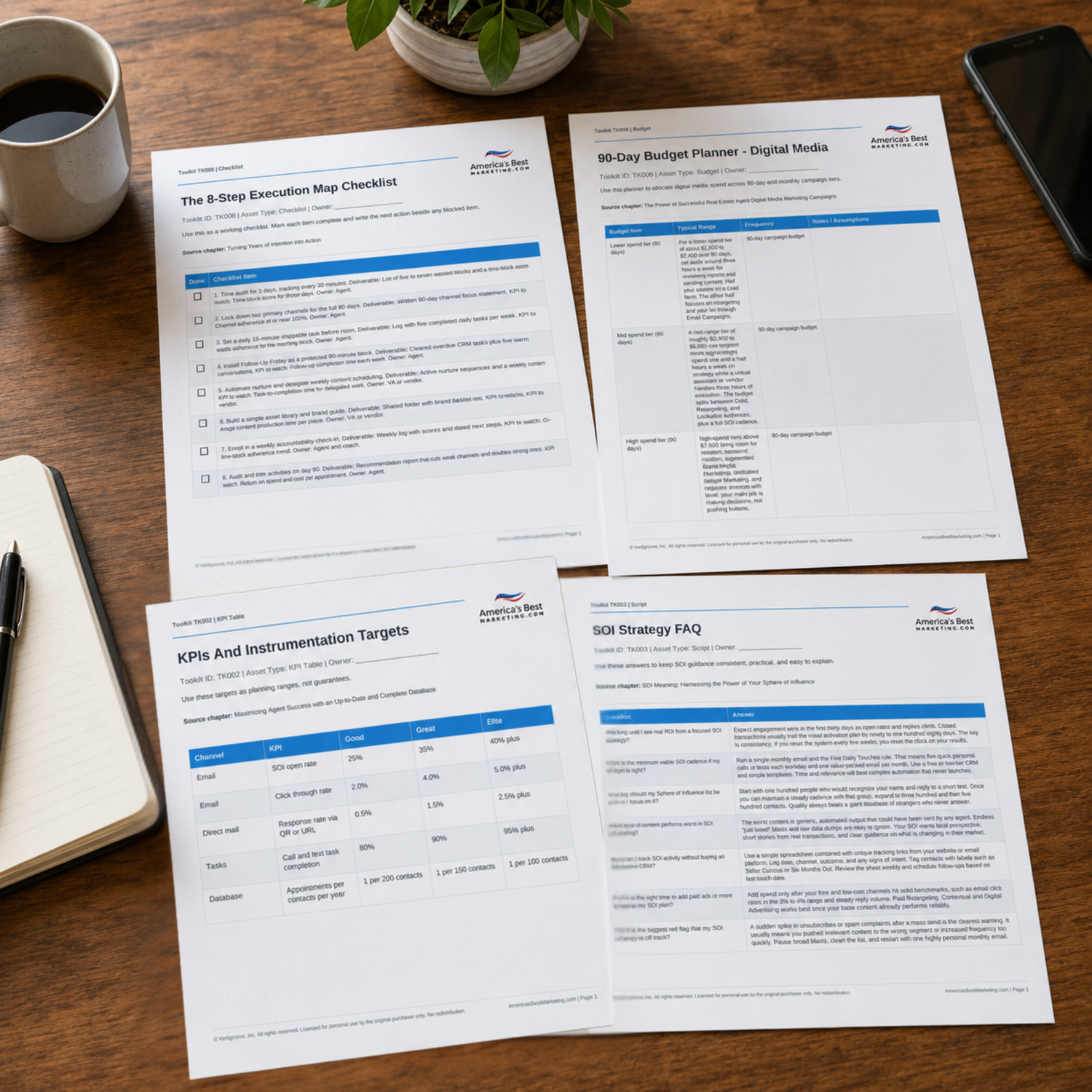
Download The Discovery Questions Toolkit
Use the companion Toolkit to tighten your intake script, discovery audit, KPI tracking, touchpoint plan, budget alignment check, and client-question prompts.
Download the Toolkit ZIPRecommended reads
Recommended Reads for Real Estate Agents
These articles help agents connect follow-up discipline, database habits, client communication, and marketing execution into a repeatable system.

Local Restaurant Guides That Generate Leads: A Real Estate Agents-Friendly Where to Eat Framework
Publish content that answers local questions, supports lead capture, and gives future conversations a reason to start.
Read article
Hidden Gems Content: How Real Estate Agents Create Local Guides That Generate Relocation Leads
Turn local knowledge into searchable content buyers, sellers, and relocation prospects can actually use.
Read article
Leveraging Hyper-Local SEO for Real Estate Success
Make hyper-local SEO for real estate success easier to plan, publish, and measure as part of a weekly marketing rhythm.
Read article
Agent Spotlight Templates Real Estate Agents Can Publish Fast
Build authority with content topics that are easier to plan, promote, and connect to follow-up.
Read articleDiscovery Questions Real Estate Agents Ask Most
How long does it take to see ROI from better discovery?
You will usually feel the impact within a few weeks because your tours get tighter fast. Track fewer showings per client, higher reply rates, and fewer stalled deals. The biggest gain is time: less friction, fewer misaligned conversations, cleaner next steps.
How do I handle clients who are tight-lipped on the first call?
Start with low-stakes questions, then mirror their last phrase to show you are listening. Use short summaries and ask for a simple confirmation. People open up when they feel safe, and safety comes from calm pacing and accurate restatement.
Should I use a printed questionnaire or a conversation?
Use a conversation with a structured script, then document the outputs. A printed worksheet can help you stay consistent, but the value is in the listening loop, not the paper. Aim for one sentence that captures the driver and two trade-offs you can repeat back.
What are the first discovery questions I should ask every time?
Ask what changed, what the move needs to fix, and what cannot break. Then confirm timing and who else is involved in the decision. Those four points give you enough signal to guide the next questions without turning the call into an interview.
How do I avoid sounding scripted while still using a script?
Memorize the intent, not the exact words. Keep your questions short, pause longer than feels natural, and summarize in the client’s language. A good script sounds like a calm professional who has done this a thousand times, not someone reading.
What do I do when spouses or partners disagree in discovery?
Name the trade-off out loud and ask each person to rank priorities. Do not try to solve it with more listings. Your job is to clarify what matters most, then show options that test the rankings in real life so the household can decide.
How should I document discovery notes so they actually get used?
Create three fields: driver, non-negotiables, and acceptable trade-offs. Write one sentence in each field using the client’s words. Then use those fields in follow-up messages so your touchpoints feel personal and consistent across the full transaction.
Next step
Build the System Behind the Advice
Continue from one useful article into the larger ABM ecosystem: the book series for strategic depth and the full marketing program for done-for-you execution.

View the Book Series
Explore the America’s Best Real Estate Agent Marketing System books for a deeper strategic framework around visibility, referrals, listings, lead generation, and growth.
View the Book Series
See Full Marketing Program
See how AmericasBestMarketing.com runs real estate blog writing, social media, listing marketing, email, direct mail, and retargeting as one managed system.
See Full Marketing Program