AR/VR Real Estate Marketing
Practical Uses Agents Can Implement This Year
A practical listing-media playbook for using 3D tours, virtual staging, AR overlays, listing pages, and retargeting without turning technology into a gimmick.

AR/VR works when it removes buyer uncertainty
AR/VR in real estate marketing matters when it helps a buyer understand layout, scale, condition, and next steps faster than photos alone. The strongest use is not novelty. It is a repeatable listing system: clean 3D capture, transparent virtual staging, a dedicated listing page, clear follow-up, and distribution through social media, email, and retargeting.
- Use immersive media to answer buyer questions faster, especially on vacant listings, relocation buyers, small rooms, and homes that need a clearer vision story.
- Publish the tour and staged assets on your own domain so the listing experience supports SEO, lead capture, retargeting, and seller reporting.
- Protect trust with clear Virtually Staged labels, realistic furniture, honest condition notes, and no visual promises that the physical home cannot support.
- Measure tour views, time on page, showing requests, retargeting clicks, and seller inquiries instead of judging AR/VR by novelty alone.
Why Immersive Listing Media Pays Off
Most buyers do not need more marketing noise. They need confidence. Before they schedule a showing, they want to know whether the kitchen connects to the living room, whether the hallway feels tight, whether a bedroom can hold real furniture, and whether the property is worth the drive. Immersive media helps answer those questions while the buyer is still in research mode.
When AR/VR is connected to Listing Marketing, IDX Real Estate Websites, Social Media Marketing, Email Marketing for Real Estate Agents, and Retargeting & Contextual Ads, it becomes a conversion asset instead of a loose media link.
The business outcome is cleaner buyer pre-qualification, fewer wasted showings, stronger out-of-area buyer confidence, and a better seller story at the listing appointment. Sellers can see that the agent has a plan for how the home will be understood, not just where the home will be posted.
- 3D tours clarify flow and reduce layout confusion before a showing is booked.
- Virtual staging turns empty rooms into usable space stories without moving furniture.
- AR overlays help buyers test scale, clearance, and furniture placement before they eliminate a property too early.
Build The Immersive Listing System Before You Buy More Tools
The mistake is treating AR/VR as a software choice first. The better sequence is to define the listing problem, choose the media standard, publish the experience in the right place, then build follow-up around it. Technology should serve the sales path, not distract from it.
Asynchronous virtual tours are self-guided experiences a buyer can replay anytime. The win is flexibility. The risk is confusion when navigation feels like a maze. A good tour feels natural on a phone and a laptop, moves room to room without friction, and labels spaces buyers might otherwise miss.
Digital decluttering removes visual noise before you stage. That means reducing distracting furniture layouts, heavy patterns, personal objects, and surface clutter in the digital version so each room reads quickly.
Virtual staging adds furniture and decor to listing photos or a 3D model. Used well, it communicates scale and function. Used poorly, it creates a trust gap between the screen and the walk-through.
Augmented furniture overlay lets a buyer place a couch, table, bed, or other object into a room view to test fit. It is a confidence tool, not a party trick.
Make empty rooms legible
Use virtual staging and a clean walkthrough to solve the empty-box problem. The goal is to show room function without pretending the home has furniture, finishes, or features it does not have.
Shortlist before travel
Use a virtual open house hub for relocation buyers, second-home shoppers, and investor prospects who need to compare properties before they spend time or money traveling.
Show potential honestly
Use digital renovation previews to frame possibility while keeping the current condition visible and properly explained. The preview supports imagination, not disclosure avoidance.
Most agents chase the wow factor and miss the rewatch factor. Buyers replay clean 3D tours while comparing homes. If the tour does not make a buyer say “I understand the layout now,” it is not earning its keep.
The 8-Week Immersive Listing Rollout
This rollout is built for real teams with limited time. You are not buying toys. You are building a repeatable listing package that ships on schedule and improves with every listing you publish.
Weeks 1 to 2: tool audit. Select one capture standard and one staging standard. If you have steady listing volume and want premium navigation, Matterport is a strong high-end option. If you want speed and wide distribution, Zillow 3D can be a practical baseline. For AR overlays, choose an app that supports scale references and simple measurement.
Weeks 3 to 4: production workflow. Implement a shoot-first standard for every new listing package. Each listing gets a 3D tour and either a digital declutter pass or a staging set for key rooms. Assign three roles: capture, review, publish. Nothing goes live until navigation feels natural, rooms read true, and the Virtually Staged mark is visible where required.
Weeks 5 to 6: digital hub. Create a virtual open house landing page on your website. Keep it simple: hero, tour, staged gallery, showing expectations, and one conversion path. Host the tour on your domain whenever possible. Treat the page like a product page, not a gallery.
To make that page perform, the fundamentals still matter. Tighten title structure, local context, internal linking, and calls to action. The principles in Proven SEO Strategies for Real Estate Websites to Increase Leads can help keep immersive listing pages discoverable after the first social spike fades.
Weeks 7 to 8: distribution blitz. Turn the tour into short clips and still frames. Publish them through social media, then follow with retargeting and contextual ads aimed at visitors who viewed the listing page but did not book. Use frequency caps, rotate creative every two weeks, and keep copy focused on clarity and next steps.
Messaging That Sells Confidence Instead Of Technology
Immersive tech needs plain language. You are not selling AR or VR. You are selling confidence. Write copy the way buyers talk to themselves while comparing homes.
Layout clarity for buyers
Headline pattern
Hook lineTour 123 Maple from your sofa.
Middle lineSee the full layout before you book a showing.
CTA lineExplore the 3D walkthrough.
Use this when the home has a strong floor plan, unique flow, or a buyer pool that may hesitate before scheduling.
Virtual staging for vacant rooms
Headline pattern
Hook lineEmpty house, clear plan.
Middle linePreview it furnished with a virtual staging walkthrough.
CTA lineSee the staged version.
Use this when the listing needs room function, furniture scale, and warmth without overproducing the physical space.
Scale and fit for small rooms
Headline pattern
Hook lineMeasure it first.
Middle lineUse the room overlay to test your furniture fit.
CTA lineCheck the room dimensions.
Use this for tight bedrooms, flexible office spaces, condos, townhomes, and any room where buyers may underestimate utility.
Match the CTA to intent. Cold viewers get the tour. Warm viewers get the preview. Hot sellers get the process. If the landing page is weak, fix that before you pour traffic into it. For the conversion path, the checklist in The 5-Point Conversion Framework for a High-Performance Real Estate Lead Capture Page is a practical baseline.
AR/VR ROI Matrix For Real Estate Agents
Use this matrix to pick the right tool for the listing problem in front of you. Costs are example ranges, not promises. Your market, tools, and vendor choices will vary.
| Tech type | Best for | Cost range | Sales impact |
|---|---|---|---|
| 3D tours | Layout clarity | $0 to $350 | Reduces wasted showings by letting buyers pre-qualify flow before they request access. |
| Virtual staging | Vacant rooms | $25 to $75 | Improves first impression and helps buyers understand function quickly. |
| AR measurement | Fit checks | $0 to $20 | Removes doubt on room size, clearance, and furniture placement before touring. |
| Digital renovation preview | Fixer vision | $75 to $400 | Frames potential while keeping the current condition honest and clear. |
The 10-Point Virtual Tour Audit
A bad tour is worse than no tour. Run this checklist before you publish anything. It protects trust and keeps viewers moving forward instead of bouncing.
- Set camera height around chest level and keep it consistent in every room.
- Turn on lights and open blinds, then check for blown-out windows.
- Remove mirrors facing the camera or angle them so you avoid reflections.
- Close toilet lids, move trash cans, and remove objects that pull attention away from the room.
- Keep doors either fully open or fully closed for visual consistency.
- Walk the navigation path like a buyer. If you get lost, fix the dots.
- Confirm floors look level and walls look straight with no warped geometry.
- Mute audio unless it is clean and intentional.
- Label key spaces inside the tour, such as pantry, laundry, storage, and flex rooms.
- Test on phone and laptop. If it stutters, compress or republish before ads go live.
The Digital Refresh That Changed The Conversation
Agent Julian had a vacant, dated listing that sat for 60 days with weak showing interest. He pulled it, invested in high-end virtual staging with a Virtually Staged watermark, and rebuilt the listing assets so the tour, staged gallery, and showing notes lived in one place.
By embedding the new 3D tour into his site and retargeting prior listing visitors, he created a cleaner reason for buyers to reconsider the property after the relaunch. The point is not to promise a specific price or offer outcome. The point is to show how better immersive assets can restart buyer engagement when the original presentation is underperforming.
AR/VR should make the listing easier to understand and easier to revisit. If the buyer leaves the experience with more confidence and a clearer next step, the media is doing its job.
Budgets And Creative Briefs You Can Ship
Budget planning should separate production costs from media spend. Capture, staging, and renovation previews create the asset. Retargeting and contextual ads extend the life of that asset after the first social post fades.
$450 monthly media spend
Allocate $300 to retargeting and $150 to contextual ads. Cap frequency at 6 impressions per 7 days per person. Audience split: 70 percent listing page visitors and 30 percent neighborhood guide readers.
$1,250 monthly media spend
Allocate $850 to retargeting and $400 to contextual ads. Cap frequency at 8 impressions per 7 days per person. Refresh creative every 14 days and rotate two angles: layout clarity and furnished preview.
Convert visitors into showings
Use an 8 to 12-second clip of the tour path plus one staged before-and-after image. Headline: “See the layout in two minutes, then book a time.” CTA: “Get the tour link.”
How Immersive Media Becomes Marketing
AR/VR is not just a listing upgrade. It is a seller-presentation asset. It gives agents a specific story about how buyers will understand the home, revisit the listing, and move from curiosity to appointment. That story belongs in listing presentations, seller emails, social proof, and follow-up campaigns.
Package the immersive workflow across Listing Marketing, Social Media Marketing, Email Campaigns, Direct Mail, and Digital Retargeting. Each channel should tell the same story: buyers can understand the home faster and sellers can see the marketing plan before the sign goes in the yard.
If you want help turning immersive listing assets into a repeatable marketing system, AmericasBestMarketing.com can connect the page, content, ads, email, and seller reporting into one managed program.
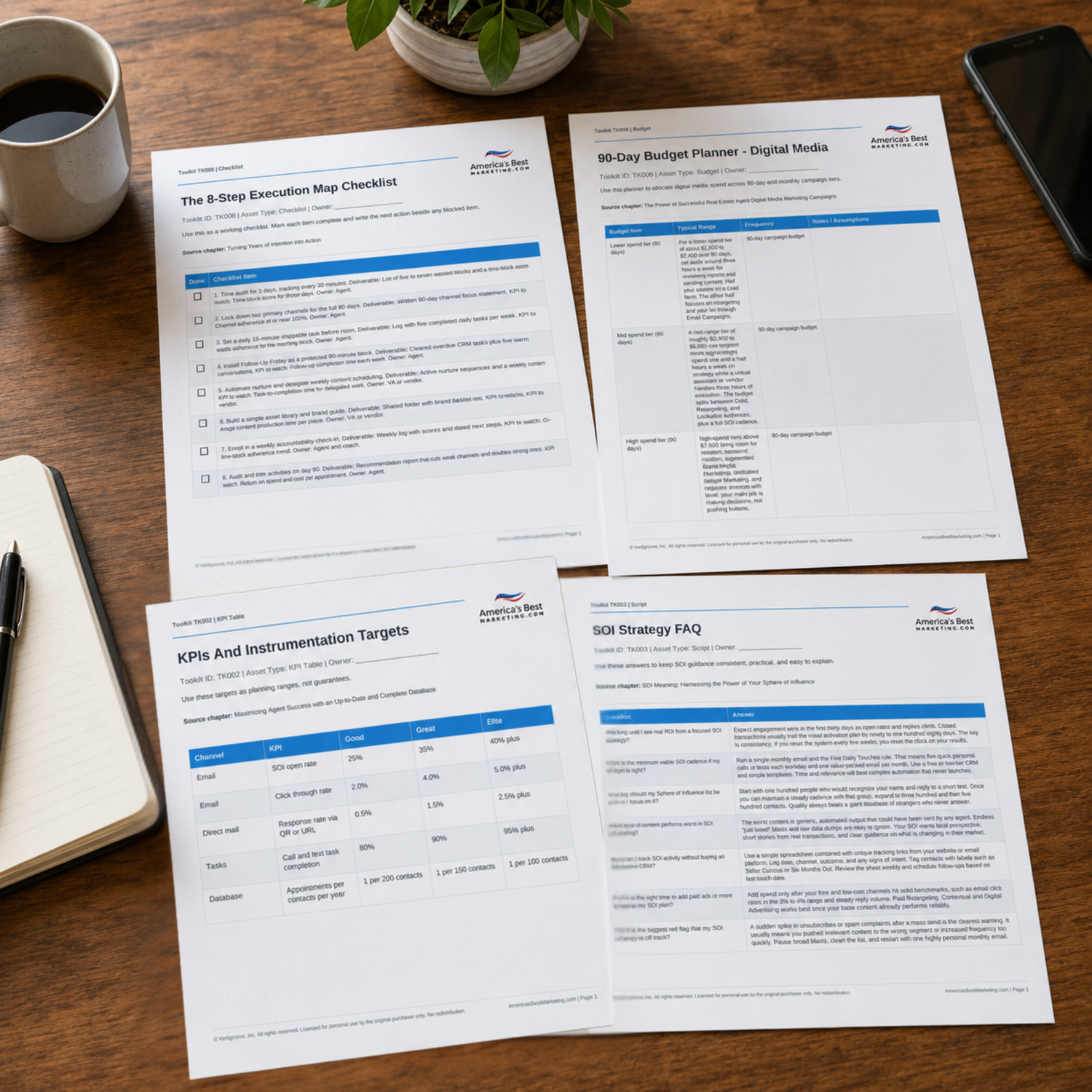
Download The Immersive Listing Media Toolkit
Use the companion Toolkit to plan immersive listing budgets, audit the rollout sequence, compare AR/VR use cases, and prepare buyer and seller talking points before the next listing goes live.
Download the Toolkit ZIPRecommended reads
Recommended Reads for Real Estate Agents
These articles help agents connect listing visibility, seller education, marketing channels, and follow-up into a clearer growth system.

Listing Agent Marketing: A Comprehensive Guide to Securing More Listings
Make listing marketing easier to plan, publish, and measure as part of a weekly marketing rhythm.
Read article
High-End Buyer/Seller Tech Stack: Tools and Systems Luxury Agents Use
Create more leverage from high-end buyer/seller tech stack with a clear path from attention to follow-up.
Read article
Best Website Builders for Real Estate Agents: Costs, SEO Tradeoffs, and Setup Tips
Bring more structure to website builder decisions so every touchpoint supports visibility and trust.
Read article
Marketing Analytics for Real Estate Agents: KPIs, Dashboards, and a Weekly Review Routine
Turn marketing analytics into a steady operating habit, not another item that waits for a quiet week.
Read articleFAQ
Is virtual staging deceptive to buyers?
It can be if you hide it. Use a clear Virtually Staged watermark and keep the staging realistic for the home’s size and style. Treat staging as a way to show function, not as a way to hide defects or pretend renovations are complete. Set expectations before the showing so the digital version and the real walk-through match.
Which 3D tour software is best for small teams?
Pick the option you can ship every time. Zillow 3D is fast and easy for phone-based capture. Matterport tends to deliver stronger navigation and presentation when you have steady listing volume. The right answer is the system you will actually use consistently, not the one with the fanciest feature list.
How long does it take to see measurable ROI on VR tech?
Measure it as a process benchmark. Many teams see early signals in 30 to 60 days by comparing tour views, time on page, and showing requests on immersive listings versus standard listings. The biggest lift usually shows up on vacant homes and out-of-area buyer traffic.
What content performs worst when using AR tools?
Anything that feels like a gimmick. Low-light shaky capture and overlays that do not match scale tend to lose trust fast. AR works best when it solves a practical question like fit, clearance, or layout. If the overlay does not help a buyer decide, it is noise.
Should 3D tours live on my website or on a portal page?
Publish the tour on your own domain whenever possible, then share that page everywhere. That keeps the buyer journey under your control and gives search engines something to index. Portals can still help distribution, but they should not be the only place your immersive assets live.
How do I keep buyers from expecting the home to look exactly like the staged version?
Be explicit. Add a Virtually Staged watermark and include one short sentence near the tour link that states the home may be vacant or arranged differently at the showing. Avoid adding features that are not present, like built-ins or fireplaces. The goal is to show function, not to rewrite reality.
Do immersive tours replace a physical inspection?
No. They reduce uncertainty before the visit, then the physical walk-through and inspection confirm condition, systems, and fit. Use immersive tools to help buyers shortlist and make showings more productive. Keep your messaging clear that tech supports due diligence, not replaces it.
Next step
Build the System Behind the Advice
Continue from one useful article into the larger ABM ecosystem: the book series for strategic depth and the full marketing program for done-for-you execution.

View the Book Series
Explore the America’s Best Real Estate Agent Marketing System books for a deeper strategic framework around visibility, referrals, listings, lead generation, and growth.
View the Book Series
See Full Marketing Program
See how AmericasBestMarketing.com runs real estate blog writing, social media, listing marketing, email, direct mail, and retargeting as one managed system.
See Full Marketing Program