Proven SEO Strategies for Real Estate Websites to Increase Leads
SEO Strategies for Real Estate Websites
Increase Leads With A Ninety Day Plan
A practical real estate website SEO briefing for agents who want stronger local visibility, sharper neighborhood pages, cleaner IDX performance, and better organic lead capture.

How SEO turns a real estate website into lead flow
SEO strategies for real estate websites increase leads when every page is built around a specific local intent, loads cleanly on mobile, connects to IDX inventory, and points visitors toward one useful next step. The goal is not traffic for its own sake. The goal is to make buyers and sellers find the agent through search, trust the page quickly, and take action before a portal or competitor gets the conversation.
- Real estate website SEO works best when technical cleanup, local content, IDX structure, and lead capture are managed as one system.
- The ninety day plan starts with crawlability and speed, then shifts into neighborhood pages, refreshed evergreen content, and authority building.
- Agents should target specific local intent, not vague national keywords that large portals already own.
- Organic traffic becomes valuable only when each page creates a clear path to a search, saved listing, guide request, form fill, call, or follow-up conversation.
Why This Matters
The real payoff from SEO strategies for real estate websites is simple. You build an asset that brings in searchers every day without paying a portal or boosting another social post just to stay visible. Instead of renting attention, you own a lead engine that sits on top of Google, maps, and your IDX pages.
The strongest agents do not treat SEO as a bag of keywords. They use it as a market-positioning system. Each URL makes a specific promise to a buyer, seller, relocating family, move-up client, investor, or homeowner who is already searching for a next step. When the page answers that intent with useful local context, the agent earns attention before the prospect fills out a lead form somewhere else.
The ninety day plan in this article focuses on two jobs. First, remove the technical friction that keeps Google from trusting and surfacing the site. Second, publish the kind of neighborhood and problem-solving content that buyers and sellers actually type into search. Do that with discipline and cost per lead starts moving in the right direction while lead quality improves.
- You win more high-intent visits from people already searching for your city, price band, or property type.
- You reduce dependence on pay-per-lead services and social spikes that vanish after a day.
- You turn IDX pages and guides into proof that you are the local expert, not just another name on a portal list.
The SEO Foundation Agents Need First
Strong SEO for real estate websites sits on two pillars. On-page work covers titles, copy, internal links, and how each page speaks to a specific search intent. Technical work covers speed, mobile experience, security, crawl paths, and how cleanly the IDX feed plugs into the site. Ignore either pillar and rankings stall.
Local intent drives both pillars. You are not trying to rank for vague national terms. You want to win searches tied to property type, price range, neighborhood, commute pattern, lifestyle need, and timing. That means the site needs clear neighborhood and property-type pages on top of reliable IDX Real Estate Websites that already handle the listing-data layer.
Make the site easy to crawl
Verify HTTPS, connect Google Search Console, submit the sitemap, clean up broken pages, compress heavy images, and make sure key pages load quickly on mobile.
Do not let scripts, image weight, or weak hosting make the first impression slower than the buyer’s patience.
Build pages around real searches
Map the phrases buyers and sellers actually use. Pair neighborhood, price band, property type, and question-driven language with helpful pages that answer one clear need.
Each page should deserve to rank for a specific query, not for every phrase in the market.
Give every visitor a next step
Route readers toward active listings, a saved search, a valuation request, a neighborhood guide, a strategy call, or a useful download.
Organic traffic without a structured next step creates analytics vanity instead of pipeline.
Most agents treat every page as a mini brochure instead of a precision page for one clear search phrase. The agents who win view each URL as a bet on a single intent, such as a move-up buyer in a named neighborhood. When you publish or edit a page, ask which exact search that page deserves to capture and tune everything around that answer.
The Ninety Day SEO Action Plan
This ninety day plan is built around three phases. Days one through thirty lock in the technical base so Google can crawl and trust the site. The next thirty days focus on hyperlocal content that lives on top of IDX pages. The final month shifts into authority and refinement so rankings and leads keep compounding.
Use a deeper local keyword and neighborhood mapping blueprint alongside this checklist. The local SEO playbook at Local SEO for Real Estate Agents can help you choose the farms, phrases, and page topics. This plan is the execution track that turns those targets into live pages.
- Verify HTTPS and connect Google Search Console. Confirm every important page loads on a secure address, add the domain in Search Console, and submit the main sitemap from the website or IDX provider.
- Control titles and descriptions. Turn on page-level SEO controls in the site platform. Use a repeatable pattern with one primary keyword, one location, and one clear benefit.
- Audit and improve mobile speed. Test the home page, a neighborhood page, a listing page, and a blog post. Compress the largest photos, remove unnecessary plugins, and limit heavy scripts.
- Fully optimize the Google Business Profile. Pick the most accurate primary category, complete service areas and hours, upload current photos, and add short posts that link back to priority pages.
- Pick ten to fifteen hyperlocal long-tail keywords. Combine neighborhood, property type, price range, and client intent. Favor phrases that signal action, not curiosity.
- Launch two strong neighborhood guides. Build pages that combine a local overview, lifestyle notes, current listings, schools, commute context, and filtered IDX paths.
- Refresh ten existing pages with sharper SEO. Rewrite titles, improve first paragraphs, add internal links, and place one relevant call to action at the end of each page.
- Fix every obvious broken link. Crawl for 404 errors and redirect retired pages to the best current match, such as a neighborhood guide, service page, or active listings hub.
- Study competitor backlinks and pick three outreach targets. Look for local directories, community sites, partner resources, and business profiles where a useful listing and link would make sense.
- Review listing content and schema on key pages. Keep listing copy accurate, compliant, and consistent with MLS data. Confirm addresses, prices, and page structure match the source feed.
By the end of ninety days, the site should have a cleaner technical base, at least two stronger neighborhood hubs, refreshed evergreen content, and a small but growing set of links back to useful pages. From there, move into a monthly rhythm that keeps adding pages, tightening internal links, and building authority.
Three SEO Content Templates Agents Can Use
High-converting SEO content does not start with clever language. It starts with the searcher’s job. A buyer wants options, a homeowner wants clarity, and a seller wants proof that the agent understands the local market. Use these templates to convert search intent into pages that feel useful before they feel promotional.
The neighborhood guide page that ranks and converts
Page copy blocks
Hook lineOpen with one concrete local benefit, such as quiet streets near the lake or walkable coffee and parks.
Middle lineAdd short sections on lifestyle, housing types, schools, commute patterns, and current listings.
CTA lineClose with a prompt to view active listings, save a search, or request a quick value check.
Keep the page tight enough to scan in under a minute. Every scroll should reveal either useful local detail or a clear next step.
The problem and solution blog for client questions
Problem and fix
Problem lineName the friction in plain language, such as buying while selling or winning with limited down payment.
Solution lineWalk through clear steps and show how the visitor can use your site tools to move forward.
CTA lineInvite the reader to save a search, download a guide, or schedule a short strategy call.
Tie this post into the larger site by linking it to a neighborhood guide, IDX search path, and relevant service page.
The service page that sells local expertise
Offer outline
Opening lineState who you help and which markets you serve in one clean sentence.
Proof lineShare simple proof such as years in the area, review themes, recent listing context, or local specialization.
CTA lineInvite a short call or home value check with a clear response expectation.
Use this page as the destination for branded searches and Google Business Profile traffic. Keep it current so searchers see active proof.
Budget And Cadence You Can Repeat
You can run this ninety day SEO plan on sweat equity, a modest budget, or a more aggressive spend. The important part is matching time and money to a lane you can sustain. Treat each tier as an operating model rather than a forever commitment so you can move up or down as pipeline and cash flow shift.
Spend fifty to one hundred fifty dollars per month on one keyword tool and a light website plan that supports IDX Real Estate Websites. Block sixty to ninety minutes each week to publish or refresh one page, tighten internal links, and review Search Console queries.
Budget two hundred fifty to eight hundred dollars per month across tools, outsourced writing, and occasional technical help. Aim for one new or fully refreshed page every week, then use Digital Retargeting to stay visible to organic visitors after they leave.
Distribution matters because SEO rarely closes the entire loop alone. Send useful organic pages through email, social, and direct mail so your sphere sees the same expertise searchers are finding. When the website, content, and follow-up cadence all point to the same message, the page works harder than a stand-alone blog post.
Agents who want a managed operating system can connect this work to the Complete Marketing Program. That keeps blog writing, listing marketing, email, direct mail, social media, and retargeting tied to one repeatable visibility model.
SEO KPI Table For Lead Quality
The quality of organic traffic matters more than raw visitor counts. Three simple metrics keep the system honest. Organic click-through rate shows whether searchers choose the result. Average keyword position shows whether the site is moving toward page one. Lead capture rate from organic traffic shows whether content and forms actually convert.
| Metric | Monthly Review | What It Shows | Optimization Move |
|---|---|---|---|
| Organic click-through rate | Search Console query and page report | Whether titles and descriptions earn the click when the page appears. | Rewrite titles around local benefit, property type, and action language. |
| Average keyword position | Top twenty target phrases | Whether priority pages are moving toward page one. | Refresh pages sitting near page one with stronger intros, internal links, and local detail. |
| Organic lead capture rate | Forms, calls, saved searches, and guide requests | Whether search traffic turns into identifiable prospects. | Add clearer calls to action, lighter forms, and more relevant next steps on high-traffic pages. |
| Indexed local page count | Neighborhood, service, and evergreen pages | Whether the site is becoming deeper and easier for Google to understand. | Publish one new local answer or neighborhood page each month and link it from related content. |
In Google Search Console, review queries and pages once a month. Note which keywords already sit on the edge of page one and focus updates there first. In analytics, track how many form fills, calls, saved searches, or chat starts come from organic visitors over the same window. Treat these numbers as feedback on titles, offers, and page experience.
Compliance And Trust Checks
Real estate SEO is not just a ranking game. Your copy must respect fair housing rules and avoid language that suggests preference for or against any protected group. Keep neighborhood descriptions factual, avoid exaggerated claims, and make sure listing content follows MLS and brokerage standards.
Trust also depends on alignment. The page title, search snippet, body copy, call to action, and lead form should all promise the same thing. A page about waterfront homes should not route visitors to a generic contact form with no waterfront context. A seller valuation page should not bury the next step below unrelated content.
- Use accurate local descriptions that focus on housing, amenities, commute, inventory, and market context.
- Avoid language that implies protected-class preference or steers buyers toward or away from a group.
- Keep schema, listing data, and visible page information consistent with the source feed.
- Do not inflate claims about rankings, guaranteed leads, or future sales outcomes.
The Monthly SEO Operating Rhythm
After the first ninety days, keep the system simple. Review Search Console once a month, refresh one existing page, publish one local answer or neighborhood guide, check for broken links, and route every useful page toward a clear lead-capture path. SEO improves when the site gets steadily cleaner, deeper, and easier for a local buyer or seller to act on.
The compounding comes from discipline, not volume alone. One strong page every month is better than a burst of thin content followed by silence. The agent who keeps publishing useful local answers, improving the internal link map, and following up with organic visitors builds a durable advantage that paid traffic can support but not replace.
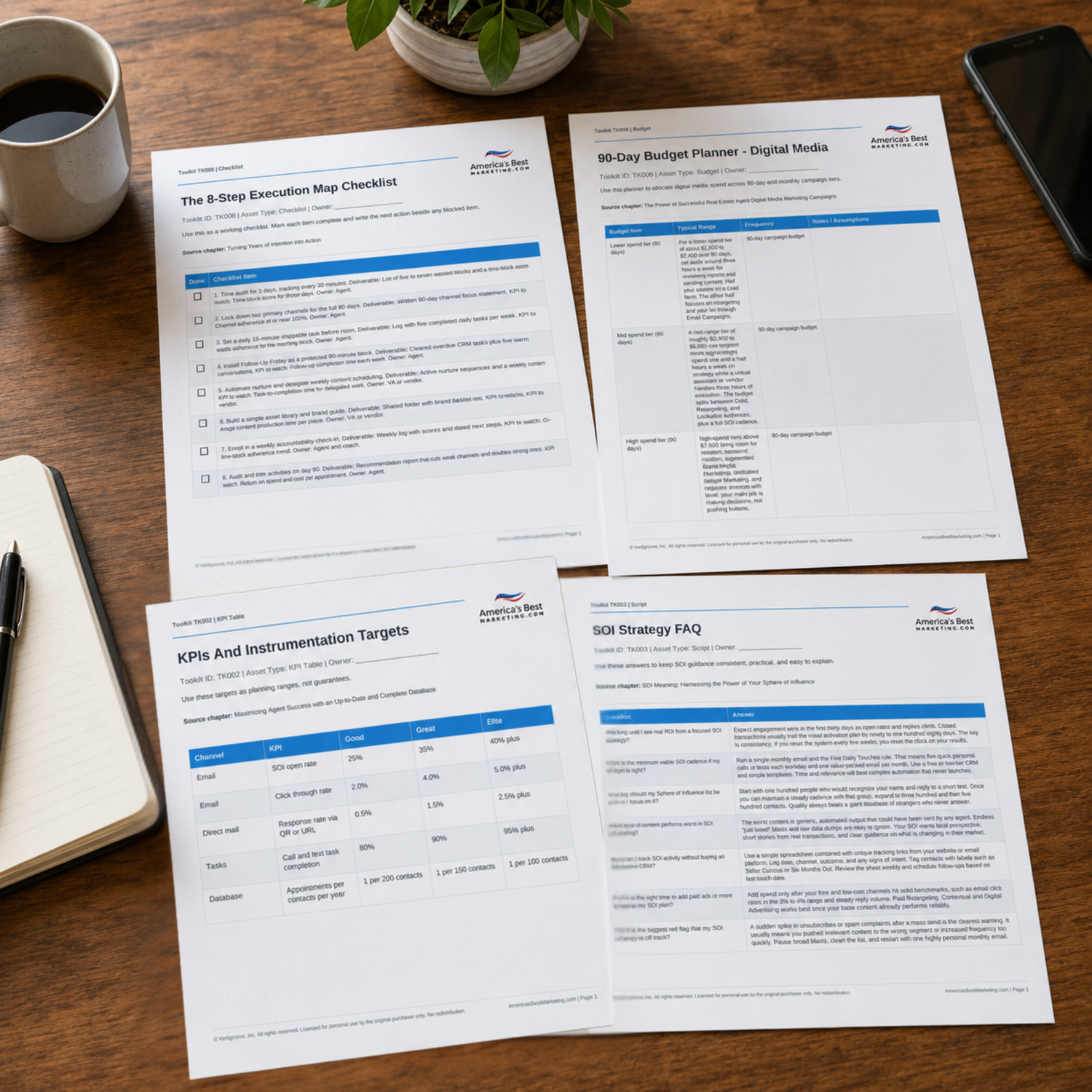
Download The SEO Website Toolkit
Use the companion Toolkit to turn the ninety day SEO plan into a working execution file with budget lanes, website cleanup steps, page templates, KPI tracking, and monthly review prompts.
Download the Toolkit ZIPRecommended reads
Recommended Reads for Real Estate Agents
These articles help agents turn client questions, local guidance, marketing channels, and follow-up into a more useful content system.

Best Real Estate Lead Generation Companies and SEO Solutions for Agents
Turn search visibility into a clearer publishing system for neighborhoods, services, and client decisions.
Read article
IDX SEO: Community Page Blueprint for Agents
Turn search visibility into a clearer publishing system for neighborhoods, services, and client decisions.
Read article
SEO-Friendly Blog Titles for Real Estate Agents: Templates + A/B Testing Checklist
Build organic reach with pages and posts that are easier to find, trust, and act on.
Read article
Local Restaurant Guides That Generate Leads: A Real Estate Agents-Friendly Where to Eat Framework
Publish content that answers local questions, supports lead capture, and gives future conversations a reason to start.
Read articleReal Estate Website SEO Questions Agents Should Be Ready To Answer
How long should I wait to see measurable ROI from SEO strategies for real estate websites?
Most agents start to see meaningful movement in search impressions and clicks within three to six months once they follow a consistent plan. Lead flow often lags behind that by another cycle because visitors need time to trust the brand and return. Treat any early wins as proof of direction rather than as a promise of future results.
What is the minimum viable SEO cadence for an agent with a tight schedule?
A simple but realistic cadence is one new or refreshed page per month plus a short weekly review of Google Search Console. That can be a neighborhood guide, a service page, or an updated blog that lines up with a clear keyword. The key is to keep the chain unbroken so Google sees steady improvement instead of random bursts.
Is local SEO more important than general organic SEO for real estate agents?
Yes. Real estate is almost entirely local, and most prospects search with a city, neighborhood, price band, property type, or landmark in mind. Ranking for broad phrases may look impressive but rarely brings qualified leads. A smaller set of local phrases can generate better conversations because the searcher already knows roughly where and how they want to move.
What type of content performs worst and wastes SEO effort?
Generic market commentary with no location, client question, or clear next step tends to perform poorly. So do thin posts that repeat the same advice without new examples or local angles. Content that never links to your key pages also wastes effort because even interested visitors have nowhere structured to go next.
How do I track rankings and organic traffic without expensive paid tools?
Google Search Console and basic analytics will cover most early needs. Use Search Console to track impressions, clicks, and average position for your main keywords and pages. Use analytics to see how organic visitors move through your site and where they convert. A simple spreadsheet is enough to log these numbers once a month.
When should I consider scaling up content production and link building spend?
Once you see consistent organic traffic, rising impressions, and a few leads every month from search, it usually pays to lean in. That is the point where more content and stronger links accelerate a working pattern instead of trying to fix a broken one. Think of extra budget as fuel for a system that already shows traction.
What is a major technical red flag on my IDX Real Estate Websites that kills SEO performance?
Slow mobile load times on listing and neighborhood pages are a serious red flag. Heavy images, cluttered plugins, or broken scripts can cause visitors and crawlers to leave before the page even renders. Fixing that often unlocks better rankings and engagement because users finally reach the content you worked to create.
Next step
Build the System Behind The Search Traffic
Continue from one useful article into the larger ABM ecosystem: the book series for strategic depth and the full marketing program for done-for-you execution.

View the Book Series
Explore the America’s Best Real Estate Agent Marketing System books for a deeper strategic framework around visibility, referrals, listings, lead generation, and growth.
View the Book Series
See Full Marketing Program
See how AmericasBestMarketing.com runs real estate blog writing, social media, listing marketing, email, direct mail, and retargeting as one managed system.
See Full Marketing Program