Stop Describing, Start Selling: Writing Property Descriptions That Drive Appointments
Stop Describing, Start Selling Property Descriptions
Writing Copy That Drives Appointments
A benefit-first listing-copy system for real estate agents who want property descriptions to earn saves, clicks, showing requests, seller confidence, and cleaner launch momentum.

How to write property descriptions that drive appointments
Write the description around the buyer most likely to act. Name the friction that could slow that buyer down, connect each major feature to a practical benefit, and make the first fifty words create a clear reason to save the listing, click deeper, or request a private showing.
- Most listing descriptions fail because they read like property records instead of sales copy.
- The strongest descriptions start with a buyer lens, then turn each feature into a benefit that removes hesitation.
- MLS copy, social captions, and email teasers should carry the same property promise in channel-specific language.
- Saves, clicks, and showing requests should be checked before assuming the listing has a price problem.
Why This Works
Property descriptions are not legal summaries. They are sales conversations delivered in text. The job is simple: turn anonymous portal traffic into real buyers who feel a strong reason to book a showing.
Two ideas sit at the center of high-converting copy. Features describe what the home has. Benefits describe what life feels like when the buyer actually lives there. A new roof is a feature. Lower surprise repair risk and quieter sleep through winter storms are benefits.
A property description becomes stronger when it behaves like a guided pitch. A headline grabs attention and sets a promise that matters to the right buyer. The opening paragraph ties one feature to one clear benefit. The middle copy builds desire through specific sensory details, practical proof, and believable next steps.
- Benefit-first copy helps buyers understand why the home deserves a showing, not just what the home contains.
- Clearer copy protects seller confidence by framing the property honestly before buyers arrive.
- Stronger listing language gives agents a repeatable launch asset for MLS, email, social, print, and follow-up.
Build The Buyer Lens Before You Write
Every property description should feel like it was written to one likely buyer, not the entire market. That buyer could be a first-time buyer, a downsizer trading yard work for more travel, or an investor who values yield and low hassle more than cosmetic finishes.
Start by asking what this buyer fears most about a wrong purchase. The concern might be surprise maintenance, commute time, weak storage, difficult stairs, noisy neighbors, or a layout that looks better in photos than it feels in person. Then list three reasons this specific address calms that fear.
The same strategic mindset in Charting Your Course: How Real Estate Agents Can Navigate a Strategic Growth Plan for Long-Term Success applies here. A listing description is stronger when it fits a plan instead of chasing generic compliments.
Decide who is most likely to act
Choose the most plausible buyer before drafting. Buyers prioritizing functional layout and usable outdoor space care about flow, storage, and practical outdoor function.
Investors care about parking, storage, rent strength, and low friction. Downsizers care about stairs, noise, service access, and upkeep.
Translate facts into outcomes
List the five strongest features of the home, then write one tangible benefit and one emotion beside each.
A new HVAC system means lower bills and calm through summer heat. A corner lot can mean more light, fewer shared walls, and a stronger sense of privacy.
Adapt the same promise by channel
Use a full benefit-rich version for the MLS description. Create a shorter hook-driven version for Social Media Marketing.
Save a tight invitation for Email Campaigns so the message feels like a direct reason to book time.
Agents often describe the home without naming the problem it solves. A fenced yard is a feature. A contained outdoor space for pets, recreation, and summer cookouts is a benefit. For every feature you write, ask which buyer hesitation it removes.
Three Frameworks For Strong Listing Copy
Use a tight set of frameworks so every new listing gets sales-grade language without depending on late-night inspiration. The goal is repeatable production that still feels specific to each property and buyer type.
The fast-scan description
Sentence path
Hook lineBuyers who are done with projects walk straight into a ready home and straight out to the backyard.
Question lineWould this home let you move in and live instead of spending weekends on repairs and projects?
CTA lineReach out today and see how quickly this address can become your daily starting point and your evening reset.
Use this framework for homes that win on ease and speed. The job is to attract buyers who want to move in and live, not repair and negotiate.
The problem-solved story
Sentence path
Hook lineTired of cramming work, meals, and guests into the same small space.
Build lineHere a wide main-level floor plan opens from kitchen to living room to deck so daily life finally has breathing room.
CTA lineRequest the full feature sheet and walk the route that your mornings and evenings will follow.
Use this framework on homes that shine through layout more than finishes. You are selling relief from daily friction, not just square footage.
The lifestyle snapshot
Sentence path
Hook lineImagine coffee on the balcony while the city wakes up under you.
Build lineInside, floor-to-ceiling windows pull light across the living room and primary suite so every day starts with a wide view.
Close lineSchedule a private tour and see how this location can replace your current commute and weekend pacing.
Use this framework when the home and neighborhood sell a routine as much as a floor plan.
Production Plans You Can Repeat
Strong copy should not depend on rushed bullet lists before activation. Build a simple production plan with realistic spend and time so every listing gets polished descriptions, not database language pasted into a portal.
Plan for fifty to one hundred fifty dollars across the first ninety days. You handle the writing and lean on basic tools for grammar checks and portal previews.
Focus on the MLS description, one social post, and a short email teaser to existing contacts. The operating goal is speed, clarity, and a measurable first fifty words.
Plan for four hundred fifty to eight hundred dollars across the first ninety days. You record a simple voice walkthrough and provide bullet points.
A trusted vendor or virtual assistant turns that source into polished MLS copy, social captions, email subject lines, and light listing-page support.
Turn the mapped list into copy tailored for three key touchpoints. Use a full benefit-rich version for MLS, a sharper hook for social, and a direct invitation for email. Use one headline for MLS, one for print or Direct Mail, and one for email so the same property promise travels across channels without sounding recycled.
For search visibility, use keyword-rich phrases such as neighborhood names, property type, and one signature feature. The goal is clarity, not keyword stuffing. Middle copy should read like a guided walk through the three strongest benefits, then end with a single Call To Action such as text instructions, a tour request, or a value-added request.
KPIs From Description To Showing
Copy only matters if it moves numbers. Track the impact of benefit-first descriptions on saves, clicks, and showings so you can justify stronger Listing Marketing support and smarter distribution.
| KPI | What It Tracks | Target Range | Action Trigger |
|---|---|---|---|
| Save rate | Shows how many viewers save the listing. | 20% to 30% | If this beats your last three listings, reuse the structure and tone on your next launch. |
| Click rate | Measures clicks from email or social to the listing page. | 5% to 10% | If clicks reach this band, add more traffic through social promotion, email, and retargeting. |
| Showings set | Counts weekly private showing requests after the updated description goes live. | 3 to 5 | If weekly showings stay below this level, sharpen the headline and first fifty words before you touch the price. |
Compliance And Ethics That Keep Copy Clean
Compliance is not a box to check after publishing. It is part of trust building. Fair Housing rules mean you focus on the property and location, not on preferred types of people.
Describe features like level entries, wider halls, nearby parks, storage, transit access, and outdoor function without coding for age, faith, family structure, or any protected class. Every factual claim about size, fees, improvements, views, privacy, and distance to local draws must match the record.
- Remove language that hints at preference for a protected group.
- Keep every claim about upgrades, distance, square footage, and fees supportable.
- Use seller input for facts and hidden strengths, but keep final wording buyer-focused and compliant.
- Review every listing description out loud before publishing to catch filler, puffery, and insider jargon.
How This Becomes A Managed Marketing System
A better property description is the starting point, not the whole campaign. The same promise should show up in the MLS preview, listing landing page, social caption, email subject line, print headline, and retargeting message.
Use the feature-to-benefit map inside Real Estate Blog Writing Services, Social Media Marketing, Listing Marketing, Email Marketing for Real Estate Agents, Direct Mail Marketing, and Digital Retargeting. Each channel should repeat the same buyer-facing value story in the format the channel rewards.
Your next move is simple. Pick one active listing and rebuild the first fifty words using the feature-to-benefit map. Then write a tighter social caption and a sharper email subject line that match those words. If you want that process handled for every listing, AmericasBestMarketing.com can turn each new address into appointment-ready copy while you stay in front of clients.
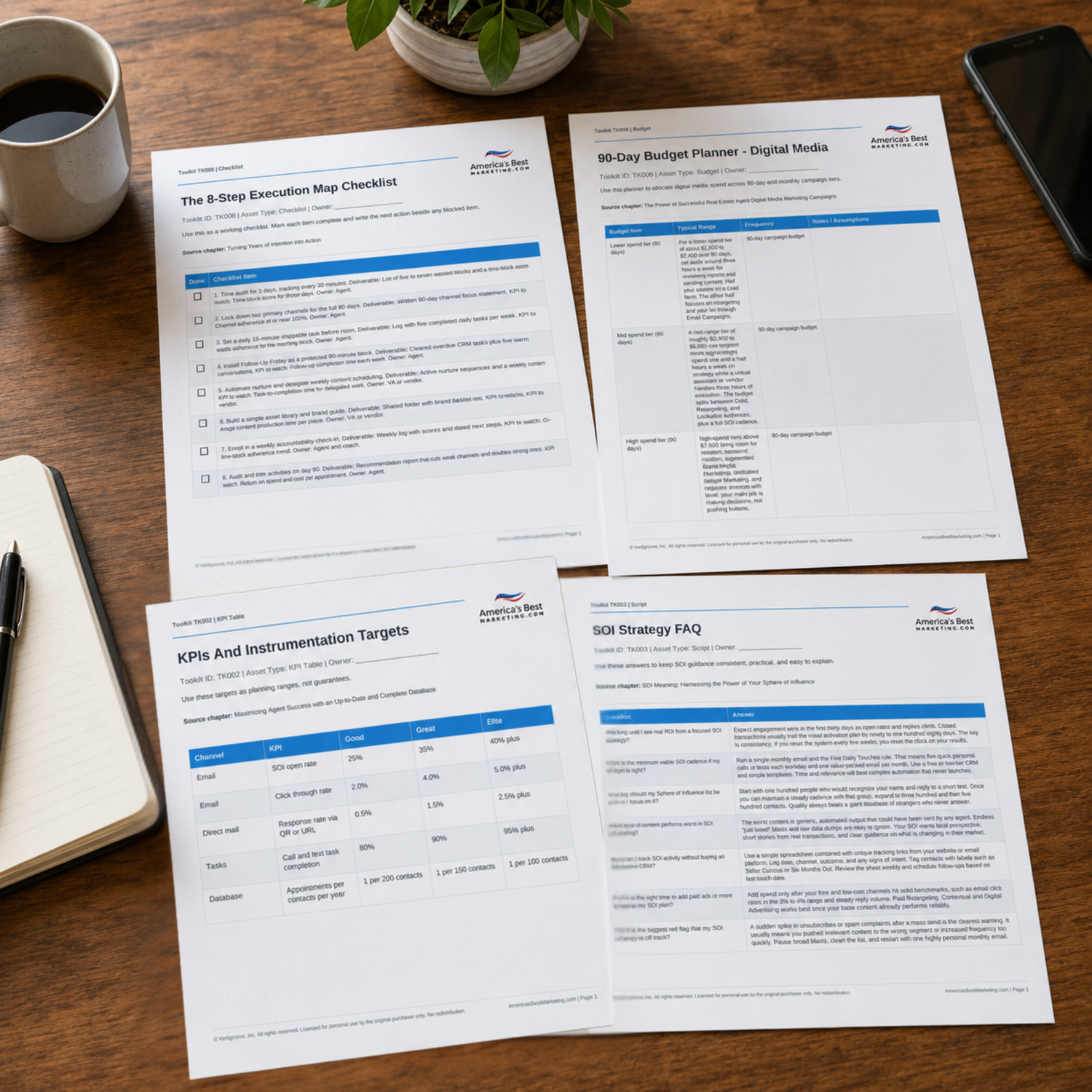
Download The Listing Copy Toolkit
Use the companion Toolkit to plan a listing-copy launch, map features to benefits, write faster description frameworks, and track saves, clicks, and showing requests after the listing goes live.
Download the Toolkit ZIPRecommended reads
Recommended Reads for Real Estate Agents
These articles help agents connect listing visibility, seller education, marketing channels, and follow-up into a clearer growth system.

Direct Response Copy for Just Listed to Just Sold: The Playbook for Seller Leads
Position listings with stronger copy, clearer proof points, and promotion that supports seller confidence.
Read article
The Pros and Cons of All-Cash Offers
Use the pros and cons of all-cash offers to create a stronger bridge between client education and real conversations.
Read article
Tax Benefits of Investment Property: Real Estate Agent Talking Points + Investor Content Angle
Make tax benefits of investment property more useful by tying the message, audience, and next step together.
Read article
Testimonial Content That Books Appointments for Real Estate Agents
Make testimonial content that books appointments more useful by tying the message, audience, and next step together.
Read articleProperty Description Questions Agents Should Be Ready To Answer
How long does it take to see results from new listing copy
You can measure early movement within the first week on most portals. Watch saves, shares, click-through behavior, and private showing requests for the next three listings that use benefit-first descriptions. Revenue follows later, but leading indicators should move quickly when the first fifty words are doing their job.
What is the minimum effort if my time and budget are tight
Focus on the first fifty words of the MLS description and the primary headline. Map three key features to three benefits, then build one social caption and one email teaser around the same promise. That gives you a usable launch message without building a full campaign from scratch.
How many listings do I need before this process makes sense
You do not need a huge pipeline. Use the framework on your next three listings and compare time to first showing request against your prior average. Even modest speed gains matter because better copy protects calendar time, seller confidence, and launch momentum.
What type of phrasing harms listing performance
Vague praise such as gorgeous, stunning, and tons of potential rarely moves serious buyers. Long sentences that stack every feature together also weaken the message. Use concrete language about light, layout, storage, commute, privacy, maintenance, and the daily moment the buyer can picture.
How can I track impact without advanced tools
Use built-in portal metrics to record views, saves, shares, click-through rate, and showing requests. Note the date the updated copy goes live and the date of the first private showing. A simple spreadsheet can reveal which headline structure and benefit angle produces faster action.
When should I invest in more traffic for a listing
Add traffic after the organic version shows signal. If saves and click-through rates improve, the message is resonating and paid distribution has a stronger chance of producing real showings. Weak copy should be tightened before more budget is added.
Should sellers have a say in the listing description
Sellers should provide facts, history, and context, but the agent should control final phrasing. Sellers remember projects and personal stories. Buyers care about future life and value. Use seller input to uncover hidden strengths, then keep the description accurate, compliant, and benefit focused.
Next step
Build the System Behind the Advice
Continue from one useful article into the larger ABM ecosystem: the book series for strategic depth and the full marketing program for done-for-you execution.

View the Book Series
Explore the America’s Best Real Estate Agent Marketing System books for a deeper strategic framework around visibility, referrals, listings, lead generation, and growth.
View the Book Series
See Full Marketing Program
See how AmericasBestMarketing.com runs real estate blog writing, social media, listing marketing, email, direct mail, and retargeting as one managed system.
See Full Marketing Program