IDX Lead Routing & Alerts: From Browse to Booking in Under 5 Minutes
IDX Lead Routing From Browse To Booking
Alerts that move website visitors into appointments in under 5 minutes
A practical operating system for real estate agents who want IDX browsing signals, instant follow up, lead scoring, and weekly routing audits to work together.

IDX lead routing explained for real estate agents
IDX lead routing works when high intent actions trigger a real-time alert, the right owner receives it, and the first SMS or email references the exact property, area, or behavior the buyer just showed. The first operating target is simple: answer hot leads in 5 minutes or less, then audit speed, relevance, and appointment conversion every week.
- Most IDX leads forget which agent they clicked within minutes, so response speed has to become an operating standard.
- High intent behavior should include showing requests, saved searches, repeat property views, and focused browsing inside one price band or neighborhood.
- Every hot alert needs one named owner and one primary channel so the lead does not disappear inside a shared inbox.
- Weekly routing audits protect the system before more traffic, retargeting, contextual ads, or social media effort gets added.
Why Speed Wins Every IDX Lead
Speed and relevance are the currencies that decide who gets the appointment. When a buyer registers on your site, you have a short window to prove that you are paying attention in real time. A fast routing and alert system that references the exact homes and price range they touched gives you a clear edge over slower agents who send bland greetings.
Fast response usually improves contact and appointment rates. Once response drifts past the 5-minute mark, competing sites, other agents, and lead distraction can sharply reduce your odds of a real conversation. The lead has tested other sites, answered other calls, and your brand now blends into the noise.
The strategic payoff is not only speed. The real leverage comes from pairing fast alerts with specific context. When your reply names the property, neighborhood, price band, school zone, or search pattern, the buyer can tell that your response was not a generic blast from a form letter.
- The one-hour lag means the lead has likely registered on multiple sites while your alert hides in an inbox.
- The generic reply wastes interest because you ask how you can help instead of naming the property they just checked.
- Alert noise trains you to ignore everything when low value pings fire all day for weak browsing actions.
Foundations For Smarter IDX Lead Routing
IDX is the engine that pulls live listing data from the MLS into your site so visitors can search without leaving your brand. A strong IDX website setup turns every view, save, and search into usable data. That data only creates revenue once you route it into a CRM where lead records, tags, and tasks update without manual typing.
Behavioral scoring turns those raw clicks into a simple language your team can act on. You assign points for actions such as viewing a property, saving a search, sharing a listing, or requesting a showing. An instant alert is the final piece. It is a real-time notification through SMS, push, or email that hits you or your team as soon as a high value action fires so the right person can respond within minutes.
Define high intent behavior
Track actions such as showing requests, saved searches, repeat property views, and focused browsing inside one price band or neighborhood.
Start with 3 to 5 triggers. Too many alerts will create noise and teach you to ignore the system.
Assign every hot alert
Make sure urgent leads reach a named person through one primary channel instead of disappearing into a shared inbox.
Use SMS or push for urgent events and email for lower intensity nurture. Do not split the same hot lead across random channels.
Review conversion weekly
Watch response time, hot lead rate, and appointment conversion before increasing traffic or ad spend.
The audit tells you whether the issue is traffic quality, speed, script relevance, or the handoff into a real appointment.
Most agents watch saved homes and ignore the quiet binge browsing that never hits the save button. A lead who looks at 3 homes in the same price band or street cluster within fifteen minutes is sending a clear buying signal. Treat that pattern as a hot trigger and send it straight to a fast human follow up queue every time.
Instant Messages That Turn Browsers Into Conversations
Your first message after a high intent action sets the tone for everything that follows. The goal is simple. Prove that you saw what they did, remove friction, and suggest one clear next step. Use these examples as starting points and tune the tone to match your market and price range.
The showing request reply
Fast text message
Hook lineHi Taylor, I received your request for 214 Oak Street.
Middle lineI can walk you through available times and any offer rules before you pick a slot.
CTA lineCan I call you in the next 2 minutes, or would you rather text to lock a time?
Use this when the lead asks for a showing or repeats views on one active listing. The address belongs in the first line.
The hot score neighborhood reply
Behavior-based follow up
Hook lineIt looks like you are very focused on homes near Ridgeview School.
Build lineI track live price moves and offer trends in that zone.
CTA lineWould you like a quick 60-second video that sums up what buyers are facing right now?
Use this when the lead shows repeated activity in one school zone, neighborhood, condo building, or price band.
The heavy viewer comparison email
Short email follow up
Opening lineI saw you comparing homes in Brookstone today.
Explain lineI pulled 2 additional homes that match your price range and style.
Value lineI can show days on market, price drops, and likely competition level side by side.
CTA lineWould you like me to send that comparison over?
Keep this message short. The lead should feel that you are adding judgment, not simply resending the same listings.
The Four Week IDX Conversion Cadence
You do not need an enterprise stack to route IDX leads like a pro. Most agents can stand up a lean system with a modest software budget and a clear weekly time block. Use this four week cadence to prove the pipes work, tune the scripts, and create a baseline before spending more money on traffic.
Lock in high intent alerts
Choose 3 to 5 high intent actions such as showing requests, saved searches, or repeat views in one area.
Confirm that your IDX platform can pass those events into your CRM through native integration or a simple webhook.
Run a test lead and confirm that the right person receives the alert in under sixty seconds.
Script SMS and email follow up
Build one short text that names the property and offers a fast call or text reply choice.
Draft one short email that references the neighborhood and adds 2 new options the lead has not seen.
Load both messages inside your CRM or IDX automation so they fire without copy and paste work.
Build a simple behavioral score
Give small values to views and higher values to saves, shares, and showing requests.
Choose the score that marks sales ready interest based on your price range and traffic volume.
Apply a hot lead tag once the threshold is reached so you can filter quickly.
Audit the handoff
Review ten hot leads from the past month and read the full message history inside your CRM.
Grade each reply on speed, relevance, and clarity of next step.
Fix broken routes, missing tags, and dead messages before you add more traffic.
Plan on a simple IDX add on, a free or low cost CRM, and one SMS tool. Spend between $150 and $450 across 90 days. Block 3 to 5 hours each week to review alerts, refine scripts, and run a weekly audit of hot leads.
Add a professional IDX package with behavioral tracking, a paid CRM, and light retargeting ads to visitors. Expect a 90-day spend between $600 and $1,500 plus 2 to 4 hours per week from a virtual assistant or vendor. Your time drops to one or two focused hours.
High volume teams that want near-instant response across long hours should set a defined $2,000 to $5,000 90-day budget for premium IDX setup, deeper automation, and queue coverage. Make sure your core process works on the starter or mid range plan before you invest at that level.
IDX Conversion KPIs You Need On One Screen
Once your routing and alerts are live, you need a short list of numbers that tell you if the system is doing its job. Focus on speed to first response, the share of leads that reach hot score status, and the rate at which hot leads turn into first appointments. Keep these KPIs pinned in your CRM or a simple dashboard so you see them daily.
Use the table below as a quick reference when you review results every week. If you find that one metric drifts outside the target range, adjust scripts, routing rules, or traffic mix before you chase new tools.
| Metric name | What it tracks | Target range | Why it matters |
|---|---|---|---|
| Response time | Share of hot leads answered in 5 minutes or less. | 80% to 95% | Shows how often high intent buyers actually feel your speed advantage. |
| Hot lead rate | Share of IDX leads that reach your hot score threshold. | 10% to 25% | Reveals how well your traffic sources attract serious buyers instead of casual surfers. |
| Appt conversion | Share of hot leads that book a first live appointment. | 15% to 25% | Signals whether scripts and handoff steps are strong enough to turn interest into meetings. |
Compliance And Data Hygiene You Cannot Ignore
Your routing rules and alerts must respect Fair Housing guidance. That means you route leads based on price range, property type, location, and timeline rather than any demographic factor. Build rules around behavior and budget, not names, photos, or guesses about who they are.
Every automated sequence that touches IDX leads needs a clean opt out path. Email sequences should always include a clear unsubscribe link. SMS replies should support a simple stop word so people can exit. Honor those choices inside your CRM so you do not accidentally pull opted out leads back into campaigns.
Finally, treat search data with respect. Only send properties and reports that match what the lead has requested or searched for on your site. Make sure your IDX feed syncs cleanly with the MLS so sold status, price changes, and listing remarks stay accurate. A single bad listing update can undo months of trust building.
A Simple Case Pattern For Small Teams
A two agent team in a mid price market noticed that their IDX leads converted to appointments at roughly 1.5%. They felt buried in logins and email alerts with no clear system. They decided to run a 90-day experiment using the mid range budget plan described above.
They set a hot score at 40 points, which matched patterns where buyers viewed 8 or more homes or requested a single showing. They wrote a short text that named the property and offered a quick call window. Over the next quarter, hot leads converted to appointments at roughly 4.5%. That jump, combined with 2 new buyer clients, covered software costs several times over and gave them confidence to add more traffic.
What I Would Do In The Next 48 Hours
Your IDX traffic already holds the buyers you want. The question is whether your system grabs them in the short window when they are engaged. A fast routing and alert setup turns your website from a passive brochure into an active intake desk that never sleeps.
- Submit a test lead on your own IDX page and time how long it takes for a notification to reach you.
- Define the one action that always deserves a call right away and treat it as a stop everything signal.
- Wire that action to a real-time SMS alert that reaches a human who can respond within 5 minutes.
- Write one instant SMS and one instant email that name the exact property or neighborhood the lead touched.
- Create a simple scoring model and tag any lead that crosses your hot threshold as sales ready.
- Hold a weekly 15-minute review where you correct routing errors and refine scripts based on real replies.
How This Becomes Marketing
IDX routing is not only a back office workflow. It becomes marketing when the same promise appears across your website, email, social content, retargeting, and listing conversations. Buyers should repeatedly see that you respond quickly, understand search behavior, and help them turn scattered browsing into a plan.
That message also supports sellers. A seller wants to know whether your marketing can create and manage buyer demand. Showing a clean lead routing system helps prove that your website is not just pretty. It captures intent, organizes follow up, and gives serious buyers a faster path into conversation.
If you want help turning this playbook into a done-for-you system, start with a clean weekly routing audit, then decide which parts should be handled by your CRM, your virtual assistant, or a marketing partner who can keep the process accountable.
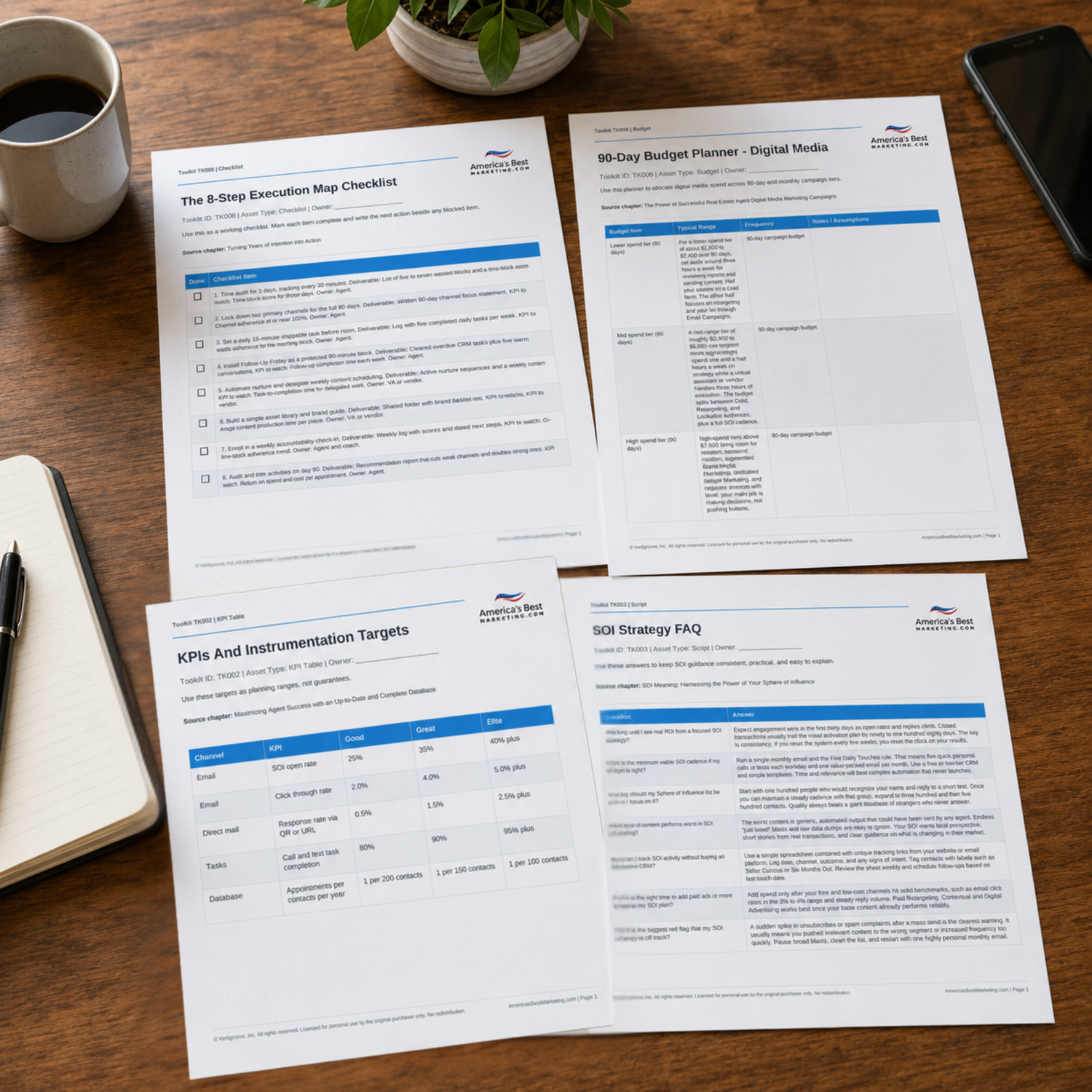
Download The IDX Lead Routing Toolkit
Use the companion Toolkit to launch high intent alerts, weekly handoff reviews, instant follow up scripts, budget planning, and KPI tracking for an IDX conversion system real estate agents can actually manage.
Download the Toolkit ZIPRecommended reads
Recommended Reads for Real Estate Agents
These articles help agents connect local visibility, useful content, channel strategy, and follow-up into a stronger search-friendly marketing system.
Why Every Real Estate Agent Needs an IDX-Integrated Website
Use IDX-integrated websites to create a stronger bridge between client education and real conversations.
Read article
High-End Buyer/Seller Tech Stack: Tools and Systems Luxury Agents Use
Create more leverage from high-end buyer/seller tech stack with a clear path from attention to follow-up.
Read article
Best Website Builders for Real Estate Agents: Costs, SEO Tradeoffs, and Setup Tips
Bring more structure to website builder decisions so every touchpoint supports visibility and trust.
Read article
Could Poor Website Design Be Costing You Clients? How Agents Can Build High-Converting Real Estate Websites
Use website design and conversion to strengthen visibility, follow-up, and client conversations without adding more random tasks.
Read articleIDX Lead Routing Questions Agents Should Be Ready To Answer
How long does it take to see improvement from IDX routing changes?
You can usually see a lift in contact rate within the first month once instant alerts and fast SMS replies are live. Revenue impact from signed clients often takes 3 to 4 months of consistent execution. Treat the first 90 days as a test cycle focused on response speed and appointment rate more than closed sales.
What is the minimum setup if my budget is tight right now?
Start with one strong IDX search page, a basic CRM, and a single SMS tool. Configure an instant alert for showing requests and reply to those leads within 5 minutes. Use simple email follow up for everyone else. You can add scoring, retargeting, and virtual assistant help once that basic loop feels reliable.
How big does my audience need to be before I build a scoring model?
You can start scoring with a small list as long as you are getting a steady trickle of IDX leads every week. Focus on the quality of behavior rather than the size of the list. A small group of buyers who return to the same area or price band tells you more than a large pool of casual visitors.
Which content performs worst in IDX follow up sequences?
The weakest content is slow and vague. Messages that arrive a day late with subject lines like just checking in usually drive silence. Generic property alerts that repeat homes the lead already dismissed also undercut trust. Timely notes that reference the exact search they ran almost always perform better than long market essays.
How can I track results without advanced reporting tools?
Use the basic reporting inside your IDX and CRM. Record the time of each hot lead alert and the time of your first reply in a simple spreadsheet. Add columns for reply type, appointment booked, and outcome. Review this every week so you can see trends in response speed and conversion without buying a new dashboard.
When should I increase ad spend or expand my target area?
Increase spend only after your hot lead appointment rate sits at a healthy level for several weeks. Once you convert a steady share of leads inside your current farm, you can add budget for new traffic sources. Expand territory only when routing rules, tags, and scripts work cleanly across your existing zones.
What is the biggest red flag in an IDX routing system?
The biggest warning sign is a lack of weekly review. If nobody audits assignment rules, message performance, and missed replies, small errors compound into lost revenue. A short standing meeting where you scan 10 recent hot leads and fix issues will protect your time, your brand, and your marketing budget.
Next step
Build the System Behind the Advice
Continue from one useful article into the larger ABM ecosystem: the book series for strategic depth and the full marketing program for done-for-you execution.

View the Book Series
Explore the America’s Best Real Estate Agent Marketing System books for a deeper strategic framework around visibility, referrals, listings, lead generation, and growth.
View the Book Series
See Full Marketing Program
See how AmericasBestMarketing.com runs real estate blog writing, social media, listing marketing, email, direct mail, and retargeting as one managed system.
See Full Marketing Program