Title Insurance Explained: Real Estate Agent Talking Points to Prevent Last-Minute Surprises
Title Insurance Explained for Agents
Talking Points That Prevent Last-Minute Surprises
A client-education briefing for real estate agents who want title fees, owner policies, title searches, and closing disclosures to feel expected before the signing table.

Title insurance explained for real estate agents
Title insurance protects against certain ownership problems that happened before a buyer owned the home. Agents should explain the lender policy, owner policy, title search, and one-time premium before the Closing Disclosure arrives so clients treat the fee as standard protection instead of a last-minute surprise.
- Title insurance protects against covered ownership issues tied to the property’s past, while home insurance protects against future events.
- The lender policy protects the lender’s lien position. The owner policy protects the buyer’s ownership rights.
- The premium should be framed early as a one-time closing cost, not explained for the first time at signing.
- A repeatable email, FAQ, video, and checklist system prevents fee shock and makes closing feel better managed.
Why Title Insurance Clarity Pays Off
Closing cost anxiety spikes when clients see title fees for the first time on the Closing Disclosure. They do not usually object because the fee exists. They object because nobody framed the purpose, timing, and protection layer early enough for the number to feel normal.
Your strategic role is to move the title conversation upstream. When you explain the one-time premium, the title search, the lender policy, and the owner policy before the paperwork stage, you convert a technical line item into proof that you protect the transaction. That gives clients a calmer finish and gives your brand a more disciplined advisory posture.
This is also a marketing asset. A strong title education workflow can live inside your website, email nurture, video rotation, and transaction communication. Start with a simple resource hub, then pair it with AI in real estate marketing and automation so the education happens consistently even when your week gets crowded.
- You reduce last-minute fee shock by explaining the premium before the closing documents force the issue.
- You make the agent’s value visible by translating legal-adjacent language into client-safe plain English.
- You create reusable education assets that can support buyers, sellers, cash clients, and financed clients.
What Agents Need To Explain First
Clients do not hate fees. Clients hate ambiguity. Title insurance becomes the villain when nobody explains what it protects, why the premium is one-time, and what happens when a title defect appears right before or after closing.
Keep the opening clean. Title insurance protects the past. Home insurance protects the future. That distinction gives buyers a usable mental model and keeps the conversation from becoming a pile of disconnected definitions.
Separate lender protection from buyer protection
The lender policy protects the lender’s lien position. It is usually required when the buyer finances the purchase. It does not give the buyer the same personal ownership protection that an owner policy can provide.
When clients ask why they are paying for lender coverage, explain the lender requirement first. Then pivot to the owner policy as the buyer’s personal protection layer.
Define the asset being protected
The owner policy protects the buyer’s ownership rights against certain covered claims tied to prior events. That can include issues such as unreleased liens, ownership disputes, signature problems, or missing heirs, depending on policy terms.
The cleanest decision rule is simple. If the buyer wants personal protection for ownership claims tied to the past, the owner policy is the conversation to have with the title team.
Show how defects are found and cleared
The title search checks the recorded history for liens, judgments, easements, chain-of-title gaps, and ownership issues. The title team works to clear what it can before closing.
If a covered claim shows up later, the policy can help with defense costs or certain losses, based on the policy language. Your job is expectation setting, not legal interpretation.
Most agents overlook that title insurance is one of the few common insurance products focused on past events rather than future risks. Frame it as the final ownership shield in the transaction. The buyer is not just buying a building. They are anchoring legal ownership to their name.
The No-Surprise Closing Education Engine
This four-phase system moves the title conversation out of the pressure zone and into calmer moments where clients can listen, ask, and retain. Use the same order every time. Consistency beats cleverness when money and paperwork collide.
The consultation anchor
Insert a two-minute title segment into every buyer consultation and seller preparation conversation. Use the same line each time: title insurance protects the past, home insurance protects the future.
Then set the expectation that the client will see title charges later and that you will explain the basic categories before signing day.
The automated nurture
Once a property goes under contract, trigger a three-part closing cost series through Email Marketing for Real Estate Agents. Keep each message short and focused on one question.
Send one email on the one-time premium, one on owner policy versus lender policy, and one on what the title search reviews before closing.
The visual authority layer
Record short Title Tip videos that answer one question at a time. Avoid legal jargon. Use examples such as old liens, heirship issues, boundary questions, and unreleased mortgage filings.
Publish those clips through Social Media Marketing so the same education supports prospects, past clients, and active transaction files.
The post-close feedback loop
A calm signing creates trust. Capture that trust while it is fresh with one survey question: What part of the closing felt easier because we explained it early?
Use the best answers as review prompts, internal training notes, and future marketing proof. Calm communication is a brand asset when you document it.
Three Ready-To-Use Title Insurance Scripts
Scripts protect consistency. They help agents explain technical subjects without overpromising, drifting into legal advice, or making the conversation sound improvised.
The consultation anchor
Agent dialogue
Hook lineBefore we get deep into numbers, I want you to understand one closing cost that surprises people when nobody explains it early.
Middle lineTitle insurance protects ownership issues tied to the property’s past. Home insurance protects against future events. Those are two very different jobs.
CTA lineYou will see title fees on the Closing Disclosure, and we will review the categories before you sign so they do not feel random.
Use this during the buyer consult, listing consult, and first offer strategy call. Keep it under two minutes and repeat it once after contract.
The owner policy decision rule
Agent dialogue
Clarify lineThe lender policy protects the lender. The owner policy protects you as the buyer.
Decision lineIf you want personal protection for ownership claims tied to the past, the owner policy is the protection layer to discuss with the title team.
Confidence lineYou are buying a legal right, not just a building. This policy is designed to defend that right when a covered issue appears.
Use this when a financed buyer asks why a lender policy exists or when a cash buyer asks whether title insurance can be skipped.
The defect example without fear
Agent dialogue
Start calmMost closings go smoothly. This is about the rare problems that can show up late.
Example lineAn old lien may not have been properly released, or an heir may question a prior transfer.
Resolution lineThe title team clears what it can before closing, and the policy exists for covered issues that still surface later.
Close lineWe are talking about it now so you do not feel blindsided when you see the title premium on the disclosure.
Use one example, then stop. More examples can increase anxiety. One clear example increases understanding.
Content Angles, Budget Blocks, And Cadence
Title insurance content should feel like a consumer finance explainer, not a lecture. Use short metaphors, plain definitions, and a clear next step. The best topics answer the exact questions clients ask under contract.
- The Owner Policy: Your Home’s Quiet Protection Layer.
- Why Cash Buyers Still Need A Title Insurance Conversation.
- Title Search Basics: What They Look For And Why It Matters.
- Three Title Issues That Can Show Up Before Closing.
- The One-Time Premium Explained In Plain English.
- Closing Costs Without Confusion: A Simple Breakdown.
Spend zero to one hundred fifty dollars each month. Run a three-email closing cost series, publish one Title Tip video per month, and keep one FAQ hub on your website. The job is not volume. The job is consistent education before stress hits.
Spend two hundred fifty to six hundred dollars each month. Add quarterly FAQ updates, two short videos, one downloadable checklist, and light retargeting. Use Digital Retargeting to bring visitors back to the title education page.
House the core answers on IDX Real Estate Websites so buyers and sellers can self-serve. Then use Real Estate Blog Writing Services, email, social, and short-form video to keep the explanation circulating.
The Title Education KPI Table
Track whether your education system is reducing friction and creating better client conversations. The best measurement is not just clicks. It is fewer repeated questions, cleaner signing appointments, stronger review language, and more specific referral prompts.
| Milestone | Content Focus | KPI | Operator Notes |
|---|---|---|---|
| Pre-contract | Closing costs with title premium callout | Page dwell time | Rewrite the first answer until clients understand that the premium is usually one-time. |
| Under contract | Owner policy versus lender policy | Email click-through rate | Track which title topics create replies before the Closing Disclosure arrives. |
| Ten days to close | Title search and defect response workflow | Video completion rate | Trim the first sentence until viewers understand the risk without feeling alarmed. |
| After closing | Survey and review prompt | Review language quality | Look for comments about calm communication, clear expectations, and no surprises. |
The Ten-Point Closing Clarity Audit
Use this audit to verify your education system before the paperwork stage. It keeps your message consistent and prevents the title conversation from hijacking your week.
- Explain lender policy versus owner policy in one sentence during the consult.
- Send the first closing cost email within twenty-four hours of contract acceptance.
- Label the title premium as one-time in every written estimate you share.
- Keep one two-sentence answer ready for why a buyer pays for a lender policy.
- Publish a Title 101 page on your site with the top seven questions clients ask.
- Link that page from your closing cost email series and your buyer resources menu.
- Record three Title Tip videos on liens, heirs, and boundary issues.
- Ask your title partner for the top defects in your county and add them to your FAQ.
- Add a CRM trigger for a ten-days-to-close title search explainer.
- Send a post-close survey within forty-eight hours that asks what felt easiest because you explained it early.
Mini Case Pattern: From Fee Shock To Calm Closing
A small real estate team noticed that roughly one in five buyers questioned title fees at the signing table. The questions rarely killed deals, but the tension turned closings into high-stress sessions and drained referral energy.
The team implemented a standardized Title Insurance Explained drip series through Email Marketing for Real Estate Agents and sent it on day one after contract. Buyers started asking smarter questions earlier, which gave the team time to answer without pressure.
The last-minute fee debate disappeared. Post-close surveys became more specific, with clients mentioning communication, clarity, and confidence. The team then used those responses as review prompts and referral language for the next quarter.
How This Becomes Marketing
A friction-free closing does not happen by accident. It happens because you taught the client what to expect before paperwork arrived and before anyone felt rushed. That calm finish is a brand asset, and you can build it on purpose.
Turn title education into a recurring theme across Real Estate Blog Writing Services, Social Media Marketing, Listing Marketing, Email Campaigns, Direct Mail, and Digital Retargeting. Each channel should make the same promise. You explain the money before the client feels pressure.
Two actions matter next. First, add a Title Insurance FAQ page to your website so clients can self-serve the basics. Second, build an under-contract communication sequence that sends the right explanation at the right milestone. That is how the transaction experience becomes future marketing.
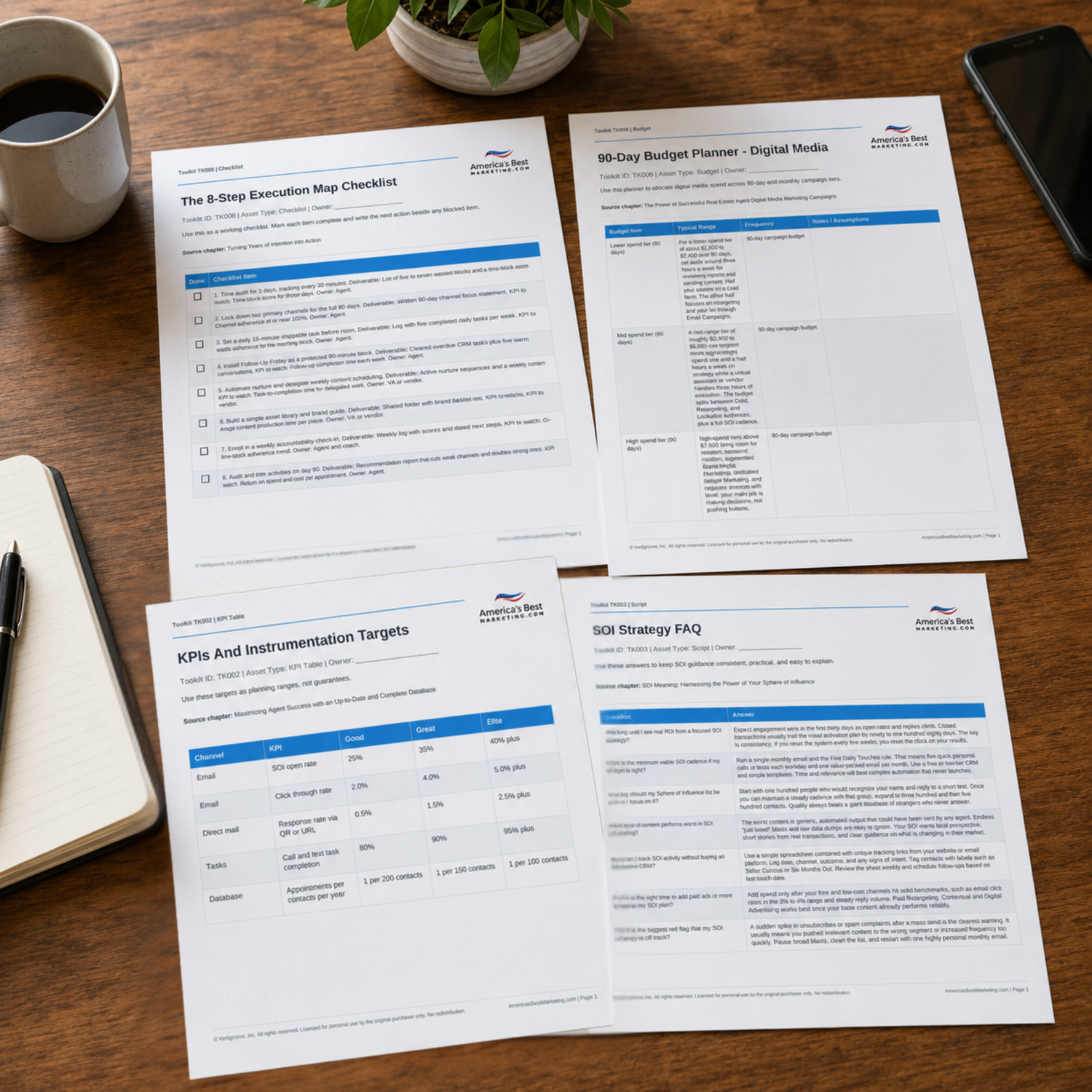
Download The Title Education Toolkit
Use the companion Toolkit to install the script pack, title insurance FAQ, content cadence, KPI tracker, budget blocks, and ten-point closing clarity audit from this article.
Download the Toolkit ZIPRecommended reads
Recommended Reads for Real Estate Agents
These articles help agents connect follow-up discipline, database habits, client communication, and marketing execution into a repeatable system.

High-Converting Real Estate Email Marketing Campaigns Every Agent Needs for Predictable Lead Flow
Give email campaigns a clearer role in the marketing system instead of treating the work as a one-off idea.
Read article
Escrow Accounts Explained: Simple Agent Talking Points for Buyers and Sellers
Make escrow accounts explained easier to plan, publish, and measure as part of a weekly marketing rhythm.
Read article
Blog Topic: Real Estate Agent Brand Kit: Fonts, Colors, and Post Styles That Signal “Pro”
Clarify the message, visuals, and client experience that make an agent feel distinctive.
Read article
How to Re-Engage Cold Real Estate Leads with Email & Retargeting
Use smarter email timing and segmentation to restart conversations without sounding pushy.
Read articleTitle Insurance Questions Agents Should Be Ready To Answer
Is title insurance a monthly payment?
No. Title insurance is typically a one-time premium paid at closing, tied to the property and the recorded transfer. Clients often assume it works like auto insurance, so say this early and repeat it once when the Closing Disclosure arrives. The simple goal is expectation, not debate.
What is the difference between the owner policy and the lender policy?
The lender policy protects the lender’s lien position and most financed deals require it. The owner policy protects the buyer’s ownership rights and can help with defense costs for certain covered claims. If a client asks why they pay for the lender policy, explain it as a lender requirement and then offer the owner policy as the buyer’s personal protection layer.
People Also Ask: Is title insurance a monthly payment?
Search results often frame this question because buyers compare it to other insurance products. The answer stays the same: it is usually one-time at closing, not monthly. Anchor the explanation to the timeline: it insures the recorded history up to closing. That keeps the concept clean and reduces pushback.
How do I explain the title search without sounding like a lawyer?
Tell clients the title team runs a history check on the property to confirm clean ownership. They look for liens, judgments, easements, missing transfers, and other recorded issues that could block the sale. Then they work to clear what they find before closing. Keep your explanation focused on process and expectation.
How long to see measurable ROI from education?
Measure leading indicators first. Within 30 to 60 days, you should see fewer repeated questions on active files and stronger engagement with your closing cost touchpoints. Within a few transaction cycles, you should see more specific review language about communication and fewer tense signing moments. Treat that language as proof of trust and track referral asks against it.
What content performs worst in financial topics?
Jargon-heavy paragraphs and fee lists without context perform poorly because they feel like a bill, not a lesson. Content also fails when it tries to explain everything at once. The best performing approach uses one question per section, one simple example, and one decision rule. If you cannot say it in two clean sentences, rewrite it.
Do cash buyers still need title insurance?
Cash buyers can skip the lender requirement, but they cannot skip title risk. The property still has recorded history and defects can surface after closing. Many cash buyers choose an owner policy because they want personal protection for the asset and future resale. Present it as optional but smart, then let the client decide.
Next step
Build the System Behind the Advice
Continue from one useful article into the larger ABM ecosystem: the book series for strategic depth and the full marketing program for done-for-you execution.

View the Book Series
Explore the America’s Best Real Estate Agent Marketing System books for a deeper strategic framework around visibility, referrals, listings, lead generation, and growth.
View the Book Series
See Full Marketing Program
See how AmericasBestMarketing.com runs real estate blog writing, social media, listing marketing, email, direct mail, and retargeting as one managed system.
See Full Marketing Program