How to Get Real Estate Leads Online: The Ultimate Guide for Real Estate Agents
How to Get Real Estate Leads Online
A Funnel System for Real Estate Agents
A lead-generation briefing for agents who want traffic, capture, follow-up, retargeting, and weekly measurement working as one connected operating system.

How agents get real estate leads online
The fastest way to get real estate leads online is to build one focused funnel, not a pile of disconnected tactics. Pick one audience, send that audience to one useful offer, capture contact information with a short form, follow up quickly, and keep every visitor warm with email plus retargeting until they are ready for a real conversation.
- Online real estate leads come from a connected funnel that links traffic, landing pages, forms, follow-up, and retargeting.
- The strongest agent systems use one audience, one clear offer, and one next step instead of sending people into a generic website.
- Speed to first contact matters, but long-term nurture is what turns early curiosity into appointments and clients.
- Cost per Lead, Lead Conversion, and Organic Click Rate should be reviewed every week so spend decisions are based on evidence.
Why Online Lead Generation Pays Off
Online real estate leads do not come from random posts or lucky clicks. They come from a simple digital funnel that runs every day and never forgets a follow-up. Traffic only has value when it moves a buyer, seller, renter, relocator, or homeowner into a trackable next step.
The real advantage is control. Portal leads, social algorithms, and referral luck can all shift without warning. A owned lead system gives an agent a repeatable path from website visit to captured contact, then from captured contact to conversation. That system pairs naturally with proven real estate marketing strategies because every channel feeds the same conversion path.
When traffic, capture, follow-up, and retargeting are separated, agents end up managing fragments. When the pieces are connected, every touch gets smarter. Ads reveal which offer earns attention. Landing pages reveal which promise earns a form fill. Emails reveal which leads are warming up. Retargeting brings back people who were not ready on the first visit.
- You stop treating online leads as isolated names and start treating them as pipeline stages.
- You reduce waste by sending paid traffic to a dedicated page instead of a general homepage.
- You make follow-up more consistent because every new lead enters a defined sequence immediately.
How The Online Lead Funnel Really Works
Every strong online lead system has the same skeleton. Traffic flows into a focused page, that page trades value for contact information, and a follow-up engine converts a portion of those contacts into appointments and closings. The work is not about chasing clever tricks. The work is about removing friction at each step.
Think of the digital funnel as one connected pipeline rather than a mix of disconnected tools. Search traffic, paid ads, social content, short-form video, email, and retargeting all feed the same outcome. That outcome is a real conversation with a real person who has a reason to talk about a move in your market.
Send the right people to the right page
Use search content, social media, short-form video, and digital ads to move people toward one useful offer. The offer should match one clear audience such as homeowners who want an equity check, buyers comparing neighborhoods, or relocators researching a market.
A good traffic plan does not send every click to the same homepage. It routes each campaign to a page that continues the exact promise made in the ad, post, email, or search result.
Capture intent without overloading the form
The landing page should explain the value, reduce risk, and ask for only the information needed to respond well. Name, email, phone, location, timing, and one qualifying question are usually enough to begin.
Build the page around one useful asset such as a valuation, relocation brief, buyer guide, neighborhood guide, consultation, or seller strategy session.
Turn capture into conversation
Every new lead should receive a fast personal touch, an immediate useful email, and entry into a nurture sequence. Warm leads should also enter a retargeting audience so they keep seeing proof, education, and a clear invitation back to the next step.
The conversion win usually comes from disciplined follow-up, not the first form fill.
The Twelve Week Plan To Build Your Online Lead Machine
Twelve focused weeks is enough time to stand up a complete online lead system that runs without constant reinvention. The first four weeks set the foundation. The next four weeks turn traffic on. The final four weeks tune budgets, improve follow-up, and identify what is ready to scale.
During this build phase, do not try every tactic you see in a group. Lock in a clean website experience, basic on-page SEO, and a small library of authority content that answers local questions. A strong starting point is the approach in Real Estate Blogging Made Simple, then wiring those articles into lead magnets and nurture emails.
Build the foundation
Choose one core audience, write one clear offer, set up the landing page, connect the form to your CRM or email platform, and prepare the first follow-up messages before traffic starts.
Turn traffic on
Publish supporting content, send traffic from social posts and digital ads, test one paid campaign, and build a retargeting audience from site visitors who do not convert on the first visit.
Tune and scale
Review Cost per Lead, response speed, booked conversations, lead quality, and follow-up completion. Increase budget only after the message, offer, page, and follow-up system are working together.
Most agents obsess over new online leads and ignore the stalled leads that already paid for themselves. Once a lead shares contact information, the odds of a conversation drop every minute without a useful touch. Every new lead should receive a personal welcome message plus immediate entry into a warm retargeting audience that keeps the agent visible until the prospect is ready.
Three Online Lead Funnels Agents Can Deploy
The best online funnel is specific enough to attract the right person and simple enough to run every month. Start with one of these three models, then expand only after the data shows which offer produces conversations worth pursuing.
Instant home valuation funnel
Message flow
Ad hookYou own in this city and want a clear picture of what buyers would pay right now.
Page promiseGet a tight price range and three action paths in a short custom report.
Follow-up lineI pulled your value range and outlined simple options for staying, renting, or selling.
Use a short form, a clean valuation page, social posts, digital ads, and retargeting creative focused on equity, timing, and local demand.
Local buyer guide funnel
Message flow
Ad hookStop scrolling random listings and use a short guide that shows how to win in your target area.
Page promiseDownload a neighborhood buyer guide that covers pricing, timelines, and real offer examples.
Follow-up lineI can walk you through how buyers in your price range have been winning in this area.
This funnel works best when the guide feels local to one city, school zone, lifestyle corridor, or price band. Generic buyer packets rarely earn serious attention.
Fifteen minute consultation funnel
Message flow
Ad hookYou can get a fast read on your move plan in a short call with a local expert.
Page promisePick a slot and bring questions about pricing, timelines, and net proceeds.
Follow-up lineHere is a short recap of what we discussed and the two most realistic paths for your move.
The consultation funnel becomes the spine of the system because valuation leads, guide leads, and warm retargeting audiences can all point back to one high-intent booking page.
Campaign Plans You Can Repeat Every Quarter
Once the funnels exist, the work shifts to steady execution. Agents need a budget they can sustain, a cadence they can hit on a busy week, and a clear rule for when to increase or decrease spend. Think in quarters, not days. A ninety day cycle gives the numbers time to stabilize.
Spend eight hundred to fifteen hundred dollars per month on one core lead campaign plus a slim retargeting layer. Aim core spend at a valuation or guide funnel. Keep the audience tight around the main city and nearby zip codes, then check Cost per Lead every week.
Spend twenty-five hundred to four thousand dollars per month across one lead campaign, a search or display campaign, and a stronger retargeting program. Add social content to push traffic toward useful content and guides. Use email follow-up to nurture every lead from all channels with one clean sequence.
Budget is only half the plan. The other half is creative discipline. Ads, landing pages, and nurture sequences should tell one simple story about who the agent serves and how the agent helps in the market. That story should be refined from numbers, not reinvented from mood.
Goal is to convert homeowners who are equity curious into tracked seller leads. Audience is owners in core zip codes who may want clarity before deciding whether to stay, sell, rent, or renovate. Creative shows a clean equity concept and a recognizable local setting. Call to action is Start Your Free Equity Checkup.
Goal is to attract serious buyers who are frustrated with portal noise and want a focused path. Audience is renters, relocating buyers, and move-up buyers who need local guidance. Creative shows a simple map, checklist, and neighborhood cue. Call to action is Get the Guide.
Inside each campaign, use a clear CTA stack. Soft clicks ask visitors to read, watch, or view details. Mid-level clicks ask for an email in exchange for a guide or valuation. Hard clicks ask the prospect to book a call. The more touches someone has with the content and emails, the more confidently the agent can invite the hard click.
KPI Table For Online Lead Generation
Three digital KPIs keep the system honest. Cost per Lead, Lead Conversion, and Organic Click Rate show whether ads, site pages, content, and follow-up are doing their job. Treat the numbers below as operating benchmarks, not universal guarantees. Results depend on market, audience quality, offer strength, response speed, and follow-up discipline.
| Metric | What To Watch | Working Benchmark | Move To Make |
|---|---|---|---|
| Cost per Lead | Average spend required to capture one contact. | $15 to $35 | Test new offers and audiences until the range holds long enough to judge quality, not just volume. |
| Lead Conversion | Share of tracked leads that become clients over a realistic sales cycle. | 1.5% to 3% | Improve response speed, nurture cadence, and scripts if results sit below the range. |
| Organic Click Rate | How often searchers click organic results after seeing them. | 4% to 8% | Rewrite titles and meta descriptions so they sound like helpful answers, not slogans. |
Digital Hygiene And Compliance That Protect The Funnel
Digital hygiene protects the numbers. Forms should push leads straight into the CRM or email platform, tags should be clean, and unsubscribes should always work. Retargeting spend should be reviewed weekly so small leaks do not turn into silent drains on the budget.
Run a short hygiene checklist each month. Test every lead form on the website. Load the main pages on a phone and check speed, layout, and form completion. Click through email sequences as if you were a prospect. Repair broken links in core content and update at least one authority article on a search term that matters.
Compliance matters as much as conversion. Email campaigns must respect consent, unsubscribe rules, and clear sender information. Ad targeting must avoid shortcuts that exclude protected classes. Visuals should show a range of people and homes that reflect the clients being served. A clean digital footprint builds trust before a prospect fills out a form.
- Do not over-target housing ads in ways that create fair housing risk.
- Do not bury unsubscribe links or use unclear sender information in nurture campaigns.
- Do document campaign claims, benchmarks, and local market statements so copy remains defensible.
Case Study: The Portal Budget That Became An Owned Funnel
An agent who relied heavily on portal leads shifted part of that spend into a home valuation funnel tied to a local landing page and a small retargeting program. The new campaign showed equity-focused creative to homeowners, captured requests for value ranges, and followed up with a short email sequence that invited each owner into a planning call.
Over the quarter, the new system produced leads at a lower Cost per Lead than the portal source and created warmer conversations because the leads came through the agent’s own website, email list, and brand. The agent did not abandon paid lead sources overnight. The agent used the owned funnel to reduce dependence and build a more controllable pipeline.
The lesson is clear. Lead sources matter, but the operating system matters more. A portal can provide names. A funnel can create a branded experience, track behavior, and keep the agent visible long after the first click.
Ninety Day Online Lead Sprint
Use this sprint to turn online lead generation into a managed operating rhythm. The goal is not to launch every possible tactic. The goal is to make one funnel strong enough that it can be measured, improved, and repeated.
- Month one: Choose one audience, one offer, one landing page, one form, one thank-you step, and one follow-up sequence.
- Month one: Test the full path on mobile, confirm lead routing, and make sure every form submission reaches the CRM or email platform.
- Month two: Publish supporting content and promote the offer through social media, email, and one focused paid traffic campaign.
- Month two: Build a retargeting audience from site visitors and form starters who did not convert.
- Month three: Review Cost per Lead, booked conversations, response speed, and follow-up completion every week.
- Month three: Increase spend only after the message, page, offer, and follow-up sequence show a stable pattern.
Online leads become valuable when an agent owns the path from first click to follow-up. A focused funnel gives every campaign a destination, every new lead a next step, and every budget decision a scoreboard.
How This Becomes Marketing
An online lead system is more than a campaign. It is a positioning asset. It shows prospects that the agent has a clear process before the first conversation. It also creates reusable content for website pages, email campaigns, direct mail, social media, listing marketing, and retargeting.
Use the funnel as a recurring theme inside Social Media Marketing, Listing Marketing, Email Marketing for Real Estate Agents, Direct Mail, and Digital Retargeting. Each channel should tell the same story. You help people move from online curiosity into a clear next step with a local expert.
If you want this online lead system built and managed for you, AmericasBestMarketing.com connects website strategy, SEO, email campaigns, social media, lead capture, retargeting, and follow-up into one done-for-you marketing engine so you can stay focused on clients.
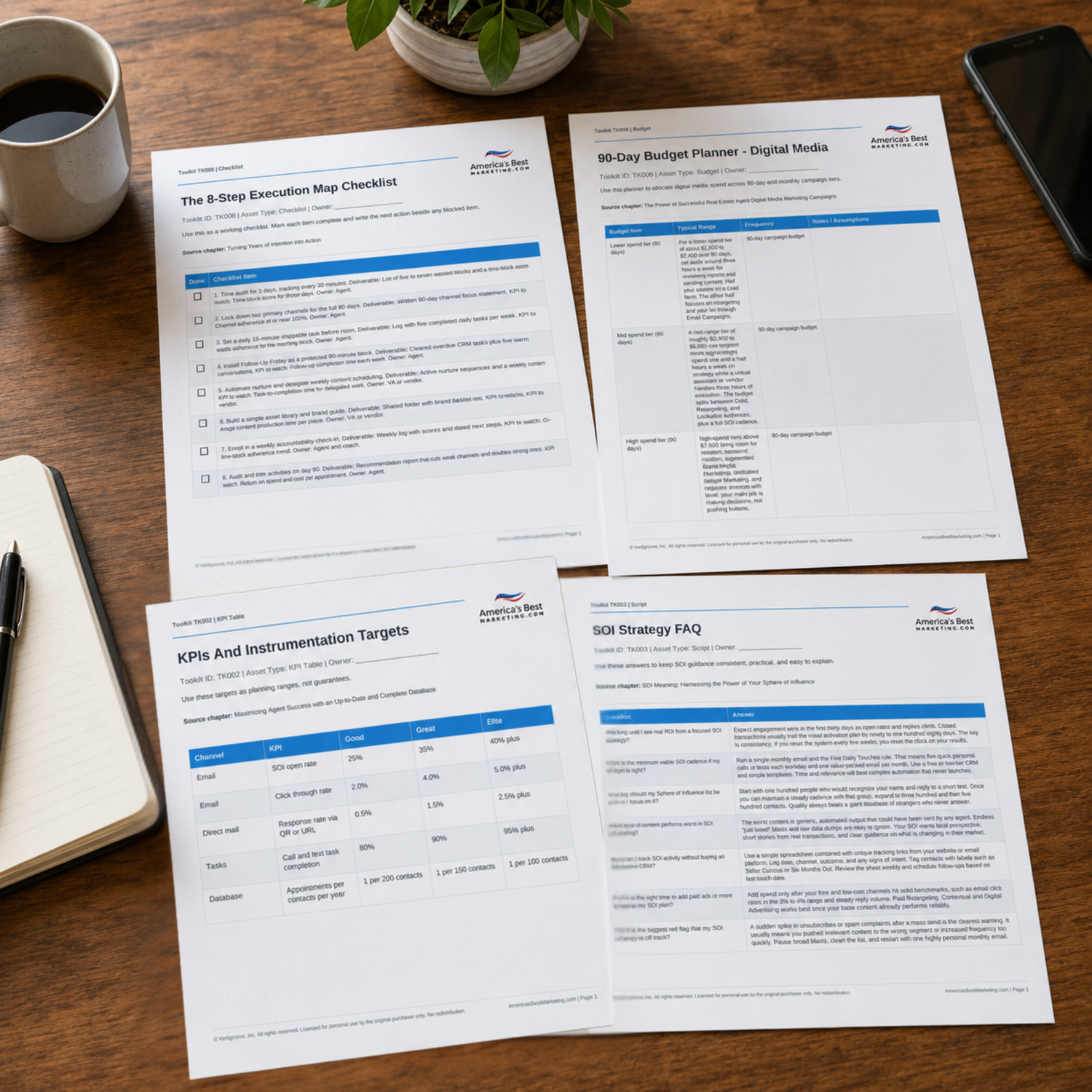
Download The Online Lead Machine Toolkit
Use the companion TK032 Toolkit to choose a lead magnet, map the funnel, track Cost per Lead and Lead Conversion, tighten follow-up, and decide when the online campaign is ready to scale.
Download the Toolkit ZIPRecommended reads
Recommended Reads for Real Estate Agents
These articles help agents connect follow-up discipline, database habits, client communication, and marketing execution into a repeatable system.

Zillow Leads vs Realtor.com Leads. Which is Worth It?
Use paid lead source decisions to create a stronger bridge between client education and real conversations.
Read article![Build a Relocation Lead Engine in [Your City] (Guide for Real Estate Agents) article preview for real estate agents](https://images.squarespace-cdn.com/content/v1/674ca5283c99f218d8bbb451/af9d20d1-51ed-4e2c-9c4d-f00444ec2a10/Blog+142+Build+a+Relocation+Lead+Engine+in+%5BYour+City%5D+%28Guide+for+Real+Estate+Agents%29.png?format=1500w)
Build a Relocation Lead Engine in [Your City] (Guide for Real Estate Agents)
Use relocation lead engine to strengthen visibility, follow-up, and client conversations without adding more random tasks.
Read article
Real Estate Blogging Made Simple: How Agents Can Attract Leads and Boost Their Online Presence
Make real estate blogging easier to plan, publish, and measure as part of a weekly marketing rhythm.
Read article
Are Paid Leads or Organic Leads Better for Real Estate Agents?
Turn paid versus organic leads into a steady operating habit, not another item that waits for a quiet week.
Read articleOnline Lead Generation Questions Agents Should Be Ready To Answer
How long does it take for online real estate leads to show up?
Paid traffic from social media marketing and digital advertising can begin to produce leads within a few days of launch. The first month is usually for learning and tuning audiences, offers, landing pages, and response speed. Organic traffic from SEO and blog content usually builds over many months, so the best system uses paid traffic for learning and content for compounding authority.
What is the minimum budget to run online real estate lead campaigns?
A lean starting point is eight hundred to one thousand dollars per month focused on one core campaign plus a small retargeting layer. Below that level, results are often noisy and slow. The key is to commit long enough to compare Cost per Lead, lead quality, booked conversations, and follow-up completion instead of judging from one week of activity.
Do I need an IDX site to get real estate leads online?
Not always, but agents do need a website experience they control. Social profiles and portal pages can change without warning. A website hub gives content, forms, tracking, retargeting audiences, and follow-up systems a permanent home. IDX can help when listing search and buyer capture are part of the strategy.
How many lead magnets should a real estate agent have online?
Most agents only need three strong magnets to start. A home valuation offer for sellers, a neighborhood or relocation guide for buyers, and a short consultation offer can cover the main intent paths. Too many options split traffic and slow testing. It is better to improve a small set of funnels than to launch new ones every month.
What is the fastest way to improve online lead quality?
Tighten the audience and the promise. Aim campaigns at fewer zip codes, refine the copy so it speaks to one type of client, and ask one simple qualifying question on the form. Then improve the first follow-up message before chasing wider audiences or more ad spend.
How should agents follow up with new website leads?
Send a short welcome email within a few minutes that references exactly what the prospect requested. Add the lead to an email sequence that shares value, proof, and clear next steps. Pair that with a quick text or call when the lead is high intent, such as a showing request, consultation request, or valuation request.
How do agents know when to scale online real estate ad spend?
Scale only when Cost per Lead, lead quality, booked conversation rate, and Lead Conversion hold steady long enough to trust the pattern. If cost to acquire a client is well below expected commission value, increase budget in measured steps. If the numbers drift, fix the offer, page, audience, or follow-up before adding more fuel.
Next step
Build the System Behind the Leads
Continue from one useful article into the larger ABM ecosystem: the book series for strategic depth and the full marketing program for done-for-you execution.

View the Book Series
Explore the America’s Best Real Estate Agent Marketing System books for a deeper strategic framework around visibility, referrals, listings, lead generation, and growth.
View the Book Series
See Full Marketing Program
See how AmericasBestMarketing.com runs real estate blog writing, social media, listing marketing, email, direct mail, and retargeting as one managed system.
See Full Marketing Program