Flipping Houses Profitability for Real Estate Agents: The Investor-Agent Playbook
Flipping Houses Profitability
Deal Analyzer + Marketing Plan for Real Estate Agents
A field-ready investor workflow for screening flip margin, planning the exit campaign, and turning deal conversations into repeatable inventory.

Protect the Margin Before the Flip Begins
Flipping houses profitability improves when the agent helps the investor screen the purchase, stress-test the numbers, and plan the resale campaign before closing. The strongest investor-agent workflow combines ARV discipline, renovation scope control, carrying-cost realism, proof-based listing marketing, and fast follow-up so the investor is not relying on hope after the renovation is finished.
- Use the deal analyzer as a gate before you spend time on weak pricing or vague renovation scopes.
- Run base-case and stress-case projections so the investor sees margin risk before acquisition.
- Build the exit marketing plan during renovation, not after the property is ready.
- Use renovation proof, follow-up cadence, and buyer clarity to reduce resale friction.
- Turn one investor relationship into rolling inventory by using the same screening process every time.
Why Flip Profit Is Mostly A Time Problem
Flipping houses profitability for real estate agents comes from two moves working together: buy-side math that kills weak deals early, and exit marketing that reduces holding time. Carrying costs, interest, taxes, insurance, utilities, and opportunity cost stack every day a project sits. Speed to market is the primary driver because it controls how long the meter runs and how fast capital gets redeployed.
The 70 percent rule is a fast screen, not a guarantee. Many investors use it as a starting point: target an all-in purchase number near 70 percent of After Repair Value, minus projected repairs. That screen forces discipline early, then the agent and investor refine with real bids, permitting reality, and a tighter exit plan.
Marketing can create its own failure mode when the exit is treated as an afterthought. If you do not build pages that rank for fixer inventory and investment intent, you miss long-tail demand that SEO for Real Estate Agents can capture over time, especially when listings rotate and the story stays consistent.
Hard money needs speed
Hard money is asset-based lending with higher rates and shorter terms. Every day of delay tightens the margin, so your exit campaign has to be planned before the property is ready.
Private money needs clarity
Private money is negotiated capital from individuals, often tied to relationship and trust. A clean deal analyzer gives the investor and lender a shared view of assumptions.
Carrying costs compound
Taxes, insurance, interest, utilities, association fees, lawn care, and security all create a daily drag. Faster buyer confidence protects projected net profit.
Most agents treat flip profit like a sales problem, but it is a purchase problem. If the buy-side does not bake in a real equity margin after repairs, every surprise turns into a panic discount. Ask one question before you get excited: if costs rise and the market softens, do we still like this deal at the price we are about to pay?
The Investor Agent Production Loop
This is the repeatable loop that moves you from transactional work to investment partner work. The goal is to run the same sequence on every prospect so investors learn your process and trust your screening. You are not pitching. You are presenting standards.
Deal hunt
Use Direct Mail Marketing to target distress signals like probate, deferred maintenance, and absentee ownership, then route calls into one pipeline with tags for condition and timeline.
Profitability audit
Run the deal analyzer in a single worksheet and do not negotiate against yourself. If the math is thin, the answer is no or the purchase price drops.
Investor pitch
Present the exit marketing plan before the acquisition closes, so the investor sees the entire play, not just the purchase contract.
Two operator rules make this loop work. First, keep every estimate labeled as a projection and require the investor to confirm contractor availability. Second, document the flip status clearly in disclosures and marketing notes so the seller, buyer, and lender conversations stay clean.
If you want serious investor clients, you need a tighter machine than casual lead generation. That starts with Client Follow-Up Systems That Create Lifetime Value so every deal conversation turns into a repeatable pipeline.
The Deal Analyzer You Can Run In Minutes
The deal analyzer is a gate, not a spreadsheet theater project. You are screening for equity margin, timeline realism, and an exit that matches the neighborhood. If you cannot defend the ARV with tight comps and finish logic, you do not have a deal, you have a guess.
Use this core equation as your first pass: ARV minus purchase price minus renovation projection minus carrying cost projection minus commissions equals projected net profit. Keep commissions and closing costs in the model even when investors try to ignore them. Reality will not ignore them.
- ARV input: three to five comps that match bed count, bath count, square footage range, and finish level.
- Renovation projection: line items by trade with a buffer for surprises and change orders.
- Carrying projection: taxes, insurance, interest, utilities, association fees, lawn, and a realistic time window.
- Exit assumptions: pricing lane, days-on-market range, and likely appraisal friction points.
Run two scenarios every time. Base case uses the most likely timeline and cost. Stress case adds time and cost padding and slightly trims the exit price. If the stress case turns the deal into noise, the investor is buying a problem.
| Tier | Profile | Spend per campaign | Benchmark notes |
|---|---|---|---|
| Cosmetic | Paint and surface upgrades | $450 to $650 | Fast turn wins. Price in a clean lane and sell with proof of condition. |
| Structural | Systems and layout work | $900 to $1,350 | Longer hold needs tighter disclosures and a renovation summary for buyers. |
| Luxury | High finish and design level | $1,500 to $2,500 | Buyer pool is smaller, so story, placement, and follow-up must be precise. |
How To Protect Margin After Renovation
Your job is to reduce holding time without creating disclosure risk. That means you prepare the exit story while the renovation is still in motion, using assets the agent and investor already have, like clean before photos, permit notes, scope summaries, and a finish checklist. You are building buyer confidence and lender comfort.
Start with audience clarity. The buyer for a cosmetic flip is different from the buyer for a structural rescue. Your marketing plan should call the buyer type, the offer friction you expect, and the proof you will provide to remove fear. If your investor wants higher conversion, tie your follow-up to Text Message Marketing for Agents so showings and neighbor interest do not die in the inbox.
$450 to $650 per flip exit campaign
Use five listing updates, one investor update email, one neighborhood awareness push, and listing retargeting. Keep creative proof-based so the campaign builds confidence instead of noise.
$900 to $1,350 per flip exit campaign
Use listing retargeting, a second ad set, one direct-response neighbor piece, creative rotation every 10 days, and a weekly investor pipeline email. Tie every message to proof, timeline, and buyer questions.
Investor first look
GoalConvert investor curiosity into calls.
AudienceLocal investors and high-intent buyers who want renovated inventory.
CreativeBefore photo plus finish checklist plus timeline target.
CTAJoin the investor first-look list for early access and deal notes.
Quality delta proof
GoalDefuse buyer fear and appraisal friction.
AudienceMove-up buyers and lender-sensitive offers.
CreativeFinish list, permit notes, warranty info, and a short scope summary.
CTAGet the renovation summary and showing link.
Use branding that signals operator, not hobbyist. Investors do not want a loud personal brand. They want standards, measurement, and speed, which is why Real Estate Agent Branding matters more here than in typical residential marketing.
Keep your tech stack simple and buyer-friendly. Build a single investor landing page hub on IDX Real Estate Websites with three categories: fixer inventory, renovated inventory, and off-market interest. Your goal is one form, one pipeline, and one repeatable follow-up cadence.
Creative That Screens Serious Investors
The best investor messaging screens for serious buyers and tells a clean story that a lender and appraiser can follow. Keep claims measured, label estimates as projections, and use proof, not vibes.
- Headline: The flipping ROI report for your target zip code.
- Headline: Three off-market leads with projected 20 percent margin screens.
- Headline: How to calculate ARV like a pro and avoid comp traps.
- Headline: The fastest exit plan for renovated inventory in your price lane.
Use a three-level CTA structure so you catch different intent levels without pushing too hard. Soft CTA is a flip profitability spreadsheet download. Mid CTA is an investor first-look list. Hard CTA is a consult to build the investor database and pipeline cadence.
If you want the investor pitch to land, do not show up with opinions. Show up with your process, your math, and the exit plan, then connect the campaign to Email Marketing for Real Estate Agents, Listing Marketing, and Digital Retargeting so every buyer and seller touchpoint reinforces the same operator story.
The 12 Point Investor Deal Check
This checklist keeps you out of the deals that look fine on a quick walk-through and then eat the margin. It also protects your reputation, because investors remember who brought them clean opportunities. Use it before you present a deal as viable.
- Confirm a tight ARV comp set that matches finish level and street feel.
- Walk the property with a contractor or require a written scope projection.
- Verify permit needs and realistic inspection friction points.
- Check roof, foundation, and major systems with a risk lens, not hope.
- Map the renovation timeline to real contractor capacity.
- Model carrying costs with time padding and conservative utilities.
- Price the exit inside a clear pricing lane, not at the top of the zip code.
- Confirm buyer pool size and loan type mix for the lane.
- Plan disclosures for flip status, work performed, and known limitations.
- Prebuild a renovation summary buyers can understand in one page.
- Set a showing and feedback cadence that triggers price action fast.
- Run a stress case and confirm the investor still likes the deal.
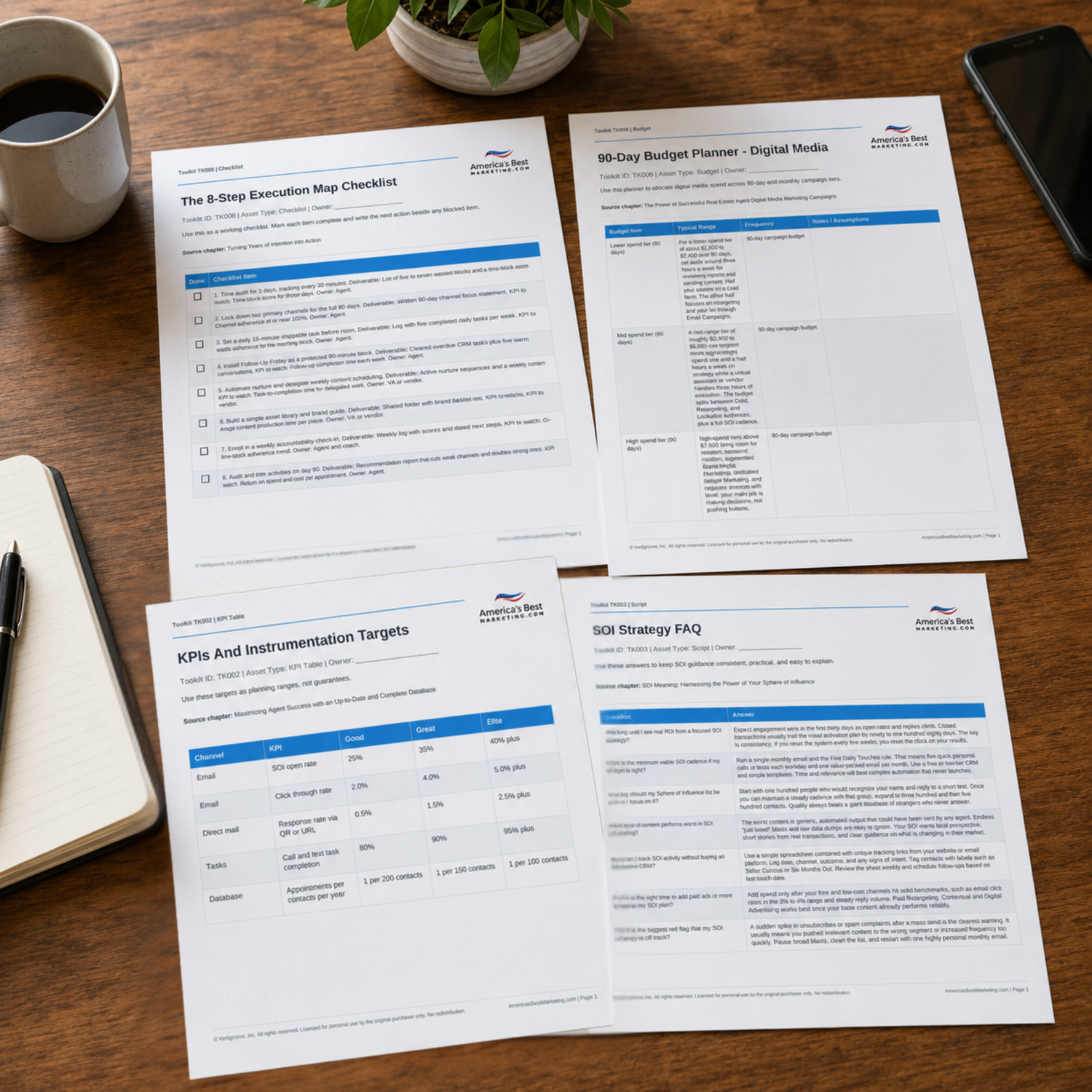
Download The Flip Profitability Toolkit
Use the companion Toolkit to pressure-test investor conversations with a budget plan, exit marketing spend tiers, a 12 point due diligence checklist, and an investor FAQ script.
Download the Toolkit ZIPMini Case Pattern: The Rolling Inventory Model
Agent Marcus focused on one mid-tier zip code and treated it like a portfolio, not a one-off hustle. He ran a targeted Direct Mail Marketing drop to absentee owners and probate signals, then routed replies into one tagged pipeline. One ranch property screened clean on the deal analyzer and the investor agreed to the exit plan before close.
In an illustrative pattern, Marcus collected proof assets the investor already had: scope notes, permit status, and a short finish checklist. He launched the exit with a fast Listing Marketing sequence designed to reduce resale friction, protect the investor’s projected margin, and create a repeatable project cycle.
The best investor-agent relationships are not built on one good flip. They are built on a repeatable operating cadence: screen the acquisition, define the buyer, document the work, launch with proof, and follow up until the next deal is already in motion.
Recommended reads
Recommended Reads for Real Estate Agents
These articles help agents connect follow-up discipline, database habits, client communication, and marketing execution into a repeatable system.

Financing an Investment Property: Creative Solutions
Make financing an investment property more useful by tying the message, audience, and next step together.
Read article
Proven Luxury Real Estate Marketing Strategies to Attract High-End Buyers
Build a cleaner system for luxury real estate marketing strategies to attract high-end buyers, with better timing, clearer messaging, and a next step people can act on.
Read article
Tax Benefits of Investment Property: Real Estate Agent Talking Points + Investor Content Angle
Make tax benefits of investment property more useful by tying the message, audience, and next step together.
Read article
Commercial Real Estate for Real Estate Agents: How to Break In and Market Your First Deal
Bring more structure to commercial real estate so every touchpoint supports visibility and trust.
Read articleFlip Profitability Questions Agents Should Be Ready To Answer
What is a good profit margin for a house flip?
A good margin depends on risk and timeline, but investors usually want enough cushion to survive surprises. As an agent, treat profit targets as projections and run a stress case that adds time and cost. If the deal only works under perfect conditions, it is fragile. A practical rule is to screen for a meaningful equity margin at purchase, then protect it with a fast exit plan.
How do agents find off-market deals for investors?
Start with distress signals and clear lists, then run consistent outreach. Direct mail to probate, absentee ownership, and deferred maintenance can produce conversations that portals never will. Track every response in one pipeline and label condition, timeline, and motivation so you can match deals to investor standards. Consistency matters more than clever copy, because sellers respond after repeated exposure.
What is the major red flag to avoid in a flip deal?
The red flag is a thin deal that requires a top-of-market resale to work. That usually shows up as weak ARV comps, vague scope, or unrealistic timeline. If the investor cannot defend the finished value with tight comps and a finish-level match, the deal is not anchored. Another red flag is contractor availability that is assumed, not confirmed, because time is the biggest cost.
How long does it take to see measurable ROI from investor-focused marketing?
Investor marketing behaves like a pipeline, not a one-week campaign. You can see early responses in weeks if your lists are clean and your offer is clear, but consistent ROI shows up after you run the same cadence long enough for recall and trust. Track benchmarks like response rate, appointments set, and investor list growth. Keep results language grounded and treat all forecasts as projections.
How should an agent handle disclosures on a flipped property?
Be direct and documented. Disclose the flip status where required, provide scope summaries when available, and avoid implying you are a contractor or warranting work quality. Keep renovation details factual and source-based, using invoices, permits, and written notes from the investor. Buyers want clarity, and lenders want consistency. Clean disclosures reduce post-inspection renegotiation and protect all parties.
What is the fastest way to reduce days on market for a flip?
Price in a lane buyers already search and launch with proof, not fluff. Build a renovation summary, show finish-level clarity in photos, and run a structured follow-up cadence for showings and feedback. Speed comes from removing uncertainty, not from hype. If buyer questions are answered before they ask, offers come faster. Keep every performance expectation framed as a target benchmark, not a promise.
Should the investor pitch happen before the acquisition closes?
Yes, because the exit plan is part of the purchase decision. When you show the marketing plan before close, you set standards and avoid panic moves later. It also changes the relationship. You become the operator who sees the full cycle, not just the paperwork helper. Present the buyer type, the proof assets you will use, and the timeline assumptions, all labeled as projections.
Next step
Build the System Behind the Deal
Continue from one useful article into the larger ABM ecosystem: the book series for strategic depth and the full marketing program for done-for-you execution.

View the Book Series
Explore the America’s Best Real Estate Agent Marketing System books for a deeper strategic framework around visibility, referrals, listings, lead generation, and growth.
View the Book Series
See Full Marketing Program
See how AmericasBestMarketing.com runs real estate blog writing, social media, listing marketing, email, direct mail, and retargeting as one managed system.
See Full Marketing Program