The Ultimate 7-Day Open House Promotion Kit: Ads, Posts, and Print Collateral for Real Estate Agents
7-Day Open House Promotion Kit
Ads, posts, print collateral, and follow-up for real estate agents
A seven-day launch plan for real estate agents who want every open house to generate stronger attendance, cleaner sign-ins, and measurable buyer, neighbor, and seller conversations.

Start the Open House Campaign Seven Days Before the Event
A strong open house promotion campaign starts seven days before the event, warms the agent’s sphere first, expands through social posts and local ads, adds neighbor print visibility, then closes with retargeting, QR sign-in, and same-day follow-up. The campaign should be judged by new contacts, guest quality, showing requests, and future listing conversations, not by impressions alone.
- A seven-day runway gives email, social, ads, print, and follow-up enough time to reinforce the same open house message.
- Every touchpoint should route to one clear detail page or sign-in path so traffic, QR scans, and ad clicks can be measured.
- Past clients, active buyers, neighbors, and online viewers need different follow-up lanes after the event.
- The most useful open house scorecard tracks clicks, form submissions, guests, showing requests, and listing conversations.
What To Lock Before The Countdown Starts
Before promotion begins, lock the parts that should not move during open house week. Listing details, creative, targeting, QR codes, and sign-in workflow need to be aligned before the first message goes out. That discipline prevents every channel from telling a slightly different story.
The goal is not more noise. The goal is a clean operating path from attention to attendance to follow-up. If you already use real estate drip campaigns that actually convert, this open house sequence gives you a fresh source of buyer, neighbor, and seller contacts to nurture.
Confirm the promise before promotion
Confirm price, status, time window, access notes, parking instructions, directions, and the strongest three buyer-facing features before the campaign starts.
Choose one central promise for the property, then repeat that same promise across email, social captions, print pieces, ads, and the open house detail page.
Route every channel to one next step
Build one digital form on your current website or IDX real estate website, then route QR codes, profile links, and ad clicks to that same path.
Ask for enough information to support follow-up without making the door experience feel like a mortgage application.
Make the campaign look intentional
Create one flyer, one square graphic, one vertical video angle, and one caption pattern so every channel feels coordinated.
Use the same headline and call to action on the flyer, QR tent, social post, ad, and email reminder.
The Open House Promotion Timeline
Treat the open house like a short listing launch. Start with people who already know you, widen to buyers and neighbors midweek, then use final reminders and field prep to convert interest into real conversations at the door.
Send the sphere sneak peek
Email past clients, close contacts, and active buyers with one strong photo, the time window, and a reply prompt for the full photo set or floor plan.
Post the social announcement
Publish a carousel or short vertical clip. Put the open house time in the first line and the neighborhood in the second line so the basics are instantly clear.
Launch the local ad push
Run a small Facebook and Instagram campaign around the address. Use one square image and one short video, then send clicks to the same open house detail page.
Add neighbor print visibility
Print property flyers and a small neighborhood handout. Use the same headline from your ads and include a QR code for open house details or a street-level market update.
Film a behind-the-scenes video that highlights light, storage, flow, outdoor space, or commute convenience. Then retarget people who watched the video, clicked the ad, opened the email, or visited the detail page. Keep frequency controlled so the message feels useful rather than pushy.
Send the final reminder, test every QR code on site, place feature sheets, check directional signs, and confirm the follow-up tags you will use after the event. The day-before work should feel like quality control, not emergency production.
Most agents treat open houses as one-day events. The better move is to treat each one as a local signal campaign. The highest-value leads often come from neighbors and past clients who already like the area, not just random walk-ins. Set a practical target such as ten to thirty new conversations and judge every tactic by how much it feeds that number.
Ad, Post, And Print Copy That Converts
Open house creative should answer one question fast: why should a buyer or neighbor pay attention to this address now? The best message is specific, visual, local, and tied to one next step. For stronger subject lines and nurture angles, adapt ideas from monthly email newsletter ideas for real estate agents and make them address-specific.
Quick tour hook for the weekend open house
Agent dialogue
Hook lineYou need to see this open house before you decide on any other address this weekend.
Build lineThe layout gives you the kitchen, light, storage, and outdoor flow buyers keep asking for.
CTA lineSave this, then tap for open house details and the full photo tour.
Use the same promise in printed feature sheets, short video captions, and listing marketing materials so the story is consistent from feed to front door.
Problem and solution video for buyers who feel stuck
Agent dialogue
Hook lineTired of open houses that feel wrong before you even reach the kitchen?
Build lineThis layout gives you light, storage, and flow that works for real life, not just staged photos.
CTA lineSend this to the person who needs to approve the move, then tap for directions.
Run this as a short vertical video and point all clicks to the same detail page so ad traffic stays measurable.
Hidden feature or local gem near the address
Agent dialogue
Hook lineThe best part of this open house may not be inside the four walls.
Build lineYou can walk from the front door to a local favorite in just a few minutes.
CTA lineSave the route, then tap for full open house details.
This angle works especially well for neighbors because it makes the campaign feel local rather than generic.
Budgets, Audiences, And KPI Targets
The win is not one crowded weekend. The win is a kit you can run on every listing without rebuilding the campaign from scratch. Start with a budget that matches the listing, then compare spend against conversations, showings, and follow-up opportunities.
Use sixty to eighty dollars in social ad spend, one square graphic, one vertical video, one flyer, and two emails. The goal is ten to fifteen new contacts, a measurable lift in local attention, and a clean list of people to follow up with after the event.
Use one hundred twenty to one hundred sixty dollars in social and retargeting spend, add a neighbor postcard, and build a lookalike audience from past clients or recent sign-ins. The goal is better reach, more repeat exposure, and sharper segmentation for Email Marketing.
| Channel Focus | Weekly Ad Spend | Target Views Per Person | Success Checkpoint |
|---|---|---|---|
| Starter geo social plus email | $60 to $80 | 2 to 3 | At least ten email clicks, five form submissions, and a small lift in local follower activity. |
| Mid-range social and retargeting | $120 to $160 | 3 to 4 | Twenty or more form submissions, controlled ad frequency, and repeat visitors in the ad manager. |
| Full push plus direct mail | $200 to $250 | 3 to 5 | A guest list of thirty or more names, clear tags for buyers and neighbors, and a follow-up lane for each group. |
Audience build: Start with a tight geo radius around the address, then layer past-client lookalikes, email clickers, video viewers, and page visitors. Keep retargeting separate so final reminders reach people who have already signaled interest. This is where retargeting and contextual ads can extend the value of every open house page visit.
- Place directional signs for real traffic flow, not only the closest corner.
- Repeat the same promise on feature sheets, social posts, emails, ads, and QR signs.
- Use two QR tents at the entry and kitchen so sign-in never depends on a clipboard.
- Keep a short vanity link as a backup for guests who do not scan codes.
- Offer a one-page neighborhood handout with local spots, amenities, and street-level market context.
Turn Open House Traffic Into Real Pipeline
The open house does not end when the last guest leaves. It ends when every real conversation has a next step. Tag contacts by intent, then send follow-up that matches what they asked about inside the home.
- Tag each guest as buyer, neighbor, future seller, agent contact, or unknown intent.
- Send a same-day thank you with photos, the floor plan, or a useful local note.
- Invite serious buyers to private showings, similar homes, or lender conversations.
- Send neighbors a street-level market update and a soft valuation prompt.
- Move long-term contacts into a consistent nurture lane supported by social media management for real estate agents and direct mail for real estate agents.
When you treat open houses as repeatable local campaigns, you stop gambling on turnout and start building a steadier pipeline of warm conversations. Use the seven-day cadence, track the numbers, and keep refining the system every time you launch a listing.
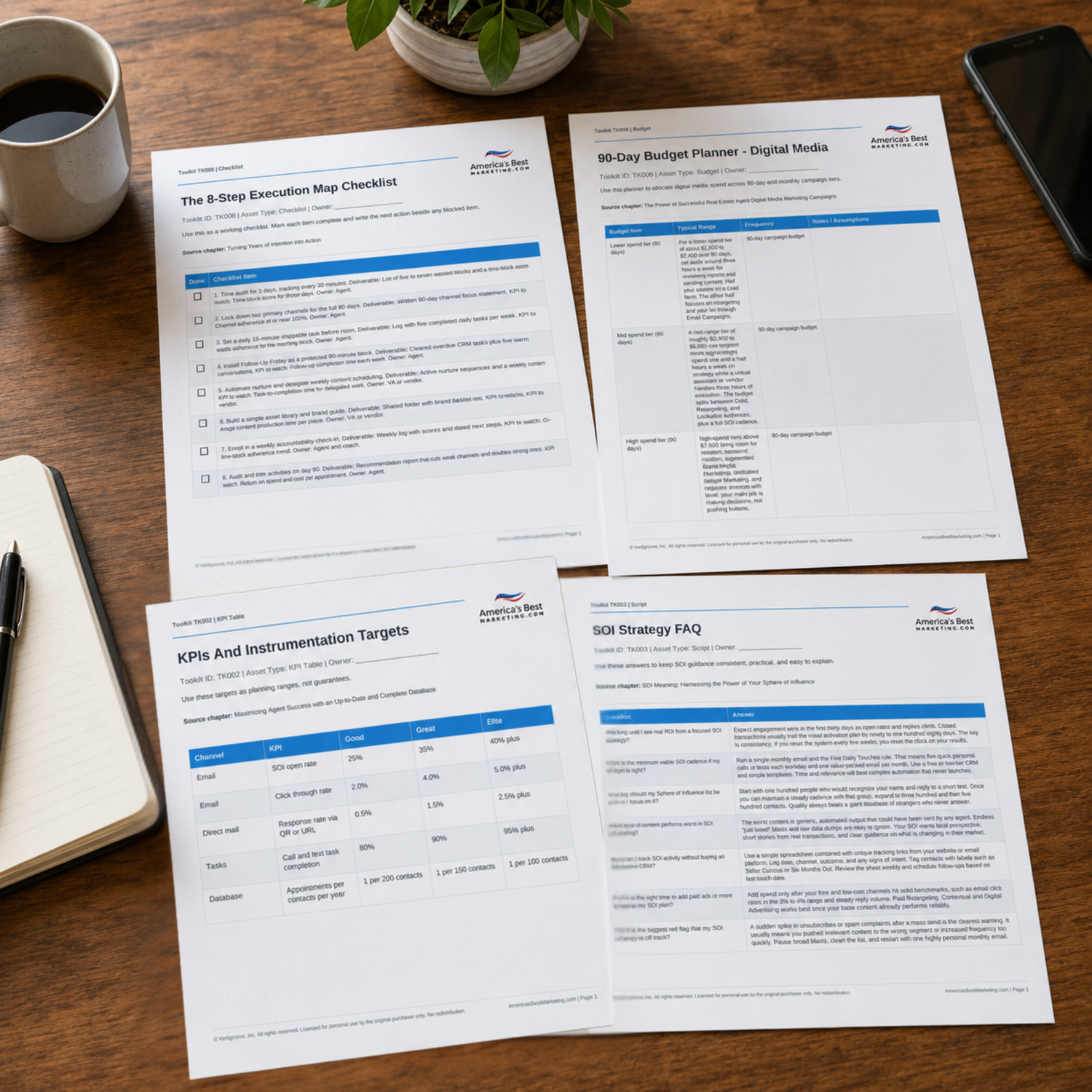
Download The Open House Promotion Toolkit
Use the companion Toolkit to plan the seven-day campaign, prepare ads, posts, print pieces, QR sign-in, event execution, and follow-up so every open house has a cleaner path from attention to appointment.
Download the Toolkit ZIPRecommended reads
Recommended Reads for Real Estate Agents
These articles help agents connect listing visibility, seller education, marketing channels, and follow-up into a clearer growth system.

How to Run Listing-Specific Contextual + Retargeting Ads
Plan ad campaigns around repetition, landing pages, and second chances with warmer prospects.
Read article
Out-of-State Buyers: A Real Estate Agent Playbook for Remote Showings, Trust, and Smooth Closings
Turn relocation traffic into booked consults with a structured funnel: relocation hub, remote showing toolkit, trust assets, and a remote closing safety audit that prevents surprises.
Read article
How Contextual and Retargeting Digital Marketing Work for Real Estate Agents and Why They Matter More Than Ever
Make paid ads easier to evaluate by tying audience, creative, budget, and next step together.
Read article
Retargeting Ads for Real Estate Agents: Setups, Budgets, and Creatives That Win the Second Chance
Plan ad campaigns around repetition, landing pages, and second chances with warmer prospects.
Read articleOpen House Promotion Questions Agents Should Be Ready To Answer
How many days before an open house should promotion start?
Seven days gives the campaign enough room to warm your sphere, reach new local buyers, and retarget people who show interest before the weekend. A shorter push can work for a fast-moving listing, but a full week gives email, social, ads, and print enough time to reinforce the same message.
Do real estate agents need paid ads for a standard open house?
Paid ads are not mandatory, but they make the campaign less dependent on your existing followers. A small geo-targeted budget can put the open house in front of buyers, neighbors, and future sellers who are already close to the address but not yet connected to you.
What budget still gives an open house campaign a fair test?
A practical starter test is sixty to eighty dollars in social ad spend, plus basic print materials for signs, flyers, and a simple neighborhood handout. That range is enough to test the offer, measure clicks and sign-ins, and decide whether a larger campaign is justified.
How should agents capture leads without a clipboard at the door?
Use a short digital form, a QR code at the entry, and one clear value exchange such as photos, a floor plan, a neighborhood guide, or a street-level market update. Keep a paper backup sheet available, then add every contact to your database immediately after the event.
What should agents send after the open house?
Send a same-day thank you note with a useful link, then segment guests as buyers, neighbors, future sellers, or agent contacts. Follow with private tour options, similar homes, local market notes, or a seller valuation prompt based on what each person asked about during the visit.
How can agents tell whether the open house promotion worked?
Track form submissions, total guests, guest quality, showing requests, listing conversations, and ad spend. The most useful scorecard compares turnout with real next steps, not just impressions or likes.
Can this seven-day plan work for luxury listings and starter homes?
Yes. The cadence stays the same, but the creative quality, targeting, print weight, and budget shift by price point. Luxury listings usually need stronger assets and a longer runway, while starter homes can often move with faster creative and tighter geo-targeting.
Next step
Build the System Behind the Open House
Continue from one useful article into the larger ABM ecosystem: the book series for strategic depth and the full marketing program for done-for-you execution.

View the Book Series
Explore the America’s Best Real Estate Agent Marketing System books for a deeper strategic framework around visibility, referrals, listings, lead generation, and growth.
View the Book Series
See Full Marketing Program
See how AmericasBestMarketing.com runs real estate blog writing, social media, listing marketing, email, direct mail, and retargeting as one managed system.
See Full Marketing Program