SEO-Friendly Blog Titles for Real Estate Agents: Templates + A/B Testing Checklist
SEO-Friendly Blog Titles for Real Estate Agents
Templates + A/B Testing Checklist
Build title tags and on-page headlines that match local intent, earn the click, and turn weekly title testing into a repeatable real estate content workflow.

SEO-friendly blog titles for real estate agents, explained
A strong real estate blog title performs three jobs at once. It names the local market, signals one clear search intent, and makes an honest promise the page can keep. When the title tag, H1, email subject line, and social caption all work from the same title system, the article becomes easier to find, easier to click, and easier to turn into a real conversation.
- Match every title to one search intent and one visible location.
- Use the title tag to earn the click and the on-page headline to confirm the promise.
- Test title variants through email or social before changing permanent page titles.
- Audit every title for clarity, compliance, and honest promise matching before publishing.
Why Title Engineering Pays Off
A blog post title is the single highest leverage decision in a real estate content workflow because it controls the click, the expectation, and the match to search intent. Most agents write titles after the article is finished. Better operators engineer the title first, then build the page around the exact decision the reader is trying to make.
Your title is your storefront sign. If it does not show the topic, the location, and the payoff, the page loses the click before the reader ever sees your advice. The fastest way to raise quality traffic is to put the local keyword in a visible title slot and make the promise specific enough for a buyer or seller to self-select.
Use this title system with a clean local publishing foundation such as IDX SEO: Community Page Blueprint for Agents. Community pages, neighborhood posts, market updates, and listing explainers become stronger when the title tells the searcher exactly what they will learn.
- Specific titles improve the quality of search clicks because the reader understands the local promise before visiting.
- Location-forward titles help agents compete against national publishers that cannot speak as precisely about neighborhoods, schools, streets, and inventory patterns.
- Repeatable title formulas make weekly content production faster, cleaner, and easier to measure.
Title Tag, H1, and Search Intent
Two titles matter. The title tag is the headline search engines often show in results. The H1 is the on-page headline that confirms the promise once the visitor lands. In a clean setup, both are aligned, but the title tag must be tighter because it competes for a click inside a crowded results page.
The working standard is intent matching. Informational intent is a buyer or seller trying to understand a decision. Navigational intent is someone looking for a specific brand, office, or page. Transactional intent is a ready-now move, such as choosing an agent, getting a home value, or narrowing neighborhoods to tour.
The fastest way to build local intent into a title is to commit to a geographic slot and keep it visible. City, neighborhood, school zone, condo building, or recognizable region belongs in the title, not buried in paragraph three.
Vague titles lose the click
A polished title that does not say what the reader gets will underperform. Replace broad phrasing with one decision, one market, and one outcome.
Missing locations waste the edge
Real estate agents win search relevance through local specificity. City and neighborhood names should carry the page before national publishers can flatten the topic.
Misleading titles damage trust
A title that overpromises attracts the wrong click and weakens reader confidence. The page must deliver the exact number, checklist, comparison, or process the title promises.
Most agents treat titles like decoration, but the title is a pre-qualification filter. Negative constraints such as mistakes to avoid in a neighborhood often convert better than feel-good titles because buyers and sellers are wired to reduce risk.
The Weekly Title Optimization Cadence
Treat titles like an operations rhythm, not a last-minute headline exercise. This cadence keeps title work tied to website architecture, email, social distribution, and Search Console feedback.
- Monday: Pull local long-tail phrases from Search Console, Google autosuggest, client questions, and listing conversations.
- Tuesday: Write two title options per topic. Lock the location slot first, then build the promise around it.
- Wednesday: Check character length, clarity, search intent, compliance risk, and whether the title reads like a real client question.
- Thursday: Test two variants as email subject lines or social captions, then use Social Media Management for Real Estate Agents to collect fast click signal.
- Friday: Review impressions and click-through movement, then update title tags on your site and confirm page titles inside your IDX Real Estate Websites setup.
A clean title cadence also supports listing content. Use the same logic for status updates, neighborhood explainers, and seller education. A useful companion workflow is A Step-by-Step Guide to Marketing Your Listings Online for Maximum Exposure.
The Templates That Keep Titles Clear
Title templates are guardrails. Use them to protect clarity, local intent, and promise matching, then adjust the noun, location, and next step so the title fits the actual page.
Number plus location
Use a number when the reader needs a fast scan. Example: five inspection issues buyers should understand before touring homes in a named neighborhood.
Real client language
Use a question when the topic mirrors a consultation. Example: is it a good time to sell in a specific city or school district?
Two options, one decision
Compare neighborhoods, towns, commute patterns, tax situations, or listing strategies when the reader is deciding between clear alternatives.
Local buyer intent
Goal: earn clicks from buyers searching one neighborhood and move them to an IDX search next step. Headline: Three things to know before buying in Riverstone, including commute, inventory pace, and inspection risks.
Seller pre-qualification
Goal: attract ready sellers and filter out vague curiosity. Headline: Five pricing mistakes that cost sellers money in Cedar Grove, plus the fix. CTA: request a short marketing plan review.
Titles should map to CTAs with intent. Soft CTA is a worksheet or checklist. Mid CTA is a site audit request for your IDX Real Estate Websites pages. Hard CTA is a planning call through 1:1 Marketing Coaching.
Title Engineering KPI Tracker
Use this table to pick title types on purpose. The point is not chasing volume. The point is aligning title type to intent and measuring click-through rate movement over time.
| Title type | Best intent | Typical CTR | Lead potential |
|---|---|---|---|
| How To | Clear steps for a decision. | 2% to 4% | Strong for buyers who need a process map. |
| Listicle | Short list for scanning. | 3% to 6% | High when location is specific and the list is useful. |
| Local Guide | Relocation research help. | 2% to 5% | Best for inbound leads needing a neighborhood short list. |
| Comparison | Choice between two options. | 2% to 4% | Good for move-up buyers deciding between pockets. |
| Mistakes | Risk reduction. | 3% to 6% | Great pre-qualification for serious planners. |
| FAQ Post | Direct question answer. | 2% to 5% | Reliable for long-tail search demand. |
The 10-Point Title Audit
- Location appears in the title and is not buried at the end.
- The title states the decision the reader is trying to make.
- The wording matches the page content.
- The title tag version is under 60 characters or close to it.
- Filler words have been removed.
- One scan aid is used, such as a number or clear promise phrase.
- The title targets one intent, not three mixed intents.
- The title avoids demographic targeting and steering language.
- A second variant was tested through email or social.
- The H1 and title tag tell the same story.
Fair housing compliance matters in title strategy. Avoid demographic targeting and wording that implies preference, exclusion, or steering. Titles can speak to commute, schools, accessibility, amenities, budget ranges, and process steps without labeling people.
The Weekly Update That Finally Started Working
Agent Mike in a mid-sized market published weekly posts titled Weekly Update and got close to zero search traction. The content was fine, but the title made it invisible. He switched to engineered titles carrying a local promise, such as Three market trends every Cedar Grove seller needs to know.
Over the next 60 days, the pages earned more impressions because the intent and location were obvious. Email subject lines and social captions matched the same title logic, turning content time into booked conversations instead of vanity posts.
For the larger site structure, read Why Every Real Estate Agent Needs an IDX-Integrated Website.
How This Becomes Marketing
Title engineering becomes stronger when it is tied to the full distribution loop. Start with IDX Real Estate Websites for the on-site foundation, use Social Media Management for Real Estate Agents to collect click signal, and add 1:1 Marketing Coaching to build a 12-month plan that compounds.
If you want the system installed as a managed workflow, pair weekly blog titles with email testing, social distribution, direct mail themes, and retargeting. The title is not just SEO metadata. It is the campaign promise that every channel can repeat.
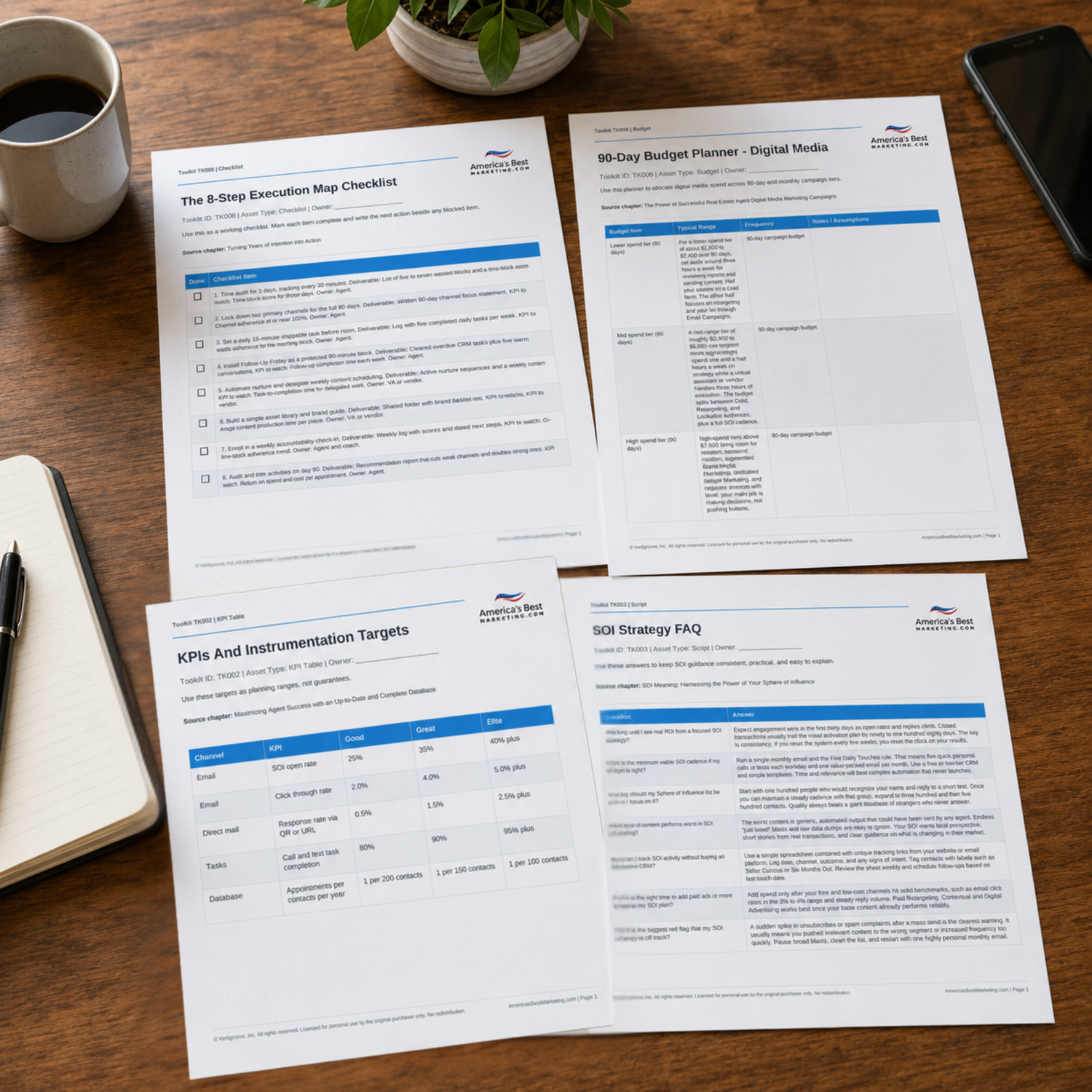
Download The Title Engineering Toolkit
Use the companion Toolkit to tighten your weekly title optimization cadence, title templates, A/B testing checklist, budget ranges, KPI tracker, FAQ prompts, and final title audit before page titles become permanent.
Download the Toolkit ZIPRecommended reads
Recommended Reads for Real Estate Agents
These articles help agents connect local visibility, useful content, channel strategy, and follow-up into a stronger search-friendly marketing system.

The Role of User Experience (UX) in Real Estate SEO
Build organic reach with pages and posts that are easier to find, trust, and act on.
Read article
IDX SEO: Community Page Blueprint for Agents
Turn search visibility into a clearer publishing system for neighborhoods, services, and client decisions.
Read article
SEO for Real Estate: How Agents Can Dominate Local Search and Generate More Leads
Build a cleaner system for SEO for real estate, with better timing, clearer messaging, and a next step people can act on.
Read article
Local Restaurant Guides That Generate Leads: A Real Estate Agents-Friendly Where to Eat Framework
Publish content that answers local questions, supports lead capture, and gives future conversations a reason to start.
Read articleSEO Title Questions Real Estate Agents Should Be Ready To Answer
How long should my real estate blog title be?
Keep the title tag tight. A practical limit is under 60 characters so it displays cleanly in many search views. If you need more detail, keep the extra words in the H1 on the page, but keep the promise and location consistent.
Does changing a blog title hurt my SEO?
It can help or hurt depending on the change. Rewriting a vague title into a clear intent match can improve qualified clicks. Do not change the topic, location, or promise in a way that breaks relevance.
What is the minimum viable cadence for blogging if budget is tight?
One post per week is enough if the title is engineered and the topic maps to local intent. Pick one neighborhood or one seller question, answer it fully, and test two title options before the page title becomes permanent.
How do I track clicks without advanced tools?
Start with Search Console for impressions and CTR, and use your email platform click report for A/B tests. For social, compare link clicks while keeping the destination page the same for both variants.
Should I put my city in every title?
For local search, yes more often than not. The city or neighborhood is what makes the page a better fit than national sites. If the topic is market-wide, use a county, school district, or recognizable region.
How do I avoid clickbait while still getting clicks?
Make one promise and keep it. If the title says three trends, deliver three trends and make them local. Use numbers, clarity, and risk framing only when the page supports the promise.
Can my titles create fair housing risk?
Yes, if the wording targets or excludes protected classes, or implies preference or steering. Keep titles focused on property features, locations, commute, amenities, budgets, and process steps.
Next step
Build the System Behind the Advice
Continue from one useful article into the larger ABM ecosystem: the book series for strategic depth and the full marketing program for done-for-you execution.

View the Book Series
Explore the America’s Best Real Estate Agent Marketing System books for a deeper strategic framework around visibility, referrals, listings, lead generation, and growth.
View the Book Series
See Full Marketing Program
See how AmericasBestMarketing.com runs real estate blog writing, social media, listing marketing, email, direct mail, and retargeting as one managed system.
See Full Marketing Program