IDX SEO: Community Page Blueprint for Real Estate Agents
IDX SEO Community Page Blueprint for Agents
Build fast, focused IDX pages that turn local buyer intent into measurable lead flow.
A practical operating model for real estate agents who want community pages with clear boundaries, filtered IDX results, mobile speed, simple forms, and a repeatable refresh rhythm.

IDX SEO community pages explained for real estate agents
An IDX SEO community page works when it targets one buyer intent, one real boundary, one filtered listing set, and one clear lead capture path. The page should explain the area before the live feed, cap visible listings for speed, connect to a CRM form, and link into a larger local market map.
- Community page SEO works best when the topic is narrow enough to match a real buyer search and a real local boundary.
- The IDX feed should support the page promise, not replace the local explanation, proof points, and conversion path.
- Mobile speed, capped listings, and simple CRM routing matter because buyers often judge the page before they ever call.
- The real advantage appears when each page becomes part of a market map supported by email, social, and retargeting traffic.
Why IDX Community Pages Pay Off
Your IDX SEO community page blueprint should feel like a weekly production line, not a one time website project. When you ship fast, mobile friendly community pages tied to live IDX data and a simple form, you end up with a living market map that beats one bloated city page that never converts.
Long tail searches are the fuel. Generic phrases such as homes for sale in the city draw noisy traffic with weak timelines. Phrases such as pool homes near Northwood under five hundred thousand or townhomes near the medical center with garages carry sharper intent and fewer casual browsers.
Micro topic selection keeps the page honest. You are not trying to describe an entire metro area. You are building one small but complete slice of the map that a real buyer would recognize from daily life. That slice could be a school zone, a pocket of new construction under a price band, or a cluster of properties with the same signature feature.
The best community page also gives your other marketing a smarter destination. A short video, a direct mail piece, an email note, or a retargeting ad can send people to the exact page that matches their interest instead of dropping them on a generic search page.
- You create search assets around the way buyers actually ask questions.
- You give every page one measurable conversion path instead of vague browsing.
- You build local authority through useful boundaries, proof points, and internal links.
How To Build The Community Page System
In this blueprint an IDX community page is a focused landing page for one clear searcher intent. It combines editorial context, filtered live data, and a visible call to action on a single fast layout. Buyers arrive with a question, see a map and matches that honor that question, and get a simple path to raise their hand.
Freshness comes from two sources that work together. Your editorial copy explains boundaries, commute patterns, tax notes, and quirks that do not change every day. The live IDX feed refreshes as listings move, which keeps the page active without constant rewriting.
Choose one buyer intent
Start with real language buyers already use. Review portal leads, email replies, listing questions, and search reports. Choose a phrase that signals clear purchase intent and a specific local problem.
The topic should be narrow enough that you can describe the boundary, likely property mix, and next step without sliding into generic city copy.
Draw the true edges
Open your mapping tool and outline the streets, landmarks, and natural breaks that define where the micro area starts and stops.
Use the same boundary language in your page copy, IDX filter notes, ad targeting, and buyer consultations so the promise stays consistent.
Make the feed prove the headline
Set property type, price band, beds, baths, features, and map shape so the visible listings match the exact promise in the page title.
Place the feed after the first block of copy and cap visible listings so the page remains fast, readable, and conversion oriented on mobile.
The quiet mistake is treating community pages as side content instead of true landing pages. When each page is built for one specific searcher intent and one small map, it finally becomes a worthy target for email, social traffic, and retargeting clicks.
Internal links turn single pages into a real market map. One pillar page can cover the wider city or county. Each community page links up to that pillar, then sideways to two or three siblings that share similar intent. Blog posts and guides link down into the right community page when the topic matches.
Your market map should also line up with the real people who send you business. That is why many agents pair this work with SOI Meaning: Harnessing the Power of Your Sphere of Influence so the places they highlight match the way their sphere already talks about the area.
Three Community Page Scripts You Can Use
The strongest community pages speak in literal, proof heavy language. Every line should sound like something you would actually say to a buyer on a tour, not like an ad slogan. The same rule applies to short videos that push traffic back to each page.
The neighborhood snapshot video
Agent dialogue
Hook lineWant every creekside home in Northwood that hits the market this week.
Build lineI pulled a live community page that shows only creekside matches inside this boundary and filters out the noise.
CTA lineTap the link for the creekside page, ask for the full match checklist, and I will send you the next three that fit.
Use this script when the page is tied to a clean physical feature such as creek access, trail access, golf frontage, or a specific new construction pocket.
The noisy search results video
Agent dialogue
Hook lineTired of scrolling page after page of listings that do not match what you actually want.
Build lineI built a live page that shows only pool homes near Northwood under a clear price band, plus commute and tax notes.
CTA lineUse the Northwood pool home page, tell me your price range, and I will send you three focused matches.
This script works best when the community page solves a filtering problem that large portal searches often create.
The hidden feature local gem video
Agent dialogue
Hook lineMost buyers do not realize this pocket has a private trail that connects straight to the river.
Build lineThe community page I built for this area shows only homes inside the trail boundary so you are not stuck across busy streets.
CTA lineOpen the trail homes page, hit the form, and I will send you my full route map and three current matches.
Pair this video with a simple map shot, a quick page scroll, and one close frame that repeats the call to action.
The Ninety Day Community Page Sprint
Community pages reward consistency more than big one time spends. Think in ninety day blocks with a clear goal for pages shipped, time invested, and outside help. Two lean tiers cover most agents. A third higher tier works once you see proof and are ready to push harder at scale.
Solo agent proof of concept
Build one new community page per month, record one short vertical video for each page, and track indexing, impressions, clicks, and form submissions.
A starter budget around one hundred fifty dollars a month can support basic virtual help or editing reviews while you keep ownership of the page choices.
Agent plus assistant market map
Build one new community page every two weeks, support each page with a short video, and send a three email follow up sequence to new leads.
Mid range agents often invest four hundred to six hundred dollars a month across research help, page loading, copy support, and light ad testing.
| Plan tier | Pages in ninety days | Monthly budget | Owner and KPI focus |
|---|---|---|---|
| Low tier agent solo | 3 | $150 | Agent builds one page each month, tracks time to index and form conversion for every page, and refines the checklist. |
| Mid tier agent plus assistant | 9 | $450 | Assistant helps with research and loading while the agent records video and runs refresh cycles. |
| High tier vendor supported | 15 | $1200 | Vendor handles technical build and content structure while the agent focuses on topic choices and high intent follow up. |
KPIs That Keep Community Pages Honest
Fancy dashboards are optional. A simple sheet and the right few reports from analytics and Search Console are enough to steer this system. You are looking for three layers of signal: page level search data, experience metrics, and production discipline.
Watch page level demand
Track time to index, impressions, clicks, and average position for the main long tail query you targeted.
Protect mobile usability
Watch Core Web Vitals, scroll depth, mobile usability errors, layout shift, and whether visitors reach the form.
Measure qualified action
Track form conversion rate, click to call events, tagged CRM leads, consultations, and closed clients tied to each page.
Compliance And Ethics For Local Search
Community pages can support fair housing or quietly undermine it. Keep every description focused on property features, commute, amenities, budget, and practical context, never on the people who live there.
When you capture email addresses through forms, treat that trust with care. Follow the basics of consent and identification in every campaign. Make it easy to unsubscribe, honor requests quickly, and avoid surprise list transfers just because you run multiple brands or sites.
Data hygiene matters behind the scenes as well. Route leads into the right list or pipeline stage, tag by community page, and avoid storing more personal detail than you truly need. Clean, respectful handling of data supports both regulations and reputation.
A Simple Market Map Case Pattern
Picture an agent who commits to one focused page every two weeks. Over ninety days that agent ships five live community pages tied to clear micro topics and boundaries. Three of those pages index in search within ten to eighteen days. The other two take closer to thirty days.
Across the full set, form conversion ranges from just over one percent to almost three percent, with the best page centered on a new construction pocket. Those forms turn into six short consultations, two signed buyer agreements, and one closed transaction during the same window.
The agent treats that pattern as proof of concept and decides to scale to fifteen pages over the next block with modest Retargeting & Contextual Ads layered on top. That is the right sequence. Prove usefulness first, then pay to bring more qualified attention back to the strongest pages.
Community Page QA Checklist
- Micro topic statement is clear, specific, and tied to a real buying scenario.
- Written boundary description matches the actual map shape and local understanding.
- Slug, visible title, and subheads all support the same long tail search phrase.
- Anchor copy includes local proof and could not describe any city on the map.
- IDX filters strictly match the promise in the headline and boundary notes.
- Listings are capped and a view more matches link points to the same filtered search.
- Mid page form submits correctly and routes into the right CRM list every time.
- Page loads quickly on mobile and passes basic Core Web Vitals targets in testing.
- Internal links connect up to pillar content and sideways to relevant sibling pages.
- Page is submitted in Search Console and a day thirty refresh is already on the calendar.
How This Becomes A Managed Marketing System
A community page system is more than local SEO. It gives you a useful destination for content, outreach, events, ads, and lead follow up. The page becomes the place where your market knowledge, IDX data, and client capture path meet.
Use the same market map across Real Estate Blog Writing Services, Social Media Marketing for Real Estate Agents, Email Marketing for Real Estate Agents, and Direct Mail. Each channel should point people back to a specific page that matches the promise of the message.
If you want help turning a few focused pages into a durable local publishing system, AmericasBestMarketing.com can help design the page map, publish the content, promote the strongest pages, and keep the follow up system organized.
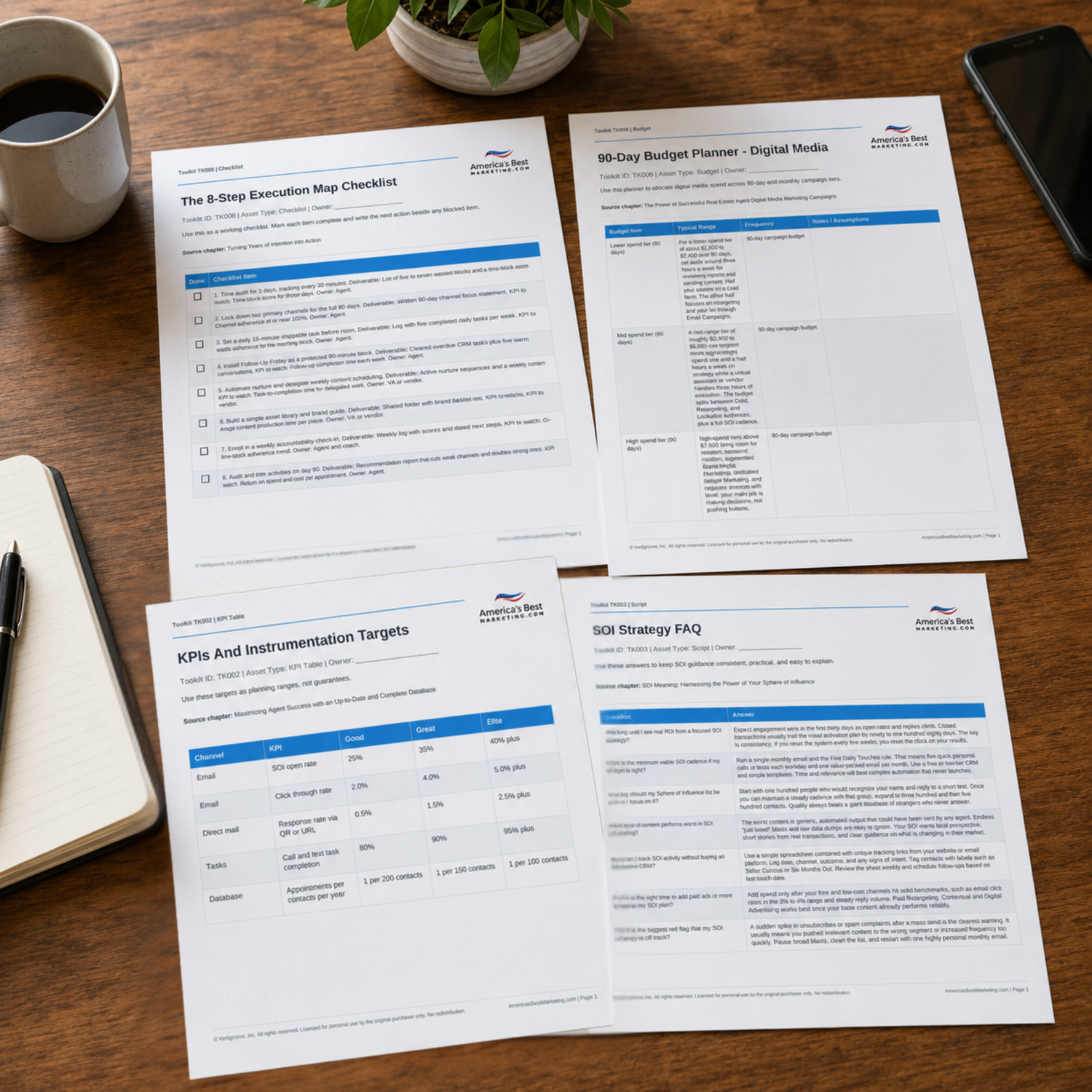
Download The IDX SEO Community Page Toolkit
Use the companion Toolkit to plan your market map, choose micro topics, audit page quality, script short videos, and track the first ninety days of IDX community page production.
Download the Toolkit ZIPRecommended reads
Recommended Reads for Real Estate Agents
These articles help agents turn client questions, local guidance, marketing channels, and follow-up into a more useful content system.

Best Real Estate Lead Generation Companies and SEO Solutions for Agents
Turn search visibility into a clearer publishing system for neighborhoods, services, and client decisions.
Read article
Proven SEO Strategies for Real Estate Websites to Increase Leads
Turn search visibility into a clearer publishing system for neighborhoods, services, and client decisions.
Read article
SEO-Friendly Blog Titles for Real Estate Agents: Templates + A/B Testing Checklist
Build organic reach with pages and posts that are easier to find, trust, and act on.
Read article
Optimizing Your IDX Listings for Search Engines
Make local search work harder with content that answers real questions and leads to a next step.
Read articleIDX Community Page Questions Agents Should Be Ready To Answer
How long does IDX community page SEO take to show results?
Expect the first signs inside thirty to sixty days once pages are live and submitted in Search Console. Early wins often show up as impressions and a few clicks for the exact long tail phrases you targeted. Form submissions usually trail search data by a few weeks while you refine copy, filters, and calls to action. Treat the first ninety days as a learning window, not a verdict.
What is the minimum viable cadence for IDX community pages?
A serious agent can start with one new page a month and still see value, as long as each page follows the full blueprint. That cadence gives you time to collect data, run a day thirty refresh, and build one short video per page. Once you have proof that pages can convert, moving to a biweekly rhythm turns your site into a true market map.
How do I pick a micro topic that actually converts buyers?
Start with the last ten buyers you enjoyed working with and reverse engineer their stories. Look at price ranges, property types, commute patterns, and favorite amenities. Turn those into specific phrases such as townhomes near the hospital with garages or lake cottages under a clear budget. The best topics are narrow enough that you could sketch a simple boundary map in under a minute.
Do IDX pages hurt SEO because of duplicate listing content?
Duplicate listing blocks alone rarely help, but they also do not need to hurt you. Problems start when a page relies only on the feed with no unique context or structure. Your job is to wrap the feed in specific copy, boundaries, proof points, and internal links that make this page clearly different from every other search result. That context is what earns and keeps rankings.
Where should the IDX feed sit on the page for SEO and conversion?
Place the feed after your first block of copy so visitors get oriented before they see a grid of photos. On desktop that usually means just below the fold. On mobile you want a short scroll from the top before listings appear. This layout protects speed, helps readers understand the promise, and makes it easier to see your form and internal links as part of the story.
How do I track ROI on community pages without fancy tools?
Use a simple sheet with one row per page and columns for publish date, indexed date, monthly impressions, clicks, and form submissions. Add a column that tracks closed clients that first came through each community page. Compare total time spent building and refreshing pages with gross commission tied to those clients. You will quickly see which pages deserve more traffic and which topics should be retired.
When should I scale from five community pages to fifteen or more?
Scale once you have proof that at least two pages can attract qualified traffic and convert above one percent on forms. That signal means your structure, copy style, and follow up system are working. From there you can safely expand to a full market map that covers more micro areas. Support from direct mail, email, and retargeting can then bring more qualified attention back to your strongest pages.
Next step
Build The System Behind The Advice
Continue from one useful article into the larger AmericasBestMarketing.com ecosystem: the book series for strategic depth and the full marketing program for done-for-you execution.

View the Book Series
Explore the America’s Best Real Estate Agent Marketing System books for a deeper strategic framework around visibility, referrals, listings, lead generation, and growth.
View the Book Series
See Full Marketing Program
See how AmericasBestMarketing.com runs real estate blog writing, social media, listing marketing, email, direct mail, and retargeting as one managed system.
See Full Marketing Program