Seller Disclosures: Real Estate Agent Checklist + How to Set Expectations Early
Seller Disclosures Set Expectations Early
Real Estate Agent Checklist
A transparency-first seller workflow for agents who want fewer inspection surprises, cleaner documentation, and calmer negotiation conversations before a listing goes live.

Seller disclosures should be handled before launch
Seller disclosures become a listing advantage when the agent treats them as a pre-launch operating system. Collect the known facts early, label unknowns clearly, organize the documents in one controlled vault, and explain the process before buyers or inspectors create their own narrative. The result is faster buyer confidence, fewer inspection surprises, and a calmer negotiation environment for the seller.
- Seller disclosures should be collected before photography and launch, not chased during inspection week.
- A clean disclosure vault helps buyers evaluate risk faster and helps sellers defend the pricing story.
- Agents should facilitate documentation and process, not write seller disclosure answers or provide legal advice.
- The strongest listing workflow tracks intake speed, document completeness, buyer questions, and repair-credit pressure.
Why Early Disclosure Expectations Win
Seller disclosures fail when sellers feel buried in forms, rush the details, and then face disclosure fatigue during inspection. The fix is a transparency-first workflow that treats disclosures as a pre-launch deliverable, not a closing-week scramble. Done right, the file reduces renegotiation noise, protects the seller timeline, and positions the agent as the calm authority who understands the operational side of listing a home.
Seller disclosures are not marketing copy, and they are not courtroom drama. They are an information system that lets buyers price risk faster and lets the agent keep the listing narrative consistent. Disclosure rules vary by state and brokerage policy, so the agent should use this as an operational checklist and route legal questions to the broker or qualified local counsel.
Most sellers do not fear disclosures. They fear getting trapped by them. Your job is to frame the process as a speed tool: the clearer the file, the fewer buyer questions, and the cleaner the inspection period. That mindset also strengthens seller education inside Listing Marketing, because it gives the agent a more credible way to explain condition, value, and timeline.
- Document what is known before the listing goes live.
- Label what is unknown instead of letting sellers guess under pressure.
- Package the file so serious buyers can say yes faster.
The Pre-Listing Disclosure Audit
Start with one simple operator model: the Pre-Listing Disclosure Audit. You collect property history before launch, organize supporting records, and decide which items need broker review, contractor review, pricing adjustment, or plain documentation. The point is not to make the property look flawless. The point is to remove ambiguity that buyers price as risk.
Begin with three terms sellers can understand. A material defect is a condition a reasonable buyer would consider important when deciding whether to buy, price, or negotiate. A latent defect is a problem not obvious during a normal walkthrough, such as hidden water intrusion or a recurring plumbing backup. A patent defect is visible on inspection or walkthrough, such as a cracked window, missing handrail, or damaged siding.
Collect the known facts
Ask for repair history, system ages, insurance claims, permits, HOA documents, warranties, and recurring issues. Keep the form short enough that sellers complete it, but structured enough that the answers are useful.
Use one standard folder structure for every listing: Intake, Receipts, Permits, Warranties, HOA, Inspections, and Broker Review.
Control the document path
Do not let receipts and disclosures live across text messages, inboxes, and camera rolls. Create one controlled vault where every file has a name, a date, and an owner.
Use IDX Real Estate Websites as the hub for the public listing experience, then keep the document workflow clean behind the scenes.
Price and explain risk
Identify issues early, then decide whether the seller will repair, disclose, document, or price for the condition. A clear decision beats a vague promise every time.
Use buyer questions as a diagnostic. When the same question appears twice, improve the file rather than improvising a new story.
Most agents overlook that a strong disclosure package can act like a conversion tool. Track a simple Transparency Index made of intake completion, document completeness, buyer question volume, and repair-credit pressure. Before every launch, ask whether a smart buyer could price the home confidently from the documents alone.
Seller Disclosure Scripts You Can Use
Scripts matter because disclosure conversations become harder when the seller is already defensive. The goal is to make transparency feel like control, not punishment. Use plain language, define the next step, and keep the responsibility lines clean.
The first listing consult setup
Agent dialogue
Opening lineBefore we talk launch timing, I want to make sure the disclosure file is organized so buyers do not create uncertainty later.
Middle lineWe are going to document what you know, label what you do not know, and keep the records in one place.
CTA lineLet us start with the home history intake and then decide what needs broker review before photos.
Use this script before pricing pressure enters the conversation so the seller sees disclosure quality as part of the launch standard.
The repaired issue explanation
Agent dialogue
Opening lineA repaired issue is usually easier to explain than a discovered issue.
Middle lineIf we have receipts, dates, and contractor notes, the buyer can see what happened and what changed.
CTA lineSend me the paperwork you have and we will place it in the vault for broker review.
This keeps old repairs from looking like hidden problems and helps the seller avoid a late-stage credibility hit.
The unknown answer reset
Agent dialogue
Opening lineUnknown is an acceptable answer when it is true.
Middle lineThe mistake is pretending certainty where none exists, because that creates a bigger problem later.
CTA lineWe will label this item as unknown and decide whether a specialist, inspection, or pricing adjustment makes sense.
Use this when sellers feel pressure to fill blanks with assumptions. The process should protect accuracy, not manufacture certainty.
The 12-Week Disclosure Mastery Launch
This 12-week structure turns seller disclosures into a repeatable system across every listing. You build the intake, publish the education, run the audit, and use the file to defend value during negotiation.
Build one intake packet that you use every time. Create a one-page Home History Intake covering repairs, permits, claims, HOA, and known issues. Add a photo request list for receipts and key systems. Set up the folder structure before the next listing consult.
Turn transparency into a public point of view. Publish a short seller education page and route it through Email Marketing for Real Estate Agents. Cover material issues, repaired history, unknowns, and how disclosure quality affects inspection outcomes.
Run a pre-listing audit on every property, even when it feels easy. Identify risk flags before photography, package the disclosure file before launch, and write a short condition narrative for your own notes so calls and emails stay consistent.
Pair the checklist with Direct Mail Marketing, seller nurture emails, and a retargeting audience. The public message is simple: your listing process reduces surprises before the home hits the market.
For a starter system, spend zero to two hundred fifty dollars per listing on a shared folder, standardized intake form, and one-page seller expectations document. For a mid-range system, add checklist automation, a templated email sequence, and a disclosure vault link that can be referenced in showing follow-up when appropriate.
Disclosure Management Cadence
This cadence keeps seller disclosures tied to timeline control. Treat it like a repeatable operating rhythm, not a one-off paperwork event.
| Stage | Action | Primary Tool | KPI |
|---|---|---|---|
| Pre-Listing | Run a home history audit and label unknowns before photos. | Process review | Intake completion rate |
| Marketing | Stand up a digital vault and include the access path in seller-approved follow-up. | IDX hub | Document access rate |
| Negotiation | Use the disclosure file to defend price and narrow repair credit pressure. | Narrative defense | Renegotiation delta |
| Metric | Target | Range | Why it matters |
|---|---|---|---|
| Intake speed | Before photos | 3 to 7 days | Short cycles prevent document chasing from colliding with launch tasks. |
| Vault completeness | Before launch | 85% to 95% | Completeness lowers buyer confusion and reduces duplicate questions. |
| Repair-credit pressure | Inspection period | 1% to 3% | Lower deltas signal cleaner expectation setting and fewer surprise narratives. |
The 12-Point Early Expectation Disclosure Checklist
Use this checklist in the first seller meeting. The goal is simple: surface the knowns, label the unknowns, and document the story before buyers do it for you.
- HVAC age: year installed, last service date, and any recurring issues.
- Roof history: age, repairs, leaks, and warranty paperwork if available.
- Plumbing events: backups, line repairs, water heater age, and insurance claims.
- Electrical changes: panel updates, added circuits, old wiring history, and available permits.
- Water intrusion: past leaks, basement moisture, drainage fixes, and contractor notes.
- Unpermitted work: remodels, additions, garage conversions, and what the seller knows.
- Foundation and structure: cracks, settlement, engineering reports, and completed repairs.
- Pest history: termite treatments, inspections, and current service plans.
- HOA status: dues, special assessments, rules that impact buyers, and document access.
- Environmental hazards: radon, mold, lead paint risk by age, and asbestos risk by materials.
- Neighborhood factors: shared driveways, easements, noise sources, and boundary quirks.
- Receipts vault: collect invoices, warranties, and contractor contacts, then name and date every file.
Mini Case: Full Disclosure, Faster Offer
An agent listed a 1920s bungalow with deferred maintenance, including an older roof and a finicky sewer line. Instead of waiting for inspection chaos, the agent built a disclosure vault and summarized the known issues plainly in the showing follow-up. The listing was framed as a priced-for-condition opportunity, and serious buyers could evaluate the risk before writing.
A cash buyer submitted an as-is offer within 72 hours because the risk felt priced and documented. The seller avoided late-stage repair pressure, and the agent protected the timeline by doing the unglamorous operational work before launch.
This is also marketing. A clean disclosure system gives you a credible seller-consultation story, stronger follow-up language, and sharper proof that your listing process protects both attention and confidence. When paired with Digital Retargeting, the checklist can continue reminding seller prospects that your process is built to reduce surprises.
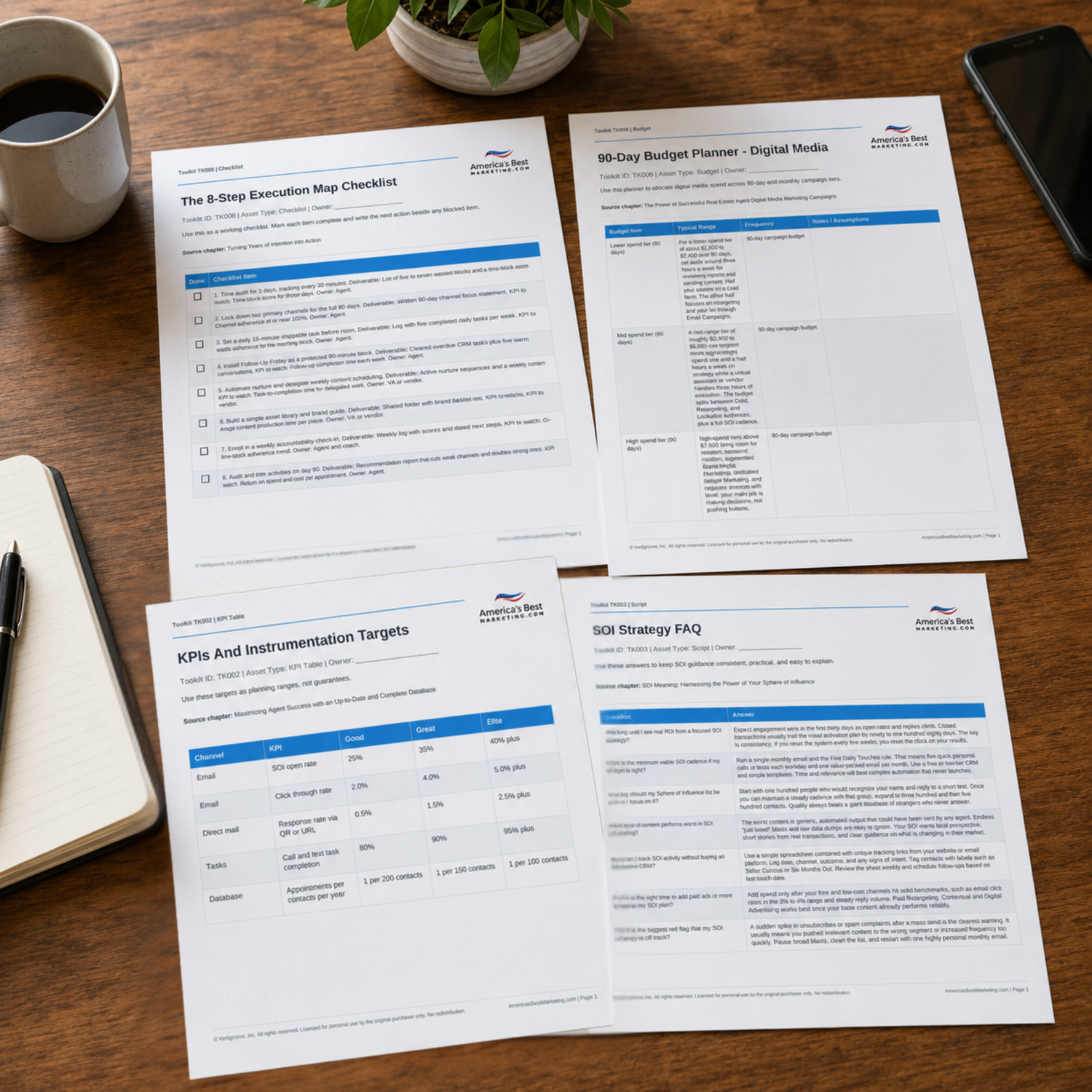
Download The Seller Disclosure Workflow Toolkit
Use the companion Toolkit to build the seller intake packet, disclosure vault, client scripts, KPI tracker, 12-point checklist, and 12-week rollout plan for real estate agents.
Download the Toolkit ZIPRecommended reads
Recommended Reads for Real Estate Agents
These articles help agents connect listing visibility, seller education, marketing channels, and follow-up into a clearer growth system.

Breaking Down Closing Costs for Buyers and Sellers
Position listings with stronger copy, clearer proof points, and promotion that supports seller confidence.
Read article
High-End Buyer/Seller Tech Stack: Tools and Systems Luxury Agents Use
Create more leverage from high-end buyer/seller tech stack with a clear path from attention to follow-up.
Read article
SEO-Friendly Blog Titles for Real Estate Agents: Templates + A/B Testing Checklist
Build organic reach with pages and posts that are easier to find, trust, and act on.
Read article
Zillow Leads vs Realtor.com Leads. Which is Worth It?
Use paid lead source decisions to create a stronger bridge between client education and real conversations.
Read articleSeller Disclosure Questions Agents Should Be Ready To Answer
How long does it take to see measurable ROI from better disclosures?
Most teams see measurable impact within 30 to 90 days because the workflow shows up immediately in inspection outcomes and buyer question volume. Track intake completion speed, vault access rate, and the size of repair credit requests. When those move, your pipeline stabilizes and your days-on-market conversations get easier. Treat the first three listings as the baseline set, then tighten the checklist.
What is the major red flag to avoid with Seller Disclosures?
The red flag is writing the seller’s disclosure language for them or turning the process into legal advice. Your role is to facilitate documentation and clarity, then route questions to the seller, your broker, or legal counsel. When you script the answers, you take on risk and you confuse accountability. Keep the process clean: collect facts, label unknowns, and package the file.
People Also Ask: Can a seller be sued for an honest mistake on a disclosure?
Rules vary by state, and liability questions depend on facts, intent, and what a seller reasonably knew. That is why your process should focus on documentation and clarity, not guesswork. Encourage sellers to answer based on records and lived experience, and to label unknowns instead of filling gaps with assumptions. For legal specifics, direct the seller to qualified local counsel.
Should you disclose issues that were repaired years ago?
In many markets, prior issues and repairs still matter because buyers care about recurrence risk and workmanship. Operationally, it is safer to document the history, attach receipts, and state what changed than to let a buyer discover it later and assume a cover-up. Your goal is to keep the narrative stable from listing to closing. Use facts, dates, and invoices, then keep commentary minimal.
How do you set expectations without scaring off buyers?
Lead with confidence and documentation, not drama. State that the file is complete, the known issues are priced or addressed, and the documents are available early for review. Buyers do not fear flaws, they fear surprises. When you make access simple and the language plain, serious buyers lean in and tire-kickers move on. That is a win for the seller.
What documents should live in a disclosure vault?
Keep it focused: seller intake, disclosure forms, permits if available, repair receipts, warranties, HOA documents, and any specialist reports the seller already has. Add a one-page index so buyers can find what they need fast. Do not dump unrelated clutter into the folder, because it slows review and invites confusion. Name every file with a date and a clear label.
How do you handle unknowns without creating conflict?
Normalize unknowns early by explaining that unknown is an acceptable answer when it is true. The mistake is pretending certainty where none exists. Have the seller label unknowns, then decide whether a targeted inspection, a contractor consult, or a pricing adjustment makes sense. This keeps the file honest and reduces the chance that a buyer later claims the seller hid something. You are managing expectations, not manufacturing certainty.
Next step
Build the System Behind the Advice
Continue from one useful article into the larger ABM ecosystem: the book series for strategic depth and the full marketing program for done-for-you execution.

View the Book Series
Explore the America’s Best Real Estate Agent Marketing System books for a deeper strategic framework around visibility, referrals, listings, lead generation, and growth.
View the Book Series
See Full Marketing Program
See how AmericasBestMarketing.com runs real estate blog writing, social media, listing marketing, email, direct mail, and retargeting as one managed system.
See Full Marketing Program