25 Fall Real Estate Marketing Ideas That Actually Work
25 Proven Fall Real Estate Marketing Ideas
For Real Estate Agents
A Q4 operating brief for turning seasonal ideas into listing conversations, referrals, appointments, and first quarter pipeline.

The fall marketing plan that converts
Fall real estate marketing works best when one useful seasonal offer is repeated across social media, email, direct mail, personal outreach, and retargeting for ninety days. Segment buyers, sellers, investors, past clients, and referral partners, then measure conversations, appointments, showings, and pipeline value instead of judging the campaign by likes alone.
- Use one seasonal offer, such as a Local Winter Market Outlook, across social, email, direct mail, and retargeting.
- Protect a weekly shipping rhythm so fall campaigns go live before holiday distractions kill momentum.
- Track inquiries, appointments, showings, and pipeline value by channel instead of judging success by likes alone.
- Segment buyers, sellers, investors, past clients, and referral partners so each group gets a relevant reason to act before year end.
Why Fall Real Estate Marketing Is A Secret Weapon
Fall real estate marketing works through a sharper filter. The total number of casual shoppers usually drops as school calendars settle, weather changes, and the holidays get closer. The people who keep paying attention are more likely to have deadlines tied to jobs, family moves, tax planning, leases, or a desire to close before the end of the year.
That shift changes the marketing job. You do not need louder seasonal noise. You need a tighter campaign that gives motivated people a clear next step. The best fall mix keeps your database warm, gives local homeowners useful timing information, and keeps one simple offer in market long enough for repeated exposure to work.
- Buyers who remain active in fall often need to solve a housing problem before winter, a job start date, or holiday travel.
- Sellers who list during fall may be more open to strategic pricing, repair credits, and cleaner negotiation terms.
- Past clients and sphere contacts are easier to reengage because gratitude, year-end planning, and neighborhood updates feel timely.
For agents who want a complementary event angle, pair this plan with 21 Client Appreciation and Event Ideas for Fall. Events give your database a real-world reason to reconnect while your digital channels keep the message moving.
The highest leverage fall window often runs from mid October through late November. Competition has cooled, but urgency has not. Aim messaging at the cost of waiting, move-in timing, rate locks, tax planning, repair credits, and year-end clarity.
Common Q4 Marketing Failure Modes
Most fall campaigns fail because they are treated like seasonal decoration instead of business development. Agents post a few warm greetings, pause outreach after Halloween, and promise themselves they will restart in January. That creates a visibility gap when serious buyers and sellers still need guidance.
Visibility disappears while decisions continue
Ad spend, email, calls, and content stop even though motivated clients are still evaluating options and timing.
The warmest audience receives no reason to reply
Past clients get no personal note, market update, referral reminder, or simple way to reengage.
Seasonal slogans replace market guidance
Holiday greetings fill the feed while stronger competitors publish local inventory, pricing, and timing information.
Features appear without a timely buyer story
Property posts list specifications without explaining why the home solves a fall or winter buyer problem.
Attention lands on a weak next step
Social ads create interest but send prospects to weak pages instead of tuned IDX Real Estate Websites with a clear call to action.
The 10 Step Fall Real Estate Marketing Action Plan
Use this ninety day plan as your operating checklist. The goal is not to test every idea at once. The goal is to ship the right combination of content, outreach, paid reach, and follow-up every week.
- Audit last year and pick your winners. Review your inbox, CRM, social insights, listing notes, and call history. Identify three pieces of content or outreach that produced actual conversations, then rebuild them with a fall timing angle.
- Build a thirty day social calendar. Plan three posts per week across education, listings, and local life. Include fall curb appeal, neighborhood market shifts, buyer timing, seller prep, and community touchpoints. A managed Social Media Management system keeps this from depending on last minute inspiration.
- Create a Local Winter Market Outlook. Build a five page download with inventory, days on market, price movement, seller timing, and buyer opportunities. This becomes the lead magnet for ads, email, direct mail, and follow-up calls.
- Launch targeted ad campaigns. Run neighborhood-level paid reach through Retargeting and contextual ads. Start with a tight radius around your best farm or listing area and send traffic to one page with one promise.
- Run a client appreciation touch. Pull your top one hundred contacts and send a personal note, invitation, or small seasonal mailer. Use Direct Mail when design, print, postage, and cadence need to stay consistent.
- Publish a seller prep series. Create three short articles or videos on pricing, repairs, staging, and showing strategy before winter. Use them as organic search assets and as links in email replies.
- Warm up your database by email. Segment past clients, sphere contacts, buyer leads, seller leads, and referral partners. Send a useful market update with one clear ask. Strong Email Marketing for Real Estate Agents keeps the message trackable and repeatable.
- Spotlight active listings during the lull. When other agents slow down, use short tours, better captions, and stronger story angles. Explain why the home works now, not just what features it has.
- Block time for personal outreach. Reserve two call blocks each week. Use your market outlook as the reason for the conversation and track how many calls become planning appointments.
- Review numbers and set the first quarter plan. In mid December, pull spend, leads, appointments, listing conversations, and pipeline value by channel. Shift January budget toward the two campaign angles that created the best conversations.
Messaging That Converts For Fall Campaigns
Good fall copy talks less about seasonal mood and more about deadlines. Buyers want to understand payment exposure, timing, inventory, and move logistics. Sellers want to know whether waiting helps or hurts. Past clients want a reason to reconnect that does not feel like a generic sales blast.
Make the cost of waiting visible
Thinking about waiting until spring? See the holding-cost math first.
Connect inventory to a real deadline
Homes that may still close before year end.
Turn curiosity into local proof
Scan to see what sold near you this fall.
Invite the audience into the timing question
What is the one thing that would make you move before winter?
Explain why the home works now
Cozy-season ready with a closing timeline that can still work before the holidays.
Calls to action should move prospects one step at a time. Social and blog content can ask for a download or a saved list. Ads and email can ask for a home value review, buyer strategy call, or open house visit. Landing pages can ask for a specific twenty minute planning appointment.
If your fall plan targets luxury or move-up clients, layer in the positioning guidance from How to Attract High-End Buyers and Sellers in Today’s Market. Higher-priced clients need sharper proof, stronger presentation, and more disciplined follow-up.
Three Fall Campaign Frameworks You Can Reuse
Each framework gives the campaign one promise, one sequence, and one next step. Keep the production simple enough to repeat while the season is active.
The Local Winter Market Outlook
Message structure
OpeningMany people misread how active or quiet their fall market really is.
ProofPresent local prices, inventory, days on market, and the timing choices facing buyers and sellers.
Next stepInvite the audience to download the report and request a short personal video review.
Use a local street exterior, a simple chart on a screen, the agent recording a market note, and a final download frame.
The Seller Timing Comparison
Message structure
OpeningStart with the cost of holding a property for three extra months while waiting for spring.
ProofCompare mortgage payments, taxes, utilities, upkeep, price movement, and possible repair costs.
Next stepInvite homeowners to request a now-versus-later net sheet.
Use a seasonal home exterior, a cost comparison graphic, a calm agent explanation, and a close shot of the worksheet.
The Local Lifestyle Spotlight
Message structure
OpeningFeature one local fall asset such as trails, markets, coffee shops, parks, or community events.
ProofConnect the scene to a neighborhood or listing area you serve.
Next stepInvite viewers to request your fall neighborhood guide or book a tour.
Use a point-of-view walk, a nearby street or listing, a warm interior lifestyle shot, and an end card with the neighborhood and next step.
Production Plans And Budget Tiers You Can Repeat
The gap between good ideas and closed business is usually production discipline. Fall real estate marketing works best when campaign work is scheduled like a listing appointment, not squeezed into leftover time.
Record one framework per week on your phone. Capture the raw clips, write one caption, and hand the files to your marketing team for trimming, captions, scheduling, and distribution.
Film two frameworks per week, one seller-focused and one buyer-focused. Reformat each into a feed post, a story, a short video ad, an email blurb, and a retargeting creative.
You do not need a huge budget to make a fall campaign work. You need enough consistency for the market to notice you, enough tracking to see what is working, and enough discipline to stop spending on weak angles.
As your marketing plan matures, your business structure should support the revenue it creates. For planning beyond campaigns, review The Financial, Business, and Legal Benefits of Real Estate Agents Incorporating into an S-Corp or LLC.
| Tier | Main Focus | Monthly Spend | How To Read It |
|---|---|---|---|
| Foundation tier | Keep database and social presence active. | $500 to $1,200 | Best for consistent social, one monthly email, light retargeting, and one strong downloadable market asset. |
| Growth tier | Layer paid reach on top of content. | $1,500 to $3,000 | Use this range for market report ads, direct mail, segmented email, video content, and stronger listing promotion. |
| Dominator tier | Run a full funnel every fall. | $4,000 to $7,000 | Treat fall as a campaign launch with full listing support, retargeting, direct mail, email, and weekly lead quality checks. |
Fall KPI Benchmarks That Keep The Campaign Accountable
Fall real estate marketing should feel like a controlled operating system, not a gamble. Track a short list of numbers that show whether your offer, audience, message, and follow-up are working together.
| Metric Group | What To Track | Check Cadence | Decision Rule |
|---|---|---|---|
| Content traction | Page views, saves, shares, comments, and video completion. | Weekly | Improve the topic or opening when attention stays weak across several posts. |
| Lead quality | Form submissions, reply quality, call requests, consults, and showings. | Weekly | Revise the offer when attention does not become a meaningful conversation. |
| Pipeline movement | Listing conversations, buyer calls, active searches, agreements, and pipeline value. | Every two weeks | Protect the campaign angles that create appointments and signed opportunities. |
| Channel accountability | Source tags for email, social, direct mail, retargeting, and organic search. | Monthly | Shift budget toward the channels that repeatedly create qualified conversations. |
A practical benchmark is simple: aim for at least one meaningful business conversation per week from the campaign while the season is active. If the campaign creates attention but no appointments, revise the offer before raising spend.
Compliance And Data Integrity
Good fall marketing respects inboxes, privacy, ad rules, and fair housing obligations. Every email should identify the sender, use honest subject lines, and provide a simple unsubscribe path. Ads should focus on geography, property type, timing, market data, and service quality rather than personal traits.
Keep CRM notes factual, protect form submissions, and limit access to the people who need it. The same discipline that protects clients also improves campaign measurement because clean lists, clear source tags, and accurate notes make follow-up easier.
How A Fall Database Campaign Can Support Listing Pipeline
Consider a suburban agent who usually sees lead volume drop between October and December. In past years, he reduced spend, stopped calling past clients, and restarted from a cold position in January. The better move was to turn fall into a database campaign.
He mailed five hundred homeowners and past clients a winter market review invitation, then followed with segmented emails for owners who had lived in their homes for more than seven years. The message was not pressure. It was a simple offer to compare selling now, preparing for winter, or planning a first quarter launch.
The campaign created listing conversations before Christmas and put additional sellers into a spring nurture path. The win came from alignment: direct mail, email, market data, and personal follow-up all pointed to the same decision.
25 Proven Fall Real Estate Marketing Ideas
Choose three to five ideas that match your market, budget, and personality. Execute them well before adding more.
- Host a fall curb appeal tour and feature the best porches in your farm.
- Run a neighborhood pumpkin drop for past clients and top sphere contacts.
- Create a fall home maintenance checklist and send it with local vendor recommendations.
- Offer a winter pricing consult for owners deciding whether to list now or wait.
- Record weekly market hits covering inventory, days on market, and price reductions.
- Send a gratitude email that includes one clear referral request.
- Run a fall pet photo contest and feature the winner on your site and social channels.
- Promote a ten minute sell-now-versus-wait call with retargeting ads.
- Partner with a local coffee shop for a client appreciation morning.
- Film listing walk-throughs that show how each home lives during cooler months.
- Publish a downsizing-before-winter guide for empty nesters.
- Share a weekly list of homes with fireplaces, covered patios, views, or gathering spaces.
- Invite landlords to a short session about vacancy risk and year-end opportunities.
- Retarget valuation-page visitors with a sharper call to discuss timing.
- Capture client event clips and turn them into proof-based social content.
- Promote a fall open house weekend with staggered tours and one central flyer.
- Send a simple weekly newsletter with one market insight and one client story.
- Feature local businesses that make fall better and tag them when you post.
- Record a short series on buying and selling in one move before winter.
- Handwrite notes to the top fifty people in your database.
- Offer a fall move-up analysis for owners with equity.
- Highlight homes near trails, parks, schools, downtowns, or fall events.
- Publish an investor deal watch focused on rent, repair, and holding-cost math.
- Answer one common fall question per day in stories or short videos.
- Invite serious buyers and sellers to review your Local Winter Market Outlook with you.
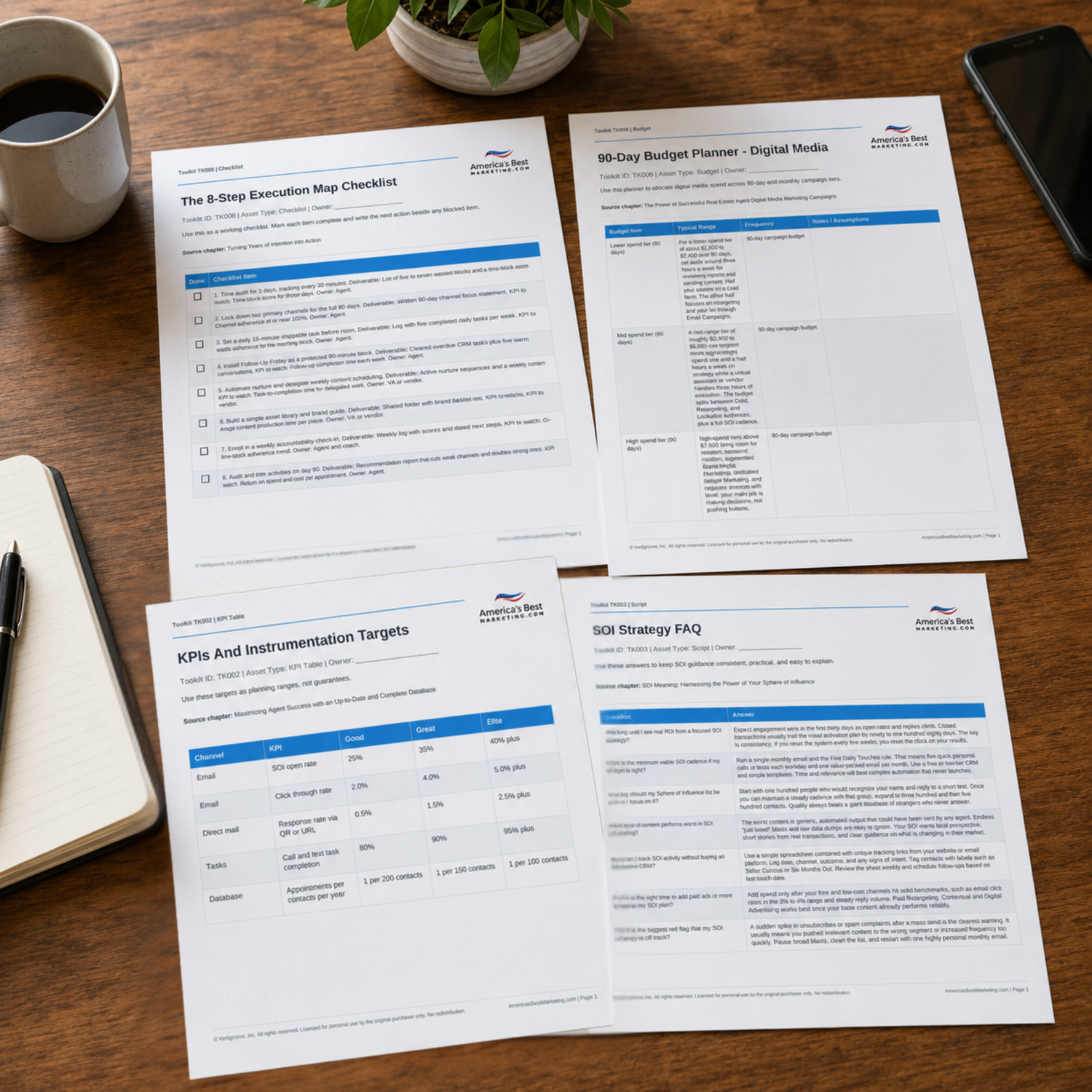
Download The Fall Real Estate Marketing Toolkit
Use the companion Toolkit to move from planning to production with the 25 idea checklist, a fall action plan, budget tier worksheet, FAQ script, and three reusable campaign frameworks.
Download the Toolkit ZIPRecommended reads
Recommended Reads for Real Estate Agents
These articles help agents connect follow-up discipline, database habits, client communication, and marketing execution into a repeatable system.

25 Proven Real Estate Marketing Ideas for Spring
Make 25 proven real estate marketing ideas for spring more useful by tying the message, audience, and next step together.
Read article
Property Taxes Explained: Real Estate Agent Cheat Sheet + Client Email Templates
Make property taxes explained more useful by tying the message, audience, and next step together.
Read article
Investor Content for Real Estate Agents: Build a Real Estate Investment Portfolio Series That Attracts Clients
Make investor content easier to plan, publish, and measure as part of a weekly marketing rhythm.
Read article
27 Real Estate Marketing Ideas for Real Estate Agents for Summer
Bring more structure to summer marketing ideas so every touchpoint supports visibility and trust.
Read articleTurn Seasonal Ideas Into A Campaign Cadence
Fall real estate marketing works when the ideas become a campaign cadence. Pick the right seasonal offer, run it across the channels your audience already notices, measure appointments instead of noise, and keep following up after the holidays. That is how a slower season becomes pipeline instead of downtime.
Fall Real Estate Marketing Questions Agents Should Be Ready To Answer
How long does it take to see results from fall real estate marketing?
Early signals can show up within two weeks through replies, clicks, saved searches, and conversations. Contracts usually trail the activity. A realistic campaign window is forty five to ninety days, with some fall conversations converting into first quarter closings.
What is the minimum cadence if my budget is tight?
Protect your database and your social presence first. Send one strong market update each month, publish three local posts per week, and keep one simple offer active for homeowners who want a fall or winter pricing conversation.
How large should my farm be for fall campaigns?
Quality beats size. A good starting point is two hundred fifty to five hundred homes where you already have some name recognition. Keep online targeting tight around the same neighborhoods so your message compounds instead of scattering.
What fall real estate marketing content performs worst?
Generic holiday greetings with no useful market insight tend to underperform. Stock images and seasonal slogans rarely create appointments. Content wins when it explains timing, pricing, repairs, equity, move logistics, or local inventory in a way a real buyer or seller can use.
How can I track success without complex tools?
Track three numbers every week: inbound calls or emails from past clients, form submissions tied to ads or email, and traffic to your most relevant fall market pages. That simple scorecard is enough to see which campaign angle deserves more budget.
When should I increase ad spend during fall?
Increase spend only after the offer proves it can create quality conversations. Look for a repeatable cost per lead, a clear appointment rate, and evidence that the leads match your buyer, seller, or listing goals.
What is the biggest red flag in a fall campaign?
The biggest warning sign is one broad message sent to every contact and audience. First time buyers, move up sellers, investors, and past clients need different reasons to act. Segment the list and speak to one decision at a time.
Next step
Build The System Behind The Campaign
Continue from one seasonal campaign into the larger ABM ecosystem: the book series for strategic depth and the full marketing program for done-for-you execution.

View the Book Series
Explore the America’s Best Real Estate Agent Marketing System books for a deeper strategic framework around visibility, referrals, listings, lead generation, and growth.
View the Book Series
See Full Marketing Program
See how AmericasBestMarketing.com runs real estate blog writing, social media, listing marketing, email, direct mail, and retargeting as one managed system.
See Full Marketing Program