Build a Relocation Lead Engine in Your City: Real estate relocation leads guide for agents
Build a Relocation Lead Engine in Your City
Real Estate Relocation Leads Guide for Agents
A practical operating model for agents who want relocation buyers to find a city guide, request help, and move into an eight-week follow-up path before they arrive.

How real estate agents can build a relocation lead engine
A relocation lead engine starts with one city-specific guide, one dedicated capture page, one video and search cadence, and one eight-week follow-up sequence. The system works because it gives out-of-area buyers commute clarity, neighborhood context, timing support, and a clean next step before they are ready to tour homes.
- Relocation buyers are high-intent prospects because they have deadlines, uncertainty, and a real decision path to manage.
- The strongest first asset is an eight to twelve page city relocation guide that answers commute, boundary, cost, and lifestyle questions.
- A dedicated landing page should capture move timeline, current location, reason for move, and email instead of sending traffic to a generic home page.
- The follow-up sequence should guide buyers through decision context before shifting to a consult, scouting trip, or shortlist.
Why Relocation Buyers Need More Than Listings
Real estate relocation leads are different from casual buyer leads. A relocating buyer is not just imagining a nicer home. They may be protecting a job change, family move, military transfer, remote-work shift, or retirement plan from becoming expensive chaos.
That buyer is drowning in listings and starving for context. Bedrooms, price, and school labels are not enough. They want commute reality, day-to-day feel, boundary clarity, cost surprises, and what life looks like when the moving truck is gone.
Your edge is not inventory. Your edge is translation. You bridge their current life to their next one by turning unknowns into a plan they can act on.
- Generic welcome-to-the-city pages rarely answer the specific questions that relocation buyers are already searching.
- Home-page traffic leaks intent because the offer, form, and next step are not built around moving deadlines.
- Listing alerts alone do not solve the buyer’s first problem, which is understanding where and how to live in the market.
Relocation leads do not want a pitch. They want reduced uncertainty. If your content answers commute, boundaries, cost, and daily-life logistics, you earn trust before the first call.
The Four-Part Relocation Lead Engine
This engine has three moving parts and one fuel source. The moving parts are the magnet, the capture page, and the nurture sequence. The fuel is search and social traffic aimed at people actively planning a move.
Keep the first version simple: one flagship guide, one landing page, one email sequence, and a repeatable weekly publishing cadence that points back to the guide.
Build the city relocation guide
Your guide should read like a decision tool, not a brochure. Make it eight to twelve pages with commute reality, school boundary tools, cost-of-living snapshots, neighborhood fit maps, and newcomer logistics.
Write for one primary persona first: a tech mover, military family, hospital hire, remote worker, or retiree. One clear persona makes the guide sharper and easier to promote.
Build the capture page
Do not send relocation traffic to your home page. Send it to one landing page with one offer and one conversion goal: guide download plus move timeline.
Build the page around your IDX real estate website experience so the lead can grab the guide and immediately explore matching neighborhoods and listings.
Add fuel from video and search
Relocation research is question-driven. People type moving-to, living-in, and best-area-for queries long before they talk to an agent.
Use social media management for real estate agents to distribute short, useful videos that point back to the guide landing page.
Nurture like a local guide
Once someone downloads the guide, they are asking you to reduce uncertainty. Your job is to keep delivering context until the move date feels manageable.
Use email marketing for real estate agents style thinking: one decision tool, one clear next action, and no pressure.
What the Landing Page Should Ask For
A relocation landing page should feel useful before it feels transactional. Keep the form short and high-signal. Ask only for the information you will actually use to personalize follow-up.
Capture name, email, current city and state, target move month, reason for move, and optional price band. That gives you enough context to segment the lead without making the form feel like an interrogation.
Confirm the guide is on the way, offer a short relocation plan call, and link to a neighborhood hub page. The thank-you page should turn the download into a next action.
The best content lanes for this engine are simple: longer YouTube answers that reduce risk and neighborhood pages that answer one specific decision question per page. Examples include living in one city versus another, best areas for commuters to a major employer hub, and what a specific price band buys in different neighborhoods.
To keep your time from getting swallowed by side quests, revisit Focused Real Estate Activities: How Successful Real Estate Agents Prioritize What They Can Control and measure the week by outputs shipped, not intentions.
Three Relocation Video Scripts Agents Can Use This Week
Relocation messaging works when it is blunt, specific, and calm. You are not trying to impress people. You are trying to make them feel safe enough to decide.
The start-here relocation opener
Agent dialogue
Hook lineMoving to this city? Do not pick a neighborhood until you understand the commute corridors.
Middle linePeople choose based on listings, then regret commute patterns, parking, or school boundary assumptions.
CTA lineGrab my free relocation guide and tell me your target move month.
Use a skyline or street-sign opening, cut to a map, then show the guide cover and landing page call to action.
The living-here-versus-there comparison
Agent dialogue
Hook lineThinking about leaving one market for this one? Here is the part people underestimate.
Build lineYour home size might go up, but your drive patterns, weekend habits, and daily rhythm can change fast.
CTA lineI made a relocation guide with commute and lifestyle maps. Start there before you shortlist homes.
End calm and practical. The goal is trust, not hype. Show two quick area clips and a simple map overlay.
The regret-prevention checklist
Agent dialogue
Hook lineThree regrets I hear from people after moving here: commute, boundaries, and one-weekend decisions.
Explain lineFix it by setting a target commute, using a neighborhood fit map, and touring with a plan.
CTA lineDownload the guide and reply with your move month so I can point you to the right areas.
Use this script for short-form video and retargeting creative after someone visits the relocation landing page.
Budget Ranges And KPI Targets
Budget does not buy trust. It buys reach and repetition. Use these tiers as planning ranges, not as promises. Actual lead flow depends on market competition, message clarity, and how consistently you publish.
| Tier | Monthly Budget | Time Investment | Planning Use |
|---|---|---|---|
| Organic | $0-$300 | 4-6 hrs per week | Use to prove the message, guide, landing page, and first videos before scaling spend. |
| Paid boost | $300-$1,000 | 5-7 hrs per week | Use to stay visible to people who watched relocation videos or visited the guide page. |
| Full scale | $1,500-$4,500 | 6-10 hrs per week | Use after the offer, form, follow-up, and appointment path are already converting. |
Track the numbers that move a lead from curious to scheduled. Your primary scorecard should include landing page conversion rate, cost per lead, appointment set rate, and reply rate to the move-month question.
- Use UTM tags on every video, email, and blog link that points to the relocation landing page.
- Compare organic video traffic, search traffic, social clips, and retargeting against appointment creation, not vanity impressions.
- Audit the week against Are You Focusing Your Time on the Right Activities to Grow Your Real Estate Business? and cut anything that does not ship content, capture leads, or book calls.
Compliance And Ethics For Relocation Content
Relocation content touches sensitive topics fast. You can be useful without steering. Give objective decision tools, then let the buyer decide.
Talk about amenities, commute, housing stock, public resources, boundary tools, and process. Avoid language that frames neighborhoods by the people who live there.
- Describe features and logistics, not demographics.
- Use official school boundary maps, enrollment information, and program resources instead of ranking claims.
- Direct people to public safety information and encourage personal due diligence.
- Get clear consent, include unsubscribe links, and explain what the buyer will receive after downloading the guide.
Mini Case Pattern: The Tech-Hub Relocation Guide
Sarah is a real estate agent in a tech hub. She builds a relocation guide for tech workers that focuses on commute corridors, neighborhoods with reliable internet access, and realistic day-to-day costs.
She records four videos that match her guide chapters: commute reality, neighborhood fit, renting versus buying, and a two-day scouting plan. Every video points to the same landing page and asks for a target move month.
Within a few weeks, she averages about 50 new leads per month entering her follow-up. She turns three of those leads into active buyer consultations within 90 days by offering a short, structured consult that turns scattered questions into a clear plan.
Her biggest win is not volume. It is trust. Prospects show up already aligned with her process, so calls are quicker and decisions are cleaner.
What To Ship First
Start with the minimum system that proves demand. A simple version launched with discipline beats a polished version that never leaves your draft folder.
- Pick one relocation persona, one employer hub, and one neighborhood fit angle.
- Draft the guide outline and write the first version fast.
- Build a dedicated landing page with a move-date field and a single call to action.
- Write the eight-week follow-up sequence before publishing the first video.
- Record four cornerstone videos that match the guide sections.
- Publish two neighborhood decision pages that match your top buyer questions.
- Add UTM tracking to every video, email, and blog link that points to the landing page.
- Schedule a weekly watch-and-respond block to reply to meaningful comments within 24 hours.
The moat is not having relocation content once. The moat is becoming the calm local expert who turns unknowns into a plan every week.
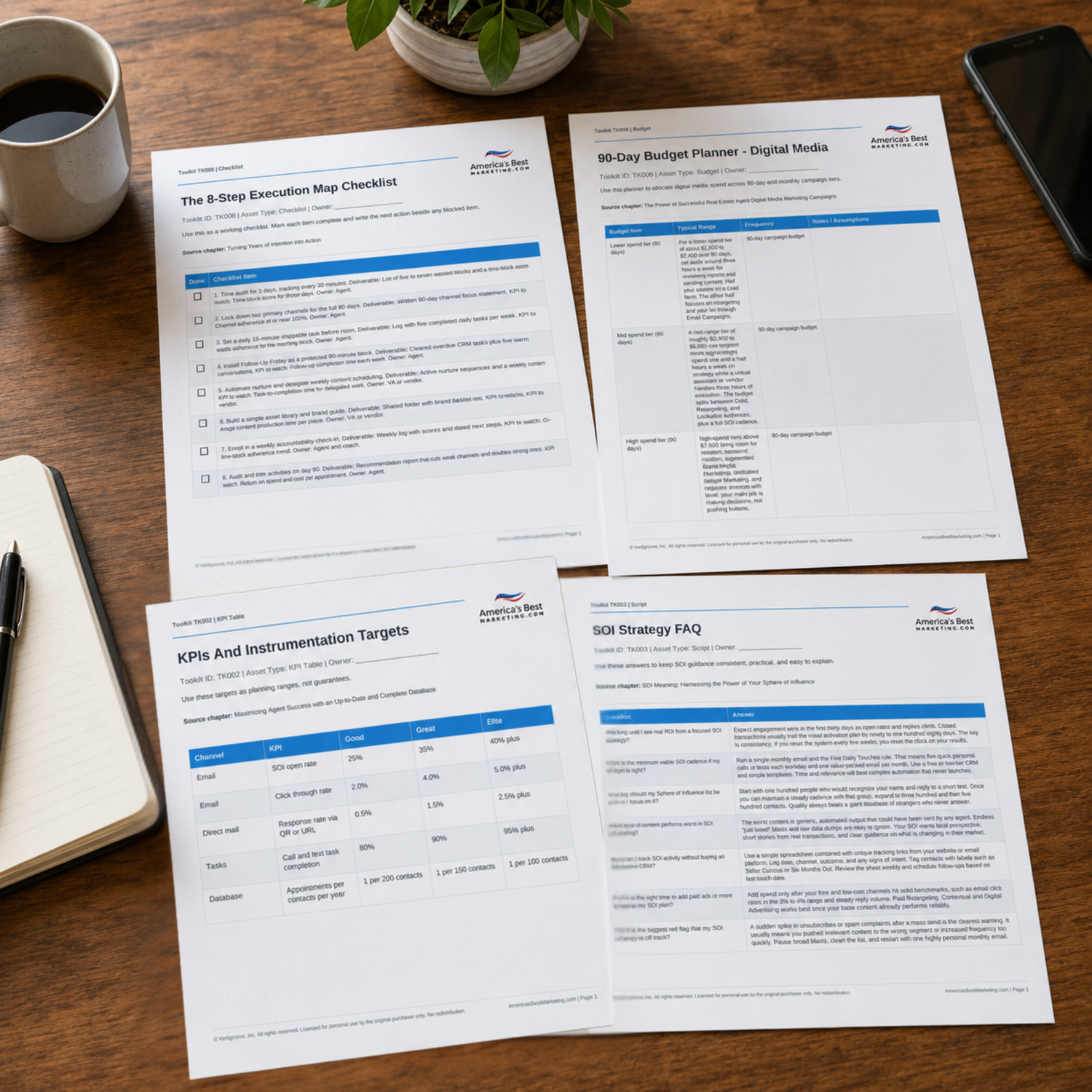
Download The Relocation Lead Engine Toolkit
Use the companion Toolkit to turn the relocation system into working assets: a budget planner, an eight-week follow-up plan, a build checklist, relocation FAQ prompts, and short video scripts.
Download the Toolkit ZIPRecommended reads
Recommended Reads for Real Estate Agents
These articles help agents turn client questions, local guidance, marketing channels, and follow-up into a more useful content system.

How to Get Real Estate Leads Online: The Ultimate Guide for Real Estate Agents
Use get real estate leads online to strengthen visibility, follow-up, and client conversations without adding more random tasks.
Read article
Hidden Gems Content: How Real Estate Agents Create Local Guides That Generate Relocation Leads
Turn local knowledge into searchable content buyers, sellers, and relocation prospects can actually use.
Read article
Real Estate Agent Video Marketing: Boost Conversions and Engage Clients with Effective Videos
Create video content with clearer scripts, simpler formats, and a cadence agents can actually maintain.
Read article
Zillow Leads vs Realtor.com Leads. Which is Worth It?
Use paid lead source decisions to create a stronger bridge between client education and real conversations.
Read articleRelocation Lead Engine Questions Agents Ask
How far in advance do relocation buyers usually start looking?
Most relocation buyers start early because planning beats panic. A common window is three to six months before the move, but job transfers can compress it fast. This is why your guide has to show up during research, not after they land. Capture a target move month on the form, then match your follow-up to that timeline.
Should I target renters who are relocating?
Yes, but segment them. Many movers rent first to learn the city, then buy after six to eighteen months. Offer a renter-friendly version of your guide that focuses on commute, neighborhoods, and lease timing, then keep them on a longer nurture track. The win is being their local guide while they form their short list.
How do I get my relocation guide in front of people in other states?
Own the queries they already type. Publish YouTube videos and neighborhood pages built around moving-to-city questions, then route every piece to the same landing page. Add retargeting so viewers see you again after the first watch. Keep the offer consistent for 90 days so algorithms and humans can recognize the pattern.
Can I automate the follow-up process?
You can automate delivery and timing, but you should not automate relevance. Automate the eight-week sequence, then add manual touchpoints based on behavior: someone who clicks commute content gets commute follow-up, and someone who visits schools content gets boundary resources. A simple rule works: every week, personally reply to the most engaged leads first.
What is the best content for relocation buyers?
The best content reduces risk and answers the how-do-I-decide question. Commute corridors, boundary tools, cost-of-living reality, and neighborhood fit maps beat generic tours every time. Use comparison videos, regret-prevention posts, and short planning checklists. If a piece does not help a buyer pick an area or plan a visit, it is noise.
How do you get relocation leads without paying referral fees?
You attract them during the research phase, before they ever talk to a relocation desk. Publish relocation-specific video and search pages, gate the best asset behind a simple form, and follow up with context that makes decisions easier. This replaces referral fees with value. Your fee is consistency, clarity, and a process that buyers can trust.
Next step
Build the System Behind the Advice
Continue from one useful article into the larger ABM ecosystem: the book series for strategic depth and the full marketing program for done-for-you execution.

View the Book Series
Explore the America’s Best Real Estate Agent Marketing System books for a deeper strategic framework around visibility, referrals, listings, lead generation, and growth.
View the Book Series
See Full Marketing Program
See how AmericasBestMarketing.com runs real estate blog writing, social media, listing marketing, email, direct mail, and retargeting as one managed system.
See Full Marketing Program