Pay Off a Mortgage Early: Real Estate Agent-Friendly Explainer + Content Angle for Homeowners
Pay Off a Mortgage Early
Real Estate Agent-Friendly Explainer for Homeowners
A homeowner-education playbook for agents who want to turn mortgage payoff curiosity into equity reviews, referral conversations, and future listings.

Mortgage payoff questions are homeowner retention signals
When homeowners ask how to pay off a mortgage early, they are really asking about control, equity, monthly pressure, and their next chapter. A smart real estate agent can answer the basics in plain English, avoid personal financial advice, and turn that curiosity into annual equity reviews, useful follow-up, referrals, and future listing conversations.
- Mortgage payoff education works because it speaks to people who already own homes and already have equity.
- The strongest agent angle is not financial advice. It is plain-language education paired with an invitation to review value, equity, timing, and housing goals.
- Payoff content should explain principal, interest, amortization, recasting, bi-weekly payments, and opportunity cost without making personal recommendations.
- The business outcome is a measurable homeowner nurture system with downloads, replies, QR scans, and equity review requests as leading indicators.
Why This Pays Off
Mortgage acceleration content drives a business outcome: more equity conversations with people who already know you, like you, and own a home. That is the cheapest attention you will ever buy.
When you explain payoff options in plain language, you stop sounding like a salesperson and start sounding like a long-term advisor. The objective is simple: ship a Homeowner Wealth Series that turns curiosity into equity reviews, and equity reviews into referrals and future listing conversations.
Make the series measurable. Track opens, clicks, replies, downloads, QR scans, and consult requests. Treat every response as a signal that a household may be planning a change.
- You keep past clients engaged around wealth, equity, and timing instead of waiting for them to announce a move.
- You create a natural reason to ask about the next five years without sounding like you are fishing for a listing.
- You convert financial curiosity into a repeatable content asset for email, social, direct mail, and retargeting.
The Math Behind Payoff Decisions
Most homeowners do not need advanced finance. They need clean definitions and a way to see the tradeoffs. Your job is to explain the moving parts, then route them to a payoff scenario they can understand in five minutes.
Start with four concepts and stick to them. Repeat the language across emails, short posts, postcards, and your equity review deck so the message becomes familiar.
Show what actually reduces the balance
Principal reduces the loan balance. Interest is the cost of borrowing. The earlier the loan is in its life, the more important this distinction feels because a larger share of the payment often goes to interest.
Explain why progress feels slow at first
The payment may stay steady, yet the split between interest and principal changes over time. Early payments lean heavy to interest. Later payments lean heavy to principal.
Separate payment relief from payoff speed
Recasting recalculates the monthly payment after a large principal reduction while keeping the same rate and payoff date. It usually lowers payment pressure, not the payoff timeline.
Now give homeowners the practical fork in the road. Are they trying to reduce monthly stress, or are they trying to shorten the payoff timeline? Those are different outcomes, and they require different tactics.
- Do not encourage payoff without talking about liquidity and opportunity cost when the rate is low and cash has other uses.
- Do not send payoff tips once and then go quiet. Run annual equity reviews with updated scenarios.
- Do not publish the content without a download hub that collects leads on your site.
- Do not ignore tax and deduction questions. State neutral facts and direct homeowners to a tax professional for personal advice.
- Do not use numbers that feel manufactured. Use a simple example with round figures and show the before-and-after payment count.
Early payoff questions often signal a household aiming for freedom, less monthly pressure, or downsizing within five to seven years. Treat these as pre-listing signals and ask one follow-up: what would you want housing to look like after the mortgage is gone?
The Wealth Advisor Content Loop
This loop turns one topic into a full year of homeowner touchpoints. Keep it simple, ship it consistently, and let the database tell you who is raising their hand.
Use one core asset, then distribute it across multiple channels. The goal is not virality. The goal is repeatable trust with homeowners who already sit on equity.
The education asset
Build the payoff playbook
Core assetBuild a Payoff Playbook PDF with a one-page glossary, a three-scenario worksheet, and a simple disclaimer.
Home baseHost the download on IDX Real Estate Websites so the content creates measurable site engagement.
CTA lineInvite homeowners to request a value and equity review after they download the worksheet.
Keep the language educational only and route personal financial, legal, lending, and tax questions to the appropriate professional.
The multi-channel blast
Turn one idea into repeated visibility
Email lineExtract one payoff concept each month and send it to past clients, homeowners, and warm prospects.
Mail lineUse Direct Mail with one QR code that points to the worksheet page.
Follow-up lineRetarget downloaders and page visitors with an equity review invite through Digital Retargeting.
A payoff series should feel like a calm financial briefing, not a promotion. The trust comes from simple examples, steady cadence, and one clear next step.
The equity consultation
Convert curiosity into a planning conversation
Opening lineWhat would you want housing to look like if your payment pressure changed?
Middle lineLet’s look at your current estimated value, remaining balance, rough equity position, and possible next step.
CTA lineIf you want, we can map a simple 12-month homeowner plan and revisit it each year.
Use this meeting to connect mortgage strategy with housing strategy. Do not present yourself as the lender, tax advisor, or financial planner.
Angles Homeowners Actually Share
Your content has one job: make the math feel doable and the next step feel safe. Avoid shaming language. Avoid strong claims. Use clear examples and a consistent cadence.
Rotate between savings angles, flexibility angles, and planning angles. When homeowners reply, route them to an equity review and ask one question about their next five years.
The thirteenth payment strategy
Show how one extra principal payment per year can change the timeline without asking the homeowner to overhaul their life.
Extra principal, same life
Frame acceleration as a controlled habit. The message is not sacrifice. The message is intentional progress.
Recasting vs. refinancing
Explain what changes, what stays, and why payment relief is a different goal from shortening the payoff calendar.
CTA taxonomy: Soft: download the payoff worksheet. Mid: request an annual equity review. Hard: book a strategy session and build a homeowner nurture calendar.
Homeowner Nurture Cadence You Can Run Without Stress
Use this cadence to turn the payoff topic into repeatable touchpoints instead of a one-off post. Each touchpoint should make one idea visible and offer one next step.
| Touchpoint | Content Angle | Primary Channel | Success Metric |
|---|---|---|---|
| Explain how extra principal changes the interest curve over time. | Email plus short post | Click rate and replies | |
| Annual review | Show two payoff scenarios using round numbers and a simple timeline. | Postcard with QR code | QR scans and consults |
| Market shift | Teach recasting vs. refinancing and connect it to monthly payment control. | Short video and DMs | Inbound messages |
Budget Guardrails and Creative Briefs
You can run this system at a starter level or scale it into a stronger monthly presence. The discipline is the same either way: one offer, one audience, one measurement loop.
Monthly spend: $300. Cadence: one email, one social post set, and 200 postcards. Audience split: 80 percent past clients and homeowners, 20 percent warm site visitors. Frequency cap: two to four impressions per week for retargeting audiences.
Monthly spend: $900. Cadence: two emails, two post sets, 500 postcards, and retargeting always on. Audience split: 70 percent past clients and homeowners, 30 percent local homeowners and warm prospects. Frequency cap: three to six impressions per week with creative rotation every 14 days.
Goal: drive payoff worksheet downloads and start equity review conversations. Audience: homeowners who mention payoff, budgeting, or early retirement. Creative: simple calculator visual, one headline, one QR code. Headline: One extra payment per year: see what it changes. CTA: Download the Payoff Worksheet.
Goal: book annual equity reviews with a calm, consultative tone. Audience: past clients with two-plus years ownership. Creative: home value range, equity range, then two payoff paths. Headline: Want a simple payoff scenario for your home? CTA: Request an Equity Review.
KPI Table for a Homeowner Wealth Series
Track the numbers that show intent, not vanity. Likes are fine, but replies, downloads, QR scans, and equity review requests are the proof that homeowners are leaning in.
| Metric | Target | Denominator | What to watch |
|---|---|---|---|
| Open rate | 28% to 42% | Delivered emails per send | Track replies from payoff subject lines and route to equity reviews. |
| QR scans | 1% to 3% | Mailed postcards per campaign | Use one QR per offer and measure scans by neighborhood or segment. |
| Consult asks | 1 to 3 consult requests | Monthly, per 500 homeowner contacts | Count consult requests, not likes, and log outcomes in your CRM. |
If your direct mail needs better creative angles and response mechanics, use this as a reference point: Real Estate Direct Mail Tips That Actually Work: A Guide for Real Estate Agents.
The 10-Point Financial Content Audit
Use this checklist before any mortgage payoff campaign goes live. It keeps the campaign useful, measurable, and safe enough to repeat.
- Use round-number examples and show the before-and-after timeline in months or years.
- Define principal, interest, and amortization in plain language and reuse the same wording everywhere.
- State that content is educational only and not financial, legal, or tax advice.
- Separate monthly payment reduction goals from payoff timeline goals.
- Include at least one scenario that compares payoff to keeping cash liquid for flexibility.
- House the payoff worksheet on your website with a clear download form.
- Tag downloaders and responders so future outreach targets the right homeowners.
- Set a simple handoff script for equity reviews: goal, timeline, scenario, next housing step.
- Keep visuals simple: one chart, one comparison, one next step. Avoid clutter.
- Track replies and consult requests as the core success metric, not vanity engagement.
How Education Turns Into Transactions
An agent launched a quarterly Mortgage Mastery newsletter to 300 homeowners and kept each issue focused on one payoff concept. They started with the single extra principal payment idea and included a one-page worksheet download on their site. Within one quarter they received 15 inbound questions about current value, equity position, and timeline changes.
Two homeowners realized they preferred to keep the mortgage steady and redirect cash toward a down payment on an investment property. The agent closed two purchase transactions and one listing within six months of shipping the first issue. After role-playing the equity review conversation, the agent standardized the meeting and now books reviews every month. The series became a consistent source of referrals because homeowners forwarded the worksheets to friends.
How This Becomes Marketing
Payoff education becomes marketing when it is packaged, distributed, measured, and repeated. One worksheet can become a blog post, an email sequence, a short video set, a postcard, a retargeting creative, and an equity review script.
Use payoff content inside Real Estate Blog Writing Services, Social Media Marketing, Listing Marketing, Email Campaigns, and Direct Mail. Each channel should reinforce the same positioning: you help homeowners think clearly before they make the next housing decision.
To speed up production without weakening accuracy, use automation to draft outlines, scenario tables, and channel-specific copy, then review every output before publishing. Start with Use AI to Cut 10+ Hours/Week: The Agent’s Revenue-First Tech Stack Guide, then tighten lead capture with Leveraging AI in Real Estate Marketing and Automation for Lead Generation.
Become the lifetime advisor, not the one-time agent. Draft your first mortgage acceleration email, publish the worksheet, then build a 12-month homeowner nurture calendar that you can run on repeat.
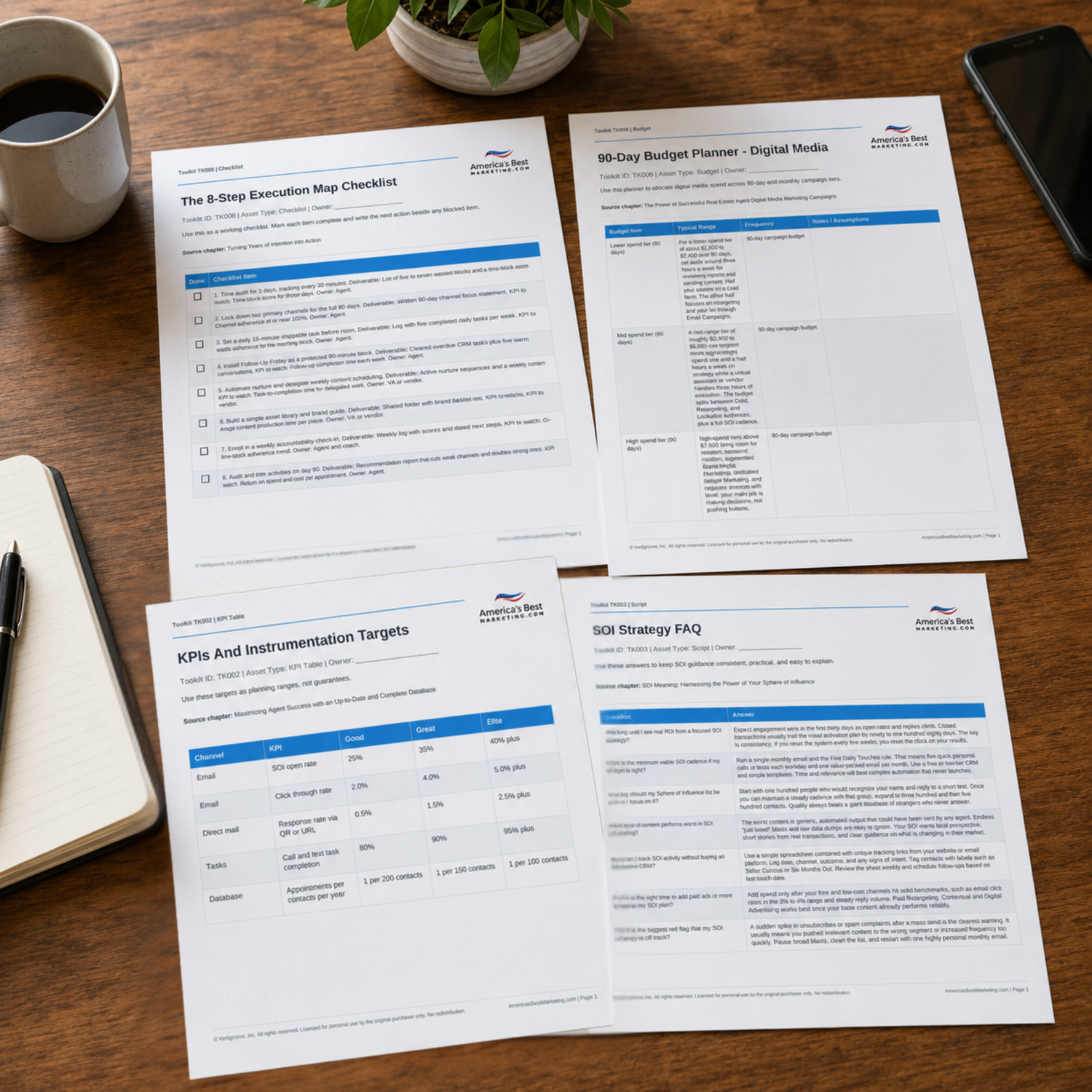
Download The Homeowner Payoff Education Toolkit
Use the companion Toolkit to turn the payoff worksheet, nurture cadence, audit checklist, KPI benchmarks, and mortgage FAQ prompts into a repeatable homeowner follow-up workflow.
Download the Toolkit ZIPRecommended reads
Recommended Reads for Real Estate Agents
These articles help agents turn client questions, local guidance, marketing channels, and follow-up into a more useful content system.

Hyper-Local Content Kit for Real Estate Agents: Parks, Events, Map Posts
Turn local knowledge into searchable content buyers, sellers, and relocation prospects can actually use.
Read article
Hidden Gems Content: How Real Estate Agents Create Local Guides That Generate Relocation Leads
Turn local knowledge into searchable content buyers, sellers, and relocation prospects can actually use.
Read article
Evergreen Content for Real Estate Agents: Build Posts That Rank for Years (and Compound Leads)
Build organic reach with pages and posts that are easier to find, trust, and act on.
Read article
Family-Friendly Content That Converts: Activity Guide + Lead Capture Ideas for Real Estate Agents
Publish content that answers local questions, supports lead capture, and gives future conversations a reason to start.
Read articleMortgage Payoff Questions Agents Should Be Ready To Answer
How long does it take to see ROI from homeowner education?
Expect early signals fast and transactions later. Replies, downloads, and equity review requests can show up within one to two sends. Listings and referrals usually lag because homeowners move on a longer timeline, so track consult requests as the leading indicator.
What is the biggest red flag in mortgage payoff plans?
The red flag is committing cash without a safety buffer. If a homeowner cannot cover emergencies or job changes, aggressive extra payments can create stress. Encourage them to model a baseline reserve before they accelerate anything.
Does paying off my mortgage early hurt my credit score?
It can change the score for some people, but it does not mean they did something wrong. Paying off a loan can reduce credit mix and remove an active account, which may shift scoring inputs. Most homeowners care more about cash flow and stability than a short-term score change.
Is bi-weekly always better than one extra principal payment per year?
Not always. Bi-weekly works best when the lender applies payments correctly and there are no fees for the service. For many households, one planned extra principal payment each year is simpler and easier to control.
What is the difference between recasting and refinancing?
Recasting recalculates the payment after a principal reduction while keeping the same rate and payoff date. Refinancing replaces the loan with a new one, which can change the rate, term, and closing costs. Homeowners often choose based on whether they want payment relief or a different rate.
How do I explain opportunity cost without giving financial advice?
Keep it neutral and focus on tradeoffs. You can say that extra mortgage payments reduce interest expense, while keeping cash available supports flexibility and other goals. Encourage homeowners to compare scenarios and consult a financial professional for personal decisions.
What should I measure to know the series is working?
Measure replies, downloads, QR scans, and equity review requests. Those actions show intent and planning. Then log what each conversation turns into over time so you can see which topics create appointments and future listings.
Next step
Build the System Behind the Advice
Continue from one useful article into the larger ABM ecosystem: the book series for strategic depth and the full marketing program for done-for-you execution.

View the Book Series
Explore the America’s Best Real Estate Agent Marketing System books for a deeper strategic framework around visibility, referrals, listings, lead generation, and growth.
View the Book Series
See Full Marketing Program
See how AmericasBestMarketing.com runs real estate blog writing, social media, listing marketing, email, direct mail, and retargeting as one managed system.
See Full Marketing Program