Are Paid Leads or Organic Leads Better for Agents?
Paid Leadsor Organic Leads?
A Hybrid Strategy for Real Estate Agents
A decision framework for agents who want paid channels to create immediate conversations while owned content, email, and follow-up build trust and lower the cost per closed client.

Paid leads and organic leads work best together
Paid leads are better for speed. Organic leads are better for trust, audience ownership, and long-term efficiency. The strongest real estate lead strategy combines both: use paid channels to create immediate attention, then move every contact into content, email, retargeting, and follow-up systems you control.
- Paid lead sources can create conversations quickly, but the platform owns the audience until the contact enters your database.
- Organic lead generation compounds through search, referrals, email, social visibility, and useful local content.
- Cost per closed client matters more than cost per lead because low-cost contacts can still produce weak appointment and closing rates.
- A hybrid system turns paid attention into an owned audience that can produce future transactions, referrals, and repeat business.
Understand the Tradeoff Between Speed and Ownership
Paid leads are contacts you buy from a portal, listing site, or pay per click campaign. You trade cash for speed and volume. The platform owns the audience, and you rent access to people who are raising their hands now.
Organic leads arrive through assets you control. They come from search traffic to your website, referrals from past clients, direct responses to your email list, and social followers who already know your voice. You trade time and consistent execution for ownership of the audience instead of short-term access.
Cost per lead is the first number most agents watch. It shows how expensive the initial contact is today. Long-term value is the number that builds a durable business because it captures repeat moves, referrals, and years of conversations that can come from one person who trusts you.
- Do not treat paid leads as one-time transactions. Move every qualified contact into your Sphere of Influence.
- Do not abandon organic work after a few months. Search, content, email, and referrals need consistent exposure before they compound.
- Do not skip source tags. Without clean CRM attribution, the real cost per closed client stays hidden.
- Do not let the promise in an ad conflict with the offer, tone, or next step on the landing page.
Build One System Instead of Choosing One Channel
Paid leads win when speed matters. New agents can use them to avoid long gaps with no pipeline. Established agents can increase spend when inventory dips, when they enter a new farm, or when they want to test a new offer.
Speed only helps when the system behind it is ready. Paid leads demand fast response, a clean CRM, and a simple follow-up plan. Agents who respond quickly, send a useful first message, and schedule a clear next step can turn the same spend into more appointments.
Organic leads win when noise levels rise. In markets where many agents buy the same portal leads, the agent with stronger local content, clearer service pages, and consistent email often enters the conversation with more trust.
Create immediate conversations
Use a focused paid campaign with one audience, one promise, and one landing page. Measure click-through rate, cost per lead, response speed, and lead-to-appointment rate before increasing spend.
Build trust that compounds
Publish local guides, market explanations, client stories, and service pages that answer concrete questions. Pair the content with monthly email and steady social visibility so prospects keep seeing the same expertise.
Convert every source through one follow-up system
Place paid and organic contacts into the same CRM, welcome sequence, tagging standard, and monthly communication cadence. The lead source changes, but the trust-building process should remain consistent.
The true value of a paid lead is not the first closing. The larger opportunity is turning that contact into a long-term member of your Sphere of Influence. Nurture paid contacts through Email Marketing for Real Estate Agents so each acquired lead has a chance to create future value.
The Integrated 90-Day Conversion Framework
Use this ten-step framework as a ninety-day launch plan. Every paid click should land on an asset you own, every new contact should enter one database, and every monthly review should help lower the cost per closed client.
- Audit the brand in week one. Put the website, ads, social profiles, email, and mail pieces side by side. Define one core promise and one primary audience.
- Make the website the lead capture center. Give each core page one conversion goal, such as property search, valuation, or guide download. Use IDX Real Estate Websites to turn anonymous traffic into known contacts.
- Launch one core content asset. Build a local guide or pillar page that answers a real market question. A strong asset can follow the logic in What Is a Lead Magnet and How Should Real Estate Agents Use One?.
- Lock in an organic social cadence. Publish two or three posts each week with market notes, client stories, and practical tips. Connect that rhythm to Social Media Marketing that brings people back to your site.
- Run one focused paid traffic test. Use one clear promise and one landing page. Judge the campaign by appointment quality, not click volume alone.
- Unify automated nurture. Put paid and organic contacts into the same welcome sequence and monthly email cadence. Track open rate, replies, and booked appointments by source.
- Turn on a retargeting safety net. Use light Digital Retargeting for visitors who reach the core asset but do not convert on the first visit.
- Own local authority signals. Update the Google Business Profile with photos, review responses, useful posts, and links back to the strongest local content.
- Turn listings into reusable assets. Create clips, quote cards, and a landing page for each listing. A repeatable Listing Marketing system should create contacts beyond the final buyer.
- Run a monthly KPI review. Compare lead source, appointments, closings, and cost per closed client. Reallocate budget based on closed business and audience growth, not hunches.
Set Investment Tiers and Track the Right Numbers
You do not need a large budget to build a hybrid lead engine. You need a clear division between money spent on immediate traffic and money invested in assets you own. Use these planning ranges as examples, not promises, and evaluate them after at least ninety days of consistent execution.
| Tier | Main Focus | Budget Mix | What To Watch |
|---|---|---|---|
| Foundation plan | Validate one core asset and simple nurture. | $400 paid, $200 organic | Track new contacts per week, first replies from the list, and booked conversations. |
| Hybrid build | Balance content, paid traffic, and retargeting. | $800 paid, $800 organic | Watch list growth, lead-to-appointment rate, and cost per booked appointment each month. |
| Scaling mode | Layer video, listing campaigns, and audience segments. | $1,500 paid, $1,500 organic | Measure cost per closed client, repeat engagement, and the quality of referrals. |
On the paid side, watch cost per lead and lead-to-appointment rate. On the organic side, track search traffic, email clicks, replies, and direct inquiries. Pull everything together with cost per closed client by original lead source.
Once a month, review which channels produce real conversations. Once a quarter, sort closed transactions by original source and ask which investments created the strongest long-term value. This prevents low-cost clicks from looking better than higher-quality clients.
Align the Message Across Every Channel
Your creative should tell one clear story from first click through closing. When a stranger sees an ad, visits the website, joins the list, and receives direct mail or email, every touch should feel like part of the same conversation.
Use lower-friction next steps such as download a guide, read a market analysis, or see recent sales in a neighborhood. Organic content should capture interest without forcing a consultation before the prospect is ready.
Use clearer conversion asks such as request a detailed valuation, schedule a short consultation, or receive a tailored property list. Paid visits cost more, so serious prospects need an obvious path forward.
- Paid ad headline: See what homes sold in your neighborhood last week.
- Email subject: You saw the market update. Here is the full report for your area.
- Organic social caption: Five inspection issues buyers should understand before they write an offer.
- Search content headline: Local property search and neighborhood trends to watch now.
- Direct mail call to action: Scan to receive the first-time buyer checklist and next-step plan.
Protect Data, Consent, and Fair Housing Compliance
A hybrid system works only when people trust you with their information. Make sure every ad, form, and email respects fair housing requirements and avoids targeting that excludes protected groups. Use plain language about what people will receive and how often you plan to contact them.
Email communication must follow CAN-SPAM and any applicable regional requirements. Provide a clear opt-out path, honor requests promptly, collect only the data you need, and protect CRM access with the same care you give signed transaction documents.
- State the value exchange before asking for contact information.
- Keep consent, source, and communication preferences visible in the CRM.
- Remove inactive or invalid records so performance reporting stays credible.
The Multiplier Effect
Consider an agent who reduces wasteful paid spend, routes traffic to one stronger local asset, and follows up consistently by email. The same lead volume can produce better appointment quality because the paid campaign creates the first touch while the owned content and nurture sequence continue the conversation. This is an operating pattern, not a universal performance promise.
What To Do Next
Start with a short brand audit so every ad, page, email, social post, and mail piece tells the same story. Then redirect part of the current paid lead budget toward one pillar asset that can capture contacts and support nurture for years.
- Choose one audience, one problem, one landing page, and one next step for the first paid campaign.
- Tag every contact by original source and place every qualified lead into the same monthly follow-up rhythm.
- Review cost per appointment and cost per closed client before increasing spend.
The choice is not paid leads or organic leads. Paid channels provide speed and volume. Organic systems provide trust, conversion, and long-term audience value. The business advantage comes from making both channels feed one measurable system.
Turn Acquired Attention Into Long-Term Equity
Paid traffic should never end as a name and phone number inside a portal dashboard. Move each qualified contact into a database you control, then stay useful through email, local content, social visibility, direct mail, and retargeting.
If you already use ideas from 75 Proven Lead Generation Strategies for Real Estate Agents, the next operational step is connecting those tactics into one system with shared messaging, source attribution, and follow-up.
AmericasBestMarketing.com helps real estate agents coordinate Social Media Marketing, Listing Marketing, Email Marketing, Direct Mail Marketing, and Digital Retargeting as one managed growth system.
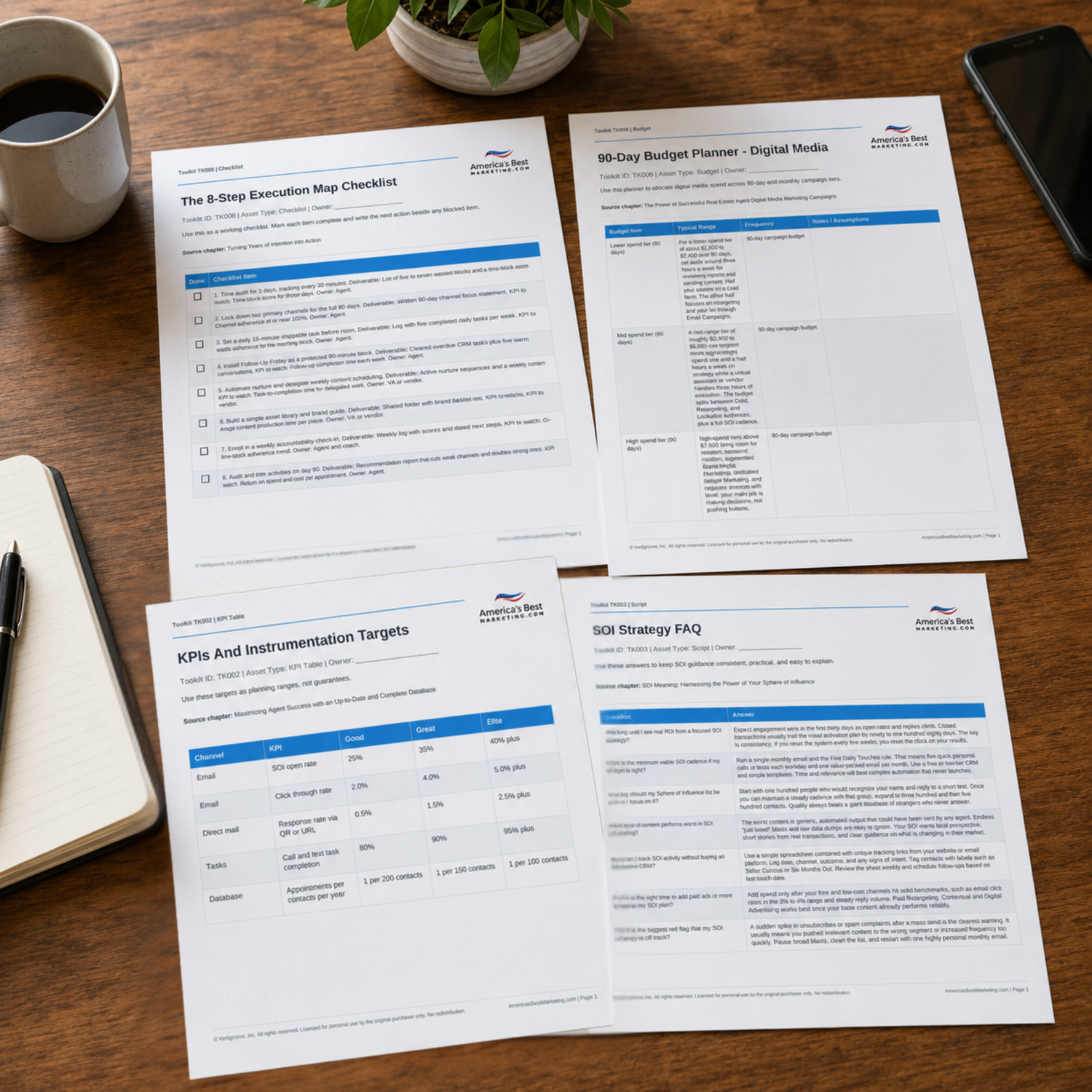
Download the Hybrid Lead Conversion Toolkit
Use the companion Toolkit to run the ninety-day hybrid lead checklist, compare investment tiers, track core KPIs, and organize paid and organic follow-up in one operating plan.
Download the Toolkit ZIPRecommended reads
Recommended Reads for Real Estate Agents
These articles help agents connect follow-up discipline, database habits, client communication, and marketing execution into a repeatable system.

Zillow Leads vs Realtor.com Leads. Which is Worth It?
Use paid lead source decisions to create a stronger bridge between client education and real conversations.
Read article
How to Convert Online Buyer Leads into Appointments and Closings
Bring more structure to convert online buyer leads into appointments and closings so every touchpoint supports visibility and trust.
Read article
SEO for Real Estate: How Agents Can Dominate Local Search and Generate More Leads
Build a cleaner system for SEO for real estate, with better timing, clearer messaging, and a next step people can act on.
Read article
How to Get Real Estate Leads Online: The Ultimate Guide for Real Estate Agents
Use get real estate leads online to strengthen visibility, follow-up, and client conversations without adding more random tasks.
Read articlePaid and Organic Lead Questions Agents Ask
How long to see measurable ROI from a hybrid paid and organic plan?
Paid leads show cost per lead almost immediately once a campaign runs. The deeper return from your organic system usually appears after nine to twelve months of steady content, email, and follow up. Treat that first year as a build phase where you judge progress by list growth and appointment volume instead of only closed transactions.
What is the minimum viable cadence when budget is tight?
Run small paid campaigns only to drive traffic toward one strong asset such as a first time buyer or downsizer guide. Commit to a single monthly email and weekly Google Business Profile updates that link back to that asset. This gives you speed from ads and long term equity from your list even at modest spend levels.
How do I track results without advanced tools or complex dashboards?
Use the lead source field in your CRM with discipline and ask every new contact how they first found you. Tag each person with a short label such as portal, search, email, or mailer. Review your closings each quarter and tally how many deals came from each source so you can reallocate budget based on reality instead of hunches.
What content usually performs worst for a local audience?
Generic national housing commentary rarely stands out against large publishers and portals. Content that performs worst tends to be vague, canned, and impossible to connect to a specific street or decision. Hyper local guides, checklists, and stories from real clients nearly always beat broad takes because they help people solve concrete problems in their own zip codes.
When should I scale spend on paid leads or organic leads?
Scale spend only after a specific asset or funnel has a stable conversion rate. For example, if a single blog page or guide consistently turns five percent of visitors into leads, then you can safely send more paid traffic there. Add budget first to the channel that delivers the lowest cost per closed client, not just the lowest cost per lead.
What is the major red flag that can break this entire strategy?
The biggest red flag is letting your list go quiet. When you stop emailing or mailing your audience, that asset quickly loses value and you are forced back into heavy paid spend every time you want more business. Protect the list by sending consistent, useful messages so your name always feels current rather than forgotten.
How big should the target audience or farm be for direct mail and local content?
Start with a tight geographic farm of no more than two thousand homes so you can show up frequently across channels. A smaller audience makes it realistic to send helpful mail, run focused ads, and publish content that mentions specific neighborhoods. Depth inside a compact farm almost always beats a massive list you rarely contact in a meaningful way.
Next step
Build the System Behind the Strategy
Continue from one useful article into the larger ABM ecosystem: the book series for strategic depth and the full marketing program for done-for-you execution.

View the Book Series
Explore the America’s Best Real Estate Agent Marketing System books for a deeper strategic framework around visibility, referrals, listings, lead generation, and growth.
View the Book Series
See Full Marketing Program
See how AmericasBestMarketing.com runs real estate blog writing, social media, listing marketing, email, direct mail, and retargeting as one managed system.
See Full Marketing Program