Screen Appeal Is the New Curb Appeal: How Agents Can Create Viral Listings
Screen Appeal Is the New Curb Appeal
How Real Estate Agents Can Create Viral Listings
A mobile-first launch system that helps real estate agents sequence listing assets, distribute them across channels, strengthen seller presentations, and turn early attention into measurable follow-up.

How Screen Appeal Turns A Listing Into A 48-Hour Digital Launch
Screen appeal is the combined impact of the listing photos, video, opening copy, calls to action, and mobile experience. The strongest launch plans define one property story, sequence the first five images, publish the MLS and IDX page cleanly, distribute through social and email within 24 hours, then retarget warm attention and record what created clicks, inquiries, and showings.
- Buyers usually meet the property on a phone first, so the thumbnail, first five photos, opening line, and mobile page now carry the first-impression burden.
- A coordinated 48-hour launch is stronger than a random sequence of MLS entry, social posts, email, video, and follow-up.
- The seven-day cadence should create controlled repetition across owned and paid channels without turning the listing into noise.
- Page views, source click-through, video completion, inquiries, showings, and clean CRM tagging matter more than likes alone.
Why Screen Appeal Now Drives The Listing Presentation
Curb appeal still matters, but buyers usually meet the property on a phone first. They see a thumbnail, swipe through the first few photos, skim a short description, and decide whether the listing feels worth their time. The first five photos, opening line, video hook, and next-step prompt now do much of the work the front porch once did.
The gap for many agents is not effort. They already collect photos, load the MLS, and post a link. The gap is sequencing and distribution. Good assets often hit the market in a random order, with generic copy, no mobile preview, and no plan for email, social, retargeting, or CRM follow-up.
A stronger real estate listing presentation shows the seller exactly how the digital first impression will be built before the home goes live. That operating plan pairs naturally with The Art of the Listing Presentation: How to Win More Business with a Data-Driven Approach.
- Lead with the strongest visual story, not simply the front exterior by default.
- Write buyer-facing benefits instead of repeating seller memories or vague adjectives.
- Preview the listing on mobile before the first social post or email goes out.
- Connect the listing page, social launch, email campaign, retargeting audience, and CRM follow-up.
The 48-Hour Asset Launch Workflow
The 48-hour launch window starts before the property goes live. Confirm access, collect property facts, and choose the one story angle the listing should own. That angle might be privacy, flexible space, walkability, storage, outdoor living, views, or move-in-ready convenience.
Then create a shot sequence and write the core copy before uploading assets. One headline, three benefit lines, one short paragraph, and one clear call to action can feed the MLS description, IDX property page, social caption, and email snippet so every channel sounds aligned.
Decide what the listing should own
Choose the one benefit that makes the home easy to understand. Use layout, light, location, storage, outdoor space, privacy, views, or move-in readiness as the organizing idea.
The angle should guide the hero image, first line, video opening, email subject, and seller-facing launch explanation.
Make the first five images answer fast questions
Pick one hero image for the MLS and one vertical cover frame for social media. Order the first five photos so buyers quickly understand how the home feels, where they will spend time, what problem it solves, and why a showing matters now.
Do not assume the exterior should always lead. The strongest opening image is the one that carries the clearest buyer story.
Audit every asset before distribution
Review sharpness, brightness, orientation, page load, image order, copy breaks, button visibility, and link accuracy on a phone before launch.
Once the MLS is live, publish the IDX property page, social carousel, and email within the first 24 hours so the launch feels coordinated instead of scattered.
The biggest listing marketing drop usually happens after good assets are created. If distribution stops at the MLS, the agent loses the chance to build a retargetable audience, activate the email list, and turn early attention into measurable follow-up.
Listing Copy That Stops The Scroll
Strong listing copy makes the visual story easier to understand. The best lines are specific, buyer-oriented, and tied to daily life. Avoid generic openers such as beautiful home or must see. Use the first line to clarify why the listing deserves attention now.
Lead with light, flexibility, and growth
Listing opener
HeadlineSunlit corner lot with room to work, host, and grow.
SupportShow the brightest shared space first, then connect the flexible room, yard, and storage to daily use.
Next stepView the full photo tour and request the layout details.
Use a soft prompt on the property page, then move to a stronger private-tour prompt after the visitor clicks or watches.
Lead with a complete move-in package
Listing opener
HeadlineKitchen, yard, and storage in one move-in ready package.
SupportSequence the kitchen, outdoor space, and storage so the buyer sees how the home solves several practical needs at once.
Next stepReply for the full feature list and showing availability.
Use conversational prompts on social and email. They lower friction and make the response feel personal.
Lead with location and lifestyle access
Listing opener
HeadlineWalk to coffee, parks, and daily errands from a quiet side street.
SupportPair the home visuals with a map, commute note, and nearby amenity detail that gives the listing local context.
Next stepBook a private tour when the visitor has already clicked, watched, or replied.
Match the call to action to audience temperature. Warm attention can carry a stronger ask than a first impression.
- Single-level living with modern systems and flexible bonus space.
- Views, privacy, and an outdoor setup built for weekend living.
- Use the same core promise across MLS copy, IDX content, social captions, email snippets, and retargeting creative.
The Seven-Day Distribution Cadence
After the listing goes live, the goal is controlled repetition. The right buyers should see the listing in more than one place without turning the launch into noise.
Publish the core launch
Confirm the MLS, IDX property page, and portal feed use the same hero image, price, description, and showing path. Launch the photo narrative and dedicated email within the same first-day window.
Primary checks are clean mobile load, zero image errors, property-page click-through, email clicks, and replies tied to the address.
Add motion, context, and practical proof
Publish a 15 to 30 second vertical clip that shows flow, light, outdoor space, or the strongest lifestyle feature. Then add a map, commute note, nearby amenity, or seller-use detail.
Watch completion rate, saves, shares, story tap-through, direct responses, and buyer questions.
Retarget, tag, segment, and learn
Retarget property-page visitors, video viewers, or engaged contacts with a private-tour prompt. Route every inquiry into the CRM with the property address attached.
Segment buyers by area, price band, property style, and timing. Record the best-performing image, headline, or channel for the next launch.
Use a trusted photo vendor with an asset budget of $250 to $400. Sequence the photos, polish the copy, and prepare one social post plus one dedicated email.
Add a simple walkthrough clip at $500 to $800, or expand to photo, video, and floor plan assets at $1,000 or more. Use stronger launches for segmented email, deeper social distribution, light retargeting, and a more detailed launch review.
The Screen Appeal Scorecard
Screen appeal becomes useful when it is measured consistently. Start with property page views, source click-through rate, video completion rate, email clicks, showing requests, and cost per inquiry. Compare those numbers across listings so you can see whether the first image, headline, channel mix, or follow-up path needs improvement.
| Metric | What It Shows | Review Cadence | How To Use It |
|---|---|---|---|
| Property page views | Launch attention | Daily for the first week | Compare traffic by source and confirm the mobile page carries the same visual story as the campaign. |
| Source click-through | Message relevance | After each channel push | Use the stronger image and headline combination in the next social post, email, or retargeting ad. |
| Video completion | Story retention | Within 48 hours | Shorten the opening, move the strongest feature earlier, or tighten the final prompt when viewers drop too soon. |
| Inquiries and showings | Buyer intent | Daily and weekly | Connect every request to the property address and source so follow-up stays relevant. |
| Cost per inquiry | Paid efficiency | After enough response accumulates | Scale retargeting only when the core assets already show engagement and the next step is clear. |
| Lesson recorded | Process improvement | After each launch | Document the best image, headline, channel, and follow-up move so the next listing starts stronger. |
Do not judge a launch by likes alone. A smaller audience that clicks, replies, books showings, or re-engages through retargeting is more valuable than a broad audience that scrolls past. The goal is not perfect attribution. The goal is a repeatable feedback loop.
How To Present Screen Appeal To Sellers
Instead of saying you will market the home everywhere, show the seller the exact sequence: the hero image, the first five photos, the listing-page headline, the email angle, the social carousel, the short video idea, and the follow-up path for anyone who clicks or asks a question.
This changes the listing appointment from a promise of exposure into an operating plan. Sellers can see that you are not simply uploading the property and waiting for portal traffic. You are building a launch that protects the first impression, creates more ways for buyers to engage, and gives you cleaner data for follow-up.
My job is to make your home easy to understand on a phone screen and then keep that story moving for the first week.
The line connects the seller goal to the process without overpromising a specific result. It also strengthens the broader listing-agent marketing strategy because the agent can show a repeatable launch standard rather than a collection of disconnected tactics.
Fair Housing And Data Hygiene
Strong screen appeal never means bending the rules. Listing copy, photos, video, and targeting must honor Fair Housing law and avoid language that targets or excludes protected classes. Focus on property features, lifestyle access, layout, systems, and clear next steps.
Protect the data you collect. When visitors click through the IDX property page, email, social posts, or retargeting ads, route inquiries into the CRM cleanly and honor unsubscribe requests quickly. Ethical follow-up protects the brand while making future listing launches more effective.
Case Pattern: One Listing, One Better Operating System
Picture an agent preparing a mid-priced suburban listing. Instead of uploading photos and hoping for traffic, she sequences the first five images, writes one clear buyer story, launches email and social within 24 hours, and retargets warm viewers after the first week.
The result is not guaranteed, but the operating advantage is real: more consistent exposure, cleaner buyer data, stronger seller confidence, and a repeatable launch process for the next listing.
How Screen Appeal Becomes Marketing Infrastructure
A listing can become more than a portal entry. The same story can power Listing Marketing, Social Media Marketing, Email Marketing, and Digital Retargeting. Each channel should reinforce the same core promise while using a call to action that fits the audience temperature.
To make the system repeatable, define the story, sequence the assets, publish quickly, distribute through owned and paid channels, retarget warm attention, and keep the data clean for the next address. AmericasBestMarketing.com helps agents turn that rhythm into a managed multi-channel marketing system.
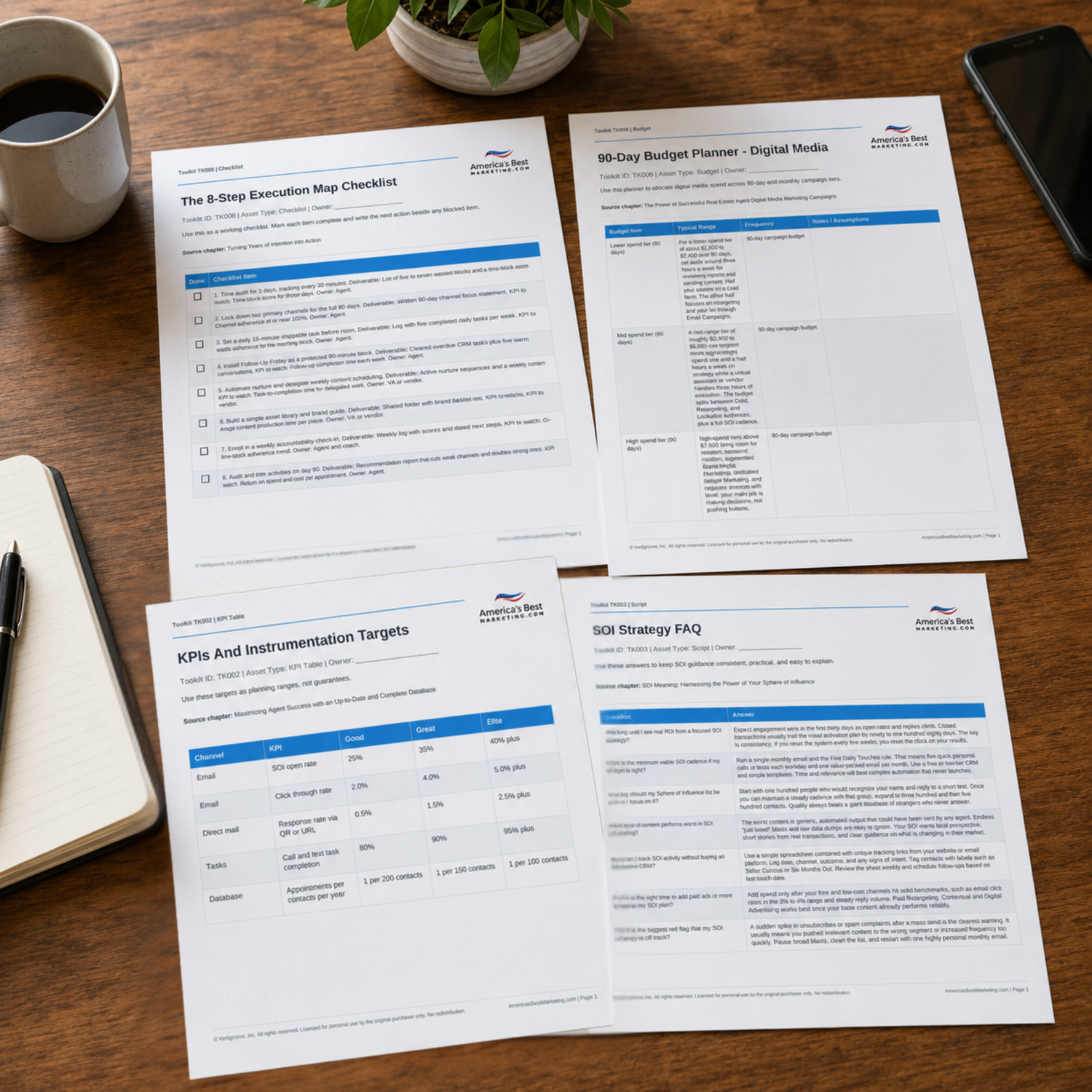
Download The Screen Appeal Listing Launch Toolkit
Use the ZIP to plan the seven-day distribution cadence, choose a repeatable investment tier, and prepare practical screen-appeal language for seller conversations before the next listing goes live.
Download the Toolkit ZIPRecommended Reads for Real Estate Agents
These articles help agents connect listing visibility, seller education, marketing channels, and follow-up into a clearer growth system.

How to Get Listings as a New Agent Fast
Use listing content to attract attention, explain value, and create better seller conversations.
Read article
Proven Luxury Real Estate Marketing Strategies to Attract High-End Buyers
Build a cleaner system for luxury real estate marketing strategies to attract high-end buyers, with better timing, clearer messaging, and a next step people can act on.
Read article
SEO for Real Estate: How Agents Can Dominate Local Search and Generate More Leads
Build a cleaner system for SEO for real estate, with better timing, clearer messaging, and a next step people can act on.
Read article
The 5-Point Conversion Framework for a High-Performance Real Estate Lead Capture Page
Build a cleaner system for lead capture page conversion, with better timing, clearer messaging, and a next step people can act on.
Read articleScreen Appeal Questions Agents Should Be Ready To Answer
How long does it take to see measurable return from better screen appeal?
Screen appeal starts helping as soon as the listing goes live because the first photos, copy, and distribution plan affect early clicks and showings. For a practical benchmark, compare the first seven to fourteen days against similar nearby listings, then track page views, click-through rate, showing requests, and follow-up quality.
What is the minimum viable cadence if my budget is tight?
Use the starter version: one strong photo set, a benefits-first description, one social carousel, one dedicated email, and a clean IDX property page link within 24 hours of going live. That simple loop is far stronger than relying on the MLS alone.
How big should my target audience or farm be for a new listing?
Start with two overlapping groups: buyers and past clients already connected to your database, plus a geo-targeted audience around the property and nearby move-up or move-down areas. Relevance usually beats raw size, especially when the listing has a clear price band and lifestyle angle.
What type of content performs worst in listing marketing?
The weakest content is usually random photo order, low-light images, vague MLS copy, and posts with no next step. Buyers respond better to clear visual sequencing, practical benefits, layout clarity, and a direct path to request more information or book a showing.
How can I track performance without advanced tools or a full marketing team?
Start with the numbers you already have: IDX property page views, social clicks, email clicks, video completion rate, showing requests, and lead source notes. Keep a simple listing launch log so every new property teaches you which image, headline, or channel worked best.
When should I scale spend on retargeting and small digital boosts?
Scale only after the core assets show engagement. If click-through rate and video completion are solid but showings are light, retarget warm viewers and property page visitors with a private-tour prompt. That keeps spend focused on people who already showed interest.
What is the biggest red flag to avoid with a real estate listing presentation?
The biggest red flag is promising exposure without showing the seller a repeatable launch plan. A stronger presentation explains the story angle, photo order, launch timing, distribution cadence, follow-up path, and measurement plan before the listing hits the market.
Next step
Build the System Behind the Launch
Continue from one useful article into the larger ABM ecosystem: the book series for strategic depth and the full marketing program for done-for-you execution.

View the Book Series
Explore the America’s Best Real Estate Agent Marketing System books for a deeper strategic framework around visibility, referrals, listings, lead generation, and growth.
View the Book Series
See Full Marketing Program
See how AmericasBestMarketing.com runs real estate blog writing, social media, listing marketing, email, direct mail, and retargeting as one managed system.
See Full Marketing Program