Lead Management Software for Real Estate Agents: Choosing, Setting Up, and Measuring ROI
Lead Management Software for Real Estate Agents
Choosing, Setting Up, Measuring ROI
A CRM and follow-up operating plan for real estate agents who want every inquiry captured, tagged, routed, nurtured, and measured before pipeline leakage becomes lost commission.

Lead management software for real estate agents
Lead management software works when it turns every inquiry into a captured record, a source tag, a follow-up sequence, and a next task. The point is not more dashboard complexity. The point is a clean operating loop that helps agents respond quickly, nurture patiently, and measure which lead sources create appointments and closed deals.
- Build the stack before adding volume by centralizing website, portal, ad, referral, open house, and sign inquiries.
- Roll out the CRM in phases so cleanup, integrations, automation, testing, training, and enforcement happen in the right order.
- Measure the behavior that creates appointments, especially speed to lead, source tagging, nurture engagement, stage aging, and cost per appointment.
- Protect the database with clean opt-ins, duplicate rules, permission records, exports, and compliance language from day one.
Why This Isn’t Optional
Lead volume is not the problem. Lead leakage is. Start by tightening your capture path using The 5-Point Conversion Framework for a High-Performance Real Estate Lead Capture Page, then use software to make sure every inquiry gets a fast, repeatable follow-up and a measurable next step.
The difference between a top-producing team and a struggling solo agent is rarely lead volume. It is the infrastructure used to process those leads. Most agents do not lose deals because they cannot negotiate. They lose deals because the first 24 hours after a lead arrives are messy.
A contact form pings the inbox. A text message lands while you are driving. A portal lead shows up with no context. Then a day passes, and the lead is already talking to someone else. That is the moment where software either saves you or exposes you.
- Centralization: every lead from referrals, signs, ads, and open houses lands in one place.
- Lead scoring: behavior like repeat views and saved searches tells you who gets the first call.
- Automated nurture: early touches run while you are busy, so trust builds without constant chasing.
- Pipeline visibility: you can see who is new, who is warm, and who is stalled.
- Source truth: each lead gets a source tag so ROI is not a guessing game.
The Anatomy of a Clean Lead Stack
A clean stack has one job: move a stranger from inquiry to appointment without losing them in the cracks. That means a single source of truth, clear automation rules, and a workflow that works on your phone because that is where agents spend much of the day.
Start with the capture layer. An IDX Real Estate Websites setup creates intent signals like saved searches, favorited homes, and repeat views. Those signals matter because they tell you who is curious and who is serious. Your CRM should ingest them without copy and paste.
Next is nurture. Most leads are not ready today. They are ready after enough touches to trust you. A practical tactic is a lead magnet that trades value for permission, such as a neighborhood report, a repair-cost guide, or a short move timeline. Use How to Build and Promote a High-Converting Real Estate Lead Magnet for Agents as your blueprint.
Then comes attribution. Lead sources must be tagged at the moment of capture. If you wait until later, it will not happen. This is how you know if your ads are driving booked calls or just browser traffic. If you run paid traffic, tie your routing back to Digital Retargeting so your data stays clean and your follow-up starts instantly.
Stop scattering new inquiries
Route website forms, IDX activity, portal leads, sign calls, referral notes, and open house contacts into one CRM record before any follow-up sequence begins.
Give every lead a next touch
Use short email and SMS sequences to acknowledge interest, ask one direct question, and move quiet leads into a longer nurture rhythm without manual babysitting.
Measure the channel before the mood
Tag the lead source at capture, review appointments by source, and separate low-intent volume from channels that actually create conversations and signed clients.
The expensive mistake is treating automation like a replacement for a real conversation. The win is using automation to earn the conversation by filtering for intent. Track speed to first human contact on high-intent leads. When you keep that window tight, you reduce the number of leads you never truly meet.
Choosing Software Without Getting Burned
Software shopping usually fails for one reason. People buy features instead of buying a solved bottleneck. Before you look at vendors, write down your top three leak points. Then pick tools that close those leaks with the least human effort.
Use this must-have feature set as your filter.
- Open integrations: the CRM must ingest leads from forms, portals, ads, and your website without manual work.
- Behavior-based tasks: the system should create a daily call list based on what leads actually did.
- Built-in communication: email, SMS, and calling should be logged automatically to keep history clean.
- Fast mobile workflow: if logging a call takes more than ten seconds, adoption dies.
- Easy data export: you must own your database and be able to leave without drama.
Watch for the common failure modes. Dirty imports create deliverability problems. Missing triggers force manual follow-up, which never scales. No source tagging means you cannot measure what is paying you. Those three problems can kill a new system even if the software is decent.
If you are using AI tools to speed up tagging, summarize calls, or draft follow-ups, keep them inside a process you can audit. The guide Leveraging AI in Real Estate Marketing and Automation for Lead Generation lays out practical ways to do that without turning your CRM into a black box.
The Eight-Week Setup Playbook
Rushing to go live is the fastest way to hate your CRM. The right move is phased setup with small tests you can prove. Your goal is not a perfect database. Your goal is a working loop: capture, tag, respond, nurture, measure.
Audit and cleanup
Export contacts from phones, spreadsheets, and old systems. Remove duplicates. Fix missing emails and numbers. Add simple tags like sphere, past client, farm, portal, and open house.
Integrations and lead flow
Connect forms, portals, and ad leads. Run five test leads from five sources and confirm each one lands in the same pipeline stage with the right source tag.
Automation and templates
Build three short sequences for new buyer inquiries, seller valuation requests, and past-client keep-in-touch. Keep each step short, local, and direct.
Training and enforcement
The system works only if calls get logged and stages move daily. Set one non-negotiable habit: every lead gets a next task.
- Trigger: new lead created. Action: send instant SMS plus create call task.
- Trigger: three repeat views on one listing. Action: assign priority call within two hours.
- Trigger: seller form submitted. Action: send confirmation plus schedule follow-up.
- Trigger: no reply for seven days. Action: switch to nurture mode and stop chasing.
- Trigger: appointment set. Action: auto-create prep checklist and reminders.
Do not skip database hygiene. It is the unglamorous work that keeps your system from turning into a junk drawer. Schedule it, protect it, and keep it simple.
KPIs That Prove You Are Getting Paid
Dashboards are only useful when they change what you do tomorrow morning. Focus on a tight set of benchmarks that tie directly to appointments and listings. Then review them on a fixed cadence. One monthly review beats daily panic.
Start with speed to lead. High-intent website leads decay fast. Your goal is an instant automated touch and a quick human follow-up when intent is clear. Next, track conversion by source. If you cannot answer where your last five closed deals came from, you are spending blind.
| Metric | What it tracks | Target range | Why it matters |
|---|---|---|---|
| Speed to lead | Time to first touch. | 0 to 5 min | Fast response helps reduce ghosting and can improve show rate. |
| Source tagging | Leads tagged at capture. | 95%+ | Clean tags let you cut weak channels and fund winners. |
| Nurture rate | Active opens and clicks. | 20% to 30% | Engagement signals trust and creates future appointments. |
| Stage aging | Leads stuck without movement. | Weekly review | Stalled stages show where follow-up or qualification rules need repair. |
| Cost per appointment | Spend divided by booked consults. | Source-specific | This reveals whether a channel creates conversations, not just form fills. |
Use a 30-day cadence for instrumentation. Review leads by source, response times, and pipeline stage aging. When you see a channel creating good leads but the follow-up tasks are missing, you do not have a marketing problem. You have a routing problem.
If your lead sources include postcards, door hangers, and neighborhood farming, the same rule applies. Tag the source at capture and make sure follow-up is automatic. When you pair clean tags with consistent follow-up, channels like Direct Mail Marketing stop being guesswork and start being a measurable investment.
Budgets and Creative Briefs You Can Run
Software cost is only half the equation. The bigger cost is the time tax of setup, hygiene, and ongoing management. If you do not schedule that work, your system will decay and you will blame the tool. Budget both money and time, then protect the habits that keep your pipeline honest.
Solo agent stability
Monthly spend: $100 to $250 for CRM, SMS, and email sending.
Setup time: 20 hours focused on cleanup, tags, and routing.
Ongoing management: 2 hours per week for hygiene and reporting.
Audience split: 70% buyers, 30% sellers inside the nurture sequences.
Boutique team throughput
Monthly spend: $400 to $900 plus calling, SMS, and automation add-ons.
Setup time: 40 hours including pipeline stages and team roles.
Ongoing management: 5 hours per week split across operations and agents.
Audience split: 60% buyers, 40% sellers with separate pipelines.
Follow-up that books showings
Goal: turn high-intent website activity into a call. Audience: buyers who saved a search or favorited homes. Creative: short SMS plus one email with three listings and one question. CTA: ask whether they want private tour times.
Valuation follow-up that earns the appointment
Goal: convert a valuation request into a consult. Audience: owners who asked for pricing or clicked seller pages. Creative: one email with a micro market snapshot plus a clear next step. CTA: ask for a good time to walk through the street snapshot.
Compliance That Keeps You Out of Trouble
Automation is powerful and it can get you sued if you treat it like a toy. Set guardrails once and enforce them forever. Your CRM should make compliance the default, not a manual habit.
- TCPA compliance: send automated SMS only to people who clearly opted in to text updates.
- CAN-SPAM compliance: every email needs a physical address and a working unsubscribe link.
- Data privacy: if you enrich lead data, disclose it in your privacy policy and limit access.
- Permissions: use roles so assistants can help without exposing everything.
Keep your automations calm. Two good messages beat eight frantic ones. The goal is trust, not noise.
Your Next 48 Hours
Inventory your sources. List every place you get leads and confirm whether each one flows automatically into your CRM with a source tag. If it does not, fix that before you spend another dollar on marketing.
Clean the top 50. Identify your 50 most likely prospects and make sure each one is assigned to a nurture sequence today. This single move often creates appointments quickly because you surface people who were already interested but went quiet.
Call to action: If your pipeline feels busy but your calendar feels empty, the fix is usually routing, follow-up cadence, and clean tracking. Pair the right systems with a simple operating rhythm, and you will stop losing leads you already paid for.
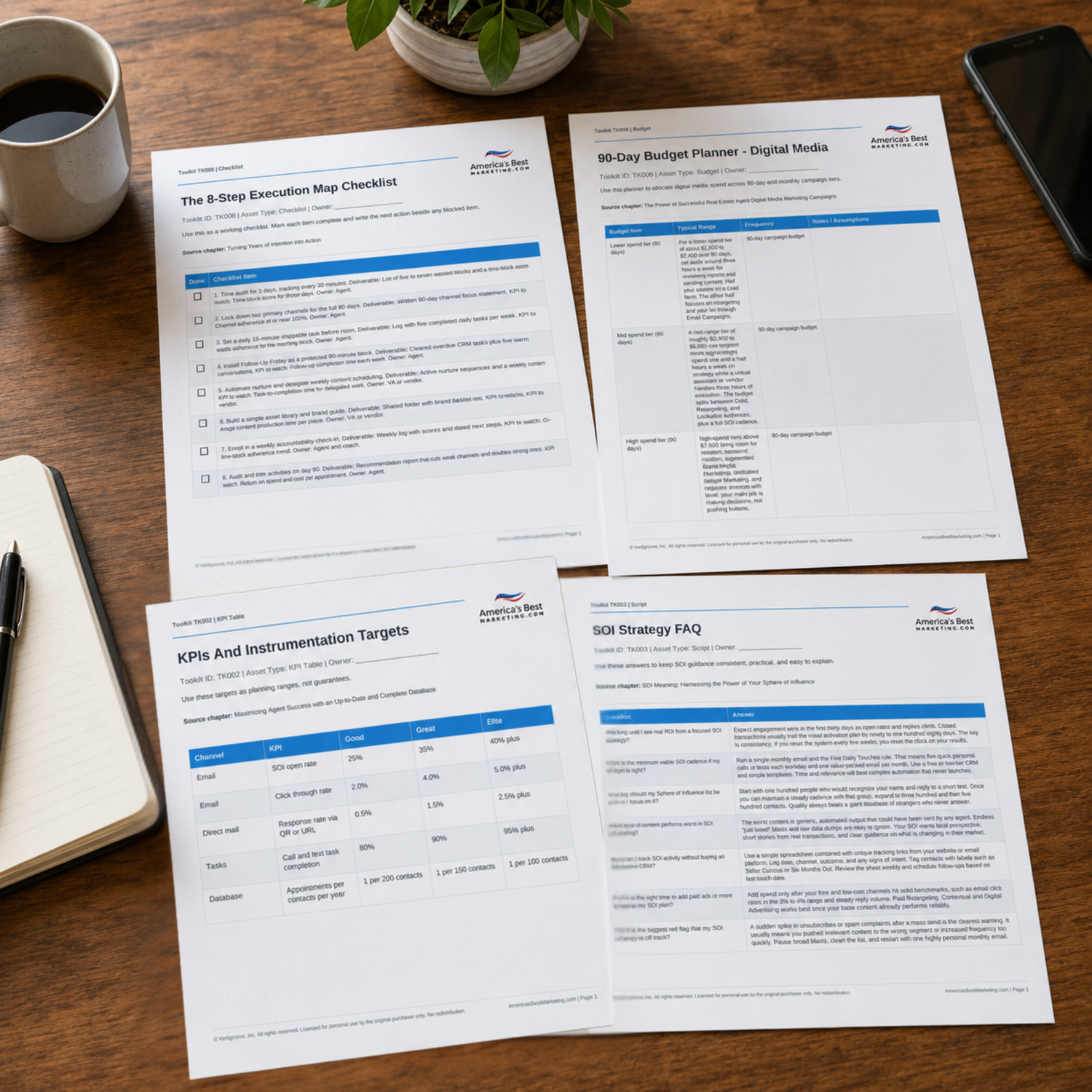
Download the Lead Management Toolkit
Use the companion ZIP to turn this lead management plan into budget planning, an eight-week CRM setup checklist, KPI tracking, and plain-language FAQ support for your rollout.
Download the Toolkit ZIPRecommended reads
Recommended Reads for Real Estate Agents
These articles help agents connect listing visibility, seller education, marketing channels, and follow-up into a clearer growth system.

11 Best Real Estate Lead Sources Ranked by ROI and Conversion
Turn lead sources by ROI and conversion into a repeatable workflow that supports trust, listings, and future conversations.
Read article
How to Convert Online Buyer Leads into Appointments and Closings
Bring more structure to convert online buyer leads into appointments and closings so every touchpoint supports visibility and trust.
Read article
IDX Lead Routing & Alerts: From Browse to Booking in Under 5 Minutes
Bring more structure to IDX lead routing and alerts so every touchpoint supports visibility and trust.
Read article
Are Paid Leads or Organic Leads Better for Real Estate Agents?
Turn paid versus organic leads into a steady operating habit, not another item that waits for a quiet week.
Read articleLead Management Questions Agents Should Be Ready To Answer
How fast should I respond to a new online lead?
Aim for an instant automated response and a human follow-up within five minutes when intent is high. If you cannot meet that window during showings, set a rule that sends a short SMS immediately and schedules a call task for your next break. Use a single template that ends with one clear question, and review your timestamps weekly so the standard stays real.
What is the minimum viable lead management stack?
Use three pieces: a website that captures behavior, a CRM that stores the full history, and one nurture channel such as email or SMS. Connect them so new leads are created automatically and source tags are applied at capture. Keep one simple pipeline with a daily task list, and do a weekly review of stage aging before you buy extra add-ons.
How do I prevent duplicate leads from portals and my website?
Set matching rules that merge records by email, phone, and name, and normalize phone formats before importing. Decide which source wins when there is a conflict, then keep the other sources as history on the same record. Make sure automations attach to the primary record only, or you will split tasks. Run a weekly duplicate review until your integrations are stable, then switch to monthly.
What automations are worth setting up first?
Start with three: instant new lead response, a seven-day follow-up cadence for active shoppers, and a slow long-term nurture for cold leads. Those cover most pipelines. Keep messages short, local, and direct, and stop sequences when someone replies. Add one re-engagement touch around day 30, and include a quick handoff task so you always know who calls next. Every automation should end with a single easy-to-answer question.
How do I measure ROI if I cannot track everything perfectly?
Tag every lead source at capture and track two conversion points: appointments set and transactions closed. You do not need a perfect attribution model to make better decisions. Also track cost per appointment and total commission by tag, even if it is manual. If one tag produces steady appointments, fund it. If a tag generates volume but no appointments, fix follow-up or cut spend and reallocate.
What is the biggest red flag when choosing a vendor?
A walled garden that makes it hard to export your data, or that hides basic API documentation. You should be able to download contacts, notes, and deal history without begging support. If your data is trapped, you cannot switch tools when your business changes. Ask for a sample export before you sign. Ownership matters because your database is a business asset, not a subscription feature.
How can I stay compliant with automated texts and emails?
Use clear opt-in language for texts, include an easy opt-out, and stop automation the moment someone asks. Store consent fields in your CRM and log the first opt-in source. For email, include your physical address and a working unsubscribe link in every send. Keep roles and permissions tight so only the right people can message your database, and review templates quarterly to stay current.
Next step
Build the System Behind the Follow-Up
Continue from one useful article into the larger ABM ecosystem: the book series for strategic depth and the full marketing program for done-for-you execution.

View the Book Series
Explore the America’s Best Real Estate Agent Marketing System books for a deeper strategic framework around visibility, referrals, listings, lead generation, and growth.
View the Book Series
See Full Marketing Program
See how AmericasBestMarketing.com runs real estate blog writing, social media, listing marketing, email, direct mail, and retargeting as one managed system.
See Full Marketing Program