How to Choose the Right Real Estate Agent
Evidence over charm, systems over sales pitch
A proof-based scorecard for comparing agent marketing, communication, pricing discipline, negotiation method, and follow-up before you sign.

How to choose the right real estate agent
Choose the right real estate agent by asking for proof of process before you trust the pitch. Score each candidate on marketing infrastructure, local data skill, communication cadence, and negotiation method. The strongest agent can show the plan on screen, explain how leads are captured and followed up, and document how pricing and concessions will be handled when pressure hits.
- The right agent is selected by evidence, not comfort, friendship, or years in business alone.
- Modern agent selection should test marketing technology, local data fluency, response speed, and negotiation discipline.
- Ask for listing recaps, targeting examples, follow-up workflows, and a one-page marketing plan before you sign.
- A simple forty-point scorecard helps buyers and sellers make a defensible decision instead of reacting to a polished presentation.
The Three Pillars Of A Better Agent Decision
Most consumers choose an agent based on comfort. That feels safe until pricing goes soft, showings slow down, or the deal turns into a negotiation cage match. The better move is to treat agent selection like a systems audit.
The best agent acts like a demand engineer. They control attention, convert attention into inquiry, and keep the follow-up path moving after the first conversation. That is why the selection process should look at technology, local data, and negotiation before personality gets the final vote.
Marketing technology stack
Ask how the agent moves a listing from market prep to distribution, inquiry capture, retargeting, and follow-up. You are looking for a CRM, a clear landing page path, a content cadence, and a documented handoff after a lead opts in.
Digital checks should include the agent website, search presence, lead capture path, and whether tools such as IDX Real Estate Websites are used to turn buyer curiosity into named conversations.
Hyper-local data proficiency
Strong agents do not talk only in broad market averages. They explain school boundaries, commute patterns, neighborhood substitutes, price bands, buyer behavior, and the last ten relevant sales that actually compete with the property.
The test is simple. Ask how they decide list price when the data conflicts. A capable operator can explain the tradeoff between traffic, price protection, days on market, and offer quality in plain language.
Negotiation methodology
Negotiation is not improvisation. It is a repeatable method for creating leverage, managing concessions, and keeping the other side inside a narrow decision lane.
Ask for the steps they use during inspection, appraisal, repair credits, and deadline pressure. You want a method, not vibes.
Most consumers overlook that the best agent is not the one with the most yard signs. It is the one with the most sophisticated digital infrastructure. High-performance operators move beyond hope-based marketing to a data-driven model that can predict where the buyer will come from before the sign hits the dirt.
- Avoid choosing an agent only because of friendship, neighborhood familiarity, or a familiar logo.
- Do not let years in the business outrank modern reach, measurement, and speed.
- Verify whether the agent has structured nurture so leads do not evaporate after the first showing.
- Review listing-to-sold performance and average days on market across recent deals that resemble yours.
The Agent Vetting Playbook In Four Phases
Most people meet once, hear a pitch, and decide. That is like hiring a CFO because you liked the handshake. A sharper process makes the difference between a polished talker and a disciplined operator obvious.
Digital presence audit
What to check
SearchSearch the agent name plus your city and neighborhood. Scan the first page like a buyer would.
SignalLook for useful answers, local market commentary, proof of process, and listing-specific promotion instead of recycled slogans.
DecisionIf the digital trail is thin, ask how buyers and sellers are supposed to build confidence before the first appointment.
The audit should reveal a working system, not just a personal brand page.
The interview
What to ask
StackWalk me through your marketing tech stack end to end, including tools, handoffs, and first 48-hour lead response.
ProofShow me recent campaign examples, targeting, creative, and what changed after week one.
ControlExplain your pricing, negotiation, communication, and escalation method in steps.
The goal is not to stump the agent. The goal is to make the operating system visible.
The marketing plan review
What to request
PlanAsk for a one-page plan with timeline, distribution channels, follow-up path, and checkpoints.
EvidenceAsk for a live marketing recap from a past listing that shows traffic sources, inquiries, and pivots.
RetargetingReview how they use Digital Retargeting, frequency caps, and creative rotation.
If the plan cannot be summarized cleanly, it usually cannot be run cleanly.
The decision matrix
How to score
DataScore micro-market knowledge, pricing method, comp logic, and the handling of conflicting evidence.
DistributionScore content cadence, paid distribution intent, and lead capture with follow-up.
ControlScore communication cadence, response speed, concession strategy, inspection playbook, and deal pressure.
Give full points only when the agent shows proof on screen. Give zero points when the answer hides behind generalities.
One more move that smart sellers miss: post-close behavior predicts pre-close behavior. An agent who can outline a long-term follow-up plan is more likely to run a clean weekly rhythm during the listing. Review how client relationships compound through Client Events for Real Estate Agents: Plans, Budgets, and Follow-Up That Earn Referrals.
Creative And Messaging Guide
Agent-selection education works as a lead magnet because it gives buyers and sellers a useful way to compare professionals before the sales conversation begins. Use these headlines and calls to action across email, direct mail, social, and web pages.
- The 5 Questions Every Homeowner Should Ask Before Hiring an Agent
- Why Experience Is Not Enough in Real Estate
- How to Spot a Fake Real Estate Marketing Plan in Five Minutes
- The Agent Interview Script That Prevents Price Cuts
- Red Flags That Signal Weak Negotiation Before You Sign
- The Simple Scorecard That Makes Agent Selection Obvious
Soft CTA: Download the Agent Interview Scorecard.
Mid CTA: See my listing marketing portfolio and the distribution checklist behind it.
Hard CTA: Book a strategy call to pressure-test your plan before you hire.
Direct mail still works when it is tied to a system and a specific offer. Study SOI Marketing: The Power of Direct Mail Campaigns and borrow the cadence and tracking habits, not just the postcard idea.
Warm-lead comparison campaign
Goal: Build trust fast for warm leads who are comparing agents.
Cadence: One scorecard email, one follow-up text, and one call inside 48 hours.
Distribution: Email to your database plus a short paid reminder to recent site visitors.
Appointment conversion campaign
Goal: Win the appointment by making your process visible before the meeting.
Cadence: Three-email sequence, one mailed scorecard, and one call across ten days.
Distribution: Paid retargeting plus local contextual placements for homeowners researching pricing.
Choose the agent with a demand plan
Convert comparison shoppers into booked consultations with a clean scorecard graphic and a short on-camera clip that walks through the five questions. The CTA is Download the interview scorecard.
This is how pros run a listing
Re-engage high-intent visitors with a simple timeline: day 1 plan, day 7 checkpoint, day 14 pivot rules. The CTA is Book a scorecard review call.
Agent Selection Scorecard
This table is the fastest way to spot the gap between an old school agent and a modern operator. Use it during interviews and give yourself a written reason for every score.
| Criteria | The old school agent | The modern operator | Why it matters |
|---|---|---|---|
| Search strategy | Puts it on the MLS | Search-driven content | Reaches active buyers without waiting for them to find you by luck. |
| Lead nurture | Occasional calls | Follow-up automation | Stops good leads from going cold after day two. |
| Property tech | Basic photos | High-intent site path | Turns curiosity into inquiry with clear next steps. |
| Ad strategy | Local newspaper | Retargeting structure | Keeps the listing in view while buyers decide. |
| Lead capture | Hope they call | Conversion-first pages | Turns traffic into named leads you can follow up with. |
| Pricing method | One comp packet | Micro-market model | Protects price by positioning the home against true substitutes. |
| Negotiation | Plays it by ear | Concession rules | Reduces chaos during inspection and appraisal. |
Watch for agents who describe exposure but cannot explain conversion. Exposure without follow-up is a hobby. A serious operator can explain who sees the message, where inquiry is captured, how response is handled, and when the plan changes.
The 10-Point Agent Selection Checklist
Print this before the first interview. If you cannot check most of these boxes with evidence, keep looking.
- Read recent reviews and look for patterns: communication speed, problem solving, and pricing advice.
- Ask for three listing recaps and look for a clear timeline and distribution log.
- Audit online presence: search results, useful answers, and proof of local expertise.
- Confirm lead capture: where inquiries go, how fast they respond, and what the follow-up path looks like.
- Review one sample marketing plan on one page: timeline, channels, checkpoints, and pivot rules.
- Ask the five hard-hitter questions and score each answer while they show proof on screen.
- Agree on communication cadence: who updates you, how often, and what triggers a same-day call.
- Check pricing method: how they handle conflicting comps and how they defend the number.
- Check negotiation method: inspection, appraisal, repairs, concessions, and escalation rules.
- Make the decision with the matrix and write one sentence on why you chose your agent.
A retention layer matters after the deal too. Build a post-close plan that keeps the agent visible without being annoying, then use The Science of Staying Top-of-Mind: How Direct Mail for Real Estate Agents Drives Referrals to tighten cadence and measurement.
When A Friend Is Not Enough
A seller in a suburban market hired a family friend because it felt easier. The early plan had a friendly tone, but no retargeting, no clear follow-up, and no positioning work beyond standard listing distribution.
After using an agent-selection scorecard, the seller realized the first plan could not prove how demand would be created. They switched to a modern operator who rebuilt the property narrative, tightened price logic, and launched a high-velocity plan with a short paid push and a local email blast.
Within 12 days, the home drew multiple offers and closed about 5 percent above the previous asking price as one example of what can happen when demand gets engineered instead of hoped for. The seller said the second agent ran the deal like a system, not a favor.
How This Becomes Marketing
For agents, this topic is more than consumer education. It is a positioning asset. When you teach people how to choose the right real estate agent, you quietly show the standard by which you want to be measured.
Turn the scorecard into a campaign across Listing Marketing, Email Marketing for Real Estate Agents, Direct Mail, and Digital Retargeting. Each channel should tell the same story: a serious agent brings a system, not just a sales presentation.
Conclusion and next move: The right agent is a profit center, not an expense. First, offer your Agent Interview Cheat Sheet as a download. Second, schedule a strategy call to review a specific listing process, scorecard, and demand plan before anyone signs.
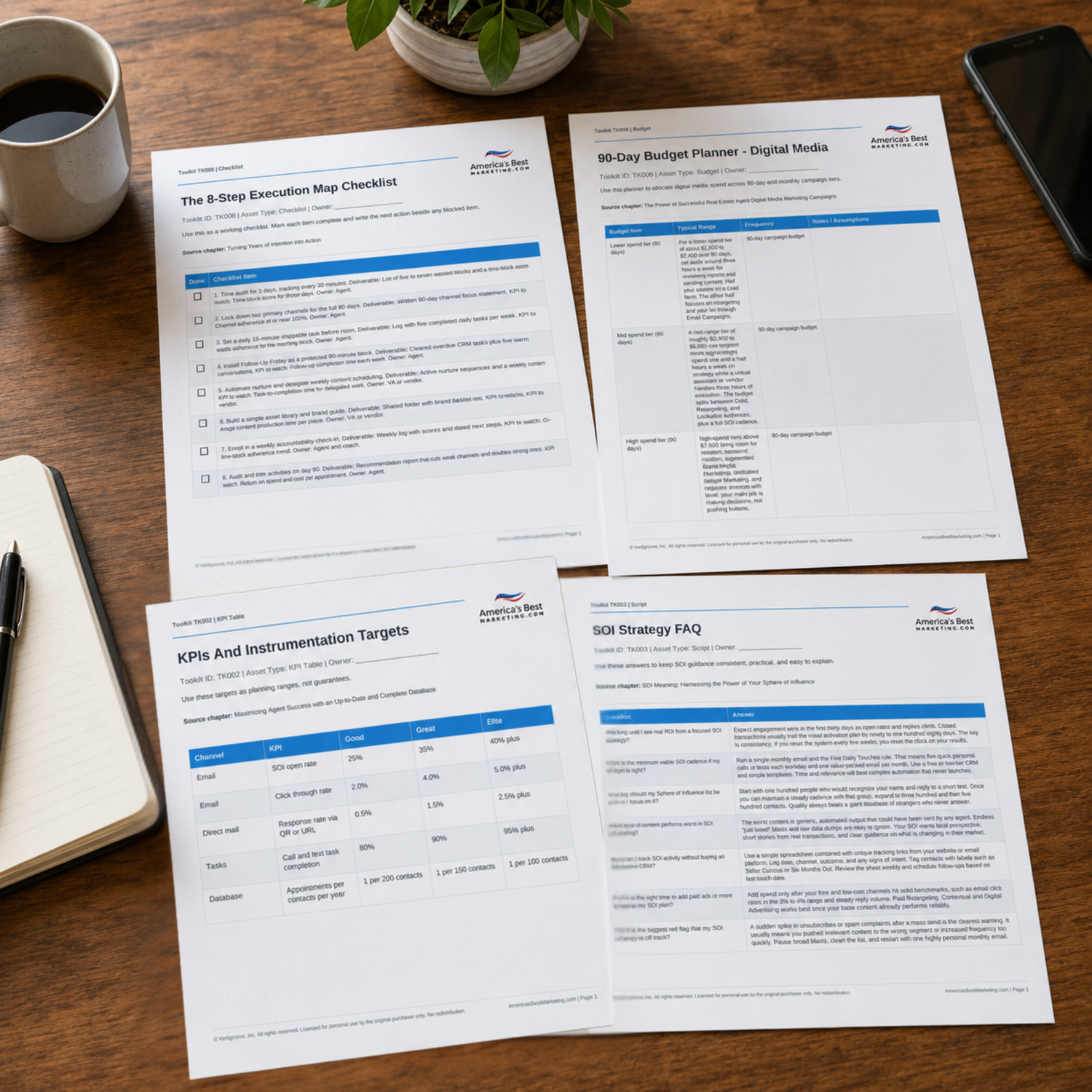
Download The Agent Selection Toolkit
Use the companion Toolkit to compare agents by proof, tighten interview questions, score marketing and negotiation evidence, plan budgets, and turn the topic into a lead-capture campaign.
Download the Toolkit ZIPRecommended reads
Recommended Reads for Real Estate Agents
These articles help agents turn client questions, local guidance, marketing channels, and follow-up into a more useful content system.

How to Choose the Right Marketing Company for Real Estate Agents
Use choose the right marketing company to strengthen visibility, follow-up, and client conversations without adding more random tasks.
Read article
High-End Buyer/Seller Tech Stack: Tools and Systems Luxury Agents Use
Create more leverage from high-end buyer/seller tech stack with a clear path from attention to follow-up.
Read article
Best Website Builders for Real Estate Agents: Costs, SEO Tradeoffs, and Setup Tips
Bring more structure to website builder decisions so every touchpoint supports visibility and trust.
Read article
Marketing Analytics for Real Estate Agents: KPIs, Dashboards, and a Weekly Review Routine
Turn marketing analytics into a steady operating habit, not another item that waits for a quiet week.
Read articleAgent Selection Questions Buyers And Sellers Ask
How long does it take to see measurable ROI from a new agent?
You can measure process signals fast: response speed, showing volume, and offer activity. For a listing, the first 7 to 14 days usually show whether distribution and follow-up are working. ROI in dollars depends on price, demand, and terms, so judge the system first. A strong agent shows checkpoints and pivots, not promises.
What is the biggest red flag during an interview?
The biggest red flag is a plan with no proof. If the agent cannot show recent campaigns, listing recaps, or a clear follow-up workflow on screen, assume it does not exist. Watch for vague language like exposure and hustle with no numbers, no cadence, and no timeline. You are hiring a system, not a story.
Does the commission rate dictate the quality of service?
No. Price does not equal process. A lower commission can mean less budget for distribution and less time for follow-up, but it can also be a pricing tactic. Judge the agent by evidence: pricing method, negotiation method, and how they create and convert demand. Ask what changes if the commission changes.
Should I hire the agent who sells the most homes in my area?
Volume can be a useful signal, but only if the systems behind it are strong. High volume sometimes hides rushed communication and shallow marketing. Ask for examples from recent deals that match your price point and property type. Then score the work, not the bragging.
How do I verify an agent actually uses modern marketing?
Ask to see three things: one listing recap, one audience targeting setup, and the follow-up sequence used after an inquiry. If they can show screens, timelines, and actual creative, you are in the right neighborhood. If they only describe it, you are buying a plan that lives in their head. Evidence beats confidence.
What questions should I ask references or past clients?
Ask about speed and clarity: how fast the agent responded, how often they updated, and whether they handled surprises calmly. Ask if pricing advice changed and why. Ask how negotiations were managed during inspection and appraisal. Then ask one blunt question: would you hire them again without hesitation.
Can I switch agents if the listing is not performing?
Sometimes, yes, but check your agreement terms first and get clear on timing and obligations. Before you switch, document what is missing: distribution, follow-up, pricing method, or negotiation strategy. If the agent cannot present a new plan with checkpoints, switching may be the cleanest move. Do it based on evidence, not frustration.
Next step
Build the System Behind the Advice
Continue from one useful article into the larger ABM ecosystem: the book series for strategic depth and the full marketing program for done-for-you execution.

View the Book Series
Explore the America’s Best Real Estate Agent Marketing System books for a deeper strategic framework around visibility, referrals, listings, lead generation, and growth.
View the Book Series
See Full Marketing Program
See how AmericasBestMarketing.com runs real estate blog writing, social media, listing marketing, email, direct mail, and retargeting as one managed system.
See Full Marketing Program