Home Inspection Waivers
Protected Offer Scripts and Risk Management
A buyer-strategy briefing for real estate agents who need to win competitive offers without pushing clients into avoidable inspection risk.

How home inspection waivers can protect buyers and strengthen offers
A home inspection waiver should never be treated as a binary gamble. The better agent move is to define the inspection spectrum early, document the buyer’s repair tolerance, and use broker-approved offer language that gives the seller certainty while preserving as much protection as the contract allows.
- Home inspection waivers work best when buyers understand the difference between inspection access, repair negotiation, and termination rights.
- A protected-offer protocol gives buyers a decision framework before deadline pressure makes them reckless.
- Pre-offer walkthroughs, informational inspections, and major component caps can help buyers compete without accepting unlimited repair exposure.
- Inspection strategy can become a visible marketing asset through search pages, email education, short-form video, and retargeting.
Turn Risk Talk Into A Competitive Advantage
Mastering home inspection waivers changes the buyer conversation. In a tight market, some buyers believe the only way to win is to remove every protection and hope for the best. That is not strategy. That is unmanaged exposure.
A stronger advisory position starts before the buyer falls in love with a house. Explain the inspection spectrum during intake, define the buyer’s financial pain threshold, and put their risk tolerance in writing. When offer day arrives, the buyer is not improvising. They are choosing from a documented menu.
That same education belongs in your marketing. Use SEO for Real Estate Agents to publish evergreen buyer guidance, use Email Marketing for Real Estate Agents to teach the decision path before showings, and use Social Media Management for Real Estate Agents to turn inspection strategy into recurring buyer education.
- You reduce liability exposure by making the buyer’s choice explicit and documented.
- You give listing agents a cleaner offer narrative instead of vague promises about being easy to work with.
- You create a repeatable content lane that serious buyers recognize before they choose an agent.
The Protected Offer Framework
A waiver is not one move. It is a range of tradeoffs. Your job is to present that range in plain language and record what the buyer chooses. The protocol below keeps the conversation practical and defensible.
Use your buyer consultation to define four options: full inspection contingency, informational inspection, major component cap, and full waiver. Then attach each option to consequences. Buyers need to know what they keep, what they give up, and what kind of surprise cost they could absorb.
Preserve the full inspection path
Use a standard inspection contingency when the buyer needs full negotiation leverage, more time, or complete confidence before moving forward.
This is the safest route, but it may weaken the offer in a highly competitive multiple-offer situation.
Use an informational inspection
The buyer inspects the property, but the report is treated as a decision tool rather than a repair-shopping list.
This can reassure sellers because the buyer is not signaling an intent to reopen the deal over normal wear.
Set a major component cap
The buyer proceeds unless major systems or structural issues exceed a stated dollar threshold.
This approach converts anxiety into a number, which makes the buyer’s risk tolerance easier to explain and document.
Most agents overlook that a home inspection waiver is not a binary choice. The safer middle ground is to explain the inspection spectrum, document risk tolerance, and use broker-approved clause options that preserve as much protection as the contract allows.
Three Inspection Waiver Scripts You Can Use Today
Scripts matter because inspection risk becomes emotional fast. Give buyers a calm opening, a clear explanation, and a documented next step before the listing deadline compresses the decision.
The buyer intake inspection spectrum
Agent dialogue
Hook lineWe can compete without signing you up for a surprise repair bill.
Frame lineA waiver is a spectrum: full contingency, informational only, a capped risk clause, or a full waiver.
Decision linePick your safety valve now, before offer day.
CTA lineTell me your repair cap number and your hard no list.
Use this script during the first buyer consultation. Save the chosen inspection path, repair cap, and deal-breaker list in the buyer file.
The fast inspector walkthrough request
Inspector coordination
Opening lineI have a buyer writing today and need a quick pre-offer risk filter.
Scope lineMajor systems, structural red flags, moisture signals, roof condition, and electrical hazards only.
Expectation lineThis is not a full report. It is a high-level audit before we bid.
CTA lineCan you do a 30-minute walkthrough by 3:30?
Keep two inspectors available most weeks. Explain the fee as pre-bid due diligence and capture one-sentence findings in writing.
The listing agent certainty call
Offer positioning
Opening lineMy buyer wants to be competitive and clean. We are not shopping repairs.
Explain lineWe are using an informational inspection with a tight window. Normal wear moves forward. Structural or safety issues exit fast.
Question lineWould your seller be comfortable with a short informational inspection window if we confirm we are not shopping repairs?
Close lineThis gives your seller certainty without asking my buyer to gamble.
Schedule the inspection immediately after acceptance and send proof of scheduling to the listing agent so the short window feels credible.
Execution Plans For Buyer Education
The protected-offer system becomes much stronger when buyers hear the message before they are standing in a kitchen with an offer deadline. Build one education loop, then repeat it across channels you already control.
Spend three hundred to six hundred dollars per month. Publish two short inspection-risk clips each week, send one weekly buyer email, and maintain one inspection education page on your site. Focus seventy percent of distribution on active buyers and thirty percent on website visitors. Cap retargeting frequency at three to five impressions per person per week.
Spend nine hundred to sixteen hundred dollars per month. Publish three short clips each week, send one weekly buyer email plus a monthly buyer memo, and support the campaign with one search-friendly article monthly. Split delivery between active buyers, website visitors, and warm local audiences.
Host the education hub on IDX Real Estate Websites so buyers can move from search behavior into a consult request. Pair that with Digital Retargeting so people who read your inspection content continue seeing the protected-offer message after they leave the site.
Use the same campaign logic in offline touchpoints. A direct mail piece can ask homeowners whether their future buyer will demand an inspection concession. A buyer email can explain why informational inspections are often better than reckless waivers. A short social clip can show how a repair cap works without turning the topic into legal advice.
Inspection Strategy Risk Matrix
Track inspection path selected, offer outcome, buyer questions, and post-close debrief notes by transaction. The table below gives agents a simple decision lens for seller appeal, buyer protection, and marketing angle.
| Strategy type | Seller appeal | Buyer protection | Marketing angle |
|---|---|---|---|
| Full contingency | Low | Maximum | The safe bet for buyers who want full leverage and time to decide. |
| Informational only | Medium | High | The fair compromise that reduces re-trade fear while keeping a safety valve. |
| Component cap | High | Moderate | The strategic bid that defines the buyer’s risk tolerance in writing. |
| Full waiver | Maximum | Zero | The investor-style move that only works when the buyer can absorb major surprise costs. |
Risk Management That Keeps The Advice Defensible
Your goal is disciplined risk explanation, not legal advice. Use broker-approved language, involve the buyer’s attorney when appropriate, and avoid promising that any clause will work the same way across markets, forms, or seller instructions.
Risk disclosure should name specific consequences. A buyer might lose leverage to request repairs. A buyer might lose a termination right. A buyer might discover roof, structure, electrical, plumbing, moisture, septic, or pest issues after closing. Spell out those categories before the buyer signs.
- Do not push a waiver just because it improves the odds of acceptance.
- Do not treat seller pressure as proof that a full waiver is wise.
- Do document the buyer’s selected inspection path and repair tolerance before offer submission.
- Do explain alternatives such as short windows, informational inspections, pre-offer walkthroughs, and component caps.
Competitive Offers Without The Legal Hangover
An agent in a hyper-competitive market was losing offers to buyers using full home inspection waivers. Instead of matching the risk blindly, the agent built a pre-offer walkthrough system with two inspectors and promoted it through weekly short clips and a buyer education page.
Within ninety days, the agent documented stronger offer outcomes using informational-only clauses instead of defaulting to full waivers. Buyers also identified major issues early enough to avoid surprise repair exposure.
After each closing, the agent refined scripts and file documentation so listing agents heard certainty and buyers felt protected. The process became a positioning asset because it showed buyers how the agent thinks under pressure.
Ten Point Offer Strategy Audit
Use this checklist to convert inspection strategy from an improvised conversation into a repeatable buyer-protection workflow.
- Confirm the buyer’s maximum repair tolerance in dollars and record it.
- Explain the inspection spectrum and have the buyer choose one path before offer day.
- Document the risks of a full waiver in plain language and get acknowledgement.
- Pre-check walk-and-talk availability with two inspectors.
- Prepare broker-approved clause concepts for informational only and component cap offers.
- Verify buyer-beware education is live and easy to find on your website.
- Send one short buyer education email per week to active clients.
- Publish one short clip per week teaching one inspection concept.
- Store walkthrough notes in the file and reference them in the offer narrative.
- After closing, run a debrief, capture one improvement, and update the protocol.
Home inspection waivers are a risk decision that belongs inside a documented protocol. Lead with clarity and alternatives and you protect clients while building a market position that serious buyers can recognize.
How This Becomes Marketing
Inspection strategy is buyer strategy and positioning. When you teach it well, you attract buyers who want a plan, not a gamble. Organic lead flow often pulls in buyers who have researched and want process. Paid lead flow often pulls in urgency without education.
Now link inspection content to local patterns buyers recognize. Keep it short and specific: older homes and wiring, flips and hidden moisture, roof age, foundation clues, rural systems, septic, wells, and water intrusion. Pair those patterns with market context using Understanding and Leveraging Real Estate Market Data to Win Listings and Trust.
Use your protected-offer protocol as a recurring theme inside Social Media Marketing, Email Campaigns, Direct Mail, and Digital Retargeting. Each channel should tell the same story. You help buyers compete without pretending risk disappeared.
If you want help turning this education into a managed campaign, AmericasBestMarketing.com can build the page, email sequence, social clips, retargeting, and follow-up system behind your protected-offer protocol.
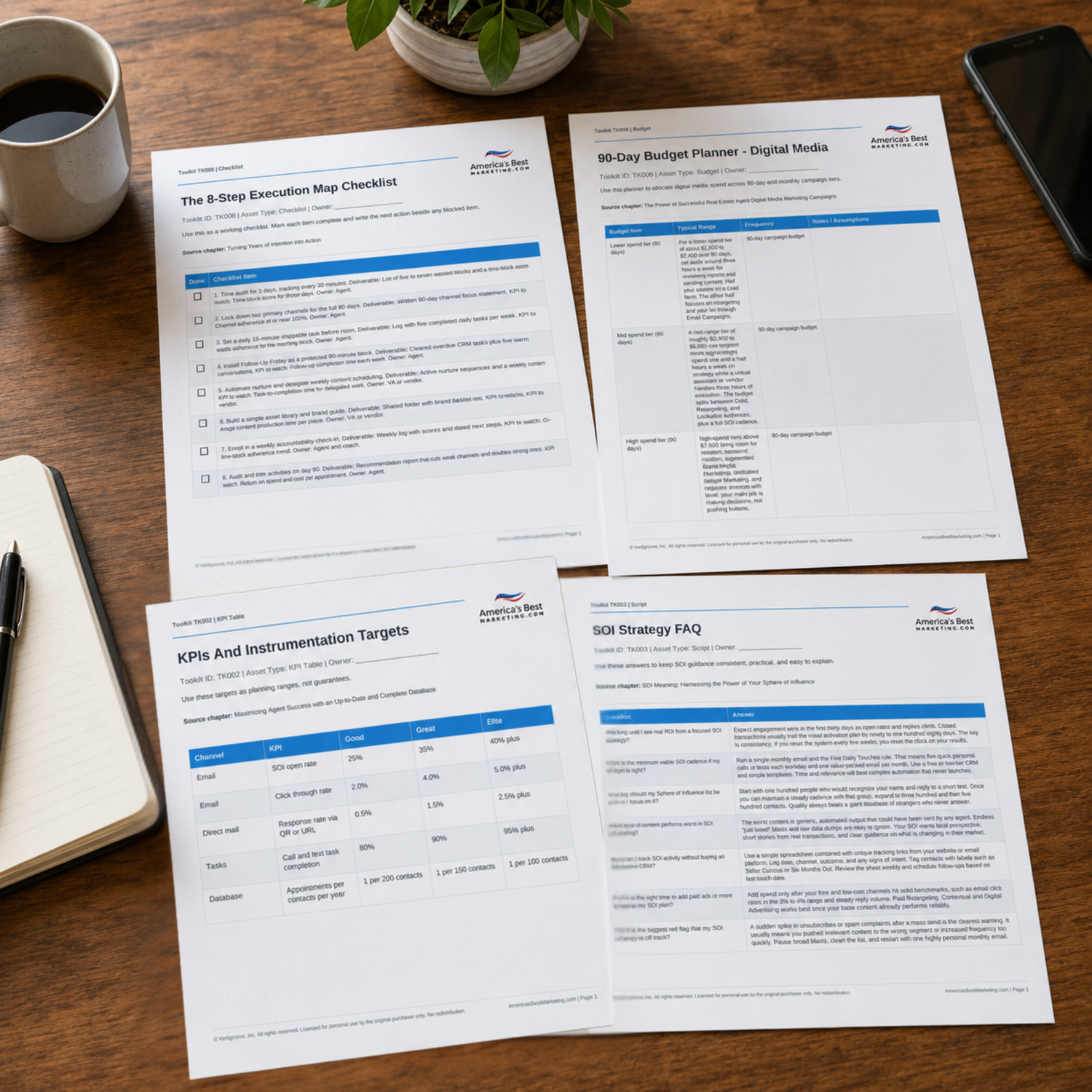
Download The Protected Offer Toolkit
Use the companion Toolkit to tighten your buyer waiver scripts, risk matrix, budget planner, inspection FAQ prompts, and protected-offer checklist before the next offer deadline.
Download the Toolkit ZIPRecommended reads
Recommended Reads for Real Estate Agents
These articles help agents turn client questions, local guidance, marketing channels, and follow-up into a more useful content system.

Winning the Rental Market: Strategies for Converting Renters into Homebuyers
Bring more structure to renter-to-buyer strategy so every touchpoint supports visibility and trust.
Read article
Financial Mistakes Buyers Make: Real Estate Agent Scripts + Preventive Content Ideas
Give financial mistakes buyers make a clearer role in the marketing system instead of treating the work as a one-off idea.
Read article
Behind-the-Scenes Content: A Weekly Storyboard for Real Estate Agents (BTS That Sells)
Use a weekly storyboard to create a stronger bridge between client education and real conversations.
Read article
How to Build a High-Converting Free Home Valuation Funnel
Create more leverage from a high-converting free home valuation funnel with a clear path from attention to follow-up.
Read articleHome Inspection Waiver Questions Agents Should Be Ready To Answer
Can a buyer still get an inspection if they waived the contingency?
Sometimes. A buyer can still schedule an inspection if the seller allows access, but the contract may remove leverage to cancel or renegotiate. Treat it as a learning tool only unless the offer preserves a termination right. Set expectations in writing before you waive anything.
What is the biggest red flag when a seller demands a waiver?
A demand for a full waiver paired with limited disclosure, limited access, or pressure to skip normal due diligence should make a buyer pause. Push for a pre-offer walkthrough, tighter disclosures, or an informational window with a clean exit. If the seller refuses all safety valves, the buyer needs to understand what they are accepting.
How long does it take to see ROI from educational content on waivers?
Start by tracking engagement signals: email replies, saved posts, and buyer consult requests that mention inspections. Lead flow usually follows once the content starts ranking or getting shared locally. Two benchmarks work well: inbound questions that mention waivers and consults booked from buyers who lost offers before finding you.
What is an informational inspection and why do sellers accept it?
An informational inspection lets the buyer inspect but removes the repair negotiation path. Sellers often accept it because it reduces re-trade fear and keeps the deal cleaner. Buyers accept it because they still learn what they are buying and can choose to proceed or exit if the contract preserves that right.
What is a major component cap and how should a buyer pick the number?
A major component cap says the buyer proceeds unless repair costs exceed a stated dollar limit for core systems. Pick the number based on cash reserves and the home’s age, then document it in the buyer file. A cap works best when it is simple, measurable, and paired with a short timeline.
How should an agent explain risk without scaring the buyer?
Use clarity, not fear. Name the most common hidden issues in the local housing stock, explain the inspection spectrum, and let the buyer choose a safety valve. Then document the decision and tradeoff in writing. Buyers usually feel calmer when they hear a plan that still gives them control.
How can inspection strategy help an agent stand out to serious buyers?
It shows process and protection, not just sales. Publish a simple protocol so buyers who hate gambling self-select into your pipeline. Tie the process to a search page, a weekly buyer email, and a clear consult offer. That consistency builds trust and reduces last-minute chaos.
Next step
Build the System Behind the Advice
Continue from one useful article into the larger ABM ecosystem: the book series for strategic depth and the full marketing program for done-for-you execution.

View the Book Series
Explore the America’s Best Real Estate Agent Marketing System books for a deeper strategic framework around visibility, referrals, listings, lead generation, and growth.
View the Book Series
See Full Marketing Program
See how AmericasBestMarketing.com runs real estate blog writing, social media, listing marketing, email, direct mail, and retargeting as one managed system.
See Full Marketing Program