How Real Estate Agents Market, Price, and Close Renovation Deals
Fixer-Upper Clients and Renovation Deals
How agents market, price, and close renovation opportunities
A 90-day operating plan for real estate agents who want to source as-is sellers, price distressed homes with ARV discipline, and help buyers see equity upside without ignoring risk.

How real estate agents win fixer-upper clients
Agents win fixer-upper clients by making the opportunity legible. The operating sequence is simple: source as-is seller conversations, explain after repair value with conservative repair ranges, show buyers the equity gap, and manage the closing path with lender, contractor, disclosure, and timeline discipline.
- Fixer-upper marketing works when the agent sells the finished potential and the risk plan, not just the low price.
- ARV, repair ranges, time risk, and buyer uncertainty should shape pricing before the property is promoted.
- Direct mail, niche site pages, IDX searches, email alerts, and listing assets should work as one renovation-deal pipeline.
- The strongest 90-day plan tracks calls, appointments, contractor walks, offers written, and contracts every week.
Why Fixer-Upper Clients Reward A More Disciplined Agent
Fixer-upper clients are not buying cosmetics. They are buying a thesis. The buyer wants to know whether the numbers work after repairs. The seller wants to know whether an as-is exit can be clean, credible, and faster than a retail prep project. The agent who can translate condition, cost, risk, and upside into a clear decision framework has a durable advantage.
This is why trust sits upstream of every renovation-deal campaign. A buyer or seller may be drawn in by price, deferred maintenance, or equity upside, yet the transaction only moves when the agent can explain the path. For stronger positioning before paid promotion, pair this niche with Building a Trusted Brand and use that trust posture across every campaign touchpoint.
The business payoff is also structural. Renovation clients can lead to repeat investor transactions, listings from inherited or deferred-maintenance owners, referral loops with contractors and lenders, and local search demand from buyers who want homes they can improve. That makes the niche bigger than one listing category. It becomes a relationship engine.
- You give sellers a credible as-is option before they spend money they may never recover.
- You help buyers understand the equity gap before fear about repairs stops the showing.
- You create reusable content, worksheets, scripts, and follow-up assets that work beyond one transaction.
The Fixer-Upper Deal System Agents Can Actually Run
The core system has four parts: seller sourcing, buyer education, pricing discipline, and closing readiness. If one part is missing, the pipeline becomes noisy. Seller leads may arrive with no qualified buyer list. Buyers may tour properties with no realistic cost model. Listings may launch with price excitement but no explanation of risk. Escrow may start without the lender, contractor, and disclosure plan aligned.
Start with the definitions clients need. ARV means after repair value, which is the realistic retail value after the planned work is complete. Hard money is asset-based financing with shorter timelines and higher costs. Renovation financing can roll purchase and repairs into one loan with escrowed draws. The 70 percent rule is an investor filter, not a universal pricing rule.
Find owners with a reason to talk
Build lists around older housing stock, absentee ownership, inherited property signals, deferred maintenance, and neighborhoods where improved homes show a meaningful spread over as-is sales.
Use Direct Mail to offer an as-is consultation instead of a generic home value pitch. The strongest angle is clarity: what the owner could sell for now versus what they might net after prep.
Turn repair fear into a next step
Give buyers a simple renovation worksheet before the showing. Include likely ARV, visible repair categories, financing path, contractor review, and the decision they need to make after touring.
Use IDX Real Estate Websites to organize saved searches around as-is, handyman special, estate sale, investor, and renovation terms when those phrases appear in local listings.
Pre-wire the expert bench
Keep renovation lenders, hard-money contacts, contractors, inspectors, insurance contacts, and title partners ready before a client finds the property. Speed is a trust asset in this niche.
For listing launches, use Listing Marketing assets to show before photos, scope direction, simple concept visuals, and the buyer profile the home serves best.
Fixer-upper buyers are shopping for equity, not cabinets. When you sell the equity gap as a number and pair it with a risk plan, the showing becomes a business conversation instead of a tour of defects.
Price The Property From Finished Value Backward
Pricing a fixer-upper from clean retail comps is the fastest way to lose serious buyers. Start with the likely ARV, subtract realistic repairs, then account for time, financing cost, execution risk, and buyer uncertainty. The final number should make sense to a buyer who is thinking in ranges, not wishes.
Use two comp sets. The first set shows renovated or highly improved homes that support ARV. The second set shows as-is or dated homes that reveal the market discount. The gap between those two sets is where the marketing story lives. Understanding and Leveraging Real Estate Market Data helps agents turn those patterns into a clearer client conversation.
| Pricing Input | Agent Question | Client Risk | Marketing Response |
|---|---|---|---|
| Likely ARV | What would the home sell for after the right scope is complete? | Overestimating finished value. | Show conservative renovated comps and explain why each comp is or is not comparable. |
| Repair range | What does the visible scope suggest before specialist inspections? | Underestimating cost. | Use low, likely, and high ranges, then route buyers to a contractor walk-through. |
| Time and carry | How long will planning, permitting, work, and resale take? | Ignoring financing or delay cost. | Include schedule risk in the buyer worksheet and lender conversation. |
| Buyer uncertainty | What unknowns will buyers price into their offer? | Weak offers or re-trades. | Disclose clearly, organize documents, and package known issues before marketing. |
A 12-Week Fixer-Upper Client Campaign
Run the campaign in three four-week sprints. The first sprint builds the seller list and local data story. The second sprint publishes buyer and seller education. The third sprint turns interest into showings, contractor reviews, offers, and repeat follow-up.
Source the seller side first
Pick one to three zip codes where older housing stock and visible improvement spreads support the niche. Build a 500 to 1,000-owner list, then send a postcard and letter sequence with an as-is exit message.
The call to action should be specific: request an as-is pricing review, compare prep versus no-prep sale paths, or ask for a renovation buyer demand check.
Publish the buyer education layer
Create two local pages: renovation deals in your area and as-is home selling options. Add definitions, scope examples, financing paths, and a saved IDX search when local listing language supports it.
Then use Repetitive Exposure in Real Estate Marketing to keep the idea visible through email, social, blog, retargeting, and direct outreach.
Convert interest into a decision path
Agent operating notes
WorksheetUse four lines: likely ARV, likely repairs, acquisition price target, and equity gap.
ReviewLabel the source of each estimate and separate fast assumptions from verified numbers.
Next stepOffer either a contractor walk-through, lender conversation, or offer strategy by financing path.
Do not let the lead sit in vague interest. The next action should always make the risk clearer or the offer easier to write.
Creative Angles That Make The Upside Clear
Renovation marketing should sell potential without hiding problems. The best content shows what is known, what still needs review, and why the property could make sense for the right buyer profile. That balance protects trust and improves conversion quality.
Use clear promise language
Campaign lines
Seller angleShould you sell as-is or renovate before listing?
Buyer angleHow to read the equity gap in a fixer-upper.
Investor angleARV math before you write the offer.
Local angleWhere older homes are creating renovation opportunity this quarter.
Use plain language. The goal is not hype. The goal is to make a complicated property feel measurable.
Move from curiosity to consultation
Agent dialogue
OpenThe price only matters if the after-repair value and repair range still leave room for the buyer.
ClarifyI will show you the likely ARV, the visible scope, and the unknowns we need to verify before you decide.
CloseIf the range works, our next move is a contractor walk and lender check before we write the offer.
This turns repair anxiety into a controlled next step and helps the client understand why speed still matters.
The KPI Table For Renovation Deal Marketing
Measure the niche with leading indicators, not just closings. The goal is to know whether your sourcing, education, and conversion assets are creating enough qualified conversations to justify the next campaign cycle.
| Channel | 90-Day Deliverable | Target KPI | Decision Rule |
|---|---|---|---|
| Direct mail | Two to four touches to 500 to 1,000 owners. | Inbound seller calls and appointment requests. | Expand the list only after one message creates measurable response. |
| Local SEO pages | Two niche pages with definitions, process maps, and next steps. | Organic visits and form fills from distressed-property intent. | Strengthen pages when search impressions rise but conversion stays flat. |
| Email and social | Weekly education around ARV, repair ranges, and as-is sale paths. | Replies, saved searches, buyer consults, and seller reviews. | Promote the topics that create appointments, not just likes. |
| Retargeting | Audience reminders for visitors who viewed renovation content. | Return visits and second-step conversions. | Use Digital Retargeting after the niche pages and email offer are ready. |
The 10-Point Fixer-Upper Specialist Check
A renovation niche becomes profitable when the agent can move from interest to action quickly. Before you scale the campaign, pressure-test whether the client experience is ready for volume.
- You can explain ARV in one sentence and support it with two comp sets.
- You use a fast repair range first and a verified repair range second.
- You have at least two renovation lenders who can respond quickly.
- You have contractors who can quote from photos or schedule a walk-through promptly.
- You have a one-page equity worksheet for buyer and seller conversations.
- You have local pages that explain renovation deals and as-is selling options.
- You describe the 70 percent rule as a filter, not a promise.
- You have an as-is seller script that compares prep versus no-prep paths.
- You have a buyer script for repair fear, financing uncertainty, and offer timing.
- You track calls, appointments, contractor walks, offers written, and contracts weekly.
How A Focused Renovation Farm Can Compound
An agent chose an older historic district with visible deferred maintenance and a high share of out-of-area owners. A 600-owner list and two-touch mail series produced three serious listing conversations in one quarter. The agent positioned each property as a forced-equity opportunity, verified repair ranges with contractor input, and used simple visuals to reduce buyer uncertainty.
The lift came from focus. The list was narrow enough to follow up. The buyer education was specific enough to be useful. The pricing story connected as-is condition to finished value. The result was a repeatable niche campaign rather than a one-off prospecting push.
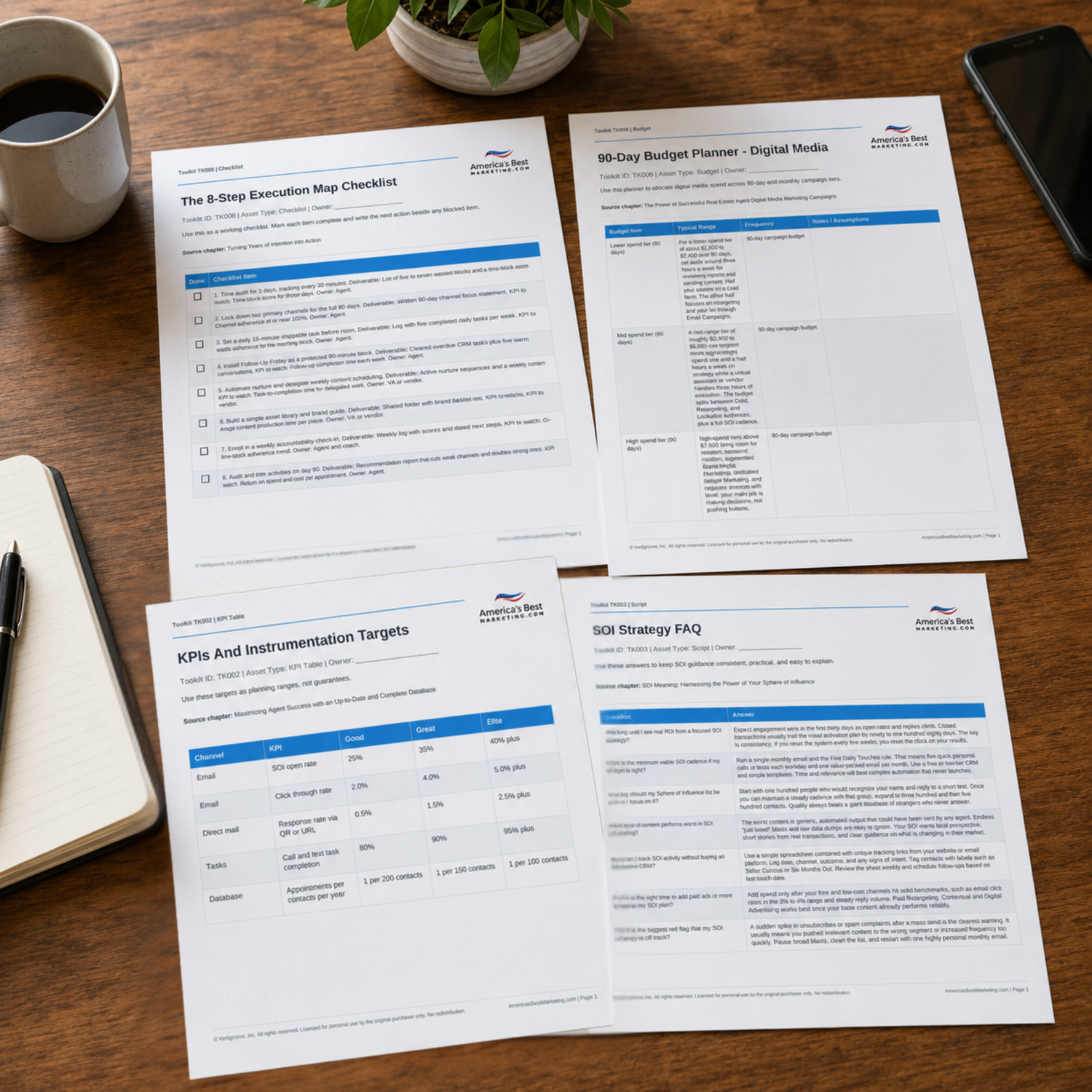
Download The Fixer-Upper Client Toolkit
Use the Toolkit ZIP to turn the 12-week launch, ARV worksheet, seller sourcing plan, buyer scripts, KPI table, and readiness audit into a renovation-deal operating system for this quarter.
Download the Toolkit ZIPRecommended reads
Recommended Reads for Real Estate Agents
These articles help agents connect listing visibility, seller education, marketing channels, and follow-up into a clearer growth system.

Turning Real Estate Leads into Loyal Clients
Turn turning real estate leads into loyal clients into a repeatable workflow that supports trust, listings, and future conversations.
Read article
Out-of-State Buyers: A Real Estate Agent Playbook for Remote Showings, Trust, and Smooth Closings
Plan ad campaigns around repetition, landing pages, and second chances with warmer prospects.
Read article
Building a Trusted Brand: The Key to Attracting Target Audiences Over Paid Leads and Mass Marketing
Turn personal brand work into a system clients can notice, remember, and trust.
Read article
Commercial Real Estate for Real Estate Agents: How to Break In and Market Your First Deal
Bring more structure to commercial real estate so every touchpoint supports visibility and trust.
Read articleFixer-Upper Client Questions Agents Should Be Ready To Answer
What is the ROI for distressed marketing?
Track cost per inbound call, cost per appointment, and listing capture rate by list segment. Evaluate every two weeks so weak segments get cut fast and productive segments get more cadence.
How big should my target farm be?
Start with 500 to 1,000 owners. That is large enough to test message quality and small enough to follow up without spreading the budget thin.
Can a first-time buyer get a loan for a fixer-upper?
Yes, but the loan path matters. Renovation loan products can roll repairs into the loan and fund work through escrowed draws when the buyer, lender, contractor, and appraisal process are aligned.
How do I price an as-is listing without scaring off buyers?
Price from ARV minus repairs, time risk, and buyer uncertainty. Show the repair range and assumptions so buyers see a plan instead of a mystery.
What should I say when a buyer panics about repair costs?
Convert fear into a next step. Give a range, explain what could move it, and schedule a contractor walk or detailed quote review.
How do I market a fixer-upper without glamorizing problems?
Lead with honesty and direction. Name the key issues, show the scope, clarify the likely finished vision, and call out the buyer profile the home serves best.
How do I avoid surprises during escrow on distressed properties?
Surface disclosures, permits, utilities, safety issues, lender requirements, and contractor timing early. Put repair ranges in writing with clear labels and sources.
Next step
Build the System Behind the Advice
Continue from one useful article into the larger ABM ecosystem: the book series for strategic depth and the full marketing program for done-for-you execution.

View the Book Series
Explore the America’s Best Real Estate Agent Marketing System books for a deeper strategic framework around visibility, referrals, listings, lead generation, and growth.
View the Book Series
See Full Marketing Program
See how AmericasBestMarketing.com runs real estate blog writing, social media, listing marketing, email, direct mail, and retargeting as one managed system.
See Full Marketing Program