Investor Content for Real Estate Agents: Build a Portfolio Series That Attracts Clients
Investor Content for Real Estate Agents
Build a Portfolio Series That Attracts Serious Clients
A practical briefing for real estate agents who want investor-focused content, deal math, email follow-up, retargeting, and portfolio conversations working as one visible system.

Investor content that turns deal math into client trust
Investor content for real estate agents works when it helps a serious buyer evaluate risk, return, timing, and next steps before a call. A six-part portfolio series gives investors deal math, buy box clarity, neighborhood yield context, and a follow-up path that makes your website feel like a decision system instead of a brochure.
- Investor clients respond to clear assumptions, return ranges, and repeatable decision rules more than listing glamour.
- A portfolio series should teach cash flow, buy boxes, neighborhood yield, financing structure, and follow-up standards.
- The strongest investor content pairs search visibility with email cadence, retargeting, calculator visits, and buy box intake forms.
- Real estate agents can build repeat transaction value when investor education becomes a visible marketing system.
Why Investor Content Pays Off
Investor clients do not shop the same way as move-up buyers or first-time buyers. They compare return targets, rental assumptions, local risk, renovation tolerance, tenant demand, financing options, and exit strategy. If your website only shows attractive listings, the investor has no reason to believe you can help them build a portfolio.
An investor portfolio series changes that signal. It shows how you think. It makes your underwriting process visible. It lets a serious buyer test whether your assumptions are conservative, whether your market knowledge is useful, and whether your follow-up will be disciplined after the first conversation.
Start with the content habits that already help agents stay visible, including Five Client-Winning Habits. Then add investor-specific assets that teach the numbers. That combination keeps the article searchable, the funnel practical, and the relationship warmer between property conversations.
- You attract investors who value process, not just access to listings.
- You turn your website into a screening layer for buy box, capital timeline, and return expectations.
- You create content that can be reused through email, social, direct mail, retargeting, and investor briefings.
The Investor Mindset Agents Need To Match
Investors run a different scoreboard. Your job is to speak their language without hiding behind jargon. Explain the math, show the assumptions, and make your process easy to evaluate.
Cash-on-cash return is annual cash flow divided by the cash invested. If an investor puts $80,000 down and nets $6,400 after expenses, cash-on-cash is 8 percent, and that number drives quick yes or no decisions.
Equity multiple is total cash returned over the life of the deal divided by total cash invested. It forces the conversation beyond the first rent check and into the full hold period.
Velocity of capital is how fast an investor can recycle cash into the next asset. Investors respect agents who understand refinance timing, rent stabilization, and when to sell versus hold.
Portfolio diversification means the investor spreads risk across locations, tenant types, asset classes, and deal structures. Your content should show how you compare neighborhoods, not just properties.
Capture intent before the call
Use SEO for Real Estate Agents thinking to target searches around returns, rent ranges, deal examples, and local investor questions.
Build one cornerstone investor page, then connect it to supporting articles for yield reports, buy box rules, and financing angles.
Give serious buyers tools
Investor pages inside IDX Real Estate Websites should make cap rate, rent range, expense assumptions, and neighborhood context easier to compare.
Listings can still matter, but the content around each listing must explain why the asset belongs in a portfolio.
Stay visible after research
Use Email Marketing for Real Estate Agents to keep investors moving from article to calculator to briefing to buy box intake.
Pair email with Digital Retargeting so calculator visitors and yield report readers see the next asset in the sequence.
Most agents miss that professional investors care more about the portfolio plan than the single property. Ask one question on every deal. How does this asset change the investor's next move in a ten-year tax, equity, and liquidity plan?
The Six-Part Investor Content Series
This series gives your investor audience a path from basic deal logic to a portfolio conversation. Each article should answer one decision question, show your assumptions, and invite the reader into a next step.
The goal is not to publish encyclopedia content. The goal is to build trust through repeatable math and consistent follow-up.
BRRRR decision rules in your market
Explain acquisition range, rehab budget tolerance, rent stabilization, refinance timing, and when the strategy stops making sense.
1031 exchange fundamentals
Teach timelines, identification rules, replacement property logic, and common failure points while directing legal and tax questions to qualified advisors.
Neighborhood yield report
Create a monthly format for rent to value, days on market, vacancy signals, property condition, and the level of competition in each target area.
Small multifamily underwriting basics
Show what to verify on rent rolls, leases, expense lines, maintenance history, insurance, taxes, utilities, and management assumptions.
Short-term rental feasibility
Cover licensing, seasonality, occupancy assumptions, management costs, furnishing costs, local rules, and the risk of relying on best-case revenue.
Capital stack and partnership basics
Explain what changes when investors use cash, conventional financing, private money, seller financing, or equity partners.
Creative And Messaging That Sound Like Underwriting
Investor content wins when it sounds like a disciplined memo, not an ad. Use clear assumptions, show your ranges, and keep every piece tied to a decision the investor needs to make.
Your brand still matters in an investor niche. It just needs to sound precise. Use Real Estate Agent Branding: Crafting Your Unique Identity to Stand Out and Attract Clients as the guardrails, then express that brand through your rules and follow-through.
Lead with fast deal math
Campaign message
Hook linePut your rent estimate into the deal calculator and see a clean return range.
Middle lineThe calculator uses vacancy, taxes, insurance, repairs, management, and reserves so the number is not cosmetic.
CTA lineSend me your buy box and I will flag the assumptions that need verification before you write an offer.
Use this message for calculator visitors, email subscribers, and retargeting audiences who have already read one investor article.
Turn local knowledge into a screening tool
Campaign message
Hook lineTop cash flow neighborhoods should be ranked by rent to value, stability, and buyer competition.
Build lineThis report compares the numbers investors ask about before they ever tour a property.
CTA lineJoin the investor briefing list and get the next yield update when the assumptions change.
Use this message for out-of-area investors comparing neighborhoods, then support it with a monthly briefing or short live stream.
- Yield Over Yard: The Cash Flow Report for Your Market.
- Scaling from 1 to 10: The Portfolio Growth Blueprint.
- The Buy Box Builder: Set Your Rules Before You Tour.
- Cap Rate Reality Check: What the Numbers Look Like Today.
- 1031 Timeline Map: Deadlines That Matter.
- Small Multifamily Scorecard: What to Verify Before Offer.
The Eight-Week Portfolio Series Launch
This is a tight launch that builds assets in the right order. You start with underwriting tools, publish the six-piece series, then distribute it until you see repeat visits and inbox replies.
Each week should have one deliverable and one measurement. That discipline prevents the common trap of writing long content that never gets used.
Build a one-page deal calculator with inputs for rent, vacancy, taxes, insurance, repairs, management, and reserves. Add a buy box intake form with location radius, target return range, asset type, and capital ready timeline. Publish a simple assumptions page that explains where rent and expense ranges come from.
Publish the six core investor articles in a sequence that moves from strategy to underwriting to follow-up. Each article should include one decision rule, one practical example, and one next step such as a calculator, briefing list, or portfolio audit call.
Send one weekly email that links to the newest post and one older cornerstone piece. Run retargeting to every portfolio post and the calculator page. Hold a monthly investor briefing, then recycle the questions into the next yield report.
For in-person relationship depth, add one quarterly investor touch. A short market briefing and deal review works well, and Client Events for Real Estate Agents: Plans, Budgets, and Follow-Up That Earn Referrals gives you a structure that does not feel salesy.
Investor Content Performance Metrics
You do not need perfect attribution to run this program. You need consistent instrumentation so you can tell what content pulls investors deeper into your funnel.
Use the table below as a target scoreboard for iteration, not a promise of outcomes.
| Content Type | Primary KPI | Target Range | Channel And Focus |
|---|---|---|---|
| Case studies | Proof-page clicks | 1.5% to 3% | Email sends that prove competence, underwriting discipline, and client process. |
| Yield reports | Organic visits | 300 to 900 visits per month | Search traffic that signals top-of-funnel investor research intent. |
| Deal vlogs | Form starts | 2% to 5% | Social posts that build trust by showing how you evaluate actual opportunities. |
| Calculator page | Repeat visits | 10% to 20% returning users | Retargeting and email that bring investors back when a new deal enters the pipeline. |
The Ten-Point Investor Readiness Audit
If you want investor clients, your system must look like an investor system. Run this audit before you publish the series so every piece has a destination and a follow-up path.
- Create CRM tags for investor type, target return range, and capital ready timeline.
- Build a buy box intake form and route it to a single inbox with a same-day reply standard.
- Publish a deal calculator page with clear assumptions and editable inputs.
- Set a standard underwriting template for rent, vacancy, expenses, reserves, and net cash flow.
- Document two off-market sourcing channels and a weekly outreach cadence.
- Write an investor script that starts with targets, not property features.
- Create one yield report format you can update monthly without rewriting the entire post.
- Install tracking on calculator clicks, form starts, and email link clicks.
- Create a retargeting audience for calculator visitors and yield report readers.
- Define a weekly block for deal review content with one deal, one lesson, and one next step.
Case Pattern: The Portfolio Series That Changed The Conversation
A small team in a suburban single-family rental market decides to stop posting listing highlights and start publishing a six-part portfolio series. They lead with a yield report and a deal calculator that uses conservative expense assumptions.
They send one weekly email that links to each new piece and pin one investor question in the subject line. Three high-net-worth buyers reply within the first month because the content answers screening questions without requiring a call.
The team runs retargeting ads to calculator visitors and sees repeat site visits from the same devices, which signals serious evaluation. During follow-up calls, they use a buy box worksheet and quickly sort each investor into a clear acquisition plan.
Over the next year, the team closes eight transactions across three investor clients because each buyer keeps recycling capital. The content cost looks small next to repeat transaction frequency, and the team now has a measurable investor pipeline instead of random inquiries.
How This Becomes A Marketing System
An investor portfolio series is more than a content project. It is a conversion asset. It gives you a credible reason to talk about money, risk, return, and discipline without sounding like you are chasing a deal.
Use the series across Real Estate Blog Writing Services, Social Media Marketing, Listing Marketing, Email Campaigns, Direct Mail, and Digital Retargeting. Each channel should tell the same story. You help investors evaluate the next move before they tour the next property.
If you want the done-for-you version, AmericasBestMarketing.com can turn your investor education into a managed marketing system with blog content, social distribution, email cadence, direct mail, and retargeting working from the same strategic message.
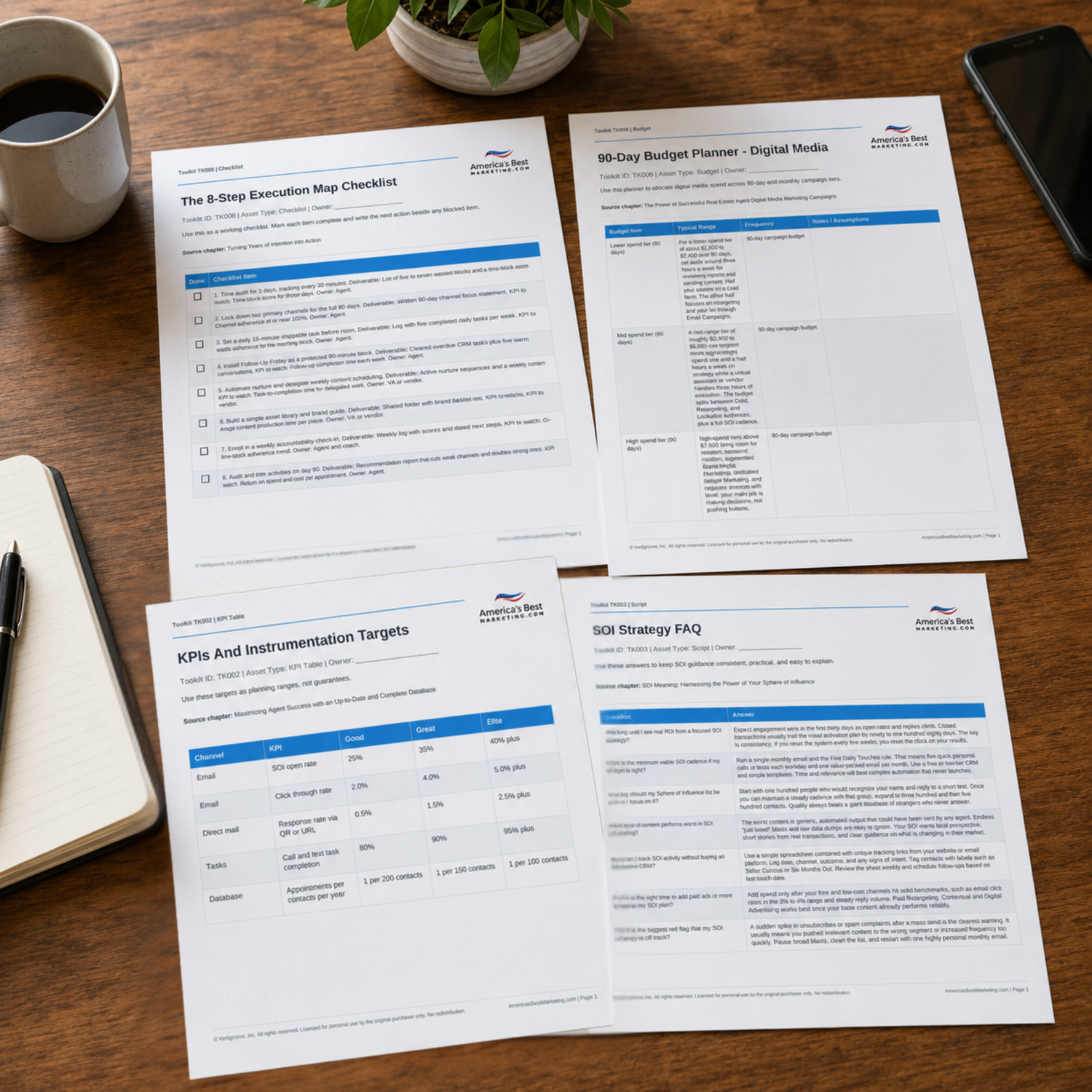
Download The Investor Content Toolkit
Use the companion Toolkit to turn this article into production work with budget guardrails, KPI targets, investor-readiness checks, FAQ prompts, and a portfolio content sequence that supports serious investor conversations.
Download the Toolkit ZIPRecommended reads
Recommended Reads for Real Estate Agents
These articles help agents connect content planning, client education, local visibility, and follow-up into a more consistent marketing rhythm.

REITs Explained for Real Estate Agents: Talking Points + Content Angles for Investor Clients
Build authority with content topics that are easier to plan, promote, and connect to follow-up.
Read article
Hyper-Local Content Kit for Real Estate Agents: Parks, Events, Map Posts
Turn local knowledge into searchable content buyers, sellers, and relocation prospects can actually use.
Read article
Tax Benefits of Investment Property: Real Estate Agent Talking Points + Investor Content Angle
Make tax benefits of investment property more useful by tying the message, audience, and next step together.
Read article
Testimonial Content That Books Appointments (Real Estate Agent Templates)
Publish content that answers local questions, supports lead capture, and gives future conversations a reason to start.
Read articleInvestor Content Questions Agents Should Be Ready To Answer
How long does it take to see measurable ROI from investor leads?
Plan on 6 to 12 weeks for early signals and 3 to 6 months for consistent deal conversations. Watch leading indicators first: repeat visits to your calculator page, replies to your weekly email, and buy box forms started. Investor clients move slower at the front end because they verify process, then they speed up once they trust your underwriting. Your job is to stay consistent and track the signals.
What content performs worst for serious investors?
Pretty listing roundups with no numbers waste investor attention. Long market opinion posts without assumptions also fall flat because investors cannot test the claim. Avoid content that hides expenses, uses vague language, or skips decision rules. If the reader cannot estimate cash flow in five minutes, the post does not help them and it does not help you.
People Also Ask: Should I specialize in one type of investment property?
Specialize in one primary asset type first, then expand after you publish a full series and build a repeatable intake process. One lane makes your underwriting sharper and your messaging cleaner. You can still serve other deals, but your public content should lead with a clear buy box category such as single-family rentals or small multifamily. Clarity earns trust and speeds up calls.
What should I include in a buy box intake form?
Collect the return target range, preferred neighborhoods, asset type, and capital ready timeline. Ask for deal breakers such as HOA limits, renovation tolerance, or tenant type. Add one field for financing style such as cash, conventional, or private money so you can set expectations early. Keep it short enough to complete on a phone in under two minutes.
How do I talk about returns without sounding like I am promising results?
Use ranges and assumptions, not guarantees. State the rent estimate source, the expense reserve standard, and the vacancy buffer, then show how the numbers change under different scenarios. Frame your KPI targets as benchmarks for content performance, not deal outcomes. Investors respect cautious math because they have been burned by sloppy projections.
Do I need a calculator on my website, or is a spreadsheet enough?
A spreadsheet works for internal analysis, but a website calculator captures leads and proves you run a real process. The best approach is both: a simple web calculator for prospects and a deeper spreadsheet for underwriting and offer planning. Keep the web version conservative and fast, and use the spreadsheet to document assumptions and save versions per deal. That creates clean follow-up material for your next call.
How often should I publish investor content once the series is live?
Publish one update per month and one short email per week to keep the series active. Rotate between a new yield report, an updated assumptions page, and one case-style breakdown of a deal you evaluated. Investors do not need daily posts. They need reliability and a steady signal that you still track the market. Put the work on a calendar and treat it like lead generation.
Next step
Build The System Behind The Investor Content
Continue from one useful article into the larger ABM ecosystem: the book series for strategic depth and the full marketing program for done-for-you execution.

View the Book Series
Explore the America’s Best Real Estate Agent Marketing System books for a deeper strategic framework around visibility, referrals, listings, lead generation, and growth.
View the Book Series
See Full Marketing Program
See how AmericasBestMarketing.com runs real estate blog writing, social media, listing marketing, email, direct mail, and retargeting as one managed system.
See Full Marketing Program