Community Development Districts CDD: How Real Estate Agents Explain Fees, Benefits, and Risks
Community Development Districts CDD
Fees, Benefits, And Risks For Real Estate Agents
A plain-English operating brief for agents who need to explain CDD fees before they become buyer objections, appraisal friction, or late-stage trust problems.

Turn CDD Fee Questions Into Buyer Confidence
A Community Development District, or CDD, is a local government district that helps finance and maintain infrastructure inside a community. Real estate agents should explain what the fee funds, where it appears on the tax bill, and how buyers can verify current amounts before making an offer.
- CDD questions become deal risk when buyers feel surprised instead of prepared.
- The cleanest explanation separates debt service from operations and maintenance.
- Agents should verify current amounts through official county and district sources before quoting numbers.
- CDD education can become a hyper-local content asset that captures relocation and community-search leads.
Why CDD Fee Clarity Wins Trust
CDD fees are most likely to become deal-killers when buyers discover them late. The fee itself is not always the problem. The real problem is surprise. A buyer who has already emotionally chosen a home can feel blindsided when a tax bill shows an assessment they do not understand.
That is why the strongest agents treat CDD education as an advisory asset. They explain the infrastructure story, separate the fee components, and give buyers a verification path before offer day. That same discipline supports stronger Listing Marketing, clearer community pages, and better relocation follow-up.
Effectively explaining Community Development Districts is especially important in master-planned and fast-growth markets. Many agents avoid the topic because it feels technical. That avoidance creates the very friction that damages trust. The agent who translates the issue in plain English becomes the community interpreter.
- You reduce late-stage buyer anxiety by explaining the fee before disclosure review.
- You position yourself as a source of calm, practical local knowledge.
- You create content that attracts buyers searching for community-specific cost answers.
How To Explain CDDs Without Losing The Buyer
Start with the simple definition. A CDD is a special-purpose local government that finances and maintains community infrastructure. That can include roads, utilities, stormwater systems, parks, amenity centers, landscaping, and other assets that make a neighborhood function.
Then explain the fee like an operating model. One part may be tied to bond debt service that helped build the original infrastructure. Another part may fund operations and maintenance that keep community assets working. Buyers do not need bond finance theory. They need to know what the fee funds, how it is collected, and where the current numbers can be checked.
Separate payoff from upkeep
Explain debt service as the payment stream tied to the original infrastructure buildout.
Explain operations and maintenance as the ongoing budget for common assets such as landscaping, ponds, amenities, gates, and stormwater systems.
Never present a single CDD number as if every parcel and every year will be identical.
Show buyers where to check
Point buyers to the current tax bill, county property appraiser, tax collector, and district manager.
Save screenshots and source links when you build a community page so your content can be updated with discipline.
Use ranges when publishing educational content and state the date the information was checked.
Compare total cost, not labels
Compare a CDD community to a non-CDD neighborhood by modeling monthly housing cost, taxes, HOA dues, amenities, and lifestyle value.
Explain that an HOA and a CDD can coexist, yet they are not the same governance layer.
Give buyers the language to evaluate the trade-off calmly instead of reacting to a mystery fee.
Most agents miss that CDD fees are often collected through the county property tax bill. When you explain that reality calmly, buyers stop treating the fee like a hidden charge and start evaluating it like a structured payment for real infrastructure.
Three CDD Scripts You Can Use Today
Scripts matter because fee conversations can turn emotional quickly. Use a short opening, a plain-English explanation, and a verification next step so the conversation feels guided instead of defensive.
The first buyer consult explanation
Agent dialogue
Hook lineBefore we compare homes, I want you to understand one local fee that can affect total monthly cost.
Middle lineA CDD helps pay for and maintain community infrastructure. The key is knowing what part is debt service and what part is ongoing maintenance.
CTA lineWhen we identify a specific home, I will show you where to verify the current CDD lines before you make an offer.
Use this script before showings in master-planned communities so buyers hear the explanation before they see the tax bill.
The listing presentation framing
Agent dialogue
Hook lineBuyers will ask about the CDD, so we should turn the answer into a trust point instead of letting it become an objection.
Build lineI will describe what the fee funds, where it appears, and how buyers can confirm current amounts through official sources.
CTA lineThat gives us cleaner buyer expectations and keeps the conversation focused on total value, not surprise.
Pair this with seller education content and a consistent Email Marketing for Real Estate Agents follow-up so every lead hears the same explanation.
The relocation buyer comparison
Agent dialogue
Opening lineCDD communities can look expensive until we compare total monthly cost and what the community infrastructure includes.
Explain lineWe will compare the CDD, HOA, taxes, insurance, amenities, and location trade-offs side by side.
Reassure lineYou do not have to guess. We will verify the current amount and compare it to the alternatives before you decide.
CTA lineSend me the two communities you are weighing and I will build a simple comparison for our next call.
Use this with relocation buyers who are comparing lifestyle, school zones, commute patterns, and total housing cost across communities.
Build The Hyper-Local Authority Content Loop
This is the loop that turns a complex disclosure into a lead engine. You are not writing a generic explainer. You are building community pages that answer the exact questions buyers type into search before they call an agent.
Pick your top five master-planned communities. For each one, collect the current tax bill source, district manager contact, fee split, and verification date. Publish one page per community through your IDX Real Estate Websites ecosystem so buyers can move from education to listings without a context switch.
Turn the research into a one-page CDD comparison cheat sheet. Promote it through Retargeting & Contextual Ads aimed at visitors who viewed listings in those districts. Follow with a short email sequence that explains the fee split, verification path, and community trade-offs.
To keep the loop honest, anchor your publishing to trust. A buyer who trusts your explanation of fees is more likely to trust your pricing advice, inspection strategy, and offer guidance later. The tone should be transparent, source-backed, and calm.
When you publish these guides, pair them with a practical SEO plan so the pages rank for community-specific questions. Use Proven SEO Strategies for Real Estate Websites to Increase Leads as the on-page model, then apply the same structure to every CDD community page you build.
KPI Table For CDD Buyer Education
Track whether your CDD education is becoming a business development asset. The goal is not to promise results. The goal is to measure whether buyers are engaging with your explanations, returning to your guides, and asking better questions.
| Metric | Signal | Planning Range | Why It Matters |
|---|---|---|---|
| Guide clicks | From listing views | Two percent to five percent | Shows that buyers want cost context before they request a showing or consultation. |
| Cheat sheet opt-ins | CDD comparison requests | Three to twelve opt-ins per active campaign window | Creates a measurable relocation pipeline tied to a specific community question. |
| Return visits | Repeat sessions on community pages | One and a half to three sessions per returning user | Signals that buyers are using the guide as a planning resource, not just a one-time definition. |
Verification And Ethics That Keep You Safe
Your goal is education, not tax advice, bond advice, or legal advice. You can explain what a CDD generally funds, how the assessment is commonly collected, and where buyers can verify current information. You should not promise future fee changes, deductibility, payoff timing, or parcel-specific treatment without official confirmation.
Keep your process consistent. When you mention CDD amounts in content, show the date checked and the source path. When you speak with a buyer, encourage them to review the current tax bill and consult qualified tax or legal professionals for anything outside your role.
- Do not promise that the fee will drop, disappear, or stay flat.
- Do not present tax deductibility as brokerage advice.
- Do not confuse an HOA with a public district assessment.
- Do document the source, date checked, and official verification path.
Case Study: The Community Interpreter Wins
Mark, an agent in a fast-growth relocation market, kept losing buyers at the disclosure stage. The pattern was consistent. They liked the home, then panicked when they saw CDD lines on the tax bill and did not understand what the fee represented.
He built a simple community resource section on his IDX site. Each page explained the fee split in plain English, listed the amenity and infrastructure benefits, and showed where to verify current rates. Then he ran retargeting ads to visitors who viewed listings inside those communities and offered a one-page comparison sheet.
Within six months, Mark captured twenty-eight high-intent relocation leads who referenced his guide as the reason they reached out. Those leads moved faster because the trust work was done early, and his fall-through rate improved because expectations were set before offer day.
The 10-Point CDD Listing Audit
Use this checklist before you publish MLS remarks, ad copy, or a community guide. The goal is simple: no surprises and no sloppy comparisons.
- Confirm the property is inside a CDD boundary using the county or district map.
- Pull the most recent tax bill and identify the CDD lines that apply to that parcel.
- Separate debt service from operations and maintenance in your working notes.
- Write one sentence that explains what the fee funds in that community.
- State where the buyer can verify current rates and include the exact office name.
- Confirm whether an HOA also exists, then explain that it is a separate governance layer.
- Check listing copy for language that implies the fee is optional.
- Do not claim the fee will drop. Model a range and state that amounts can change.
- Attach your cheat sheet link in follow-up messaging after the first showing.
- Log the buyer question in your CRM, then add the answer to your community guide.
CDD fees should never feel like a late-stage twist. When clients see the structure early, they feel guided instead of trapped. When your content gives them a verification path, you become the agent who makes complicated local decisions easier.
How This Becomes Marketing
A CDD education system is more than a transaction aid. It gives you a credible reason to publish community pages, send useful email, support listings, and retarget warm buyers with content that answers a real financial concern.
Use the topic across Listing Marketing, Email Marketing for Real Estate Agents, Digital Retargeting, and Social Media Marketing. Each channel should tell the same story. You help buyers understand the local cost picture before they feel surprised by it.
If you want your community guides to rank and convert, build them like an operator: consistent page format, clear verification, plain-English fee explanations, and a disciplined follow-up system. AmericasBestMarketing.com builds done-for-you multi-channel marketing for real estate agents who want complex local topics to become trust-first lead capture.
Download The CDD Buyer Education Toolkit
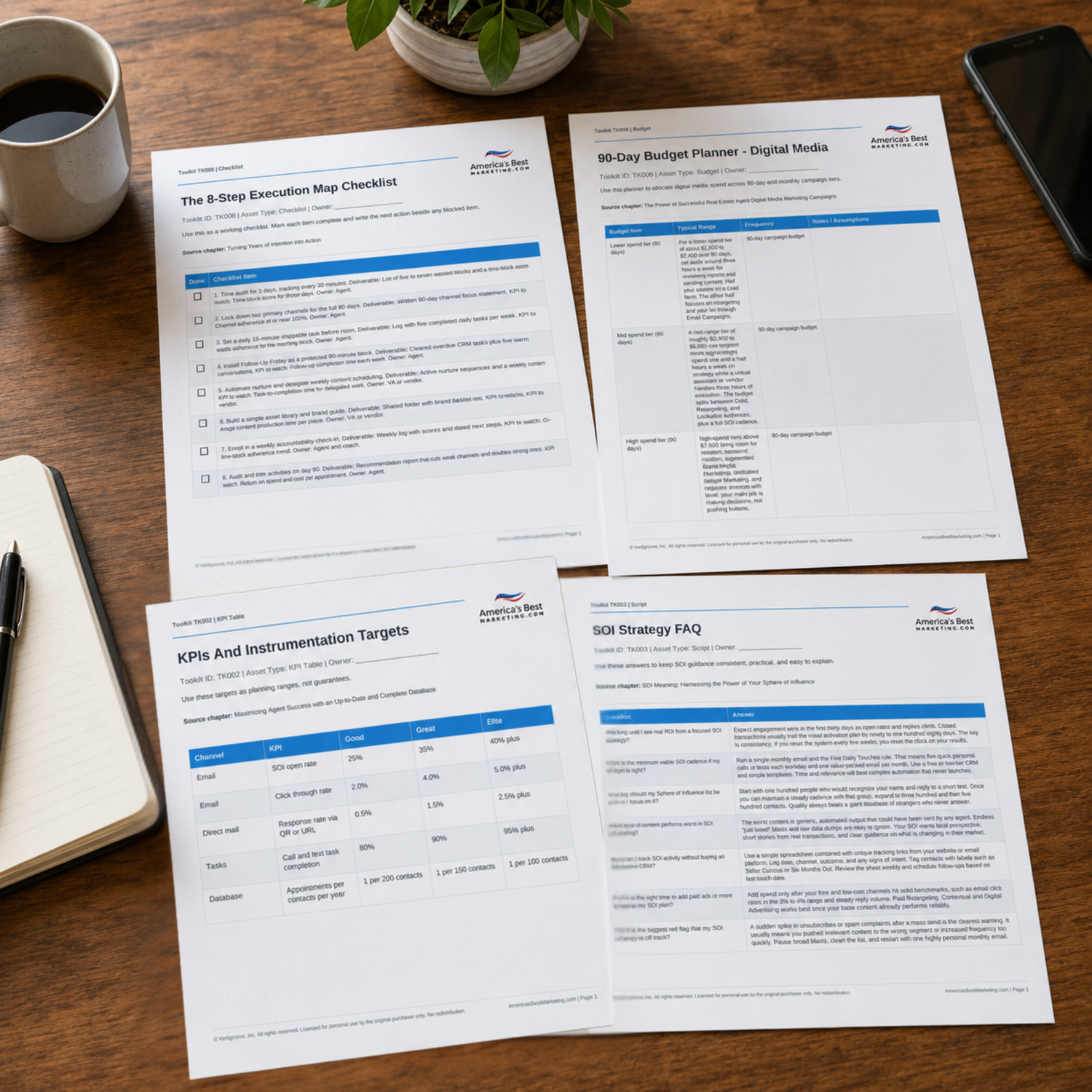
Use the companion Toolkit to tighten your listing audit, fee explanation script, buyer comparison workflow, KPI tracking, and community-page rollout plan before CDD questions become deal friction.
Download the Toolkit ZIPRecommended reads
Recommended Reads for Real Estate Agents
These articles help agents connect listing visibility, seller education, marketing channels, and follow-up into a clearer growth system.

Real Estate Listing Promotion Playbook For Faster Sales And Future Listings
Make listing promotion feel planned instead of improvised, from pre-market to post-sale follow-up.
Read article
The Ultimate Guide to Local SEO for Real Estate Agents
Turn search visibility into a clearer publishing system for neighborhoods, services, and client decisions.
Read article
Leveraging Hyper-Local SEO for Real Estate Success
Make hyper-local SEO for real estate success easier to plan, publish, and measure as part of a weekly marketing rhythm.
Read article
Community Events Calendar Content: How Real Estate Agents Publish It to Generate Leads
Build authority with content topics that are easier to plan, promote, and connect to follow-up.
Read articleFAQ
CDD Questions Agents Should Be Ready To Answer
What happens when a CDD bond is paid off?
In many districts, the debt service portion can drop off once the bond schedule is complete, but the operations and maintenance portion can still remain. That is why agents should separate the fee into its parts when they explain it. Verify the current split and any projected changes with the CDD manager and county property appraiser before publishing numbers.
Are CDD fees tax deductible?
It depends on how the specific fee line is classified and the buyer's tax situation, and those factors can change. Agents should avoid tax advice and focus on verification. Show buyers where the fees appear on the tax bill and advise them to confirm deductibility with a qualified tax professional.
What is the red flag to avoid in a CDD community?
The red flag is surprise plus uncertainty. A buyer sees a large fee line and nobody can clearly explain what it funds or where it is verified. Fix this by publishing a community page that lists the fee split, amenity assets, and verification sources. Never promise the fees will go down.
How should I explain a CDD to an out-of-state buyer?
Use a two-step explanation. First, the CDD funded infrastructure that makes the community feel complete, such as roads, utilities, stormwater systems, and amenities. Second, the fee is usually collected with property taxes and can include payoff plus upkeep. Then compare total monthly housing cost to a non-CDD neighborhood.
How big should my target community farm be?
Start small and go deep. Pick five communities where you already show homes, then build one page per community that answers the same questions in the same order. Once those pages generate steady visits and opt-ins, expand to the next five. Depth beats breadth because buyers want specifics.
Should I include CDD details in MLS remarks?
Yes, but keep it clean. State that the home is in a CDD, note that buyers should review current tax lines with official sources, and route them to your community guide for the plain-English explanation. Do not try to teach bond finance inside short remarks.
How do I publish numbers without creating liability?
Publish ranges and cite the verification path, not a single number delivered like a guarantee. Say where buyers can confirm current amounts and that amounts can change by parcel and year. Save source screenshots and record the date checked. You are providing education, not tax or bond advice.
Next step
Build the System Behind the Advice
Continue from one useful article into the larger ABM ecosystem: the book series for strategic depth and the full marketing program for done-for-you execution.

View the Book Series
Explore the America’s Best Real Estate Agent Marketing System books for a deeper strategic framework around visibility, referrals, listings, lead generation, and growth.
View the Book Series
See Full Marketing Program
See how AmericasBestMarketing.com runs real estate blog writing, social media, listing marketing, email, direct mail, and retargeting as one managed system.
See Full Marketing Program