Buying and Selling Land: Real Estate Agent Playbook for Pricing, Due Diligence, and Lead Gen
Buying and Selling Land Without Guessing
Pricing, Due Diligence, and Lead Gen
A land-niche briefing for real estate agents who want to price parcels by permitted use, verify constraints early, and build a ninety-day owner and builder pipeline.

Buying and selling land without guessing
Buying and selling land works best when an agent prices each parcel by permitted use, verifies access and constraints before promotion, and runs a ninety-day outreach system that turns county parcel data into seller conversations, builder inquiries, and qualified buyer follow-up.
- Land value is driven by legal use, access, utilities, buildable area, entitlement risk, and timeline, not acreage alone.
- A feasibility summary helps sellers, builders, lenders, and retail buyers understand the parcel before they waste time.
- Owner outreach should begin with county parcel data, then move through a simple direct mail and follow-up cadence.
- Builders and retail buyers need different messages, but both audiences need constraints explained in plain language.
- The agent who packages due diligence becomes harder to replace than the agent who only posts raw land photos.
Why The Land Niche Rewards Discipline
Land is not a casual listing category. It is math, permissions, access, time, and risk. That is exactly why a disciplined real estate agent can build durable leverage in the niche. Many residential agents avoid land because it is less emotional and more technical. The opening is obvious: become the advisor who can translate the technical issues into a clear path forward.
The land conversation changes when an agent explains zoning, easements, perc tests, setbacks, frontage, utility access, flood-zone exposure, wetlands flags, and highest and best use before the buyer has to ask. That advisory posture supports stronger seller confidence and better buyer qualification.
The marketing system should not depend on one channel. Pair a land-specific page with Direct Mail Marketing, Listing Marketing, IDX Real Estate Websites, and Digital Retargeting so owners, builders, and researching buyers see a consistent message across the full journey.
- Owners respond better when the offer is a value band and feasibility review, not a generic “thinking of selling” pitch.
- Builders respond better when listings show access, utilities, permitted use, and constraint notes before the first call.
- Retail buyers respond better when the lifestyle story is backed by proof that the parcel can actually be used.
The Land Specialist Vocabulary
Land deals move faster when you speak the language. Entitlements are approvals that allow a specific use, density, site plan, subdivision, or permit path. Easements are legal rights that let another party use part of the parcel for access, utilities, drainage, or another defined purpose. A perc test determines whether the soil can support a septic system. Setbacks define the required distance from property lines, roads, waterways, and protected features. Highest and best use means the most valuable legally permitted use that is physically possible and financially feasible.
Those terms are not academic. They decide whether a buyer sees a buildable site, a long approval project, a recreational hold, or a problem parcel. Your marketing should make the difference visible before the prospect has to decode it alone.
Prove the path in and out
Legal access is the first land filter because undocumented ingress and egress can stop lenders, builders, and cautious buyers immediately.
Show road frontage, recorded easements, private road obligations, gate access, and maintenance responsibility as early as possible.
Separate available from assumed
Power, water, sewer, gas, and broadband proximity are not the same as service availability. Buyers need to know what can be connected, what must be extended, and what still needs approval.
If sewer is unavailable, identify septic viability and any available perc history before the listing story overpromises usability.
Price the usable envelope
Flood zones, wetlands, steep slopes, buffers, setbacks, overlays, deed restrictions, and easements can shrink usable land dramatically.
Buyers do not pay top dollar for map acres they cannot use. Price the buildable or usable envelope, then explain the gap with calm evidence.
Most agents miss that land value often hides in the zoning code, not the dirt. Ask this every time: what use becomes possible if the next buyer solves one constraint?
Price The Use, Not The Acreage
Most land pricing mistakes start with the wrong comparable set. A five-acre parcel can behave like a residential lot, a small farm, a future subdivision, a commercial hold, or a speculative zoning play. You do not price acreage in isolation. You price the most likely exit a rational buyer can execute.
Use a three-rung value ladder. Rung one is the as-of-right use based on current zoning, access, frontage, and utilities. Rung two is low-friction upside such as a minor variance, lot line adjustment, or utility extension. Rung three is high-friction upside such as rezoning, subdivision, or major infrastructure. Anchor pricing to the first two rungs, not the dream scenario.
Then apply a gross-to-net filter. Buyers pay for usable land, not map acres. Subtract wetlands, flood zones, steep slopes, access limitations, utility easements, setbacks, and other constraints before you discuss price per acre or price per potential unit.
| Tier | Primary strategy | Monthly spend | Expected outcome |
|---|---|---|---|
| Low tier | Small-farm owner direct mail. | $500 to $1,000 | One to two listing appointments from owners when follow-up is consistent. |
| Mid tier | Search, land page, listing package, and builder intake. | $1,500 to $3,000 | Five to ten qualified inquiries from owners, builders, and serious land buyers. |
| High tier | Full funnel with retargeting and segmented owner outreach. | $5,000+ | A more consistent developer and owner pipeline with repeatable lead flow. |
The 90-Day Land Pipeline
In weeks one through four, harvest county parcel data. Pull vacant land, long-term owners, out-of-area owners, zoning classes, frontage, parcel size, and utility proximity. Tag each owner as contact, contacted, warm, appointment, listed, or not a match. The database is the campaign asset.
In weeks five through eight, launch the outbound engine. Send a calm, specific sequence that offers a land value band and feasibility snapshot. Use three touches over six weeks: an owner letter, a postcard reminder, and a final letter that shows the simple path to selling without surprises.
In weeks nine through twelve, publish a land landing page and builder intake form. Target searches around buying and selling land in your county. Retarget visitors with a feasibility-first message. Keep the funnel tight: one page, one offer, one next step.
Land value without guessing
Invite long-term owners to request a land value band review. The message should promise clarity around use, access, and likely buyer pool, not a generic automated estimate.
Get matched to buildable sites first
Create a builder intake form that asks about intended use, frontage, utility needs, financing, timeline, approval tolerance, and cash readiness before you send parcels.
The 12-Point Land Audit
Land marketing works when it sells certainty. Before you promote the parcel, package the facts buyers need to decide whether the opportunity deserves more time.
- Confirm current zoning and permitted uses.
- Verify legal access and document ingress and egress.
- Check recorded easements and their effect on buildable area.
- Review setbacks, buffers, and overlay districts.
- Confirm power, water, sewer, gas, and broadband availability.
- If sewer is unavailable, confirm septic viability and perc history.
- Check flood zones, wetlands flags, and drainage constraints.
- Review topography and grading risk.
- Confirm road frontage requirements.
- Audit mineral rights and severed rights.
- Review HOA or deed restrictions.
- Publish clear maps, access notes, and the feasibility summary link.
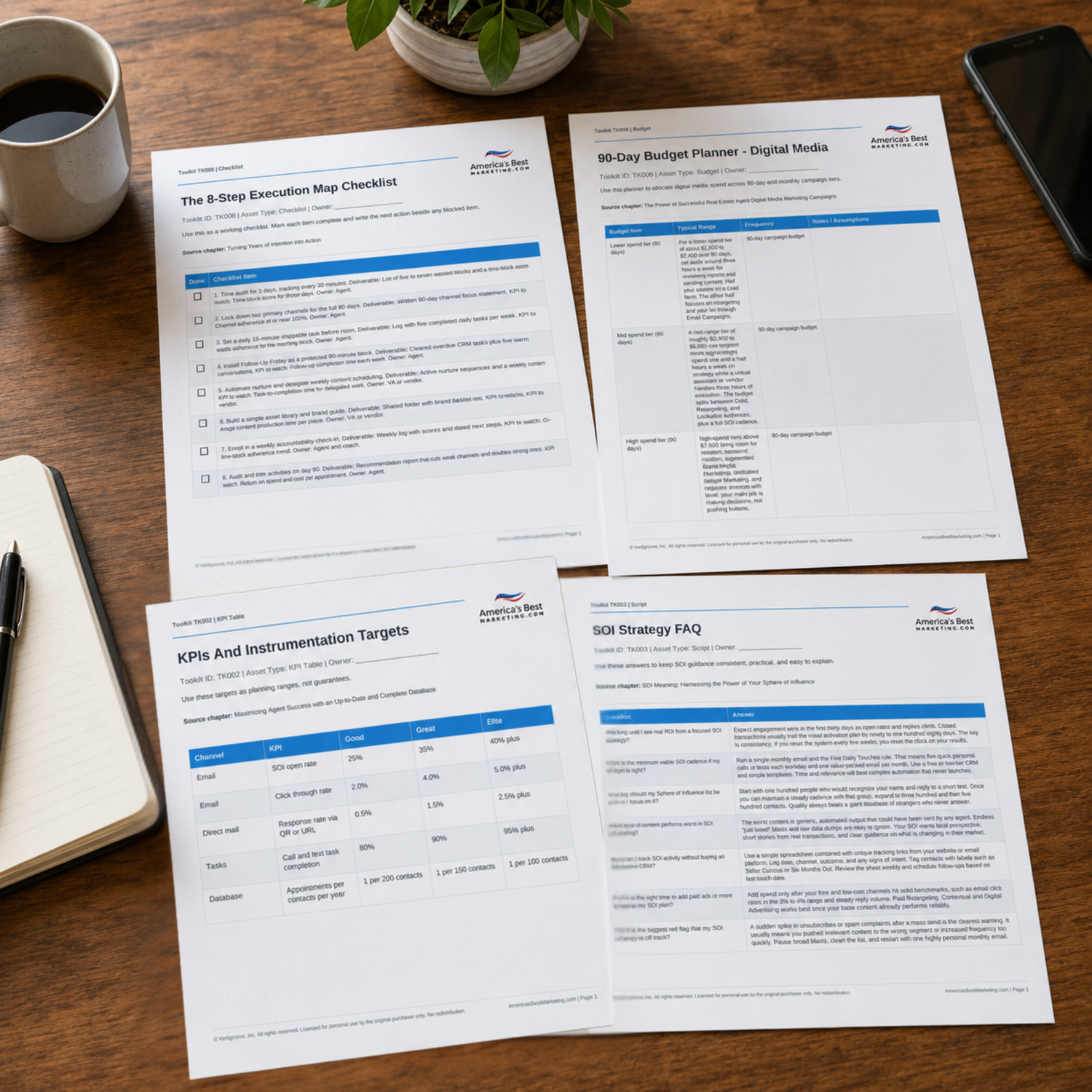
Download The Land Due Diligence And Lead Gen Toolkit
Use the companion Toolkit to plan your ninety-day land owner cadence, document access and utility checks, package feasibility notes, map budget tiers, and keep seller and builder follow-up tied to measurable next actions.
Download the Toolkit ZIPFrom Listing Chasing To Land Control
An agent in a high-growth corridor stopped chasing generic residential listings and focused on land for local builders. The campaign mailed owners of parcels five acres and larger, then brought each warm prospect a concise entitlement report explaining likely use and the fastest path to permits.
Each listing became a project brief with access points, boundary notes, buildable envelope language, and buyer-specific follow-up. Within six months, the agent closed $4.5 million in land volume and held an average commission rate one point higher than local residential norms.
Recommended reads
Recommended Reads for Real Estate Agents
These articles help agents connect follow-up discipline, database habits, client communication, and marketing execution into a repeatable system.

Monthly Direct Mail for Real Estate: The 12-Month Agent Playbook
Turn print into a consistent relationship channel instead of a one-off postcard gamble.
Read article
Out-of-State Buyers: A Real Estate Agent Playbook for Remote Showings, Trust, and Smooth Closings
Plan ad campaigns around repetition, landing pages, and second chances with warmer prospects.
Read article
How Contextual and Retargeting Digital Marketing Work for Real Estate Agents and Why They Matter More Than Ever
Make paid ads easier to evaluate by tying audience, creative, budget, and next step together.
Read article
Real Estate Direct Mail Tips That Actually Work: A Guide for Real Estate Agents
Turn print into a consistent relationship channel instead of a one-off postcard gamble.
Read articleLand Marketing Questions Agents Should Be Ready To Answer
How long to see ROI in land marketing?
Expect signal in 30 to 45 days if outreach runs consistently and every lead gets fast follow-up. Most land owners need multiple touches before they respond. Track response rate, booked calls, listing appointments, and buyer-list growth over a ninety-day window.
What is the biggest red flag in land due diligence?
Unclear legal access is the fastest deal killer. If ingress and egress are not documented, buyers pause and lenders often refuse the file. Solve access early, then confirm utilities, septic viability, and use constraints.
How is land valued differently than residential homes?
Residential value leans on condition, layout, and neighborhood demand. Land value leans on permitted use, buildable envelope, access, utilities, approval risk, and timeline. Buyers price the path from raw parcel to usable project.
What should I include in a feasibility summary for a land listing?
Include zoning, permitted uses, access notes, utility availability, septic path, setbacks, flood zones, wetlands flags, and the most likely highest and best use. Add a map image with boundaries and a plain-language constraint summary.
How do I find off-market land owners without buying leads?
Use county records and parcel maps to find long-term owners of vacant land. Filter by zoning, parcel size, road frontage, utility proximity, and out-of-area mailing address. Then run a three-touch direct mail cadence with a valuation and feasibility offer.
How do I qualify land buyers so they do not waste time?
Ask about intended use, timeline, utility requirements, approval tolerance, financing, and cash readiness. Match buyers to parcels by constraints, not acreage alone. A builder who needs sewer and road frontage should not see recreational acreage.
Should I market land differently for builders versus retail buyers?
Yes. Builders want feasibility, constraints, entitlement path, and permit timeline. Retail buyers often respond to lifestyle and usability, but they still need access and utilities answered. Write one project brief for builders and one plain-language buyer story for retail demand.
Next step
Build the System Behind the Advice
Continue from one useful article into the larger ABM ecosystem: the book series for strategic depth and the full marketing program for done-for-you execution.

View the Book Series
Explore the America’s Best Real Estate Agent Marketing System books for a deeper strategic framework around visibility, referrals, listings, lead generation, and growth.
View the Book Series
See Full Marketing Program
See how AmericasBestMarketing.com runs real estate blog writing, social media, listing marketing, email, direct mail, and retargeting as one managed system.
See Full Marketing Program