Video Testimonials: Shot List, Questions, and an Editing Workflow Real Estate Agents Can Repeat
Video Testimonials That Build Trust
Shot List, Questions, and an Editing Workflow Agents Can Repeat
A repeatable shoot-to-post system for turning client stories into proof assets across social media, email, websites, and retargeting.

Video testimonials should become a repeatable proof engine
Video testimonials work when an agent captures a specific client fear, shows the moment the process became clear, and distributes the story where future buyers and sellers already make decisions. The goal is not a polished commercial. The goal is one credible client story, edited into multiple useful assets, then placed across social media, email, website pages, and retargeting so trust compounds before the first appointment.
- Strong testimonials follow a simple arc: fear, process, outcome, and recommendation.
- Clean audio, eye-level framing, and clear captions matter more than expensive camera gear.
- Every testimonial should produce one main edit, several cutdowns, and one website asset.
- The value rises when testimonials are embedded near lead capture and shown again through email and retargeting.
Why This Pays Off
Most real estate marketing asks prospects to trust the agent before they have enough proof. A written review helps, but a client on video carries body language, emotion, context, and credibility in a way static copy rarely matches. When a seller hears another seller describe the same anxiety, the story lowers friction before a consultation ever happens.
The deeper play is to turn each closing into a reusable trust asset. A testimonial that only appears once in the feed is a temporary post. A testimonial that is published through Social Media Marketing, placed in Email Marketing for Real Estate Agents, embedded on IDX Real Estate Websites, and supported with Digital Retargeting becomes part of the agent’s conversion infrastructure.
That infrastructure matters because prospects rarely move in one clean step. They search, compare, hesitate, visit again, ask friends, watch a clip, open an email, then finally raise their hand. Video testimonials give that whole journey a stronger proof layer.
- You give future clients a believable preview of how it feels to work with you.
- You convert closed transactions into marketing assets without inventing a new campaign from scratch.
- You create warmer conversations because prospects arrive with proof already in their head.
The Repeatable Shot List And Question Set
The best testimonial workflow is intentionally small. Use a phone, a lav mic, a mini tripod, and one quiet room. Put the camera at eye level, place the client near soft window light, and record two full takes without interrupting the story. A modest setup used consistently beats an elaborate setup that never leaves the office.
Build the interview around a PSR story arc: Problem, Solution, Result. The problem gives the viewer a reason to care. The solution shows the process you managed. The result gives the viewer permission to believe the same kind of outcome is possible.
Set the room before you ask questions
Choose the quietest room, turn off fans and televisions, and record a quick audio test before the client starts talking.
Frame the client at eye level with simple background depth. Keep the agent out of the main story unless a brief handshake or setup clip adds context.
Confirm permission in writing and tell the client they can review the final cut before it is published.
Ask for specifics, not praise
What was your biggest concern before we started?
What happened that helped you feel more confident?
What did the agent do that made the process easier?
What surprised you most about the transaction?
Who would you recommend this agent to, and why?
Capture the evidence around the story
Film the exterior, front door, kitchen table, sign, keys, paperwork, and one natural interaction after the interview.
Use B-roll to cover edits, show the setting, and keep the client story from feeling static.
Record more short clips than you think you need. Six clean proof clips can make one simple interview feel finished.
The money line is usually not “the agent was great.” It is the sentence that starts with “I was worried that.” Build the edit around the fear and the turning point. That is where the next client recognizes himself or herself in the story.
Turn One Client Story Into A 30 Day Distribution Plan
The editing loop should be simple enough to run every month. Pick the strongest audio take, cut the story into three beats, add captions for silent viewing, place one quote on screen, and close with a calm next step. Export one vertical version for feeds and one horizontal version for the website.
Start the first five seconds with the problem, not the compliment. A viewer who hears “we were worried the inspection would kill the deal” has a reason to keep watching. A viewer who hears “we had a great experience” keeps scrolling because the story has not created tension.
Publish the full story
ActionPost the 45 to 75 second version with a caption that names the client challenge, the turning point, and the outcome. Use one clear call to action.
Post the fear-to-fix cut
ActionRun a 15 to 25 second cut that begins with the original concern and shows what changed. This is the strongest warm-audience clip.
Email the proof
ActionSend the story to past leads, open buyer conversations, active sellers, and past clients who could refer. Keep the email short and specific.
Embed and retarget
ActionAdd the best version to a website page, then retarget recent visitors with the short cut so the story follows up without another manual touch.
For sellers, place the strongest testimonial near listing presentation content or current listing proof. For buyers, place it near consultation pages, search pages, or relocation content. For sphere-of-influence follow-up, use the clip as a referral prompt that feels useful instead of needy.
Pair the testimonial cadence with Listing Marketing, Direct Mail, and retargeting so the same proof story shows up across more than one channel. Multi-channel repetition is what turns a good clip into a market memory.
Creative That Sounds Real Instead Of Rehearsed
Client language should stay plain. Overproduced testimonials can feel scripted even when they are honest. Keep the client’s original phrasing, clean up only the pauses that hurt clarity, and let the viewer feel the human texture of the story.
Use captions and headlines that name a specific obstacle. Timing, repairs, financing, competition, relocation, pricing, and inspection uncertainty all make stronger hooks than general satisfaction. The best editorial standard is simple: the hook should tell the prospect why the story matters before the first scroll decision.
Caption angles that create context
From anxious to clear: the moment the deal turned.
How the inspection issue almost changed everything.
What surprised them most about the process.
Why they would hire the same agent again.
Match the ask to viewer temperature
Soft: Watch more client stories.
Mid: See the current market plan.
Direct: Book a quick consultation.
Referral: Send this to someone planning a move.
Choose The Tier You Can Repeat For 90 Days
Most agents overbuy gear and underbuild workflow. The right production level is the one that can survive a busy month, a late closing, and a client who only gives you 15 minutes. Pick a tier, run it for 90 days, then improve the system from actual output.
| Tier | Equipment | Distribution | Best outcome |
|---|---|---|---|
| DIY Mobile | Phone, lav mic, mini tripod, window light | One main post, two cutdowns, one website embed | High authenticity with the fastest speed to publish |
| Pro-sumer | Phone or mirrorless camera, lav mic, pocket light, basic editing app | Weekly creative rotation with email and retargeting support | Better consistency while keeping production manageable |
| Full Team | Two-camera setup, separate audio, dedicated editor | Website proof library, nurture sequence, paid distribution | Highest brand control for teams with steady deal flow |
Do not measure success only by views. Track whether prospects mention the story, whether email replies improve, whether consultation requests feel warmer, and whether website visitors move from proof pages to contact pages. Those are stronger signals than vanity engagement.
The Closing Day Checklist
A checklist protects the workflow when the day gets busy. Keep the system field-ready and remove every avoidable source of friction before the client arrives.
- Confirm written permission and store the release in the client folder.
- Choose a quiet room and turn off fans, televisions, and loud HVAC.
- Record a 10-second sound test before the real interview begins.
- Frame the client at eye level and leave the background clean.
- Ask the same five questions every time so editing becomes predictable.
- Capture six B-roll clips: exterior, entry, sign, keys, hands, and room context.
- Export one vertical cut for social and one horizontal cut for your website.
- Schedule one email touch and one retargeting audience using the strongest clip.
When the workflow becomes routine, testimonials stop feeling like special projects. They become operating assets. One closing creates a client story. One client story creates multiple proof moments. Multiple proof moments create a higher-trust marketing system.
How Testimonial Content Becomes A Marketing System
A video testimonial library is not just a content bank. It is a trust layer for the entire business. Place the strongest stories near lead capture, send them to quiet prospects, show them to recent website visitors, and reference them in listing conversations when the client needs evidence instead of claims.
AmericasBestMarketing.com can help turn this kind of proof into a managed marketing rhythm across social posting, email campaigns, website placement, direct mail, listing marketing, and retargeting. The agent still owns the relationship. The marketing system makes the proof visible often enough to matter.
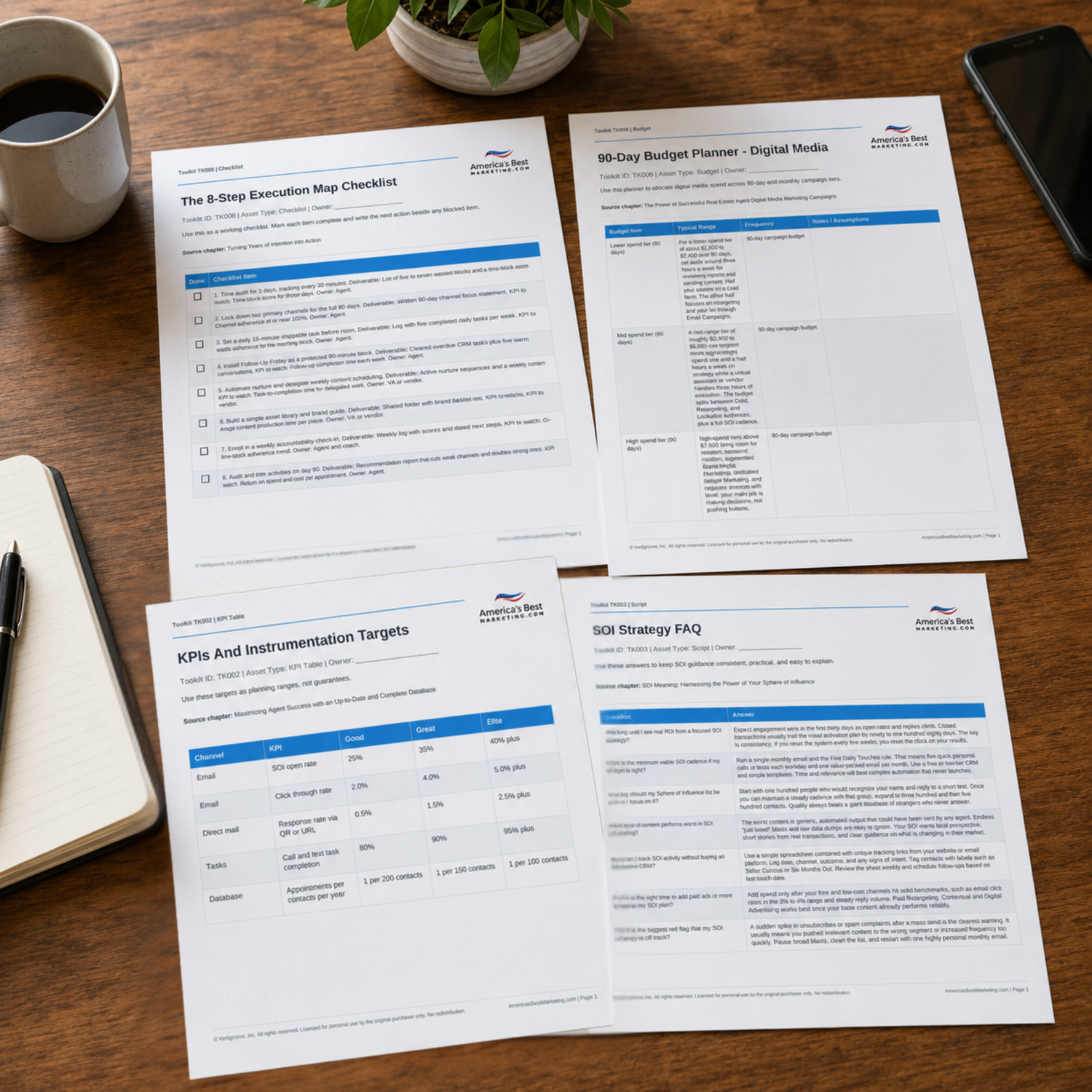
Download The Video Testimonial Production Toolkit
Use the companion Toolkit to run the testimonial checklist, production tier choices, creative brief prompts, budget options, and FAQ script assets from one repeatable field workflow.
Download the Toolkit ZIPRecommended reads
Recommended Reads for Real Estate Agents
These articles help agents connect content planning, client education, local visibility, and follow-up into a more consistent marketing rhythm.

Building Your Personal Brand with Video Content
Use video to explain value, show proof, and stay visible without chasing every trend.
Read article
Home Inspection Waivers: Real Estate Agent Scripts, Risk Management, and Deal-Saving Options
Create more leverage from home inspection waivers with a clear path from attention to follow-up.
Read article
Live Streaming Q&As for Real Estate Agents: Topics, Scripts, and Promotion Plan
Create video content with clearer scripts, simpler formats, and a cadence agents can actually maintain.
Read article
Beginner’s Guide to High Quality Real Estate Videos
Build a cleaner system for high quality real estate videos, with better timing, clearer messaging, and a next step people can act on.
Read articleVideo Testimonial Questions Agents Ask Most
How long to see ROI from video testimonials?
Plan on 30 to 90 days to feel the lift, because the value comes from repetition and placement. Track consult requests from site visitors and response rate to follow-up emails. When testimonials sit on key pages and run through retargeting, the first improvement is usually warmer conversations, followed by higher appointment confidence.
What if my client is camera-shy?
Lower the pressure and shorten the ask. Offer a 20-second version where the client answers one question and the rest of the story runs as captions over B-roll. Let the client approve the final cut before you post. Camera-shy testimonials often feel more credible because they sound unpolished and real.
People Also Ask: Where is the best place to post video reviews?
Post where prospects already spend attention, then place the same asset where decisions happen. Use short cuts on social channels, embed the full version on your website, and include it in email nurture. The best placement is the one connected to your funnel, not the one with the flashiest feed.
How long should a video testimonial be?
Aim for 45 to 75 seconds for the main story. Keep the first 5 seconds focused on the problem so the viewer stays. Create 15 to 25 second cutdowns that each tell one beat. Longer interviews can work, but only after the viewer already trusts you.
What gear matters most for credibility?
Audio wins. A cheap lav mic beats a fancy camera with bad sound every time. Stabilize the shot with a tripod and keep the light soft and even from a window or small light. If you do those three things, your phone is enough for a high-trust look.
Should I put my face in the testimonial or keep it client-only?
Keep the story client-led and use your presence as proof, not the main event. A quick handshake clip or a two-second introduction can help, but do not talk over the client. The viewer wants to hear a peer describe the experience. Your job is to keep the story clear.
How do I keep testimonials from feeling repetitive?
Change the angle, not the format. Keep the same five questions, but select a different hook for each client: timing, competition, repairs, financing, or uncertainty. Rotate the first shot and on-screen quote style. A consistent system creates trust while varied hooks keep attention.
Next step
Keep Client Proof Moving After The Closing
Continue from one useful article into the larger ABM ecosystem: the book series for strategic depth and the full marketing program for done-for-you execution.

View the Book Series
Explore the America’s Best Real Estate Agent Marketing System books for a deeper strategic framework around visibility, referrals, listings, lead generation, and growth.
View the Book Series
See Full Marketing Program
See how AmericasBestMarketing.com runs social media, listing marketing, email, direct mail, websites, and retargeting as one managed system.
See Full Marketing Program