Building Trust with Clients from the First Meeting: Scripts + Touchpoint Systems
Building Trust From the First Meeting
Scripts + Touchpoint Systems for Real Estate Agents
A first-meeting trust system for agents who want clearer onboarding, calmer clients, stronger referrals, and a repeatable follow-up cadence.
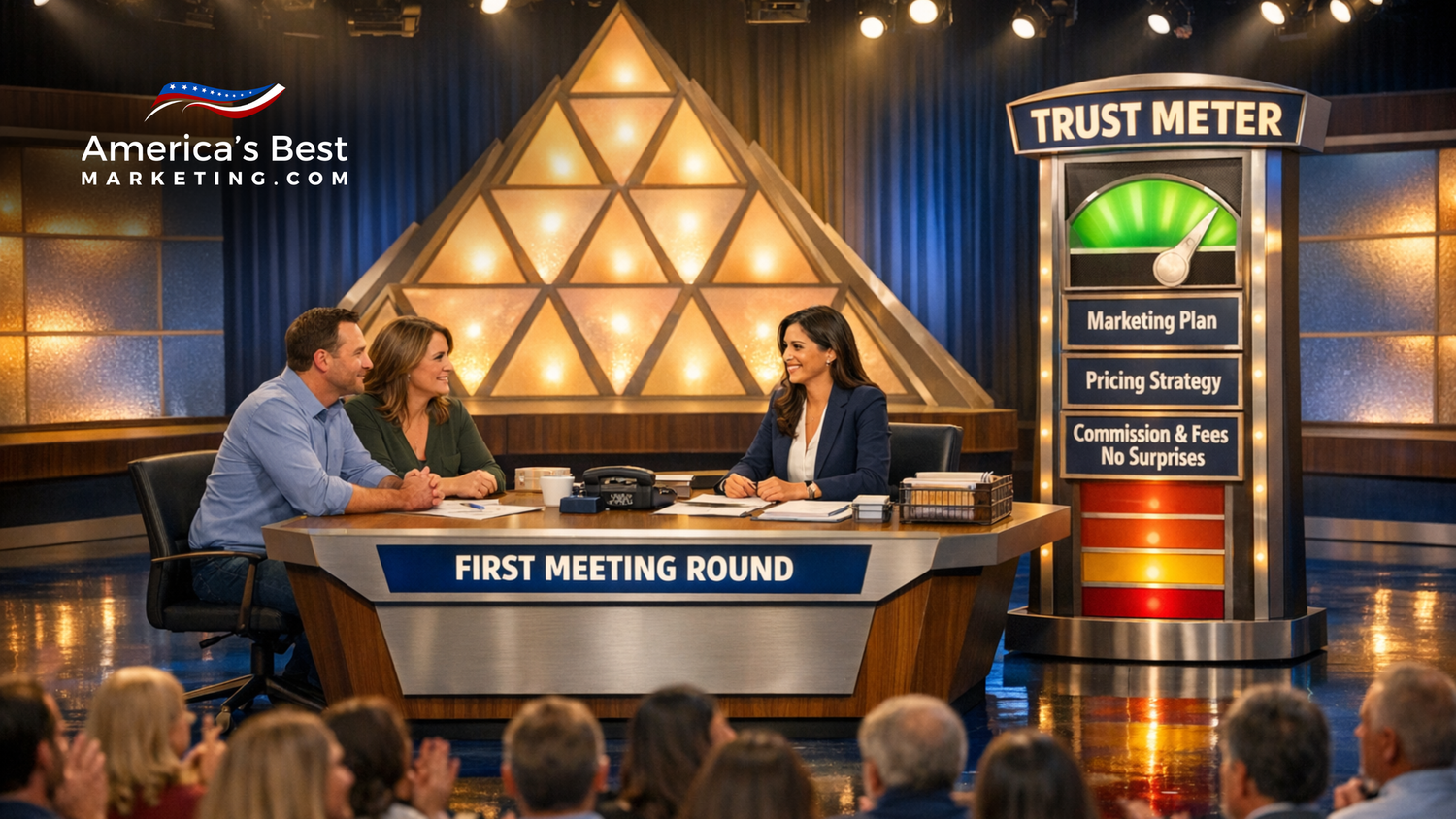
Building trust with clients starts with a visible system
Most commission objections are trust objections wearing a budget costume. The fastest way to reduce that friction is to replace charm with a visible process: a written agenda, a discovery script, a milestone tracker, a communication cadence, and one promised deliverable completed within 60 minutes of the first meeting.
- Clients calm down when they can see what happens next, who owns each step, and when they will hear from you again.
- LPMARE discovery keeps the first consultation structured around location, price, motivation, past agent experience, remote communication, and expectations.
- The first 14 days should include 8 to 12 trust-building touchpoints, not random check-ins that depend on memory.
- The strongest trust signal is a small promise kept fast, then repeated through email, text, call, and tracker updates.
Why Trust Breaks Early
Trust has two layers that behave differently under stress. Cognitive trust is competence, proof that you can run the deal. Affective trust is emotional safety, proof that you will not disappear when the client is anxious. Both are tested almost immediately after a first consultation.
The onboarding gap is what happens between the handshake and the first real deliverable. If the client has no next step, no timeline, and no communication standard, their brain fills the gap with worst-case stories. That is when friendly first meetings turn into ghosting, second opinions, and commission pressure.
Agents who connect first-meeting expectations with consistent relationship marketing have an advantage. A client who sees your follow-up system early is more likely to believe your long-term marketing systems later, including SOI Marketing: The Power of Direct Mail Campaigns and consistent database communication.
- Winging the first meeting without a written agenda makes the process feel improvised.
- Over-promising on price or timeline creates a trust debt that comes due later.
- Ignoring the client background check on your online presence weakens your authority before the appointment starts.
- Failing to set communication expectations turns every unanswered text into a trust event.
Build the High-Trust Onboarding Loop
Predictability is a client comfort feature. It shows up as punctuality, consistent updates, and a short list of promises you keep every time. The goal is not to be liked. The goal is to be trusted under pressure.
Start with a pre-meeting packet that includes your process overview, a sample timeline, and the basic tools clients will use. When clients also see resources such as IDX Real Estate Websites, saved-search expectations, and communication standards before the meeting, the consultation becomes more strategic.
Then make the system visible. A client should be able to answer three questions without guessing: what happens next, when will I hear from you, and where do we track progress together.
Establish competence before the appointment
Send a short packet before the meeting so clients understand the agenda, timeline, and basic decision points before you walk in.
Include a one-page process overview, a sample milestone tracker, and the questions you will ask during discovery.
Keep the conversation structured
Location is the non-negotiable area. Price is the comfort range and the limit. Motivation is why now and what happens if nothing changes.
Agent is what they have tried before. Remote is how they want updates. Expectation is what success looks like and what they fear.
Make progress visible
Create a shared milestone tracker the same day. It must show stage, next action, owner, and due date.
Add a standing update cadence so the client knows when silence is normal and when a response is due.
Most agents think trust is built by big gestures, but it is built by the small loop of integrity. Make one specific promise in the meeting and complete it within 60 minutes, so the client experiences reliability, not just hears it.
Scripts That Make Trust Operational
Scripts matter because the first meeting often gets emotionally loaded. Sellers want confidence. Buyers want certainty. Remote clients want proof that they will not be left guessing. Use these scripts as guardrails, then adapt the language to your market and personality.
The hard truth script for an over-priced listing
Agent dialogue
Set contextI am on your side, and my job is to protect your outcome.
Reality checkIf we price above the market, we buy time with your equity.
ChoiceWe can test high for a short window, or we can price to win in week one.
CommitmentIf we test, we agree on the review date and the adjustment trigger right now.
Bring three active comps, three sold comps, days on market, and one written adjustment trigger tied to showing volume and feedback.
The next steps script to end the meeting
Agent dialogue
ConfirmHere is what I heard, and here is what matters most to you.
TimelineToday we do A, by tomorrow we do B, and by day three we do C.
CadenceYou will hear from me on these days, even if nothing new happens.
CloseIf you text me after hours, I will respond by this time the next morning.
End with a deadline and a deliverable, not with friendly small talk. Send the plan recap, milestone tracker, and tailored resource within 60 minutes.
The welcome video script for remote clients
Agent dialogue
OpeningI am glad we met. Here is how I run the process so you never wonder what is happening.
PointerThis tracker is where we keep milestones, due dates, and decisions.
BoundaryI do not give legal or tax advice, but I will connect you with pros fast.
CloseReply with your top three priorities so I can tailor the plan.
Keep the video between 45 and 60 seconds. Show the tracker on screen and end with one clear ask.
Budgets, Creative Briefs, And First-14-Day Cadence
A trust system does not require complicated technology. It requires a repeatable rhythm. Use Email Marketing for Real Estate Agents, text, call, direct mail, and retargeting only where each channel has a defined job.
Spend $250 to $450 per month. Run a 14-day touchpoint loop, then weekly check-ins. Use 60% email and 40% direct mail to past clients. Cap active-client emails at two per week and past-client mail at one piece per month. The headline is Your Plan for the Next 14 Days and the call to action is Reply with your top priority and I will lock the next step today.
Spend $650 to $1,100 per month. Run the 14-day loop plus monthly past-client reinforcement. Use 45% email, 35% direct mail, and 20% digital retargeting. Cap ads at 6 to 10 impressions per week per person and keep email at one to two messages per week.
Creative should reinforce the same operational promise in every channel. Use one-page timeline graphics, three-bullet communication standards, short story emails, and client checklists that show how your process keeps transactions calm.
If you are also using Social Media Management for Real Estate Agents, make the proof visible before clients ask for it. Show how your onboarding system, listing preparation, and communication habits translate into the public-facing trust cues clients already check online.
KPI Table For First-Meeting Trust
Track the numbers that show whether clients are receiving reassurance in writing. The goal is not to turn the relationship into a dashboard. The goal is to notice when silence, slow replies, or weak follow-up starts to erode trust.
| Metric | Definition | Benchmark | Why it matters |
|---|---|---|---|
| Response Time | First reply speed. | 15 to 60 minutes during business hours; next business morning after hours. | Fast replies lower anxiety and stop second-guessing after the meeting. |
| Touchpoints | Contacts in 14 days. | 8 to 12 | More small updates build predictability without resorting to spam. |
| Open Rate | Email engagement. | 35% to 55% | If opens are low, the client is not receiving reassurance in writing. |
Trust-Building Touchpoint Calendar For The First 14 Days
This cadence keeps the client oriented. Each touchpoint has a job, a channel, and a specific emotional outcome, so you stay consistent even when the deal gets noisy.
| Day | Action item | Channel | Desired response |
|---|---|---|---|
| Day 0 | Send plan recap, dates, owners, and the first promised resource immediately after the meeting. | I feel guided. | |
| Day 1 | Confirm milestone tracker access and explain how decisions are documented. | Text | I know where to look. |
| Day 2 | Share the timeline for inspections, disclosures, and contingencies based on the deal type. | I know what is next. | |
| Day 3 | Ask one focused question that removes friction, such as scheduling windows or must-haves. | Call | I feel prioritized. |
| Day 4 | Send a short market snapshot with one decision tip, not a data dump. | I feel informed. | |
| Day 5 | Confirm weekend plan, showing schedule, or prep checklist and who is doing what. | Text | I feel organized. |
| Day 6 | Share a one-page checklist for the next stage and the typical mistakes to avoid. | I feel protected. | |
| Day 7 | Review progress against milestones and update the tracker with any changes. | Call | I feel in control. |
| Day 8 | Send a recap of the call and restate the next due date in one sentence. | I feel calm. | |
| Day 9 | Check for unanswered questions and restate communication hours. | Text | I know the rules. |
| Day 10 | Send a simple decision framework for tradeoffs such as location versus budget. | I feel capable. | |
| Day 11 | Confirm next appointment details and what the client should prepare. | Text | I feel ready. |
| Day 12 | Share one story from a past transaction that highlights predictability under stress. | I trust the system. | |
| Day 13 | Ask for a quick yes or no on the plan so far and adjust if needed. | Call | I feel heard. |
| Day 14 | Send the two-week recap and set the weekly cadence going forward. | I know what to expect. |
The 10-Point First Meeting Success Audit
Use this audit after every first consultation until the system becomes automatic. It gives you a practical way to grade the meeting and identify which trust cue was missing.
- Send a pre-meeting packet at least two hours before the meeting.
- Open with a written agenda and ask for one client goal in their words.
- Use LPMARE to keep discovery structured and complete.
- State your communication cadence and your response standards.
- Show a milestone tracker and explain who owns each action.
- Say your Fair Housing and Equal Opportunity standard out loud.
- Set the boundary that you do not give legal or tax advice.
- Make one specific promise you can deliver within 60 minutes.
- End with next steps that include dates, owners, and a review point.
- Send the recap the same day and record it in your CRM.
Mini Case: David Stops The Ghosting
Agent David struggled with leads who went quiet after the first consultation. His meetings were friendly, but nothing felt anchored, so clients drifted and kept shopping for someone who felt more certain.
After he added the welcome video, milestone tracker, and onboarding sequence, more first-meeting leads moved into active representation. Past clients also had a clearer story to repeat when referring him because his process was visible, not implied.
He then used client events for real estate agents so trust stayed alive long after closing.
How This Becomes Marketing
A trust system is more than a transaction aid. It is a positioning asset. It gives your blog, email, social, direct mail, and retargeting a more specific promise than I give great service. It tells clients exactly how your service feels when the deal gets stressful.
Use the first-meeting system as recurring content. Publish a post about what happens after the first consultation. Send a past-client email about how you keep clients updated. Mail a one-page checklist that helps homeowners prepare for their next move. Retarget visitors who read your client-process content and invite them to request a consultation.
If you want your first meeting to feel consistent and referral-ready, build the trust system once, then run it on every lead. AmericasBestMarketing.com can help you standardize your touchpoint cadence, tighten your messaging, and turn your follow-up into a predictable operating system.
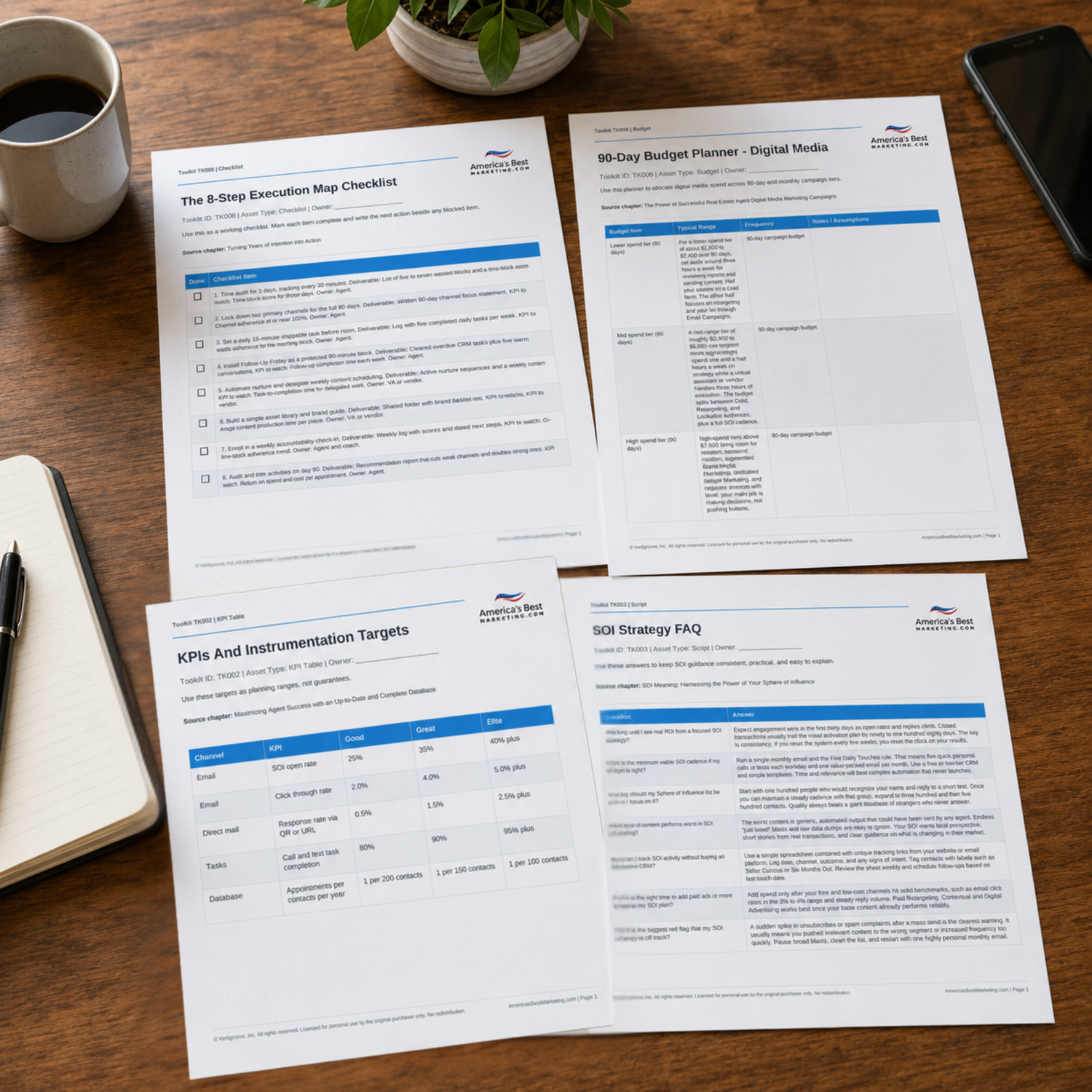
Download The First-Meeting Trust Toolkit
Use the companion Toolkit to tighten your discovery questions, first-meeting scripts, 14-day touchpoint calendar, KPI tracker, FAQ prompts, and client trust audit.
Download the Toolkit ZIPRecommended reads
Recommended Reads for Real Estate Agents
These articles help agents connect follow-up discipline, database habits, client communication, and marketing execution into a repeatable system.

Honesty and Transparency: Trust-Building Scripts Real Estate Agents Can Use From Day One
Build a cleaner system for honesty and transparency, with better timing, clearer messaging, and a next step people can act on.
Read article
Pay Off a Mortgage Early: Real Estate Agent-Friendly Explainer + Content Angle for Homeowners
Make “pay off a mortgage early” more useful as an authority-content topic by tying the homeowner question to a clear audience, message, and next step.
Read article
Building a Personal Brand as a Real Estate Agent: From Your Bio to Your YouTube Channel
Make the agent’s brand easier to recognize through clearer positioning, touchpoints, and proof.
Read article
How to Handle Difficult Clients and De-escalate Situations
Use handle difficult clients and de-escalate situations to create a stronger bridge between client education and real conversations.
Read articleFirst-Meeting Trust Questions Agents Should Be Ready To Answer
How do you build trust with a client you have never met?
Start with predictability. Send a pre-meeting packet, confirm a communication cadence, and share a milestone tracker on day zero. Then complete one specific promise within 60 minutes so reliability becomes a lived experience. Keep language neutral, follow Fair Housing standards, and avoid steering. The client does not need hype. They need clarity and follow-through.
What are the three components of trust in real estate?
Competence, reliability, and transparency. Competence is your ability to run the process. Reliability is doing what you said you would do, when you said you would do it. Transparency is making progress visible so the client is not guessing. Put all three into writing early: the plan, the cadence, and the tracker. That is what makes trust durable.
What is the minimum viable cadence for follow-up if I am solo?
Aim for eight touchpoints in the first 14 days, then one weekly update. Use a simple mix: day zero recap email, day one text confirmation, one call by day three, and short emails that explain the next milestone. The key is consistency, not volume. If you cannot do eight, do six, but do them on schedule every time.
What is the major red flag to avoid in the first meeting?
Over-promising to win the deal. If you promise an unrealistic price, timeline, or availability, you cash a trust check you cannot clear later. A close second is vague communication, where the client has no idea when they will hear from you. Use clear standards instead. Put review dates on the calendar and document decisions in writing.
How do I handle a client who pushes for advice outside my lane?
Set a boundary and provide a path. Say you do not give legal or tax advice, then offer to connect them with a qualified professional and coordinate the handoff. Summarize the question in writing so everyone stays aligned. Clients respect this because it signals professionalism. It also protects the relationship, since wrong advice becomes a trust event that is hard to repair.
How do I talk about Fair Housing without making it awkward?
Make it a standard, not a speech. Say you serve every client fairly, you follow Equal Opportunity standards, and you keep the conversation focused on property facts and client-stated criteria. If a client asks for something that sounds like steering, redirect to objective filters like commute time, budget, and property features. Calm delivery signals confidence and keeps the meeting professional.
What should I send right after the meeting to prevent ghosting?
Send three items within 60 minutes: a one-page plan recap with dates and owners, the milestone tracker link, and one tailored resource tied to their motivation. Tailored beats generic every time. If they are relocating, send a neighborhood shortlist. If they are selling, send a prep checklist. This is the small loop of integrity that turns a good meeting into a commitment.
Next step
Build the System Behind the Advice
Continue from one useful article into the larger ABM ecosystem: the book series for strategic depth and the full marketing program for done-for-you execution.

View the Book Series
Explore the America’s Best Real Estate Agent Marketing System books for a deeper strategic framework around visibility, referrals, listings, lead generation, and growth.
View the Book Series
See Full Marketing Program
See how AmericasBestMarketing.com runs real estate blog writing, social media, listing marketing, email, direct mail, and retargeting as one managed system.
See Full Marketing Program