Breaking Down Closing Costs for Buyers and Sellers
The Agent as Financial Navigator
A closing-cost briefing for real estate agents who want clients to understand cash to close, seller net, credits, and prorations before disclosure review.

Closing costs explained for real estate agents
A strong closing-cost conversation gives clients one clear forecast before they sign, one updated estimate when terms change, and one calm walk-through before closing. The agent becomes a financial navigator by showing how every dollar moves and by keeping buyer or seller expectations aligned with the final disclosure.
- Closing costs should be introduced before offer signing, not explained for the first time at the closing disclosure review.
- Seller net sheets and buyer cash-to-close estimates turn financial uncertainty into a managed advisory process.
- The strongest agents compare estimates to final disclosures and improve their templates when the variance is too large.
- Closing-cost education can become a repeatable marketing asset across blog, email, social, direct mail, and retargeting.
Why This Pays Off
Closing costs can either reinforce client confidence or detonate it at the worst possible moment. Buyers and sellers often agree to price and terms, yet still feel uneasy because they cannot see how taxes, fees, credits, prepaids, and prorations add up to a final number. That tension waits quietly in the background until the closing disclosure arrives and the mood shifts from celebration to doubt.
When agents explain buyer cash to close, seller net proceeds, lender fees, title charges, credits, and prorations early, the transaction feels managed instead of mysterious. Paired with a clean database strategy such as Maximizing Agent Success with an Up-to-Date and Complete Database, clear money conversations turn into repeat business, stronger referrals, and better listing presentation follow-through.
When you step in as a financial navigator, you move beyond the role of door opener. You become the person who can translate line items into a story that makes sense. That reputation attracts analytical clients, higher price points, and referrals from people who care deeply about how every dollar moves.
- You reduce last-minute renegotiations by removing surprise from the money conversation.
- You give highly analytical clients a reason to trust you beyond charm and market knowledge.
- You build reusable tools such as net sheet templates and closing cost scripts that work across deals.
How To Turn Closing Costs Into A Simple System
The core tool is a net sheet. For sellers, it shows expected payoff, taxes, fees, and true proceeds. For buyers, it shows cash to close after down payment, lender charges, prepaids, and credits. The goal is not perfection on day one. The goal is a repeatable template that becomes more accurate with every deal.
Start by mapping your local fee landscape. List transfer taxes, recording costs, common title and escrow ranges, plus typical lender charges from your main partners. Then design one seller net sheet and one buyer estimate that use clear labels instead of internal bank language. When you pair these with proof content such as Testimonial Content That Books Appointments for Real Estate Agents, you position yourself as the agent who shows the math, not just the marketing.
Group charges by client logic
Group lender charges together and label them clearly. Include origination and underwriting, appraisal, discount points if used, and credit report fees.
Group title and escrow fees together, including lender title policy, settlement charges, and recording fees to the county.
Group prepaids and prorations together. Show homeowner insurance, escrow reserves for taxes and insurance, prepaid interest through month end, and any association reimbursements.
Protect the number that matters
Lead with the estimated sale price and immediately show the expected payoff on any loans plus daily interest through closing.
Show commission, transfer taxes, and title charges as separate rows so clients can see what is negotiable and what is statutory.
Add lines for credits to the buyer and for dues or taxes that will be prorated. End with the projected wire amount, not the gross sale price.
Compare estimate to disclosure
Compare every lender fee on the closing disclosure to the original loan estimate and flag anything new for clarification.
Confirm earnest money, association credits, and negotiated cost credits are applied to the correct side of the sheet.
Check the closing date so prepaid interest and tax prorations match the calendar you discussed earlier.
Most agents treat closing costs as a percentage sound bite instead of a forecast that can be audited. Treat every estimate like a draft budget, then study the variance to the final closing disclosure. The rule is simple. If the gap is bigger than one percent, update the template before the next client sees it.
Three Closing Cost Scripts You Can Use Today
Scripts matter because financial conversations become harder when the client is already nervous. Give yourself a repeatable opening, a clear explanation, and a calm next step so the conversation feels guided instead of improvised.
The buyer cost primer before showings
Agent dialogue
Hook lineBefore we look at houses, I want you to see the real number that matters on closing day.
Middle lineThis estimate shows cash to close with taxes, insurance, and lender fees in one place so nothing sneaks up on you later.
CTA lineTell me the range that feels comfortable and we will only tour homes that keep you near that number.
Use this script at the first buyer consult before any home tours. Email the estimate, walk through it on a quick call, and save the comfort range in your notes.
The seller net sheet listing presentation script
Agent dialogue
Hook linePrice is interesting, yet the size of your check at closing is what really matters.
Build lineThis net sheet shows payoff, taxes, commission, and the credits buyers often ask for in this price range.
CTA lineWhen offers come in, we plug each one into this sheet so you see true net in real time.
When you later share success stories using client testimonials and social proof, highlight how you protected net proceeds, not just the sale price.
The closing disclosure walk-through before signing
Agent dialogue
Opening lineI compared this closing disclosure to our estimate so we can focus on what changed.
Explain lineTaxes, insurance, and prepaid interest moved a bit because the closing date changed and the calendar shifted.
Reassure lineYour final number is still inside the range we planned, so you can sign with confidence.
CTA lineIf anything feels unclear, pause me and we will tackle that line together.
Schedule a short screen share three days before closing. Start with a quick net sheet comparison so it feels familiar.
Execution Plans You Can Repeat
You do not need enterprise software to be the financial navigator on every deal. You need one simple estimate system, one light content plan that explains your process, and a few follow-ups that keep the message in front of your sphere.
Spend zero to fifty dollars each month on a spreadsheet tool and a branded net sheet PDF. Goal is to give every active buyer and seller one clear estimate before they sign an offer. Audience split is current pipeline only. Cadence is one updated estimate per major change in price or terms. Frequency cap is two money-focused messages per client inbox each week. Headline is Know your closing numbers before you say yes and the call to action is Reply for your custom net sheet today.
Spend one hundred fifty to three hundred dollars each month on a branded calculator page tied to your IDX Real Estate Websites plus a designer who polishes your guides. Goal is to capture leads who request instant net sheets, then move them into nurture tracks. Audience split is sixty percent past clients and forty percent warm leads in your farm. Cadence is one educational email per month plus a tailored estimate for every serious buyer or seller.
Distribute your education through channels you already control. Send a quarterly cost of selling guide to your farm and pair it with Direct Mail Marketing pieces that invite owners to request a draft net sheet. For buyers, build a short automation that explains prepaids and closing costs using the same plain language you use live. Run that automation through Email Marketing for Real Estate Agents so every new lead gets the same money briefing.
Retarget people who visit your closing cost content but do not reach out. Use simple creative that points back to your calculator or guide and pull strategy ideas from retargeting ads for real estate agents. The point is not fancy design. The point is clear language that signals you protect clients from surprise.
KPI Table For Closing Cost Education
Track the numbers that show whether your financial guidance is becoming a business development asset. A net sheet should not live as a private transaction document only. It should become a repeatable trust system that generates replies, appointments, and referrals.
| Content Tier | Monthly Asset Target | Lead Or Reply Goal | Benchmark Notes |
|---|---|---|---|
| Starter plan | One buyer cost post and one seller net sheet post | One to three direct replies | Treat any request for a net sheet, closing cost estimate, or buyer cash to close explanation as a qualified response. |
| Mid-range plan | Two emails, two short videos, and one direct mail piece | Three to six conversations | Track replies by source so you know whether the strongest pull comes from email, social, direct mail, or retargeting. |
| High commitment plan | Monthly guide, calculator CTA, and retargeting audience | Six or more planning conversations | Use cost per conversation and cost per appointment as your main gauges. Shift budget toward the formats that produce booked time. |
Compliance And Ethics That Keep You Trusted
Your goal is clarity, not legal advice. You can explain that a line item covers a title search or an association transfer fee. You cannot interpret deed restrictions, complex tax questions, or legal risk in creative contract structures. When things turn legal, bring in a qualified real estate attorney and frame it as disciplined risk management.
Keep your process consistent across every client. Offer the same level of financial breakdown to every buyer and every seller, then document the process. If you are using lender estimates, title estimates, or seller net sheets in your marketing, keep the disclaimers plain. Say that final costs vary by lender, title company, contract terms, county, association, loan product, closing date, and state law.
- Do not promise final costs before final lender and title numbers are available.
- Do not present tax, legal, or lending advice as if it were brokerage advice.
- Do not use one market’s title customs as if they apply everywhere.
- Do document the estimate date, assumptions, and source of each major fee.
Case Study: The Net Sheet That Won The Listing
Elena, an agent in a competitive suburb, faced a discount broker who advertised a one percent listing fee. Instead of debating value, Elena built two net sheets. One modeled the discount approach with lower pricing and heavier credits. The other modeled her strategy with stronger pricing and firmer negotiations on closing cost credits.
Her net sheets revealed a twelve thousand dollar swing in the seller’s favor once local transfer tax brackets and typical buyer credit requests were included. Elena won because she showed the math in plain language and backed her pitch with a tool the seller could keep.
She then turned that process into a repeatable content angle. Her next email did not say she was a great negotiator. It showed how sellers can lose money by focusing only on commission instead of true net. That one message created two listing appointments because it made the financial value of her process visible.
Ninety Day Closing Cost Sprint
Use this sprint to turn closing cost education into an operating asset instead of a one-time conversation. The goal is to make your estimate process visible enough that future clients associate you with calm financial guidance before they ever speak with you.
- Month one: Build buyer and seller net sheet templates using your county tax rates, common fee ranges, and realistic insurance estimates.
- Month one: Ask two trusted lenders and one title partner to review your categories for clarity and local accuracy.
- Month two: Publish one buyer-facing post, one seller-facing post, and one short video that explains why gross price and net proceeds are not the same thing.
- Month two: Add a closing cost CTA to your buyer consultation follow-up and listing presentation follow-up.
- Month three: Send a short email to your database offering a no-pressure estimate for buyers, sellers, or owners who are thinking ahead.
- Month three: Review every closed file and compare your estimate to the final disclosure so you can tighten the template for the next client.
Closing costs should never feel like a last-minute twist. When clients see clear numbers early, they feel guided instead of sold. When your estimates line up with the final disclosure, you earn the right to future referrals as the agent who treats money with respect and precision.
How This Becomes Marketing
A closing cost system is more than a transaction aid. It is a positioning asset. It gives you a credible reason to talk about money without sounding salesy. It also creates practical content for your website, email list, direct mail program, social channels, and listing presentation.
Use your net sheet process as a recurring theme inside Real Estate Blog Writing Services, Social Media Marketing, Listing Marketing, Email Campaigns, and Direct Mail. Each channel should tell the same story. You help clients understand the financial path before they reach the table.
If you want help turning this financial clarity into marketing assets that win new clients, AmericasBestMarketing.com can help turn systems like your net sheets into direct response campaigns, educational email marketing, and direct mail that spotlight you as the trusted financial navigator in your market.
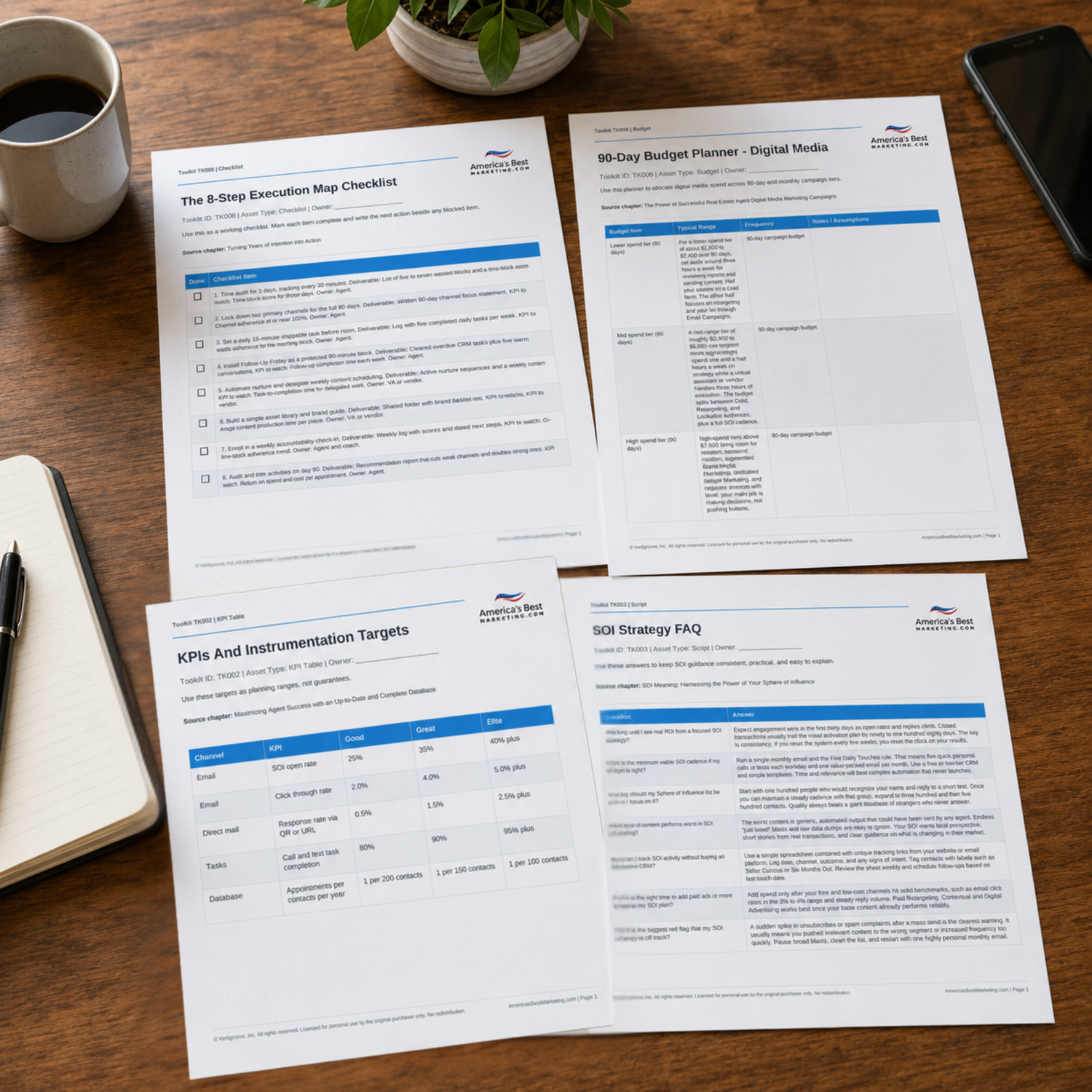
Download The Closing Cost Planning Toolkit
Use the companion Toolkit to tighten your buyer cost primer, seller net sheet script, closing disclosure walk-through, KPI tracking, checklist, and ninety day rollout plan.
Download the Toolkit ZIPRecommended reads
Recommended Reads for Real Estate Agents
These articles help agents connect listing visibility, seller education, marketing channels, and follow-up into a clearer growth system.

Seller Disclosures: Real Estate Agent Checklist + How to Set Expectations Early
Agents focused on listing visibility and seller communication can use this read to position listings with stronger copy, clearer proof points, and promotion that supports seller confidence.
Read article
Escrow Accounts Explained: Simple Agent Talking Points for Buyers and Sellers
Use this read to add a stronger client-education layer to listing visibility and seller communication and make escrow accounts explained easier to plan, publish, and measure as part of a weekly marketing rhythm.
Read article
Screen Appeal Is the New Curb Appeal: How Real Estate Agents Can Create Viral Listings
Use this read to connect listing visibility and seller communication with campaign planning and build a cleaner system for seller leads, with better timing, clearer messaging, and a next step people can act on.
Read article
Flipping Houses Profitability for Real Estate Agents: Deal Analyzer + Marketing Plan
Use this read to keep listing visibility and seller communication tied to follow-up discipline and build a cleaner system for flipping houses profitability, with better timing, clearer messaging, and a next step people can act on.
Read articleClosing Cost Questions Agents Should Be Ready To Answer
What is the difference between a loan estimate and a closing disclosure?
A loan estimate arrives a few days after application and outlines projected costs. A closing disclosure arrives a few days before signing and shows final numbers. The two documents should look similar. When they do not, the lender should be able to explain every change in clear, plain language.
Who usually pays for title insurance?
Customs vary by region, and the contract can override that default. Buyers almost always pay for the lender title policy that protects the bank. In many markets the seller pays for the owner policy that protects the buyer. When in doubt, ask a local title officer to explain the standard pattern in your area.
Can a buyer roll closing costs into the loan amount?
On most purchases, third party costs such as taxes and title fees cannot simply be added to the loan balance. Buyers can sometimes trade a slightly higher rate for a lender credit that covers part of the costs. Buyers can also negotiate for seller credits that reduce how much cash they must bring to closing.
Are agent commissions part of closing costs?
Yes. Commissions are a cost of the transaction and are usually paid from the seller proceeds at closing. They appear on the seller side of the closing disclosure along with taxes and title charges. On a seller net sheet, commissions should be shown as one clear line tied to the listing agreement.
What happens to the earnest money deposit at closing?
The earnest money deposit is credited back to the buyer on the closing statement. It does not disappear or get paid twice. It becomes part of the buyer’s funds already delivered toward the purchase and reduces the amount of additional cash needed at closing.
How often should agents update a buyer or seller closing cost estimate?
Agents should update the estimate whenever price, loan terms, closing date, seller credits, association charges, tax prorations, or negotiated repairs change. The strongest practice is to update once before offer signing, once after major contract changes, and once before the closing disclosure review.
Next step
Build the System Behind the Advice
Continue from one useful article into the larger ABM ecosystem: the book series for strategic depth and the full marketing program for done-for-you execution.

View the Book Series
Explore the America’s Best Real Estate Agent Marketing System books for a deeper strategic framework around visibility, referrals, listings, lead generation, and growth.
View the Book Series
See Full Marketing Program
See how AmericasBestMarketing.com runs real estate blog writing, social media, listing marketing, email, direct mail, and retargeting as one managed system.
See Full Marketing Program