How to Run Listing-Specific Contextual and Retargeting Ads for Maximum Buyer and Seller Leads
How to Run Listing-Specific Ads That Convert
Contextual and retargeting campaigns for buyer and seller leads
A practical listing ad workflow for real estate agents who want cleaner tracking, smarter budget shifts, stronger lead capture, and seller proof they can show after every campaign.

Listing-specific contextual and retargeting ads explained
Run one tracked property page, one contextual traffic lane, and one retargeting conversion lane. Contextual ads create fresh listing traffic. Retargeting turns listing visitors into showing requests, buyer inquiries, and future seller conversations.
- Listing campaigns work best when contextual traffic and retargeting follow-up are built as two separate lanes.
- The first operational priority is tracking. Verify page views and lead submissions before the first ad spends money.
- Start heavier on contextual traffic, then shift more spend to retargeting after the visitor audience builds.
- The campaign recap should become seller proof, with timeline, audience split, top creative, clicks, leads, and tours requested.
Why Listing-Specific Ads Beat Generic Boosts
Most listing ad plans fail because they treat every property like the same product. A listing is a single decision with a short attention window. Your job is to put the right message in front of the right person while that decision is still active.
That is why listing-specific contextual and retargeting ads matter. Contextual ads introduce the property to people reading and browsing related topics. Retargeting ads follow up with people who already raised their hand by visiting your site and viewing the listing.
When the goal is more impressions, agents tend to buy cheap reach. When the goal is appointments, you need measurable intent. That starts on your own IDX Real Estate Websites, where you control the page, the lead capture, and the tracking.
- Use the contextual lane for new traffic, first clicks, and fresh buyer attention.
- Use the retargeting lane for higher-intent visitors who already viewed the listing.
- Use the seller lane to document proof of execution for the next listing conversation.
Build Tracking And Audiences Before You Spend
Listing-specific ads are not a creative problem first. They are a tracking problem first. If you cannot measure a page view and a lead submission, you are buying fog.
Set up a dedicated property page and verify your pixel events. Treat the setup like a preflight checklist. If one item fails, pause and fix it before you launch. This is also where your Retargeting, Contextual & Digital Advertising stack should stay clean and compliant.
Send every click to one owned page
Use one page per listing. Do not send campaign traffic to a portal page where tracking, lead capture, and the next step are outside your control.
Keep the page lightweight, mobile-friendly, and clear enough that a visitor can request a showing without hunting for the form.
Measure the two events that matter
Confirm the page-view event fires on the property page. Then confirm the lead-submission event fires only after the visitor completes the form.
Do not optimize from click volume alone. A click is attention. A form submission is intent.
Keep cold traffic and warm traffic separate
Separate contextual and retargeting audiences so budget, creative, and performance remain readable.
Use platform housing category settings and avoid demographic shortcuts that create compliance risk.
Most agents treat retargeting as a buyer tool only, then wonder why the listing pipeline stays thin. Listing page visitors can include neighbors, future sellers, and buyers who lost a bidding situation. The sharper question is simple: what message would make a curious visitor raise a hand as a potential seller?
Run A 30-Day Flight With Two Lanes
A listing campaign should feel like a controlled experiment. Same page, same offer, same tracking. You change the message and the budget split as intent increases. Keep the system simple enough to run every time you take a listing.
Use this schedule as the default, then adjust based on the listing price point and local buyer volume. If you need a broader benchmark for paid versus organic strategy, read Are Paid Leads or Organic Leads Better for Real Estate Agents? and decide where paid listing traffic belongs in your overall channel mix.
Open with contextual traffic
Use the early window to create fresh listing traffic. Run soft and mid calls to action that invite people to view photos, details, tour times, or open house information.
A practical starting point is 60 percent of spend into contextual traffic while the retargeting pool builds.
Shift toward retargeting conversion
Move more spend toward visitors who already touched the property page. Retargeting should use stronger proof, urgency, and clearer showing or value-report prompts.
A practical later-stage target is 75 percent of spend into retargeting when the audience is large enough to matter.
- Days 1 to 3: verify tracking, build the property page, and name audiences by address.
- Days 4 to 15: run contextual traffic with soft and mid calls to action.
- Days 16 to 30: run retargeting with stronger conversion prompts.
- Days 7 and 14: refresh the headline and the first image before fatigue takes over.
- Weekly: shift budget toward the ad set with the lowest usable cost per lead.
Match Creative To Intent, Not Your Mood
Creative is not about being clever. It is about being correctly specific. A contextual viewer needs a reason to click. A retargeting viewer needs a reason to stop hesitating.
Keep your creative library small and reusable. For every listing, ship three core assets: a clean just listed card, a price update card, and an open house card. If you already have a strong open house cadence, borrow the structure from The Ultimate 7-Day Open House Promotion Kit: Ads, Posts, and Print Collateral for Real Estate Agents and adapt the ad copy so it points back to the single property page.
The 15-Second Listing Snapshot
HookThe best part of this home is not the photo you think.
BuildThree quick highlights: layout, light, and the one feature buyers keep asking about.
Call to actionTap to see the full photo set and request a tour.
Use the brightest interior room as the lead image, then test one curiosity hook against one straight feature hook while everything else stays identical.
The Open House RSVP Prompt
HookTouring this one feels different in person.
BuildUse the date, time, and one punchy benefit such as yard space, layout, or walkability.
Call to actionClick to reserve a tour slot and get directions.
Retargeting versions can add one line of proof, such as showings booked, saved searches, or a price update, as long as the claim is accurate.
The Seller Proof Follow-Up
HookWant the same exposure plan used for this home?
BuildMention the campaign fact pattern: views, clicks, tours requested, and the timeline you tracked.
Call to actionRequest a private pricing and timing check for your address.
Do not run this as a cold ad. It is a follow-up message for people who already touched the listing content.
The Conversion Checklist You Run Before Launch
This checklist is boring on purpose. Boring beats broken. Run it every time, then keep screenshots of the setup for your listing file so you can show your work later.
- Pixel verification: confirm page view and lead submission events fire on the property page.
- Audience split: contextual and retargeting sets are separate and named by address.
- Budget caps: daily limits are set to prevent accidental overspend.
- Compliance check: housing settings are enabled and copy avoids demographic cues.
- Destination check: every ad points to your property page, never a portal link.
- Frequency control: keep retargeting under 3 to 4 impressions per person per day.
- Creative rotation: at least two variations are live at all times.
- CTA match: contextual uses soft or mid asks, while retargeting uses mid or hard asks.
Metrics That Turn A Campaign Into Seller Proof
Seller proof is not a victory lap. It is a repeatable report that shows your effort and your process. The goal is to earn trust, not to brag. Keep the language neutral and stick to instrumentation.
Create a one-page recap after the listing closes. Include the campaign timeline, the audience split, the top creative, and three metrics. When a homeowner asks what you will do differently than other agents, you can show receipts under your broader Listing Marketing plan.
| Metric | What It Measures | Useful Range | How To Use It |
|---|---|---|---|
| CTR | Click rate on the ad creative | 0.8% to 1.8% | Review weekly and improve the headline or first image before changing the whole campaign. |
| CPL | Cost per low-friction property-page inquiry or form submission | $3 to $12 | Compare cost and lead quality by audience before shifting budget to a cheaper source. |
| Form rate | Lead form conversion on the property page | 8% to 18% | If the rate is low, tighten page copy, shorten the form, and make the call to action obvious on mobile. |
Ads create attention, but follow-up creates appointments. Route every lead into a simple email and text sequence you can run consistently. If you need help building that cadence, start with Email Marketing for Real Estate Agents and make the first reply fast and human.
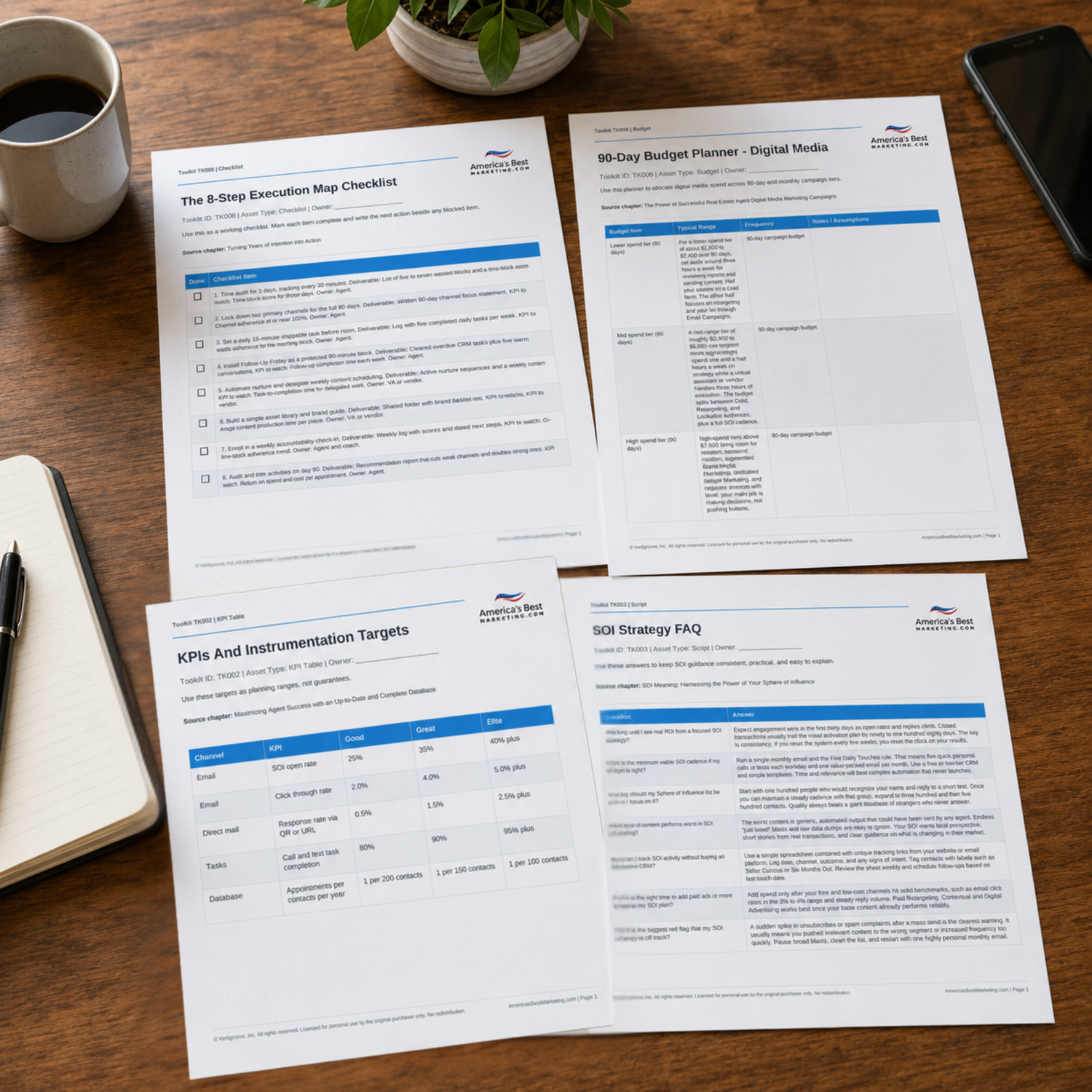
Download The Listing Ad Toolkit
Use the companion Toolkit to plan the 30-day flight, check the launch setup, compare KPI ranges, and adapt the listing ad scripts without rebuilding the process from scratch.
Download the Toolkit ZIPRecommended reads
Recommended Reads for Real Estate Agents
These articles help agents connect listing visibility, seller education, marketing channels, and follow-up into a clearer growth system.

Retargeting Ads for Real Estate Agents: Setups, Budgets, and Creatives That Win the Second Chance
Plan ad campaigns around repetition, landing pages, and second chances with warmer prospects.
Read article
Out-of-State Buyers: A Real Estate Agent Playbook for Remote Showings, Trust, and Smooth Closings
Plan ad campaigns around repetition, landing pages, and second chances with warmer prospects.
Read article
How Contextual and Retargeting Digital Marketing Work for Real Estate Agents and Why They Matter More Than Ever
Make paid ads easier to evaluate by tying audience, creative, budget, and next step together.
Read article
How to Re-Engage Cold Real Estate Leads with Email & Retargeting
Use smarter email timing and segmentation to restart conversations without sounding pushy.
Read articleListing Ad Questions Agents Should Be Ready To Answer
Should I put more budget into contextual or retargeting for a single listing?
Retargeting usually produces the lowest cost per lead because the audience already showed intent by visiting your property page. Contextual still matters because it creates new traffic for retargeting to work on. A safe default is to start with a higher contextual share early, then shift more budget to retargeting after the audience list builds.
What is the biggest red flag when creating listing ad audiences?
The red flag is trying to target people based on attributes that can map to protected classes. Run housing ads inside the platform housing settings and focus on allowed levers such as location radius, broad interest clusters, and on-site behavior like listing page visits. Keep your audience logic written down so you can defend it if asked.
How long should my retargeting window be for listing visitors?
A 60 to 90 day lookback window is a strong starting point because buyers often return after a pause. Short windows miss early-stage shoppers and people waiting on a timing trigger such as financing approval. If frequency climbs too high, reduce spend or refresh creative instead of shrinking the window to a week.
How do I prevent ad fatigue during a listing campaign?
Rotate the first image and the first line of copy every 7 to 14 days. Keep the destination page and the offer stable so your tracking stays clean. Watch click rate and cost per click for fatigue signals. When those start falling, refresh creative before you touch targeting or budget.
What is the minimum budget that can still produce useful signal?
If you only have $500 for a month, focus almost entirely on retargeting and skip broad contextual. You are buying signal, not fame. Aim for enough impressions to learn which image and headline drive clicks, then use that winner in your next listing. Track leads in your form and follow up fast.
Where should the ads send traffic so lead tracking stays accurate?
Send traffic to a single property page on your website where your pixel and lead form are installed. Avoid portal pages because you cannot control tracking and lead capture. Keep the page lightweight, make the call to action obvious, and make the form short enough that someone can complete it on a phone.
Can listing retargeting help generate seller leads, not just buyers?
Yes, as long as you run it as a follow-up message to people who already visited your listing page. Create a separate ad set that offers a private value report or a simple timing check for their home. That turns listing traffic into future listing conversations. Keep the copy process-focused and avoid any outcome promises.
Next step
Build the System Behind the Campaign
Continue from one useful article into the larger ABM ecosystem: the book series for strategic depth and the full marketing program for done-for-you execution.

View the Book Series
Explore the America’s Best Real Estate Agent Marketing System books for a deeper strategic framework around visibility, referrals, listings, lead generation, and growth.
View the Book Series
See Full Marketing Program
See how AmericasBestMarketing.com runs real estate blog writing, social media, listing marketing, email, direct mail, and retargeting as one managed system.
See Full Marketing Program