The A-to-Z of Buying and Selling Waterfront Properties: An Agent’s Guide to the Niche
Waterfront Property Marketing
An Agent’s Guide to Buying and Selling the Niche
A waterfront property briefing for real estate agents who need better due diligence, sharper seller positioning, and a marketing system that sells the water before the floor plan.

Waterfront property marketing starts with the water, the rights, and the risk
Real estate agents who want to win waterfront listings need more than prettier listing copy. They need a repeatable system that verifies access, rights, flood exposure, insurance friction, dock condition, buyer use case, and seller expectations before the listing goes live. The strongest marketing sells the shoreline experience first, then uses education, direct mail, retargeting, and follow-up to turn a specialized property into a trust-building campaign.
- Waterfront value is shaped by rights, access, depth, orientation, insurance, and shoreline condition, not bedroom count alone.
- Agents should verify flood zone exposure, dock status, bulkhead condition, and access claims early so buyers do not discover risk late.
- A waterfront niche can become a defensible brand lane when content, direct mail, retargeting, and email all point to the same educational offer.
- The best listing copy sells daily water use first, then supports the home with clear proof, local knowledge, and disciplined follow-up.
Why Waterfront Niches Pay Off
Waterfront deals can be high-margin, high-drama, and high-mistake when they are handled like standard homes. The buyer is often buying a wet-feet lifestyle first. The seller is often sitting on a high-value asset with complicated rules, sentimental attachment, and a small qualified buyer pool. That combination rewards agents who can make the technical issues understandable.
The business upside is not just stronger property copy. It is a tighter operating model: a due diligence workflow, a 12-week authority plan, ready-to-use buyer and seller scripts, budget ranges, KPI benchmarks, and a repeatable owner outreach system. When those pieces work together, your waterfront expertise becomes visible before a prospect ever requests a showing.
Use the trust mechanics in Building a Trusted Brand: The Key to Attracting Target Audiences Over Paid Leads and Mass Marketing, then layer in the technical checks and niche outreach below. Waterfront is a credibility market. The agent who explains risk early usually becomes the agent clients trust most.
- You reduce fall-through risk by surfacing flood, insurance, access, and structural questions before emotions run the deal.
- You give high-intent buyers a clearer way to compare true access, shared access, and view-only properties.
- You create a specialized seller story that generalist listing presentations rarely match.
The Terms That Control Waterfront Value
Waterfront value is governed by rules and physics, not vibes. Rights, setbacks, easements, flood exposure, and shoreline conditions shape what a buyer can actually do with the water and what a seller can confidently represent. Your job is not to practice law or engineering. Your job is to spot risk early, route questions to licensed professionals, and keep the transaction moving with clean documentation.
Start with market truth instead of storytelling. Use the measurement mindset in Understanding and Leveraging Real Estate Market Data to Win Listings and Trust to track days on market, concessions, and the specific waterfront features that actually move price in your area, such as deep-water access, protected coves, usable beach, or canal access.
Confirm access before you sell the dream
Riparian rights are tied to land that borders a river or stream. Littoral rights are tied to lakes, seas, or oceans. Both can affect access, moorage, shoreline use, and improvement limits.
Recorded documents, local rules, and title guidance should be collected before marketing language makes promises the property cannot support.
Separate view, access, and usable water
Setbacks, view easements, vegetation rules, and shoreline alteration limits can change the buyer’s use case quickly. A property with a beautiful view may not have direct access.
Build separate comp buckets for true access, shared access, and view-only pricing so seller expectations stay grounded.
Inspect the shoreline story early
Docks, lifts, bulkheads, seawalls, pilings, erosion, and drainage can move a buyer from excitement to hesitation in one showing.
Use a red-flag process, then refer structural and legal calls to qualified professionals who can document the risk correctly.
Most waterfront buyers are buying the daily-use experience first, not the bedroom count. Lead with access, depth, orientation, and the places people will actually sit, launch, dock, swim, or watch the sunset. Then let the house support the water story.
The 12-Week Waterfront Authority Launch
This niche rewards operators who run a tight timeline. Think of it like a water-ski pyramid. Boat speed, rope tension, skier stance, and spotter timing all have to work together. In waterfront marketing, that pyramid is permits, insurance, inspection, marketing, and buyer expectations.
Build the data layer
Map every waterfront parcel in your target ZIP codes. Create a shortlist of high-equity owners based on ownership length, assessed value, and visible improvement clues.
Pull dock and shoreline rules for each jurisdiction and write a one-page summary per area so buyer questions can be answered faster.
Publish the niche proof
Create hyper-local Waterfront Life assets that match how people search, such as deep-water dock homes, private beach homes, lakefront homes, or canal homes with boat access.
Pair those assets with SEO blog writing fundamentals and the consistency logic from Your Brand is Built on Every Interaction: Managing Client Touchpoints for Lasting Success.
Activate owners and warm traffic
Run direct mail to the high-equity owner list with one simple offer, then retarget every click and site visit with proof and education.
Use a two-touch phone plan, one voicemail, one text, and an email follow-up sequence that keeps the shoreline report in front of owners who are not ready today.
- Build a seller list of 250 to 600 shoreline households inside your chosen radius.
- Mail twice during the first campaign window: first with a checklist offer, then with a market report offer.
- Drive every response to one landing page with a PDF gate and a clear next step.
- Use Listing Marketing, Direct Mail for Real Estate Agents, and Retargeting & Contextual Ads as connected channels, not separate campaigns.
Messaging That Matches Waterfront Reality
Waterfront buyers scan for friction before they scan for inspiration. Your content should remove uncertainty, prove competence, and sell the daily experience. Lead with what matters: access, use, rules, water depth, orientation, and long-term upkeep. Once the buyer trusts that layer, the kitchen and floor plan become easier to process.
Create practical assets such as The Waterfront Checklist, Living the Shoreline Life, Bulkhead Reality Check, View Without Access, and Flood Insurance Math. Each asset should answer a decision question, not simply decorate the listing.
Use a soft offer for the Waterfront Buyer Due Diligence PDF, a mid-step offer for the Shoreline Market Report, and a direct offer to schedule a marketing strategy conversation.
Three Waterfront Scripts You Can Use Today
Scripts matter because waterfront conversations get expensive fast when the buyer is already emotionally attached. Give yourself a repeatable opening, a clear explanation, and a next step that sends people toward verification instead of assumption.
The water-first tour
Agent dialogue
Hook lineBefore we go inside, look at the shoreline access and where you can actually step in.
Middle lineThis is the daily-use view: entry, depth, and the spot you will sit at sunset.
CTA lineMessage me Wet Feet and I will send the waterfront due diligence checklist.
Use this script for short listing videos and buyer tours. Start with the water, hold the access point, then finish with one clean water-to-house reveal.
The problem-to-proof walkthrough
Agent dialogue
Hook lineHere is the one thing that kills waterfront deals late.
Middle lineDocks, lifts, and bulkheads have rules and maintenance. We verify permits, condition, and buyer use before you fall in love.
CTA lineWant my inspection red-flag list. Send me Shoreline.
Keep the tone calm. The goal is confidence, not fear. Technical calls should always be routed to licensed inspectors, engineers, title officers, or attorneys.
The view-without-access pricing script
Agent dialogue
Hook lineThis home has a water view, but no direct access. That changes value.
Middle lineWe market it to view-first buyers, price it against true access comps, and explain the rights clearly up front.
CTA lineMessage me View Map and I will send the short list of access neighborhoods.
Use this script when a listing has water appeal but not true shoreline utility. It protects seller confidence and prevents access-first buyers from misreading the property.
Budgets, Cadence, and Creative Briefs You Can Run
Waterfront marketing does not need to be chaotic. It needs one defined owner audience, one buyer education offer, one retargeting loop, and a follow-up cadence that keeps the agent visible after the first click.
Spend about six hundred fifty dollars per month for retargeting and listing traffic, with direct mail printing, postage, and list costs budgeted separately. Split roughly two hundred fifty dollars to retargeting and four hundred dollars to listing traffic. Run two mail drops per quarter to 300 homes, plus weekly email to leads.
Spend about eighteen hundred fifty dollars per month, with postage and list costs budgeted separately. Allocate six hundred fifty dollars to retargeting, nine hundred dollars to listing and content traffic, and three hundred dollars to direct mail printing. Run two mail drops per month to 500 homes for 90 days.
Turn shoreline curiosity into booked calls
Target lifestyle buyers who are relocating, upgrading, or actively comparing lake, river, canal, or coastal homes. Use short video and static carousels showing access points, water depth cues, and sunset orientation. Headline: Buy the water with your eyes open.
Reach owners before they list
Target owners with eight-plus years of tenure in shoreline ZIP codes. Use direct mail plus a landing page offering a Shoreline Market Report with recent comp notes. Headline: What your dock, bulkhead, and insurance do to price.
Stay visible without exhausting the audience
Use two impressions per person per day for starter retargeting and three impressions per person per day for the mid-range campaign. Track replies, opt-ins, and booked calls every two weeks.
Waterfront Due Diligence Versus Standard Sales
Use this comparison as a pre-listing briefing and a pre-offer filter. For legal rights, permitting, insurance, and engineering conditions, route final calls to qualified professionals.
| Factor | Standard Residential | Waterfront Property |
|---|---|---|
| Insurance | Quote is usually stable early. | Flood and wind pricing can change the deal math fast. |
| Inspections | Home systems drive most findings. | Shoreline structures, moisture, and erosion add major variables. |
| Legal Rights | Access is usually assumed on the lot. | Riparian and littoral rights must be confirmed and explained clearly. |
| Permits | Improvements are mostly standard. | Docks, lifts, and seawalls can require strict approvals. |
| Valuation | Comps often start with beds, baths, condition, and location. | Use value and water access often beat interior finishes. |
| Marketing | Features usually lead the pitch. | Access, daily use, restrictions, and orientation should lead before the floor plan. |
The 12-Point Wet-Feet Listing Audit
This audit keeps the listing conversation disciplined. It gives the seller a reason to trust your process and gives buyers the proof they need before small concerns turn into late-stage deal tension.
- Confirm shoreline type: lake, river, ocean, or canal, and note seasonal changes.
- Document access: stairs, beach, dock, shared path, or none.
- Verify rights and recorded easements, then store the proof in the listing file.
- Check flood zone designation and request insurance context before final pricing.
- Inspect bulkhead or seawall visually and request professional review if anything looks off.
- Confirm dock and lift status, including permit history, visible condition, and allowed use.
- Measure key use cues such as depth at normal levels, tide swing, and boat clearance.
- Capture orientation, including sunrise, sunset, wind exposure, and afternoon shade.
- Clarify setbacks, vegetation rules, shoreline alteration limits, and association restrictions.
- Build comp buckets for true access, shared access, and view-only pricing.
- Write marketing copy that leads with the water experience and then the home.
- Prepare a buyer FAQ handout to reduce repeat questions and fall-through risk.
The Bulkhead Problem That Became the Hook
An agent in a Great Lakes community had a waterfront listing with an older bulkhead that made buyers nervous. A generalist agent had carried the listing for 120 days without a clear education plan. The new positioning asset was a one-page explainer called Bulkhead Restoration for ROI, supported by two short clips showing what inspectors look for.
The agent drove traffic to the guide through Listing Marketing, then retargeted shoreline shoppers and boat owners through Retargeting & Contextual Ads. The message stayed consistent: verify the structure, price with reality, and buy the location with eyes open.
The buyer who closed valued the location over the repairs and paid 98 percent of list because the risk had been framed early. That is the strategic lesson. Strong waterfront marketing does not hide the technical issues. It puts them into a controlled story before they become a surprise.
KPI Benchmarks for the Waterfront Niche
Track the numbers that show whether your niche positioning is becoming a business development asset. Waterfront authority should produce stronger opt-ins, clearer conversations, and warmer seller follow-up over time.
| Metric | Target | Range | Why It Matters |
|---|---|---|---|
| Click Rate | Beat local baselines | 1.2% to 2.4% | Shows whether the niche message is specific enough to pull real waterfront intent. |
| PDF Opt-Ins | Convert guide traffic | 4% to 9% | Proves the due diligence offer is strong enough to earn contact information. |
| Retargeting Frequency | Stay present, not annoying | 4 to 9 | Keeps the agent top of mind while buyers and sellers compare shoreline options during the active campaign review window. |
How This Becomes a Managed Marketing System
Waterfront specialization becomes powerful when the same advisory point appears across every channel. Your blog explains the due diligence. Your listing copy sells the water first. Your direct mail reaches high-equity shoreline owners. Your email sequence answers common objections. Your retargeting keeps the agent visible after the first click.
Use Real Estate Blog Writing Services, Social Media Marketing, Listing Marketing, Email Marketing for Real Estate Agents, Direct Mail Marketing, and Digital Retargeting as one system. Each channel should carry the same promise: this agent helps clients understand the water, the rules, and the risk before the transaction gets fragile.
If you want to own a niche that attracts higher-quality conversations, build it like an operator. AmericasBestMarketing.com can help package the waterfront offer, instrument the funnel, and keep the system consistent across every channel.
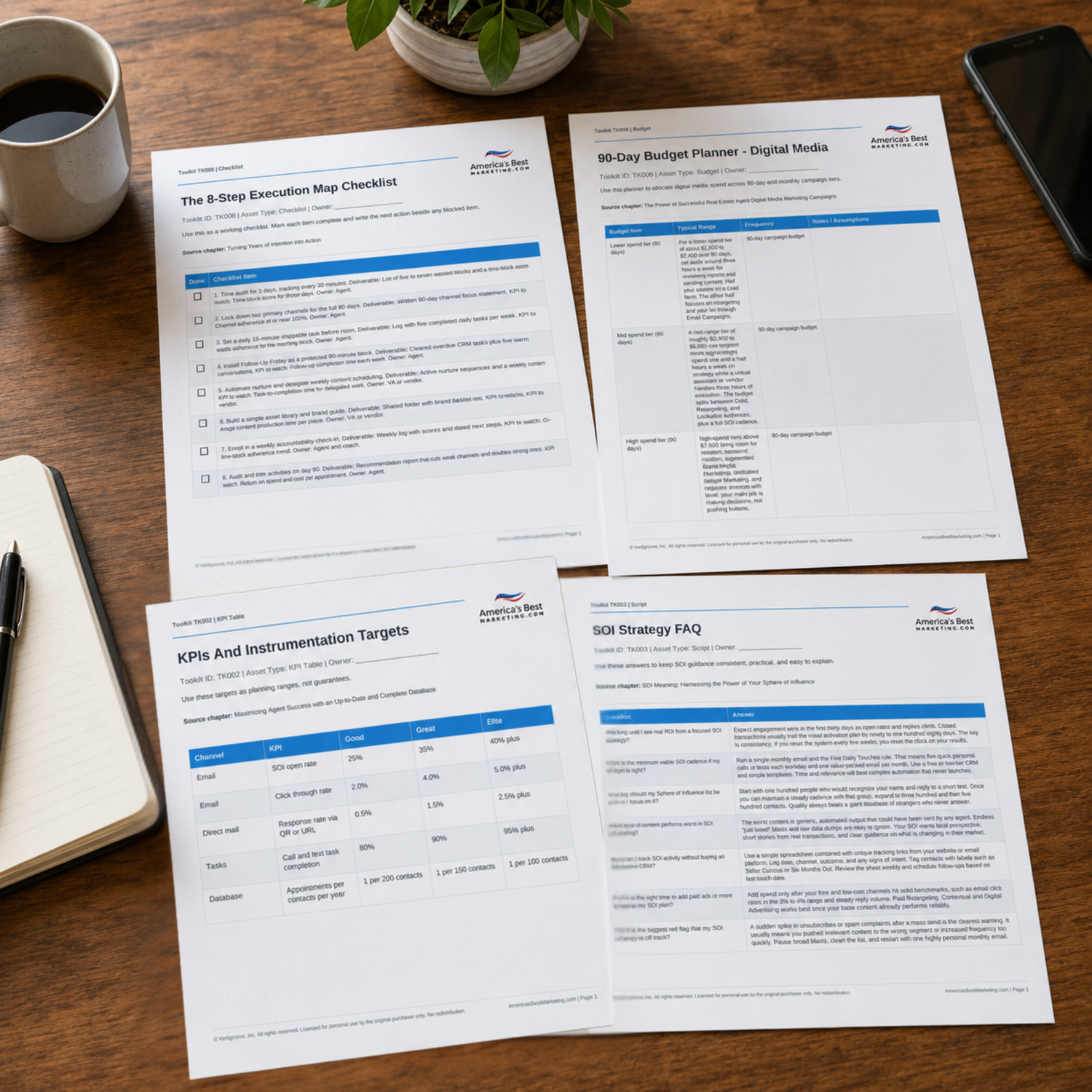
Download The Waterfront Marketing Toolkit
Use the companion Toolkit to turn the waterfront niche into a working campaign system with the authority launch plan, wet-feet listing audit, budget planner, KPI sheet, FAQ support, and short-form video scripts.
Download the Toolkit ZIPRecommended reads
Recommended Reads for Real Estate Agents
These articles help agents connect listing visibility, seller education, marketing channels, and follow-up into a clearer growth system.

Selling Historic Homes: Positioning, Disclosures, and Marketing Angles for Real Estate Agents
Use listing content to attract attention, explain value, and create better seller conversations.
Read article
Out-of-State Buyers: A Real Estate Agent Playbook for Remote Showings, Trust, and Smooth Closings
Plan ad campaigns around repetition, landing pages, and second chances with warmer prospects.
Read article
Mastering Real Estate Niche Marketing Ideas: A Guide for Investors to Empty Nesters
Turn personal brand work into a system clients can notice, remember, and trust.
Read article
Understanding the Unique Market of Rural Properties
Give the unique market of rural properties a clearer role in the marketing system instead of treating the work as a one-off idea.
Read articleWaterfront Property Questions Agents Should Be Ready To Answer
What are riparian rights and why do they matter?
Riparian rights are use and access rights tied to land that borders a river or stream. They matter because they can affect whether a buyer can access the water, place improvements, or use the shoreline in expected ways. Rights vary by state and local rules, so gather the recorded documents early and direct legal interpretation to an attorney who works in your area.
How do I market a house that has a view but no direct water access?
Lead with the view and lifestyle, then be explicit about access so you do not waste showings. Price it against other view-only properties, not true access comps. Build a short map-based explanation that shows the nearest public access or marina and who uses it. The goal is to attract view-first buyers and prevent access-first buyers from getting disappointed late.
What is the major red flag to avoid in waterfront inspections?
Unknown shoreline structure condition is a deal killer. Bulkheads, seawalls, and pilings can be expensive, and small visible issues can hide bigger structural or erosion problems. Set expectations early, book the right inspectors, and route engineering calls to licensed pros. Your job is to surface risk early and keep the transaction from discovering reality at the finish line.
Why do flood zones and insurance premiums change pricing so much?
Because they change the monthly payment and the buyer pool. A premium jump can make an otherwise qualified buyer back out, and it can force price adjustments that feel abrupt to the seller. Pull flood zone data early, request an insurance quote before you list, and include that reality in your pricing conversation. This reduces renegotiation pressure after inspections.
What should I verify about docks and lifts before going under contract?
Confirm permit status, allowed use, and visible condition. Ask for documentation on installation, repairs, and any prior permits or approvals. Verify whether the dock is private, shared, or part of an association, and confirm responsibilities for maintenance. For structural questions, refer to licensed inspectors or engineers. Buyers care about daily use, and surprises here create late-stage fallout.
How long does it take to see measurable ROI in a luxury niche?
Use 60 to 90 days as an early signal window when the niche offer is specific and the follow-up is consistent. The faster win is usually seller conversations from targeted owner lists and retargeting, not instant closings. Track opt-ins, reply rates, and booked calls, then tighten your message every two weeks. Waterfront authority is built through repeated proof, not one viral post.
What is one mistake that makes waterfront listings sit?
Marketing the home like a normal listing and burying the water story. Buyers want the daily-use facts: access, depth cues, orientation, and restrictions. If you lead with granite and square footage, you attract the wrong traffic and invite confusion. Put the water first, answer the hard questions up front, and use education to create confidence instead of hesitation.
Next step
Build the System Behind the Advice
Continue from one useful article into the larger ABM ecosystem: the book series for strategic depth and the full marketing program for done-for-you execution.

View the Book Series
Explore the America’s Best Real Estate Agent Marketing System books for a deeper strategic framework around visibility, referrals, listings, lead generation, and growth.
View the Book Series
See Full Marketing Program
See how AmericasBestMarketing.com runs real estate blog writing, social media, listing marketing, email, direct mail, and retargeting as one managed system.
See Full Marketing Program