Real Estate Blogging Made Simple: How Agents Can Attract Leads and Boost Their Online Presence
Real EstateBlogging MadeSimple
Attract Leads and Build Online Authority
A practical briefing for real estate agents who want every article to answer a client question, attract qualified search traffic, and create a clear path to the next conversation.

How a real estate blog turns expertise into leads
A real estate blog works when each article answers one specific buyer or seller question, earns useful search visibility, and gives the reader one relevant next step. The operating model is simple: choose questions clients already ask, publish two strong articles per month, connect each article to a guide, form, email list, or consultation, and reuse the content across email and social media.
- Start with real client questions instead of generic market commentary.
- Give every post one clear offer and one primary call to action.
- Use each article as a source asset for email, social, appointment follow-up, and retargeting.
- Measure sessions, shares, CTA clicks, form submissions, and new-contact attribution.
Why Real Estate Blogging Still Works
Buyers and sellers usually research before they contact an agent. They search for pricing guidance, neighborhood context, financing questions, inspection concerns, preparation checklists, and timing advice. A useful article lets an agent enter that decision process before the prospect is ready to raise a hand.
The goal is not to publish random thoughts. The goal is to create durable pages that attract qualified site sessions, support client education, and route readers toward a sensible next step. A focused blog also strengthens Email Marketing for Real Estate Agents, social posts, listing conversations, direct mail, and retargeting because every channel has a useful destination.
Consistent education also changes the first conversation. Prospects arrive with more context, better questions, and an early sense of the agent's judgment. That reduces friction and gives the agent a stronger position than a generic sales message can create.
- Search visibility compounds as useful articles remain available over time.
- Client education builds trust before an appointment is scheduled.
- One article can support several channels without requiring several separate ideas.
Build The Blog Around Questions, Offers, And CTAs
Most weak blogs begin with the question, “What should I post?” A stronger system begins with, “What is my client trying to understand?” Capture questions from listing appointments, buyer consultations, open houses, inspection conversations, and follow-up calls. Then sort them by audience and decision stage.
Every topic should connect to a relevant offer. A seller pricing article can point to a preparation checklist or valuation conversation. A first-time buyer article can point to a planning guide. A neighborhood article can invite readers to join a local market email. The article earns attention, and the offer gives that attention a business path.
Answer one real question
Choose a question with practical buyer, seller, investor, or past-client intent. Specific questions create clearer titles and more useful answers.
Match the next step
Connect the article to one guide, checklist, consultation, email list, or form that logically continues the reader's decision.
Reuse the source asset
Turn the finished article into an email introduction, several social posts, an appointment follow-up resource, and an internal-link destination.
A blog post is not merely a page. It is a reusable marketing asset. The strongest content systems make one well-developed article do the work of several disconnected promotional messages.
The 12 Week Real Estate Blogging Activation Plan
This 12 week sprint replaces an open-ended content promise with a manageable operating cadence. The target is two useful posts per month, supported by lead capture, distribution, and monthly review.
Build the question bank
List at least ten questions buyers and sellers ask before they are ready to hire you. Sort them by audience, funnel stage, and local relevance.
Create the editorial calendar
Select four priority articles. Assign each one a working title, audience, publish date, primary CTA, and distribution plan.
Draft and optimize
Write the first two articles with a direct answer, clear H2 sections, useful examples, internal links, image alt text, and one primary CTA.
Connect lead capture
Pair each article with a form, consultation page, downloadable guide, or email list. Education without a next step has no business pathway.
Publish and distribute
Send each article through email and Social Media Marketing. Reference it in client follow-up when the topic fits.
Review and refine
Measure traffic, engagement, CTA clicks, form submissions, and new contacts. Keep what creates conversations and repair weak offers or positioning.
Your First 90 Day Blogging Checklist
- Write down ten client questions from calls, showings, listing appointments, and follow-up conversations.
- Turn those questions into titles and map each title to buyer, seller, investor, or past-client intent.
- Choose two articles per month for the next three months.
- Assign one CTA and one conversion path before drafting each article.
- Keep one stable URL for every article and avoid changing it after publication.
- Add relevant internal links, including service pages such as IDX Real Estate Websites.
- Share every article through email, social media, and relevant client follow-up.
- Refresh high-performing articles every six to twelve months.
Simple KPIs For Real Estate Blogging Success
You do not need an elaborate reporting stack to judge early performance. Track whether people find the article, consume it, share it, click the next step, and become identifiable contacts. Review the numbers monthly and use them to improve the topic, offer, or CTA.
| Metric | What it reveals | Management response |
|---|---|---|
| Site sessions | Whether the article is being discovered. | Strengthen the title, internal links, local relevance, and distribution. |
| Time on page | Whether readers are consuming the answer. | Tighten the opening and improve section clarity when engagement is weak. |
| Shares | Whether the topic is useful enough to pass along. | Create related follow-up content around highly shared questions. |
| CTA clicks | Whether readers understand the next step. | Improve CTA relevance, placement, and wording. |
| Form submissions | Whether the offer earns contact information. | Strengthen the guide, checklist, consultation, or email promise. |
| New contacts | Which articles introduce prospects to the brand. | Expand winning topics into clusters and nurture sequences. |
What It Costs To Run A Blogging Engine
The real cost is a combination of strategy, writing time, editing, publishing, distribution, and reporting. The right operating tier depends on how quickly the content library should grow and how much production work the agent can reliably keep on the calendar.
Lower cash cost, higher time cost
An agent can write and upload four to six articles in 90 days with basic SEO setup and one simple lead magnet. The constraint is consistency when active business becomes demanding.
Higher leverage, steadier output
A managed system can produce six to twelve optimized articles in 90 days with stronger CTAs, coordinated distribution, and performance reporting while the agent supplies market judgment and final approval.
Distribute Every Article Without Creating More Work
Publishing is the beginning of the content cycle, not the end. Pull one email introduction, three social captions, one client-facing talking point, and one follow-up message from each article. Then link related articles together so readers can move deeper into the site.
Use articles during real conversations. Send the seller preparation article after a listing inquiry. Send a financing article before a buyer consultation. Send a neighborhood article to a relocation prospect. The article becomes proof of expertise and a reason for the next touch.
- Email the article with one practical reason to read it.
- Turn the main points into short social posts that link back to the source.
- Use the article as appointment follow-up when the question is relevant.
- Add internal links from older articles and service pages when appropriate.
Refresh And Expand High Performing Posts
Review strong articles every six to twelve months. Update examples, tighten the introduction, improve the CTA, add one useful internal link, and remove dated details. Small maintenance passes keep the page useful without turning every update into a full rewrite.
Use performance data to decide what deserves expansion. When an article attracts traffic but few clicks, improve the offer. When it earns shares but few form submissions, add a stronger mid-page conversion path. When it creates contacts, build a related topic cluster around the same client need.
Do not judge the first month by closed transactions. Judge it by operating indicators: publication cadence, useful distribution, CTA activity, and whether the article makes client conversations easier.
Compliance And Local Credibility
Keep neighborhood descriptions neutral, avoid steering language, and never imply guaranteed outcomes. When discussing market trends, explain the context and avoid hype. Helpful, balanced guidance is more persuasive than inflated claims.
Local credibility comes from useful specifics: timelines, process steps, questions to ask, documents to prepare, and decisions to consider. The more clearly an article explains the process, the more prepared the reader feels when a conversation begins.
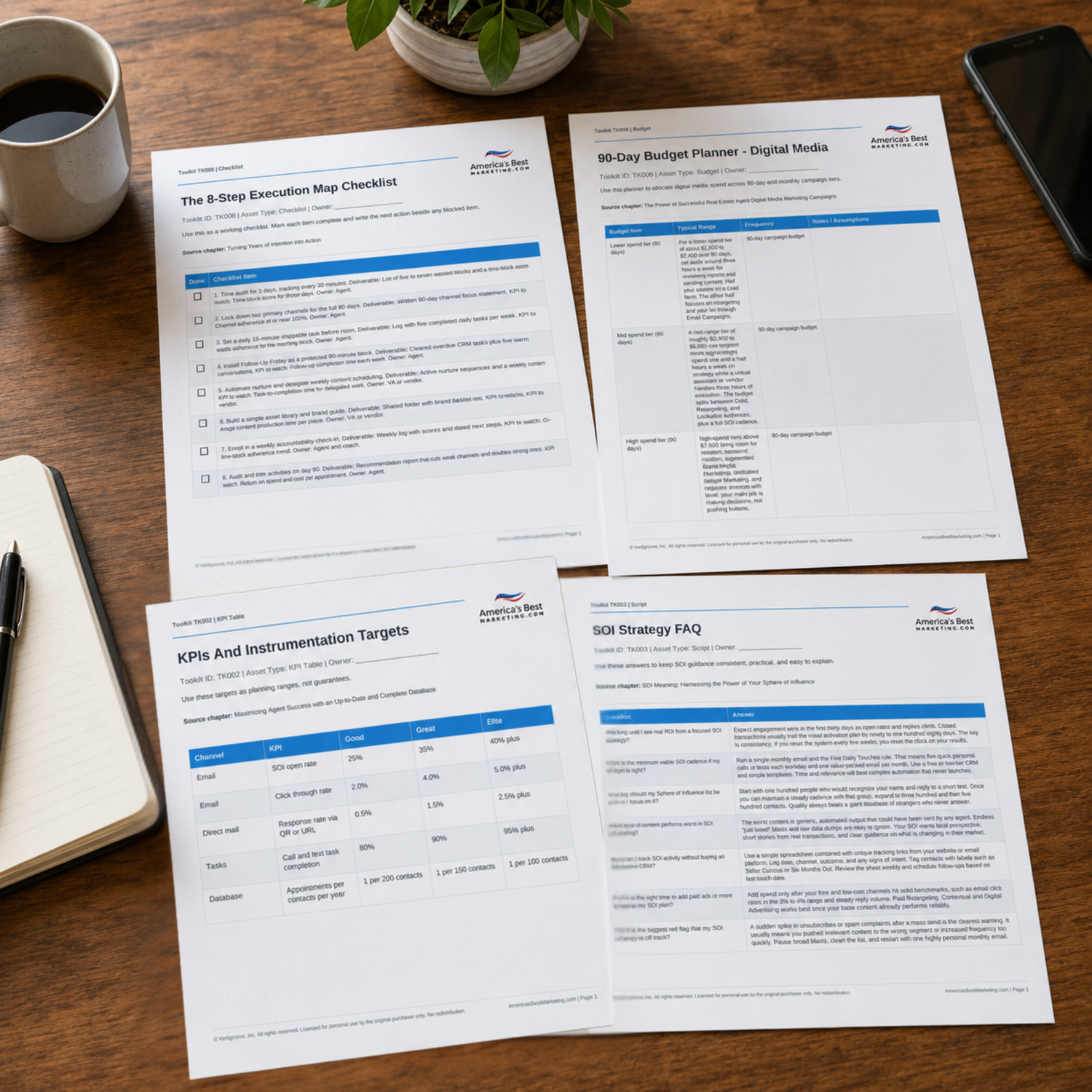
Download The 12 Week Blogging Activation Toolkit
The ZIP includes practical PDF resources for choosing an investment tier, organizing a 12 week blogging sprint, and answering common real estate blogging questions.
Download the Toolkit ZIPRecommended reads
Recommended Reads for Real Estate Agents
These articles help agents connect content planning, client education, local visibility, and follow-up into a more consistent marketing rhythm.

Agent Spotlight Templates Real Estate Agents Can Publish Fast
Build authority with content topics that are easier to plan, promote, and connect to follow-up.
Read article
Best Real Estate Content Marketing Ideas
Turn local knowledge into searchable content buyers, sellers, and relocation prospects can actually use.
Read article
Investor Content for Real Estate Agents: Build a Real Estate Investment Portfolio Series That Attracts Clients
Make investor content easier to plan, publish, and measure as part of a weekly marketing rhythm.
Read article
Family-Friendly Content That Converts: Activity Guide + Lead Capture Ideas for Real Estate Agents
Publish content that answers local questions, supports lead capture, and gives future conversations a reason to start.
Read articleReal Estate Blogging Questions Agents Ask Most
How often should a real estate agent publish blog posts?
Two useful posts per month is a realistic cadence for most agents. One strong post per month is better than an inconsistent burst that stops when business gets busy.
What should a real estate blog post be about?
Start with questions clients already ask. Pricing, timing, preparation, financing, neighborhoods, inspections, offers, and moving logistics are usually stronger topics than generic market commentary.
How does blogging help with lead generation?
Blogging helps when each post has a clear CTA tied to a form, guide, email list, or consultation path. Traffic alone is not the objective. The objective is useful attention that can become a relationship.
Should blog posts include local keywords?
Yes, when the local context is natural and useful. Add city, neighborhood, or market references when they help the reader make a better decision. Do not force location terms where they do not belong.
Can AI help with real estate blogging?
AI can help with outlines, topic ideas, and early drafts, but the final article still needs the agent's market knowledge, judgment, examples, and voice. Generic content rarely creates durable trust.
What metrics should agents track?
Track site sessions, time on page, shares, CTA clicks, form submissions, and new-contact attribution. Those numbers show whether the content is attracting attention and creating business movement.
Next step
Build the System Behind the Advice
Continue from one useful article into the larger ABM ecosystem: the book series for strategic depth and the full marketing program for done-for-you execution.

View the Book Series
Explore the America’s Best Real Estate Agent Marketing System books for a deeper strategic framework around visibility, referrals, listings, lead generation, and growth.
View the Book Series
See Full Marketing Program
See how AmericasBestMarketing.com runs real estate blog writing, social media, listing marketing, email, direct mail, and retargeting as one managed system.
See Full Marketing Program