Hidden Gems Content: How Real Estate Agents Create Local Guides That Generate Relocation Leads
Hidden Gems Content for Relocation Leads
How Real Estate Agents Create Local Guides
A local-guide briefing for real estate agents who want hidden gems content to attract relocation leads, earn trust, and create repeatable follow-up.

Hidden gems content explained for real estate agents
Hidden gems content is a local guide strategy built around specific daily-routine details, useful proof, and a clear lead capture path. For real estate agents, the play is to curate local insights, publish them as a pillar guide, distribute smaller posts back to the guide, and follow up through email or retargeting so relocation interest becomes measurable conversations.
- Relocation buyers use local detail as a proxy for confidence, belonging, and agent credibility.
- The strongest hidden gems guides focus on real routines such as dining, errands, recreation, schools, services, and commute patterns.
- Every guide needs one opt in, one source tag, and one follow-up path so interest can become measurable pipeline.
- Quarterly refreshes protect trust because hours, access rules, seasonal patterns, and local recommendations can change.
Why Hidden Gems Content Earns Relocation Trust
Relocation leads are high intent, high value, and usually captured by portals before an agent ever gets a shot. Hidden gems content gives real estate agents a different lane: specific local knowledge that helps a newcomer picture daily life, trust the source, and take the next step before they are ready to fill out a portal form.
Hidden gems content is the non obvious local knowledge people wish they had on day one. Think best Tuesday taco special, the quiet park bench with solid cell signal, the fastest airport route at rush hour, the gym that is not packed at lunch, or the errand loop that saves a busy parent forty minutes on Saturday.
Relocation buyers use those details as a proxy for belonging. They are not always searching for an agent yet. They are deciding if they can picture life in a place and who seems credible enough to guide them like a community curator, not a tour guide reading generic stats.
- Make it specific by naming the place, the routine, and the exact problem it solves.
- Make it usable by adding timing, parking, price range, accessibility, or the best day to go.
- Make it organized by grouping gems into categories a newcomer can scan in minutes.
- Make it trackable by connecting the guide to one opt in, one follow-up path, and one source tag.
How To Build A Local Guide Asset
Most local guides fail because they read like a brochure. Brochures do not build trust. They feel safe, vague, and interchangeable, which is exactly what a portal can replicate at scale.
Build the guide like a field asset. Collect evidence, label it, and package it so a newcomer can navigate confidently. The end product is one pillar guide plus smaller posts that point back to it from social, email, and retargeting.
Name the routine
Write about the breakfast stop before school drop-off, the errand loop after work, the dog park with shade, or the quiet work spot with reliable Wi-Fi. Specificity makes the guide useful.
Add one field detail
Give readers one proof point such as wait time, parking pattern, access rule, price range, seasonal note, or the best time to go. That detail signals that the guide was not copied from a list.
Offer the next step
Use a Relocation Discovery PDF, Hidden Gems email, or move-planning call as the next step. A useful CTA turns anonymous reading into a relationship.
Tag the source
Tag every opt in by guide topic so you can measure replies, booked calls, and future content demand. You do not need fancy attribution to start. You need consistent tagging.
Relocation buyers are not searching only for an agent. They are searching for proof that they will belong, which is why lifestyle compatibility signals beat generic market reports. Ask one question before publishing: does this guide help someone choose a daily routine, not just a zip code?
The Eight Week Guide Launch
Your operating rule is simple: each week produces something publishable. That keeps momentum, creates distribution hooks, and prevents the guide from dying in a drafts folder.
Curation
Identify ten gems across five categories: dining, recreation, services, schools, and commute. Keep each gem tight with one sentence benefit, one sentence proof, and one sentence practical tip.
Content creation
Write long-form descriptions that answer what it is, why it matters, and how a newcomer should use it. Start with assets the agent already has, then fill gaps with simple on-site photos captured during a normal day.
On-page improvements
Apply clean page structure, clear headings, internal links, and lead capture placements that do not interrupt the reading experience. Publish on pages that can be indexed and revisited.
Distribution
Add a simple opt in and deliver the guide by email. Then follow with two short emails that point to different gem categories so readers self select what they care about.
Use the same cadence inside a broader marketing plan. Start by mapping the content calendar to Proven Real Estate Marketing Strategies: A 30 Day Plan for More Leads and Sales, then connect the finished guide to Email Marketing for Real Estate Agents so the first opt in does not become the last touch.
Creative That Gets Opt Ins
Headlines win this game because relocation buyers skim. Your headline should promise local clarity and deliver it fast. The goal is not to impress locals. The goal is to reduce uncertainty for someone who does not know what they do not know yet.
Use a simple message frame: a newcomer problem, your field-tested answer, and one clear next step. Keep the agent in the background until the end. Let the community be the star.
- Moving to a new city: the five things your relocation packet will not tell you.
- The insider guide to a neighborhood: hidden gems that match real routines.
- Your first week plan: food, errands, workouts, and the fastest commute routes.
Use soft, mid, and hard CTAs across the guide so people can choose their own pace. Soft is a download for a Relocation Discovery PDF. Mid is a weekly Hidden Gems email. Hard is a call to plan the move. If the buyer wants timeline clarity, route the conversation into a structured planning call instead of a generic contact form.
Budget And Time Requirements
These are planning ranges, not promises. The cleanest builds are the ones that match your actual capacity, then repeat. Pick a tier you can run for eight weeks without burning out.
| Tier | Focus | Monthly Spend | Time Requirement |
|---|---|---|---|
| DIY | One pillar guide | $0 to $150 | Two hours weekly for curation, writing, posting, and basic tracking. |
| Outsourced | Guide plus posts | $300 to $900 | One hour weekly to review drafts, approve images, and publish consistently. |
| Managed | Full system | $1,100 to $2,500 | Thirty minutes weekly for approvals, source review, and lead follow-up. |
The Twelve Point Content Quality Audit
Before you publish, run this audit. It keeps your guide useful, safe, and compliant, and it forces the lead capture piece to be real instead of wishful.
- Each gem is specific and can be acted on in one visit.
- Each gem includes one practical detail like timing, parking, or cost range.
- Categories match a real routine: dining, errands, recreation, schools, and commute.
- The guide answers who it is for in the first 150 words.
- The guide includes one clear opt in that delivers something useful.
- The opt in lands on a simple thank you page with next steps.
- You avoid protected class language and keep neighborhood descriptions neutral.
- You do not publish personal addresses, seller schedules, or client identifying details.
- Internal links are limited and placed where they support the next step.
- Each post points back to the pillar guide with a consistent path.
- You tag every lead source so you can track guide performance.
- You set a quarterly refresh reminder to keep details accurate.
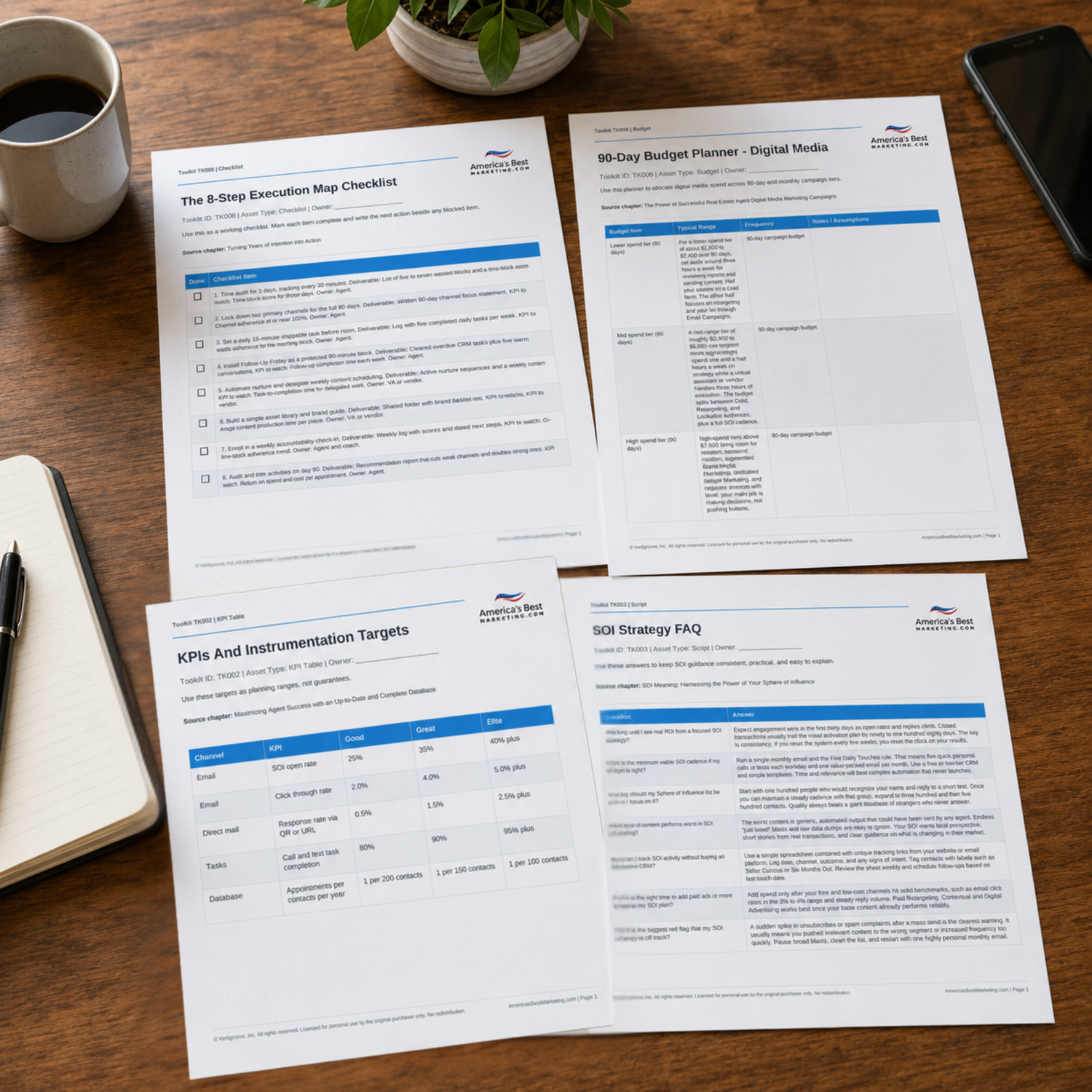
Download The Hidden Gems Content Toolkit
Use the companion Toolkit to plan an eight week local guide launch, compare budget tiers, audit the guide before promotion, and answer relocation-buyer questions with cleaner follow-up.
Download the Toolkit ZIPMini Case Pattern You Can Copy
In a composite example, an agent in a coastal Florida market built a Hidden Gems guide for pet friendly amenities and non tourist beaches. The guide offered a Relocation Discovery PDF with a short form and a two email follow-up that asked one question: what does your ideal Saturday look like?
She then ran $300 per month in Digital Retargeting to out of state visitors who hit the guide and did not opt in. For the playbook mechanics behind that setup, see Retargeting Ads for Real Estate Agents: Setups, Budgets, and Creatives That Win the Second Chance.
Over 90 days she captured 12 relocation leads and converted two into closed sales totaling $1.4M in volume. Treat that as an example pattern, not a guarantee: niche focus plus a guide plus a follow-up loop beats broad content almost every time.
How This Becomes Managed Marketing
A hidden gems guide is strongest when it does not stand alone. It should feed your blog, short social posts, email nurture, direct mail ideas, and retargeting audiences so every channel reinforces the same local authority.
That is the operational difference between publishing content and running a marketing system. The guide earns attention, the opt in captures intent, Email Marketing for Real Estate Agents continues the conversation, and retargeting brings warm readers back when they are closer to action.
AmericasBestMarketing.com builds that rhythm for real estate agents who want consistent visibility without turning content production into a second job.
Recommended reads
Recommended Reads for Real Estate Agents
These articles help agents turn client questions, local guidance, marketing channels, and follow-up into a more useful content system.

Hyper-Local Content Kit for Real Estate Agents: Parks, Events, Map Posts
Turn local knowledge into searchable content buyers, sellers, and relocation prospects can actually use.
Read article
Best Real Estate Content Marketing Ideas
Turn local knowledge into searchable content buyers, sellers, and relocation prospects can actually use.
Read article
Leveraging Hyper-Local SEO for Real Estate Success
Make hyper-local SEO for real estate success easier to plan, publish, and measure as part of a weekly marketing rhythm.
Read article
Community Events Calendar Content: How Real Estate Agents Publish It to Generate Leads
Build authority with content topics that are easier to plan, promote, and connect to follow-up.
Read articleHidden Gems Content Questions Agents Should Be Ready To Answer
How do I find hidden gems if I am new to the area?
Start with routines, not attractions. Ask five locals in service roles, then cross check by visiting at two different times. Log each gem with one proof detail such as a wait time, parking pattern, or quiet corner. Build your first guide around one niche you can validate fast, like remote work spots or quick errand routes. Keep it honest. If you do not know, say you are still testing.
What is the best way to track leads from a digital guide?
Use one opt in per guide and tag it as the source in your CRM. Keep the form short, then trigger a two email follow-up that asks one lifestyle question. Measure three benchmarks: opt in rate, reply rate, and booked call rate. You do not need fancy attribution to start. You need consistent tags and a weekly review so you keep publishing what pulls people forward.
Should I include negative reviews of local businesses in my guide?
No. Your job is clarity, not conflict. If something is a known friction point, describe it as a practical constraint without naming names. For example, mention that a popular brunch spot has long waits on weekends and offer an alternative that solves the same need. Keep the tone fair and neutral. You are building trust with newcomers, and you do not want to create reputational issues or invite arguments.
How often should I update my local guides?
Set a quarterly refresh for each pillar guide and a quick monthly scan for anything time sensitive. Focus on details that change, like hours, access rules, and seasonal patterns. Add a short updated note at the top and adjust any broken links or outdated tips. Keeping guides current protects trust. It also protects SEO because search engines reward pages that stay accurate and useful over time.
How do I stay compliant when describing neighborhoods?
Describe features, not people. Stick to objective facts like commute patterns, parks, school options, and local services without implying who should live there. Avoid any wording tied to protected classes and never steer readers toward or away from an area based on identity. Keep safety in mind too. Do not publish seller addresses, showing schedules, or client details. Your guide should feel helpful without exposing anyone.
Where should the lead capture live inside the guide?
Place one soft CTA after the first major section and one mid CTA near the end. The soft CTA can be the Relocation Discovery PDF. The mid CTA can be a weekly Hidden Gems email. Keep both offers simple and aligned to the guide theme. Avoid popups that block reading. Use a clean form and a clear confirmation. The best lead capture feels like a helpful next step, not a trap door.
Next step
Build the System Behind the Advice
Continue from one useful article into the larger ABM ecosystem: the book series for strategic depth and the full marketing program for done-for-you execution.

View the Book Series
Explore the America’s Best Real Estate Agent Marketing System books for a deeper strategic framework around visibility, referrals, listings, lead generation, and growth.
View the Book Series
See Full Marketing Program
See how AmericasBestMarketing.com runs real estate blog writing, social media, listing marketing, email, direct mail, and retargeting as one managed system.
See Full Marketing Program