Top Real Estate Marketing Trends to Watch and Implement
Top Real Estate Marketing Trends to Watch and Implement
Ten Shifts That Build Visibility, Trust, and Conversion
A practical trend briefing for real estate agents who want short video, local authority, automation, and personalized follow-up to work as one ninety-day growth system.

The real estate marketing trends that deserve priority
The most valuable trends are short-form video, hyper-local content, AI-assisted production with human judgment, story-led branding, automated nurture, digitally connected print, conversion funnels, community presence, consistent social publishing, and segmented personalization. Start with one visibility channel, one authority channel, and one follow-up system, then improve the stack over a focused ninety-day cycle.
- Trend adoption works when several channels support one operating system, not when each new idea becomes a disconnected experiment.
- Short video and hyper-local content create attention, while automation and personalization turn that attention into appointments.
- AI should accelerate drafting and analysis, but local judgment, real stories, and clear proof must remain visible.
- The strongest ninety-day plan measures conversations and conversion before increasing spend or adding more channels.
Why Strategic Adaptation Drives Growth
Real estate has shifted from information scarcity to information overload. Clients can see active listings, market commentary, reviews, and agent profiles before they ever speak to you. The agents who grow in that environment are the ones who adapt their systems to current real estate marketing trends instead of relying on random acts of promotion.
Strategic adaptation is not about chasing shiny tools. It is about building a repeatable engine that delivers visibility, proof, and follow-up without burning you out. When your marketing mix reflects how buyers and sellers actually search and decide, you spend less time hunting for attention and more time talking with ready clients.
Sharper calls to action help the system convert. Use the examples in Real Estate Call-to-Action Examples That Drive More Clicks to connect useful content with a clear next step.
- Single-channel dependence creates fragility. Portal leads, cold calls, or one social platform can change without warning. A coordinated mix protects visibility when one source slows down.
- Viral chasing creates inconsistent execution. One useful piece of content each week builds more durable trust than spending hours trying to manufacture a breakout clip.
- Follow-up gaps waste acquired attention. Teams often invest in lead generation while new contacts sit in a spreadsheet. Basic automation and clear next steps keep high-intent leads from cooling off.
The 10 Essential Real Estate Marketing Trends
The best trends are predictable shifts in how people consume information and how a marketing system responds. Do not adopt all ten at once. Choose a small stack that fits your market, then execute it long enough to create useful data.
Start with one visibility trend, one authority trend, and one conversion trend. That combination creates depth without scattering your time across too many platforms.
Short-form video owns first impressions
Vertical clips on Reels and Shorts now function like a digital yard sign for many prospects. Phone-shot tours, market updates, and opinion pieces let buyers and sellers hear your voice and evaluate your judgment before they book a call.
Open with a clear hook in the first two seconds and cover one useful idea per clip. Clarity and local relevance matter more than elaborate production.
Hyper-local content beats broad statistics
Generic citywide reports rarely move a serious seller. People want to know what is happening on their street, in their school zone, and within their property type.
Use neighborhood reports, local story posts, and farm-area campaigns. Direct Mail for Real Estate Agents can put real sales data and case evidence in front of the homeowners you want to serve.
AI improves speed, not trust
Artificial intelligence is useful for outlines, subject-line options, content variations, and first drafts. The danger begins when the tool speaks without your local judgment.
Add market numbers, recent deal stories, and the language you actually use with clients. The tool can accelerate production, but the trust still comes from you.
Branding moves from logo to storyline
Logos and color systems still matter, but they do not persuade a seller to hand you the keys. Strong branding now lives in the story you repeat across channels.
Explain who you serve, how you work, and why your process feels safer or simpler. Testimonials, recurring case patterns, and behind-the-scenes content make that story credible.
Automated nurturing becomes standard
Lead capture without follow-up is only paid website traffic. When someone requests a valuation, downloads a resource, or attends an event, the contact should enter a relevant sequence immediately.
Well-designed Email Marketing for Real Estate Agents keeps leads warm with local updates, proof, and specific next steps without requiring you to rewrite every message.
Print gets smarter through digital ties
Physical mail still earns attention because many agents abandoned the mailbox. The stronger move is connecting cards and letters to digital assets.
Use QR codes that lead to useful landing pages, private reports, or short videos. A postcard becomes the first step in a measurable online journey instead of a one-time impression.
Funnels turn clicks into conversations
Traffic is not the goal. A funnel guides a prospect from first touch to booked appointment through a logical sequence of offers and reminders.
Pair a home-value offer with follow-up and a listing consultation. How Contextual and Retargeting Digital Marketing Help Real Estate Agents Build Their Business explains the strategy, while Digital Retargeting keeps the message visible after the first click.
Community presence fuels referrals
Sponsoring local teams, hosting client events, featuring small businesses, and supporting causes builds a reputation that lasts longer than an isolated ad campaign.
People prefer to refer the agent who shows up in real life. Every event or partnership also creates material for video, email, social, and direct mail.
Consistency on social beats clever tricks
A useful, predictable publishing cadence creates familiarity. A plan supported by Social Media Management can keep market proof, local life, and client stories moving through the feed several times each week.
Volume alone is not the target. Reliable presence is the strategic advantage.
Personalization becomes expected
Mass communication that treats every contact the same feels generic. Segment by move timeline, buyer or seller need, geography, and relationship stage.
Use simple tags so emails and ads speak to what each group cares about. The same discipline improves local search content by aligning pages and articles with the exact questions people ask.
Most agents obsess over lead count and ignore conversion. Spend at least half of your marketing energy on systems that move existing leads closer to meetings instead of using every available hour to chase new clicks.
The 90-Day Trend Implementation Framework
Trying to launch every trend at once guarantees overwhelm. Use this ninety-day framework to roll out three core pillars at a realistic pace: short video, automation, and local digital authority. Treat it as a production schedule, not a wish list.
- Step 1: Clarify the growth target. Decide how many listings or buyers you want from marketing over the next twelve months, then reverse engineer the activity required.
- Step 2: Pick three primary trends. Commit to short video, email automation, and local authority for this sprint. Everything else is optional.
- Step 3: Secure a solid home base. Audit your website for speed, mobile usability, and lead capture. When the foundation is weak, an IDX Real Estate Website can reduce traffic and lead leakage.
- Step 4: Build five local video themes. Create recurring outlines for price-point tours, market updates, neighborhood spotlights, renovation guidance, and behind-the-scenes deal stories.
- Step 5: Batch the first month. Block two hours to record four to six vertical videos. Do not chase perfection. Clear information and energy outperform unnecessary production complexity.
- Step 6: Design a ten-step nurture sequence. Mix market proof, service explanations, client education, and direct invitations to schedule a conversation.
- Step 7: Connect every lead source. Make sure site forms, lead ads, events, and downloads flow into the same CRM and trigger the right follow-up path.
- Step 8: Launch daily micro-tasks. Assign one small weekday action such as posting a clip, replying to comments, or sending personal check-ins to past clients.
- Step 9: Review the right numbers every two weeks. Track video watch percentage, nurture email click rate, retargeting cost per click, and appointment conversion before changing spend.
- Step 10: Run a ninety-day review. List what produced conversations, what felt unnecessarily heavy, and what broke. Keep the pieces that delivered appointments and remove the rest.
Messaging That Aligns With Current Trends
Trends only matter when the words on the screen create a next step. Strong creative replaces vague hype with specific, local value. Tell people exactly what they will learn, see, or gain when they engage.
Use the structures below as starting points, then tune them for your farm area, price points, and voice. Seasonal campaigns can also borrow from 25 Proven Real Estate Agent and Real Estate Marketing Ideas for Fall.
Lead with one local reason to care
Use these lines as adaptable starting points.
Short video“This three-minute market story shows why downsizers in Oak Ridge are suddenly in control again.”
Profile bio“I help local owners trade uncertainty for clear, step-by-step moves in this market.”
Specific place, specific audience, specific benefit.
Connect proof to the homeowner
Use relevance before urgency.
Email subject“Your street just gained new equity. Here is the number that matters for your home.”
Postcard headline“Seven sellers on your block cashed out with less stress than the local average.”
A useful claim should lead naturally to a report, valuation, or conversation.
Make the next step easy to understand
Remove ambiguity from the invitation.
Retargeting ad“Still wondering what your house could sell for? Get a custom equity readout in twenty-four hours.”
Event invite“Join us for coffee and local housing stories, then leave with a simple plan for your next move.”
The strongest call to action tells the prospect what happens after the click.
Budgeting for Trend Adoption
A strong marketing budget is less about size and more about focus. Fund the systems that keep working while you are on showings instead of spreading money across every new platform. These tiers are directional ranges, not promises.
$450 to $1,200 over ninety days
Cover a basic CRM, simple design support for mailers, and an affordable editing tool so phone-shot clips look clean and consistent.
$2,000 to $4,000
Add outsourced social content, professional nurture copy, targeted direct mail, and a modest daily retargeting budget that follows site visitors.
$5,500 or more
Fund a managed system that can include IDX, email campaigns, retargeting, social media, listing marketing, and coaching so execution does not depend on spare time.
KPIs for Trend Success
Tracking a small set of numbers separates trends that feel exciting from trends that move revenue. Treat the ranges below as working benchmarks, not guarantees. The purpose is to identify friction early and improve the system before frustration builds.
| Channel | What To Track | Working Range | What To Adjust |
|---|---|---|---|
| Short video | Average percentage watched | 40% to 60% | Strengthen the opening hook and shorten the clip so the point lands faster. |
| Email nurture | Click rate on nurture messages | 2.5% to 4% | Refresh subject lines and calls to action so the value and next step are clearer. |
| Retargeting ads | Cost per click | $1.00 to $2.50 | Adjust audience size and test one new creative concept during each review cycle. |
Ethical Video, Data Capture, and AI Use
New channels do not change the standards that govern real estate marketing. Visibility must remain accurate, fair, permission-based, and consistent with brokerage and legal requirements.
- Respect fair housing rules. Keep property tours and neighborhood content focused on features, amenities, access, and objective facts. Avoid language that suggests a preference for or against a protected class.
- Honor consent in automation. Add people to email or text paths only when they clearly opt in through a form, event, or written request. Every message should make opting out easy.
- Keep data and visuals honest. Use real numbers, real photos, and realistic timelines. Do not let AI tools exaggerate market conditions, pricing, or property potential.
Case Pattern: Growth Through Automation
Agent Mark decided that automation was too important to ignore. He built a seller funnel that started with a home-value page on his IDX site and sent every new lead into a twelve-message nurture path. Each contact was tagged by neighborhood and move timeline, then added to a small retargeting audience.
Over eight months, the system generated roughly 320 leads from a steady $700 monthly ad budget. The lead-to-appointment rate rose from 2.5% to 4.5%, translating into fifteen listing appointments without adding more prospecting hours. The lesson is not that every market will produce the same result. The lesson is that visibility becomes more valuable when the follow-up system is built before traffic arrives.
Your Next Two Moves
Real estate marketing trends reward agents who operate a system instead of treating marketing as a side project. You do not need a giant team or unlimited spend. You need a small set of actions that can be repeated until the results become predictable.
- Publish two local videos this week. Share one market insight or story from a current listing, distribute the clips across your primary channels, and reply to every substantive comment.
- Audit every lead-capture path. Confirm that each new contact receives an immediate, relevant email and a clear invitation to talk. Fix the follow-up before increasing traffic.
When you are ready to turn these trends into one managed system, the Full Marketing Program connects content, social media, email, direct mail, retargeting, listing support, and accountability around one operating plan.
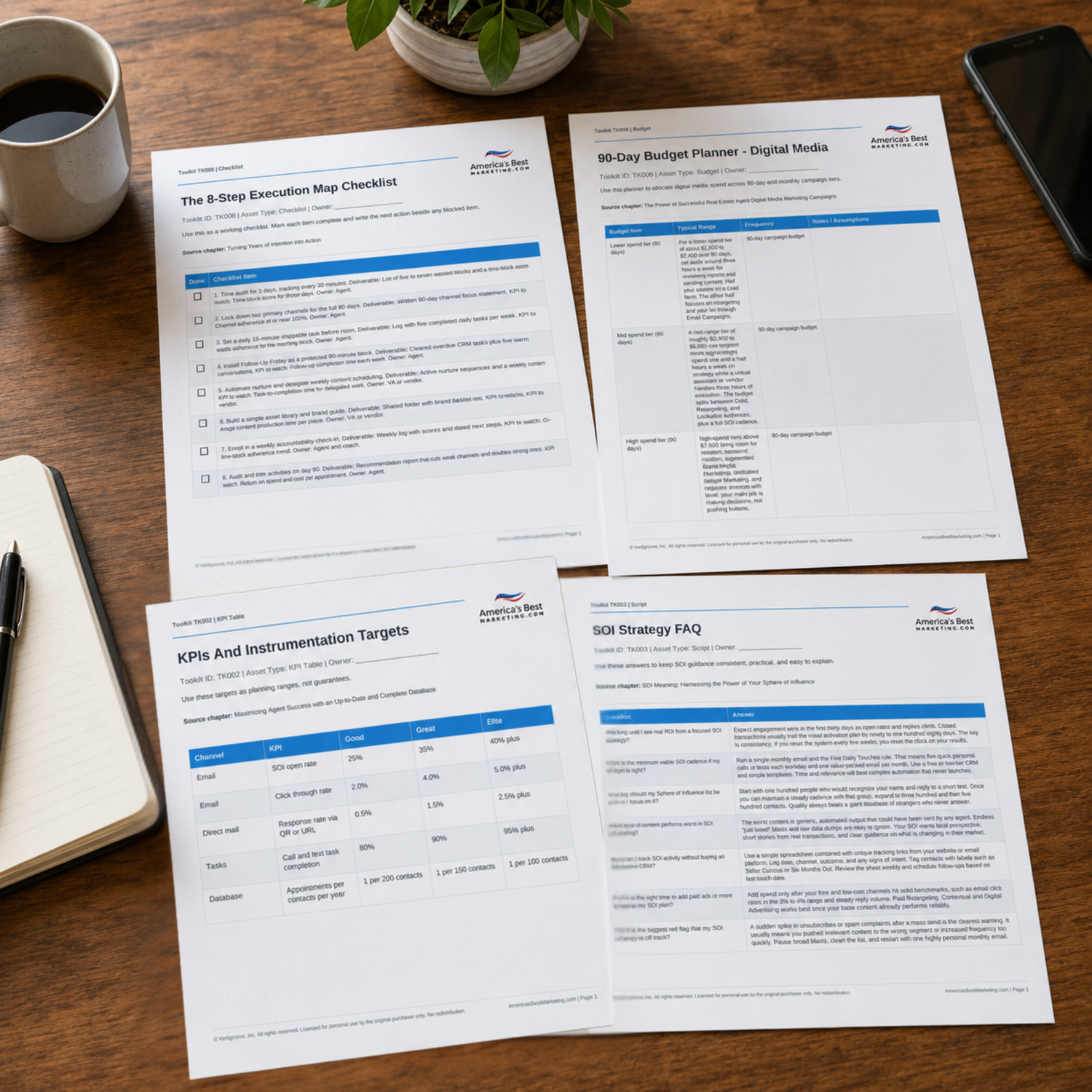
Download The Real Estate Marketing Trends Toolkit
Use the companion Toolkit to plan a ninety-day rollout, set budget tiers, track video, email, and retargeting KPIs, and keep trend adoption focused on execution that produces conversations.
Download the Toolkit ZIPRecommended reads
Recommended Reads for Real Estate Agents
These articles help agents connect follow-up discipline, database habits, client communication, and marketing execution into a repeatable system.

The Top 7 Things to Look For in a Real Estate Marketing Program
Give the top 7 things to look for in a real estate marketing program a clearer role in the marketing system instead of treating the work as a one-off idea.
Read article
How to Choose the Right Real Estate Agent
Make “How to choose the right real estate agent” more useful by turning the topic into a clear buyer-and-seller education resource with a defined audience, message, and next step.
Read article
Tax Benefits of Investment Property: Real Estate Agent Talking Points + Investor Content Angle
Make tax benefits of investment property more useful by tying the message, audience, and next step together.
Read article
The #1 Mistake Agents Make with Lead Generation and How to Fix It: Implement an Integrated Real Estate Marketing System
Use implement an integrated real estate marketing system to create a stronger bridge between client education and real conversations.
Read articleReal Estate Marketing Trend Questions Agents Ask
Which real estate marketing trends should a solo agent start with first?
Start with one visibility trend and one conversion trend. Short video and a simple email nurture sequence usually deliver the fastest learning and the clearest feedback. Once those two pieces feel predictable, layer in local authority moves such as neighborhood reports or community features so your name shows up everywhere serious owners look.
How much time per week should I expect to invest in these trends?
A realistic starting point is four to six focused hours each week. That time should cover scripting and filming simple clips, loading emails into your system, and reviewing numbers. If you outsource creative tasks such as editing or graphics, your weekly time drops and your primary job becomes recording video and approving campaigns.
Can real estate marketing trends work in a slower or rural market?
Yes. The volume may feel smaller, but the impact of consistent trends can be stronger because there is less noise. Hyper-local content, direct mail, and community partnerships often outperform flashy online plays in rural markets. The key is to tailor your message and examples so they match the price points, timelines, and concerns of the people you actually serve.
What if I feel uncomfortable on camera for short video content?
You can begin with clips that show homes, streets, and reports instead of your face. Use voiceover and text overlays while you build comfort. Over time, introduce quick on-camera moments such as a greeting or a one-line summary at the end. Viewers care far more about clarity and honesty than they do about polish or perfect delivery.
Do I need expensive software to automate follow-up with my leads?
No. Many agents start with a simple CRM that can trigger emails when a form is submitted. The value sits in the message flow, not the tool. Focus first on writing ten useful emails that educate and invite next steps. You can always upgrade platforms later once the core path is already proven and producing appointments.
How do I know when to increase my ad spend on retargeting or lead campaigns?
Increase spend only after both cost per lead and lead-to-appointment rates look healthy for at least sixty days. If you see leads arriving at a cost you like and at least a small percentage converting into real conversations, then stepping up the budget makes sense. Scaling before that point just multiplies confusion and wasted money.
What role can a marketing partner play in these trend-driven strategies?
A strong partner can handle the build, wiring, and ongoing execution so you can focus on advising clients. Many agents prefer to outsource tasks like structured posting, email production, and retargeting setup. The right relationship feels like gaining an operator who thinks in systems while still sounding like your voice in every channel.
Next step
Build the System Behind the Trends
Continue from one useful article into the larger ABM ecosystem: the book series for strategic depth and the full marketing program for done-for-you execution.

View the Book Series
Explore the America’s Best Real Estate Agent Marketing System books for a deeper strategic framework around visibility, referrals, listings, lead generation, and growth.
View the Book Series
See Full Marketing Program
See how AmericasBestMarketing.com runs real estate blog writing, social media, listing marketing, email, direct mail, and retargeting as one managed system.
See Full Marketing Program