Effective Strategies for Managing Client Expectations in Real Estate
Managing Client Expectations
Effective Real Estate Communication Strategies
A communication protocol for agents who want clearer expectations, calmer transactions, better reviews, and more repeatable client service.

Managing client expectations starts with a written communication protocol
The fastest way to reduce transaction stress is to set the communication rhythm before the file gets emotional. Define how often clients will hear from you, which milestones trigger an update, how urgent items are handled, and what each decision means. Then put that rhythm into your CRM, email templates, and weekly summary process so clients experience calm guidance instead of improvised check ins.
- Expectation gaps usually start when clients assume the process will match a friend’s experience, a portal estimate, or a best case timeline.
- A written communication protocol protects the agent by making cadence, channel, response time, and milestone updates explicit.
- Pre contract, under contract, and post closing communication each need their own rhythm because each stage creates different client anxiety.
- Client satisfaction should be measured with time variance, survey score, referral rate, and the volume of unplanned check in calls.
- The strongest communication system turns service clarity into marketing proof through email, listing updates, reviews, and repeatable client touchpoints.
Why Expectation Gaps Break Client Trust
Expectation gaps are the distance between what a client assumes will happen and what the transaction can realistically deliver. In real estate, that gap might be the timeline they heard from a friend, a price they saw on a portal, or a belief that every update will arrive in real time. The bigger that gap becomes, the faster trust erodes, even when you are doing solid work behind the scenes.
Managing client expectations in real estate is not about promising less. It is proactive risk mitigation that protects your time, your reputation, and your energy. When you define the process in advance, you stop arguments before they start and free your calendar from constant unplanned check in calls.
- Do not assume clients understand the contract and timeline because they have bought or sold property before.
- Do not avoid hard news until the last minute when an early update with clear options would protect trust.
- Do not rely on quick verbal explanations without a written recap that confirms what happens next.
Clients notice silence before they notice effort. If a deadline is on your calendar, your client needs to see it in writing with a short explanation of what might happen next.
The Client Communication Protocol
Think of your communication as a product you deliver alongside your market expertise. The Client Communication Protocol turns vague promises such as frequent updates into clear standards clients can see and measure. Every phase of the transaction gets its own rhythm: pre contract, under contract, and post closing.
In the pre contract stage, set the ground rules, share the roadmap, and anchor expectations with data instead of stories from social media. A simple overview that includes insights from Understanding and Leveraging Real Estate Market Data helps clients see why pricing, timelines, and negotiation windows look the way they do in your market.
Under contract is where most expectation gaps explode. A single missed inspection update or a vague explanation of lender timelines can turn a confident client into a constant critic. Your protocol should specify which milestones trigger an update, how soon the update goes out, and what format you use so the message is easy to skim on a phone.
Post closing communication is shorter, yet just as important. A simple schedule of check ins at one week, thirty days, and ninety days reinforces that you did not vanish after closing. It also gives you structured opportunities to ask about survey responses, online reviews, and future plans without sounding needy.
Set the rules before the emotions rise
Explain how you communicate, how fast you respond, which channels handle urgent items, and which decisions are coming in the next seven days.
Anchor every update to a milestone
Send a short note when inspections, appraisal, loan, title, negotiation, repair, or closing tasks move from pending to complete.
Make follow-up feel like service
Check in at one week, thirty days, and ninety days with practical questions, a review request, and a referral invitation that feels earned.
Keep the process out of your memory
Store templates, task reminders, client preferences, survey links, and stage-based emails inside your CRM and Email Marketing for Real Estate Agents platform.
Three Communication Scripts You Can Use Today
Scripts matter because client conversations become harder when the client is already nervous. Give yourself a repeatable opening, a clear explanation, and a calm next step so the conversation feels guided instead of improvised.
The first expectations call
Agent dialogue
Hook lineI want to start by walking you through the exact path from today to closing in plain language.
Middle lineHere is how often you will hear from me, what I will update you on, and which decisions I will flag early.
CTA lineReply to this message with the channel you prefer for urgent items so I can log it correctly.
Use this script at intake. Send the recap within one hour so the agreement lives in writing, not just in the conversation.
The bad news call with clear options
Agent dialogue
Hook lineI have an update that is not ideal, and I want to walk you through it calmly.
Build lineHere is what changed, here is why it happened, and here is how it affects your timeline or net.
CTA lineAfter I outline two clear options, I will ask which path you want to approve today.
Lead with the fact that you have a plan. Explain the situation once, move to options, and confirm the decision in writing.
The post closing check in and referral ask
Agent dialogue
Opening lineI wanted to check in now that you have lived with the move for a bit.
Build lineTell me what feels great so far and what surprised you about the home or the process.
Reveal lineYour feedback helps me fine tune how I communicate with clients so they feel supported.
CTA lineIf a friend or family member mentions a move, would you feel comfortable connecting us so I can help them the same way?
Lead with sincere curiosity. The referral request works only after the client has felt listened to.
Budget And Time Investment
You do not need enterprise complexity to manage expectations well. You need one clear roadmap, one update rhythm, one CRM workflow, and one owner for follow-through. Spend should support clarity, not noise.
Spend fifty to two hundred dollars each month on a simple CRM and one email template tool. Block one hour each week to send a Friday progress summary, reply to questions, and log notes. Cap automated emails at two per week per client so your messages feel consistent instead of noisy.
Spend two hundred to eight hundred dollars each month on a stronger CRM, a professional email platform, and part time admin help. Give support staff the job of formatting weekly updates, tagging client stages, and watching response rates while you handle the higher level conversations.
At the high end, invest in integrated dashboards and dedicated communication coordination only if the added visibility improves service quality. The real gain is faster recovery when a file gets messy. Use Listing Marketing metrics, client response data, and service feedback to see whether your communication is actually reducing friction.
Schedule a quarterly managed marketing program review or coaching conversation around emotional conversations, boundary setting, service dashboards, and follow-up consistency.
Client Satisfaction KPI Table
Communication systems are only useful if you can see whether they work. Instead of chasing vanity metrics, track a small set of indicators tied directly to stress and loyalty.
| KPI | What it measures | Target range | How to use it |
|---|---|---|---|
| Time variance | Gap between promised and actual closing date | 5 to 10 days | Large gaps point to weak expectation setting around lenders, inspections, repair timelines, and title work. |
| Survey score | Average client rating from post closing surveys | 8.5 to 9.5 | Falling scores signal that tone or cadence feels off even if deals still close. |
| Referral rate | Average referrals per closed transaction | 0.4 to 0.8 | Lower rates mean clients may have liked you, but they did not feel strongly guided enough to talk about the experience. |
| Unplanned check ins | Client calls or texts asking what is happening now | Trending down | A rising count means clients need a clearer roadmap, more predictable updates, or stronger written summaries. |
Compliance And Ethics For Clear Communication
Expectation management must sit inside strong compliance. Use photos and marketing assets that respect Fair Housing guidance and avoid reinforcing stereotypes about who belongs in a home or neighborhood. Put agency relationships and privacy practices in writing so clients know who you represent and how their data is stored and shared.
Clear communication should not drift into legal, tax, lending, or repair advice that belongs to another licensed professional. Your role is to explain the process, identify the decision point, and bring in the right expert when the question moves outside your lane.
- Do document client preferences, update cadence, and important decisions in writing.
- Do use the same service standard across buyers, sellers, price points, and neighborhoods.
- Do not make promises about appraisals, closing dates, inspection outcomes, or financing approval.
- Do not let automated messages imply that every client faces the same risk or timeline.
Quick Case Example: The Weekly Status Email
A weekly Email Marketing for Real Estate Agents status update template can reduce reactive check in calls because clients know when they will hear from you and what the next decision point will be. Keep the update short: what happened this week, what happens next, what needs the client’s attention, and what you recommend.
The value is not the template itself. The value is the predictable rhythm clients can trust when the transaction feels uncertain. When that rhythm repeats across your files, it becomes part of your brand and gives past clients a better story to tell when they refer you.
Ten-Step Expectation Checklist
Use this checklist to turn expectation management from a good intention into a repeatable operating system.
- Create a detailed three phase transaction roadmap that you can share digitally and in print.
- Use the first meeting to complete a communication preferences questionnaire and log it in your CRM.
- Design a professional end of week status summary email template for buyers and sellers.
- Develop standardized talking points for common setbacks such as low appraisal results, inspection findings, or delayed funding.
- Send automated educational emails through your Email Marketing for Real Estate Agents platform based on whether the client is buying or selling.
- Standardize the way you present Listing Marketing metrics to sellers such as showings, online views, and inbound inquiries.
- Schedule brief fifteen minute check in calls twenty four hours before every major deadline.
- Create a pre drafted message for unexpected good news so you can deliver it fast with a clear next step.
- Confirm that your IDX Real Estate Websites solution supports secure client areas for timelines, documents, and status notes.
- Review your survey scores, referral rate, and unplanned check in count every quarter.
Managing client expectations is not more charm or more hustle. It is documented promises, consistent delivery, and simple language clients remember when the transaction feels tense.
How Better Communication Becomes Marketing
A client communication system is more than a transaction aid. It is a positioning asset. It gives you credible proof that you guide people through decisions instead of merely chasing signatures.
Use your expectation protocol as a recurring theme inside Social Media Marketing, Listing Marketing, Email Campaigns, Direct Mail, and Digital Retargeting. Each channel should tell the same story. You keep clients informed, organized, and calm before the transaction gets complicated.
If you want help wiring this into your marketing systems, AmericasBestMarketing.com designs communication frameworks, service dashboards, and stage-based campaigns that keep clients calm and your pipeline growing.
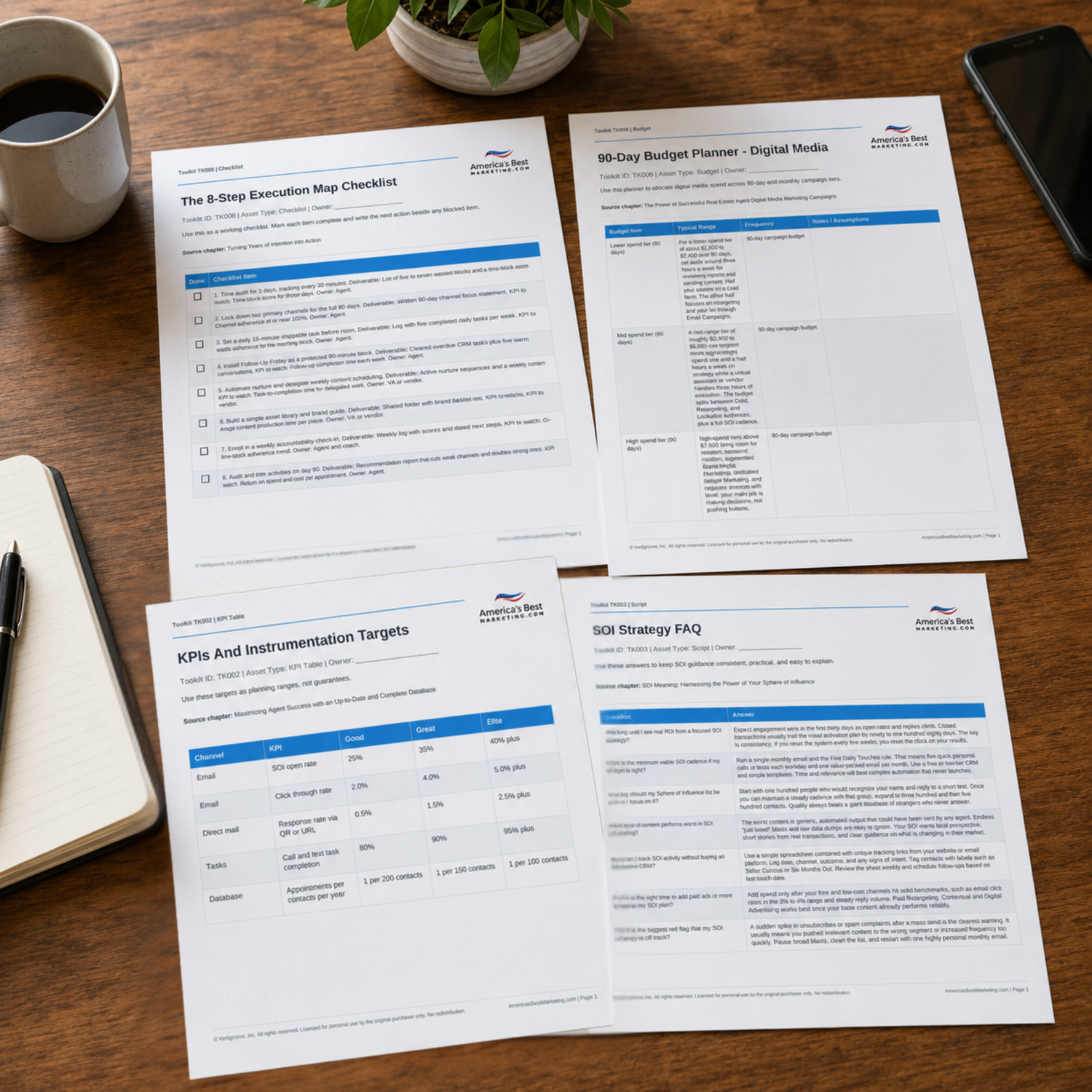
Download The Client Communication Toolkit
Use the companion Toolkit to turn expectation management into a repeatable service system with budget planning, client communication protocols, KPI tracking, and ready-to-adapt scripts.
Download the Toolkit ZIPRecommended reads
Recommended Reads for Real Estate Agents
These articles help agents connect follow-up discipline, database habits, client communication, and marketing execution into a repeatable system.

Best Real Estate Marketing Ideas: 15 Innovative Strategies to Attract More Clients
Use real estate marketing ideas to strengthen visibility, follow-up, and client conversations without adding more random tasks.
Read article
Property Taxes Explained: Real Estate Agent Cheat Sheet + Client Email Templates
Make property taxes explained more useful by tying the message, audience, and next step together.
Read article
Your Brand is Built on Every Interaction: Managing Client Touchpoints for Lasting Success
Give client touchpoints a clearer role in the marketing system instead of treating the work as a one-off idea.
Read article
How Much Should a Real Estate Agent Budget for Marketing?
Use execution to create a stronger bridge between client education and real conversations.
Read articleClient Expectation Questions Agents Should Be Ready To Answer
How long does it take for a new communication protocol to improve client satisfaction?
Most agents see noticeable changes within two or three months of running a consistent protocol. The first wins show up as fewer surprise calls and calmer reactions when problems appear. Survey scores and reviews usually move a little slower, so measure results over several closed transactions rather than just one.
What is the minimum viable check in cadence if my transaction volume is high?
A weekly status update plus fast communication around major milestones is the minimum standard for a busy pipeline. Use a fixed send day for summaries so clients know when to expect them. Add same day notes only when inspections, appraisal results, or contract changes hit the file.
Should I use the same communication style for buyers and sellers?
The tone and values stay the same, but the focus shifts. Buyers usually need more education around steps and financing, while sellers care more about traffic, feedback, and net numbers. Build two sets of examples that follow the same structure so your brand feels consistent while the content stays relevant.
What type of communication content performs worst and causes client confusion?
Vague status updates that hint at problems without explaining them clearly do the most damage. Long paragraphs with mixed topics also confuse clients who are reading quickly on a phone. Short updates that separate facts, options, and your recommendation consistently outperform emotional walls of text.
How do I track whether my communication is preventing client stress?
Track survey scores, referral rates, and the volume of unplanned check in calls per transaction. When your protocol works, clients still ask questions but they rarely sound panicked or surprised. Add one question to your survey that asks how clear the communication felt at each stage of the transaction.
When should I consider outsourcing the communication management portion of my business?
Once you consistently run more files than you can personally update each week, it is time to add structured help. Start with support that handles templates, task tracking, and formatting so you still make the key calls. If quality drops or response times slip, invest in dedicated communication support or targeted coaching.
What is the major red flag in client behavior that signals their expectations are misaligned?
The biggest warning sign is when a client keeps asking the same question in different ways across several days. That usually means your answers are not landing or they are not matching what the client expected to hear. Treat that loop as a signal to slow down, restate the process, and reset the roadmap in writing.
Next step
Build the System Behind the Advice
Continue from one useful article into the larger ABM ecosystem: the book series for strategic depth and the full marketing program for done-for-you execution.

View the Book Series
Explore the America’s Best Real Estate Agent Marketing System books for a deeper strategic framework around visibility, referrals, listings, lead generation, and growth.
View the Book Series
See Full Marketing Program
See how AmericasBestMarketing.com runs real estate blog writing, social media, listing marketing, email, direct mail, and retargeting as one managed system.
See Full Marketing Program